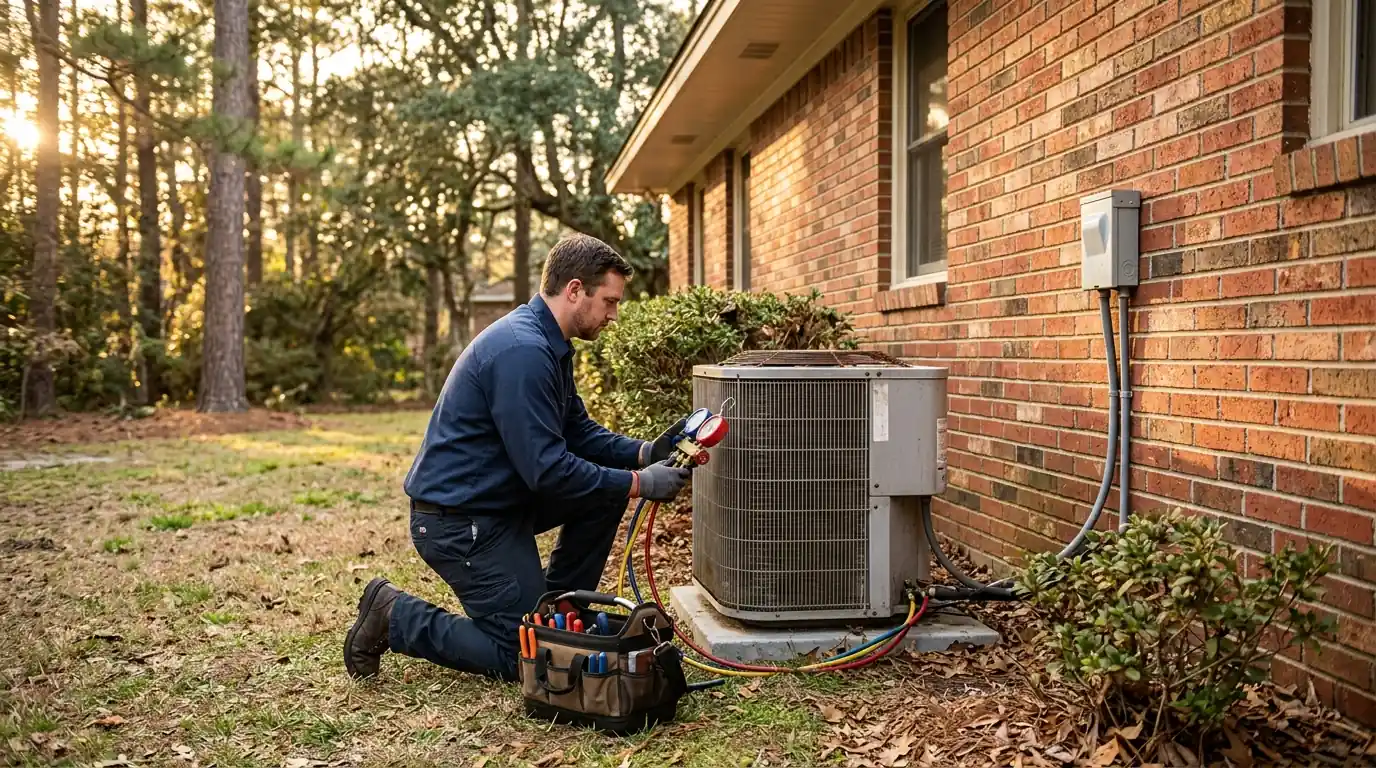
Air duct cleaning in Atlanta is worth doing after a renovation, a rodent problem, or years of heavy pet hair and pollen, not on a fixed yearly schedule. A real cleaning puts the duct system under negative pressure with a large vacuum and agitates every run, supplies and returns, not just the grilles.
What air Duct Cleaning involves on a southwest Atlanta call
Most ducts don't need routine cleaning. A good filter that fits its slot keeps most dust out. Cleaning earns its cost when something got past the filter: drywall dust from a remodel, debris from a disconnected return, droppings from pests, or years of buildup from a house with several shedding pets.
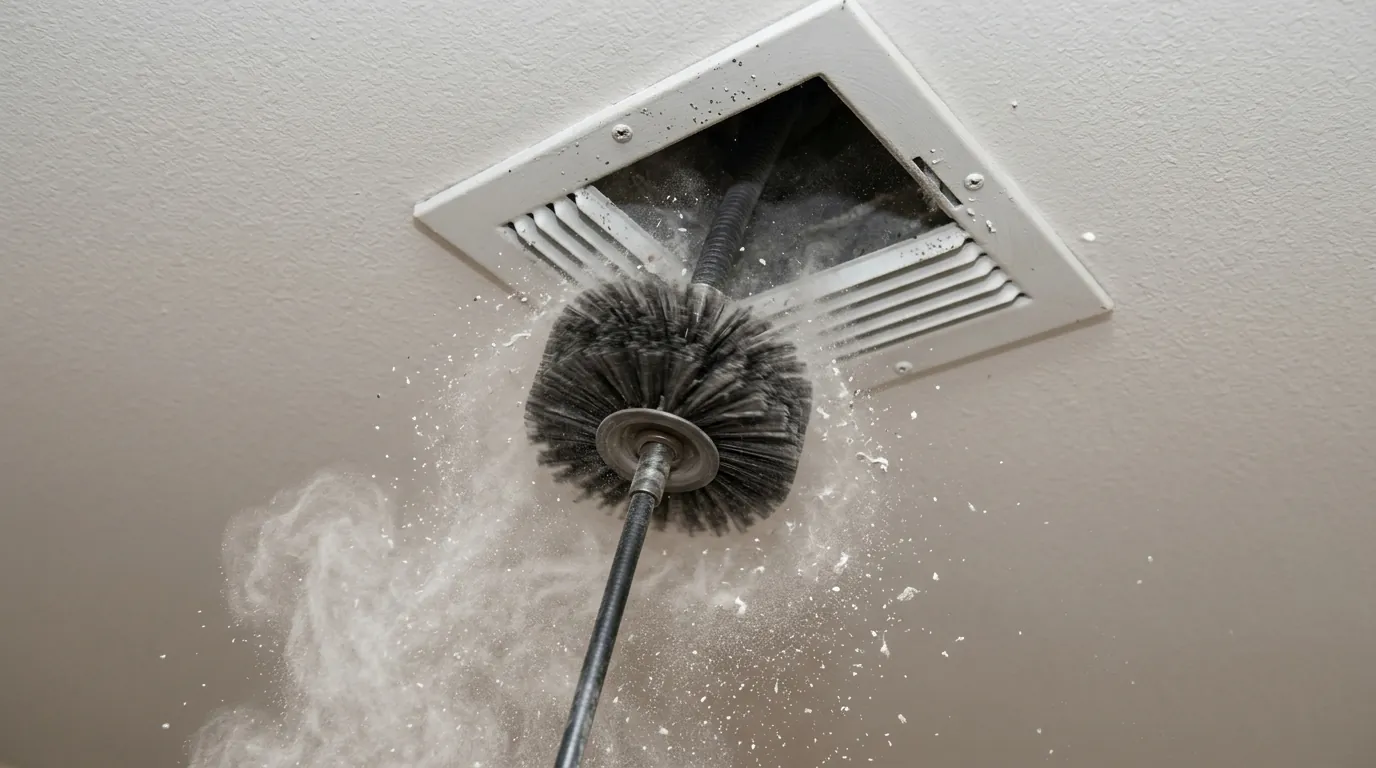
We also look at why debris got in. A return pulling attic air through a gap will refill clean ducts within months, so leaks go on the list for duct sealing. If allergies are the real concern, better filtration often does more than cleaning alone.
What a real duct cleaning includes
Duct cleaning has a lot of low-price offers that only cover the grilles. A full job includes these.
- Camera look before and after
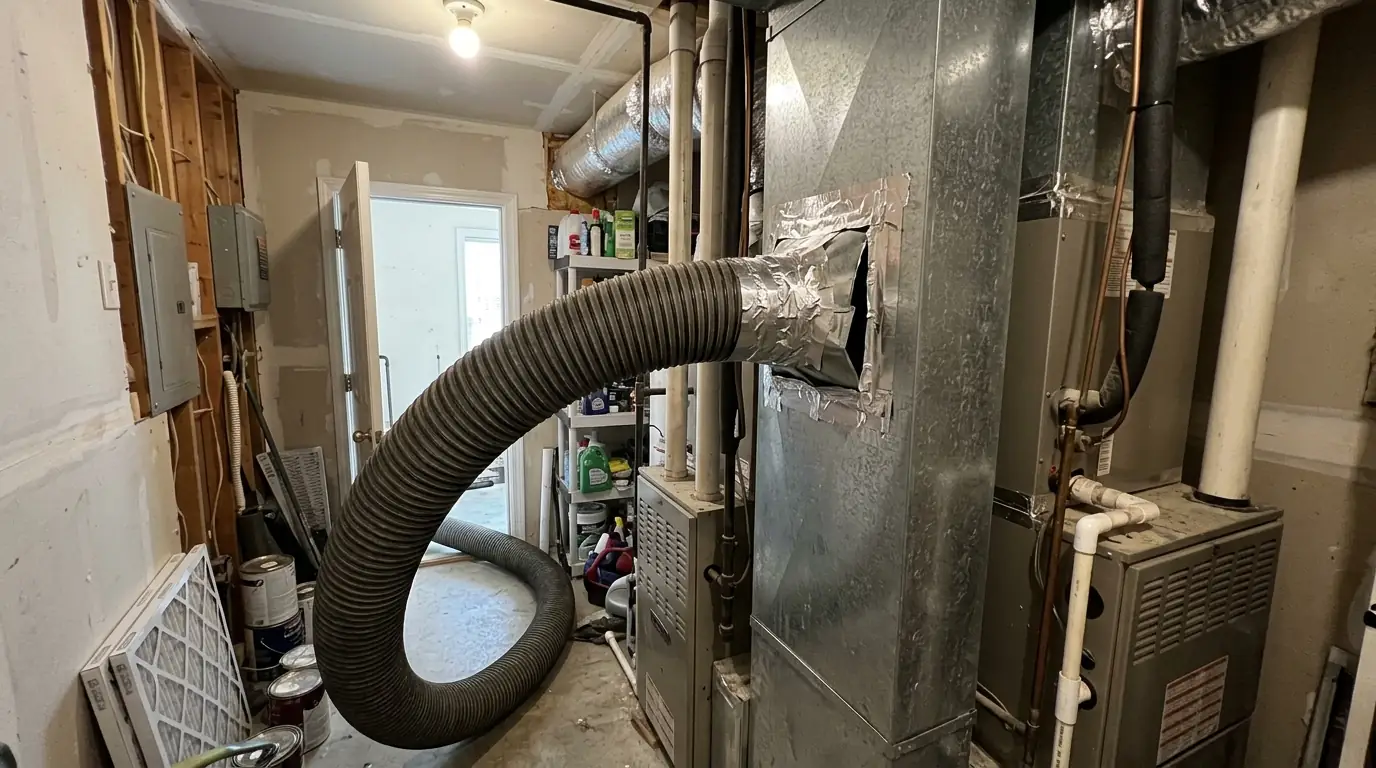
- Negative pressure on the main trunk
- Every supply run agitated and vacuumed
- Every return run, including the return plenum
- Blower wheel and housing cleaned
- Coil face vacuumed or washed
- Access openings sealed with proper patches
- Grilles washed and boot gaps sealed
Cleaning after a renovation
Sanding drywall, cutting tile and refinishing floors put fine dust into the air, and if the system ran during the work, the returns pulled it straight in. That dust settles in the return trunk, coats the blower wheel and blows back out for weeks. We clean the returns first, then the supply side, then the blower and coil face, so debris isn't pushed from one part to another. If you're planning work now, seal the registers and shut the system off on sanding days. That saves most of the cleanup.
Pet hair and pollen buildup
Pet hair mats on return grilles and inside the first few feet of the return duct, then traps pollen and dust behind it. Spring tree pollen settles fast, and a clogged filter can let some bypass around its edges. The result is a dusty house, a musty smell when the system starts, and a blower working harder than it should. We brush and vacuum the returns, clean the blower wheel, and check that the filter rack seals so hair can't slip past. Our article on pollen and filters covers the filter side.
Register and return cleaning
Registers and return grilles collect the most visible dirt, and they're the first thing people see. We pull each one, wash it, and clean the boot behind it, which is where the black ring on the ceiling usually starts. That ring can also be a sign of air leaking at the boot, pulling attic dust through the gap, so we seal those boots while the grilles are off. Cleaning only the registers without the ducts is a cosmetic job, and we'll tell you if that's all you need.
How a full duct cleaning works
Inspect with a camera
We look inside several runs first, so you can see what's there and decide if cleaning is worth it.
Set negative pressure
We connect a high-volume vacuum to the trunk so loosened debris is pulled out, not into the house.
Agitate each run
We work brushes or air whips through every supply and return, one at a time.
Blower and coil face
We clean the blower wheel and vacuum the coil face, where dust drags down airflow.
Seal and reset
We seal access holes, wash grilles, seal boot gaps and install a fresh filter.
What you can clean, and what takes equipment
Owners can handle the surface. Getting debris out of the ducts takes a vacuum strong enough to pull it to one exit.
| Task | What you can do | Where a technician comes in |
|---|---|---|
| Register and grille dust | Remove, wash and dry the grilles | Clean the boot and seal gaps behind them |
| Pet hair at the return | Vacuum the grille weekly in shedding season | Clean the return duct and blower wheel |
| Filter changes | Change on schedule, check it fits the rack | Fix a rack that lets air bypass |
| Shop vac in the ducts | Reaches only the first foot or two | Negative pressure on the whole trunk |
Atlanta homes, weather and this job
Renovation dust is a common reason for duct cleaning in Oakland City. The neighborhood's 649-acre National Register district is mostly wood and brick bungalows, Craftsman and Minimal Traditional houses. Many of those homes are being updated room by room, with plaster coming down, floors being sanded and walls opened for wiring. Plaster dust is finer than drywall dust and finds its way into returns easily. If the HVAC ran during demolition, plan on cleaning the return side before the house is finished. See heating and cooling in Oakland City for more.
Duct cleaning costs in Atlanta
The published Atlanta range below covers a typical single-system home. Very low advertised prices usually mean a register wipe and an upsell, not a full cleaning.
| Job | Published planning range | Source |
|---|---|---|
| Air duct cleaning in Atlanta | $244 to $466 | How Much Does Air Duct Cleaning Cost in Atlanta, GA? | Angi |
What moves the number
- Number of supply and return runs
- Attic or crawl space access
- Renovation or rodent debris
- Blower and coil cleaning included
- More than one system in the house
These are ranges published by the sources linked above, shown for planning. They are not a quote and not our price; the real number depends on what we find at your home.
Air Duct Cleaning questions from Atlanta homeowners
There's no fixed interval. Many homes go a decade or more without needing it. Clean when there's a reason: visible debris, renovation dust, pests, or a musty smell traced to the ducts. A camera look tells you more than a calendar does.
It can help when the ducts are actually loaded with dust or pet dander. If they're clean, it won't do much. Most allergy relief comes from a well-fitted filter and controlling humidity. We'll show you camera footage before you decide.
Gentler. Flex duct liners are thin plastic, and aggressive brushes can tear them. We use softer brushes or air whips in flex runs. Very old, brittle flex may not survive cleaning, in which case replacing those runs is the better spend.
Not as a routine add-on. Sanitizers and coatings are only worth discussing when there's a specific problem, such as mold growth confirmed in the ducts. Even then, fixing the moisture source matters more than the spray.
Only if dirt was restricting airflow, such as a caked blower wheel or a matted coil face. Clean ducts themselves don't move air much better. Sealing leaky ducts usually does far more for the bill.
Usually it's attic dust pulled through gaps around the register boot, or soot from candles caught by moving air. Cleaning removes it, but it comes back unless the boot is sealed to the ceiling.
Updated October 2026