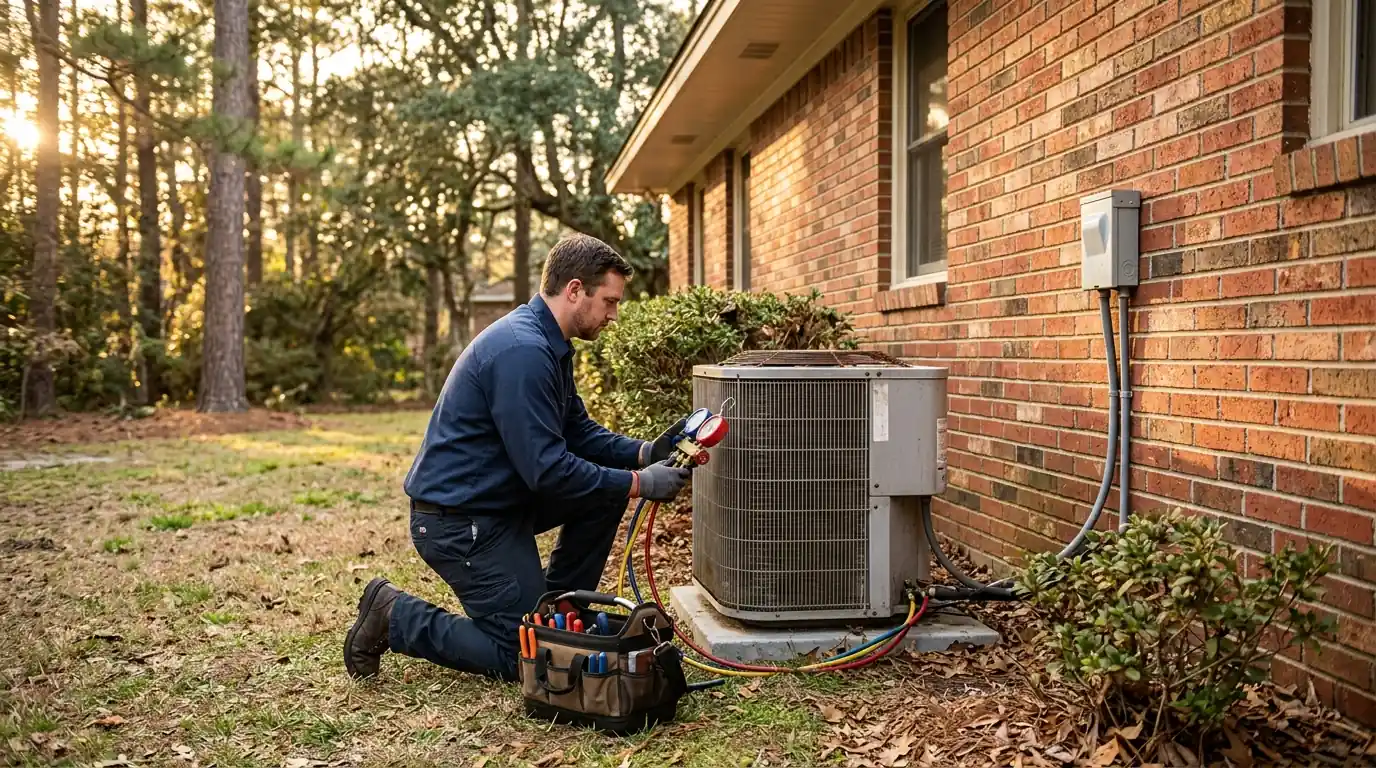
Emergency HVAC repair in Atlanta means a person answers your call 24/7 and walks you through making the house safe before a technician arrives. Shut the system off at the thermostat for any burning smell or water leak. For a gas smell, leave the house and call the gas utility from outside first.
24/7 Emergency HVAC Repair: what we check and why it matters
Some failures can wait until morning and some cannot. A house heading past 85F with an infant or elderly parent inside is urgent. So is a furnace that will not light on a hard freeze, a system that smells electrical, or a condensate leak soaking a ceiling. When you call, we sort out which situation you are in and give you safe steps for the meantime.
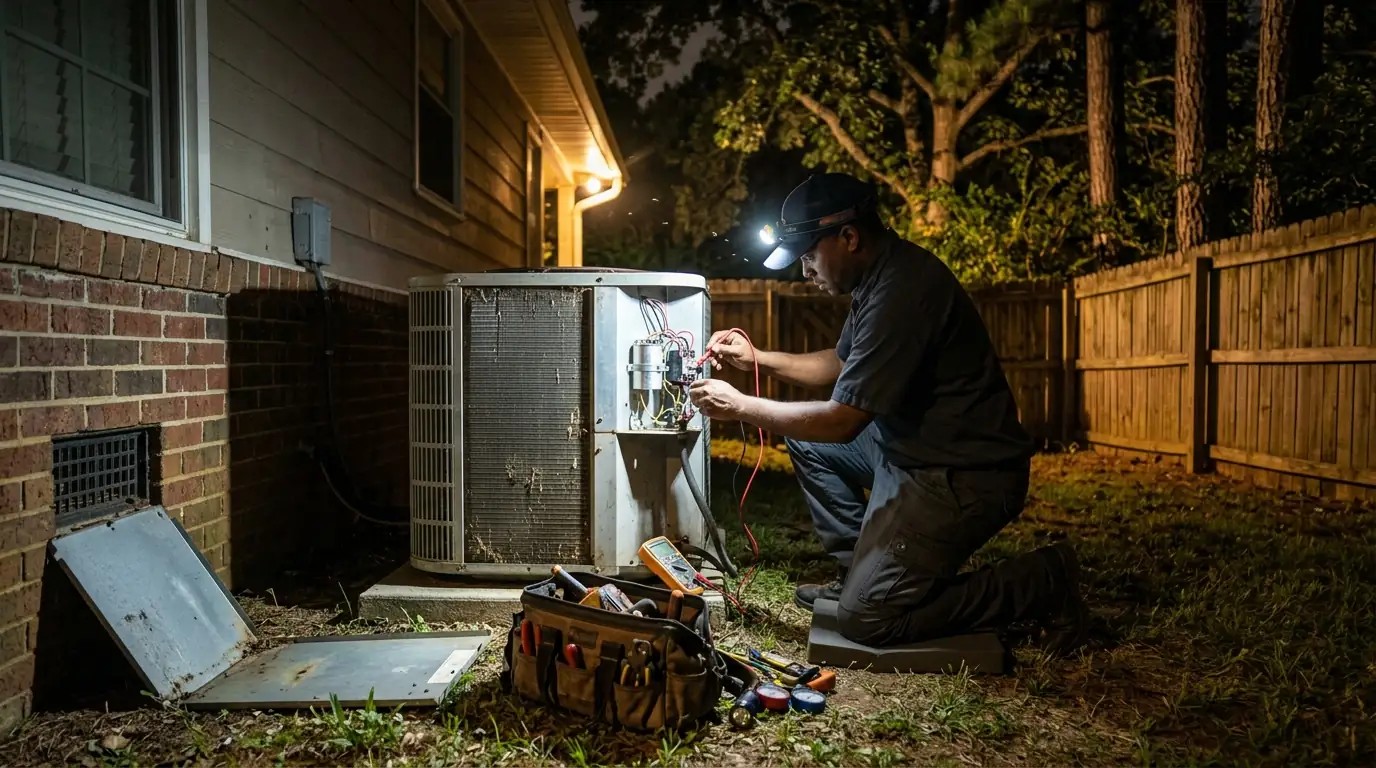
We do not quote an arrival time we cannot keep. Instead we tell you honestly where your call stands and keep the line open. Many night calls turn out to be a tripped float switch, a blown low-voltage fuse or a failed capacitor.
Signs this cannot wait until morning
Any of these is worth a call at any hour.
Smoke or a hot electrical smell
Shut the system and its breaker off right away.
CO alarm sounding
Get everyone outside and call 911 before calling us.
Rotten egg odor near the furnace
Leave the house and call the gas utility from outside.
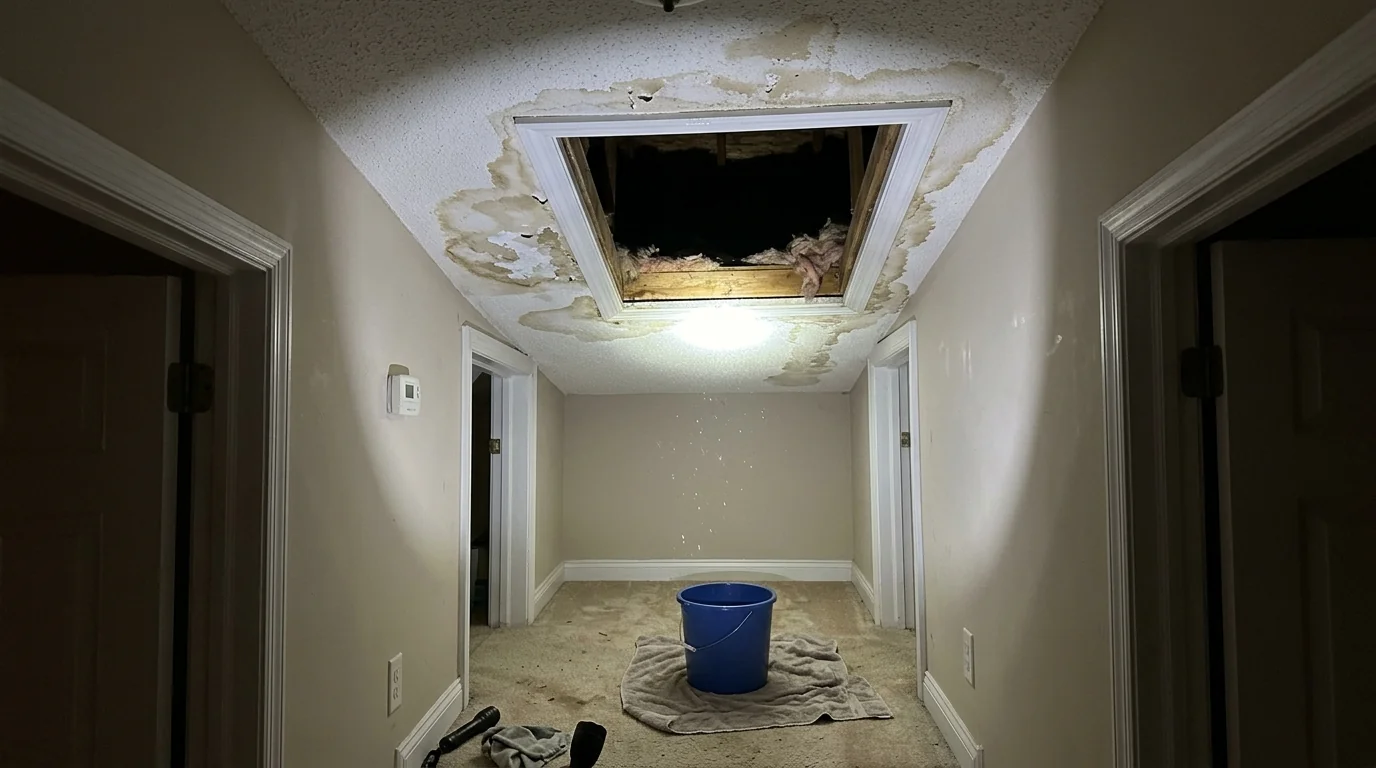
Water coming through a ceiling
Turn the system off and drain any bulge into a bucket.
Indoor heat rising past 85F
Dangerous for infants, older adults and anyone with heart or lung conditions.
No heat with a hard freeze coming
Pipes in exterior walls and crawl spaces are at risk.
How long the house can safely wait
On a mild night, most homes can ride out an AC or heat failure until a technician arrives. In extreme heat, indoor temperatures can climb past safe levels for vulnerable people within hours, so move them somewhere cooler if you can. On a hard freeze, pipes in exterior walls and crawl spaces can freeze well before living spaces feel dangerous. A leak or electrical smell is different: shut the system off right away.
No AC in a heat wave
If the outdoor unit hums but the fan does not spin, or the indoor blower runs with warm air, shut the system off. A compressor straining against a failed capacitor can overheat, and a frozen coil can flood when it thaws. Check the breaker once, and do not keep resetting it. While you wait, close blinds on the sunny side, run ceiling fans, move people to the lowest floor and keep water handy. Most of these calls end in a capacitor, contactor or fan motor repair, which our AC repair page explains in detail. Our heat wave guide covers more first steps.
No heat on a freezing night
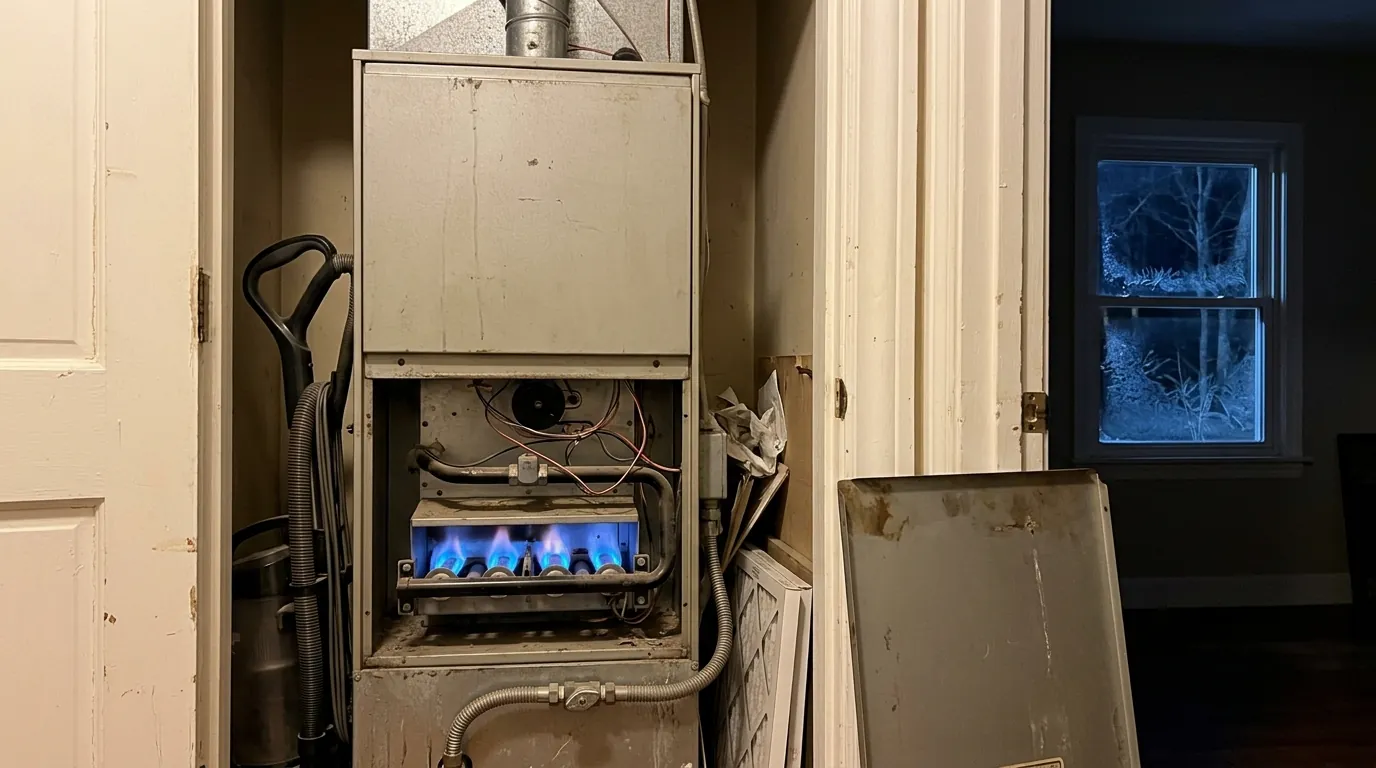
A furnace that clicks, tries to light, then shuts down usually has a dirty flame sensor, a failed hot surface ignitor or a pressure switch fault. A heat pump stuck in emergency heat may have a failed sequencer or a tripped heat strip breaker. Check that the thermostat has batteries and the furnace switch is on, then leave the panels alone. Keep interior doors open, close off unused rooms, let faucets on exterior walls drip, and open sink cabinets so pipes get house heat. Never heat the house with a gas range or grill. See why furnaces stop heating for the common causes.
Burning or electrical smells
A short dusty smell on the first cold morning is usually dust burning off heat exchangers or heat strips, and it fades within an hour. A sharp plastic, electrical or hot-metal smell that keeps going is different. Turn the system off at the thermostat, then switch off its breaker. If you see smoke or scorching, leave and call 911. Common causes include a blower motor overheating on a seized bearing, a melted wire at a contactor or heat strip, or a capacitor that has failed and leaked. Do not restart the system until we have found the source.
Water leaking from the system
Water dripping through a ceiling below an attic unit, or pooling around a closet air handler, usually means a clogged condensate line, a cracked primary pan or an overflowing secondary pan. Turn the system off so it stops making water. Put a towel or bucket under the drip, and if a ceiling bulges, poke a small hole in the center to drain it into a bucket before it gives way. If there is a float switch, it may already have shut the system off. Our drain line repair work clears the clog and checks the safety switch.
What happens from the moment you call
Answer and triage
A person picks up, asks what you see, hear and smell, and sorts out whether anyone is at risk.
Make the house safe
We walk you through shutting off the system, the breaker or the gas, and what to do about heat, cold or water.
Arrive and isolate
Our technician confirms the system is safe to power, then tests voltage, gas pressure or drain flow to find the fault.
Explain the options
You hear what failed, whether a repair restores the system tonight, and what a temporary fix would mean.
Repair and verify
We make the repair and run a full cycle, checking temperature split, flame or drain flow before we leave.
Atlanta homes, weather and this job
Hard freezes show why a no-heat call can turn into a plumbing emergency. After the Christmas 2022 freeze, burst pipes and water main breaks hit metro Atlanta, including a major main break affecting East Point and College Park supply and low pressure in Fairburn and across Clayton. A house that loses heat on a night like that can freeze pipes in exterior walls and crawl spaces within hours. That is why, when you call us with no heat, we ask about the crawl space and exterior wall plumbing as well as the furnace.
Planning ranges for a night or weekend repair
These are published national planning ranges for common repairs, not our pricing. After-hours work and the part that failed both move the final number.
| Job | Published planning range | Source |
|---|---|---|
| Typical AC repair | $150 to $650 | How Much Does AC Repair Cost? (2026) - HomeGuide |
| Typical furnace repair | $133 to $505 | How Much Does It Cost to Repair a Furnace? [2025 Data] - HomeAdvisor |
What moves the number
- Which component failed
- Whether the part is on the truck
- Attic or crawl space access
- Refrigerant needed after a leak
- Secondary damage such as a wet ceiling
These are ranges published by the sources linked above, shown for planning. They are not a quote and not our price; the real number depends on what we find at your home.
24/7 Emergency HVAC Repair questions from Atlanta homeowners
Yes. We answer 24/7, nights, weekends and holidays. A person picks up, asks what is happening and walks you through making the house safe while a technician is lined up.
No. Reset it once. If it trips again, something is drawing too much current, often a shorted compressor or a failed capacitor. Repeated resets can damage the compressor or start a fire at the connections.
Usually yes, with extra blankets and interior doors open, as long as there is no gas smell and no CO alarm. Never use a gas oven, grill or unvented heater for warmth, and plug electric space heaters directly into wall outlets.
Safety and damage set the line: gas smells, CO alarms, electrical smells, active leaks, or temperatures that put vulnerable people or pipes at risk. A system that runs but cools poorly on a mild night can usually wait for daytime service.
Usually not. Dust burns off the heat exchanger or heat strips for the first hour or so. If the smell is sharp, electrical or keeps going, shut it off and call us. Our first cold night guide explains what is normal.
We tell you honestly where your call stands once we know the night's workload, and we do not promise a time we cannot keep. If anyone in the house is at risk from heat or cold, tell us right away so we can help you plan.
Updated October 2026