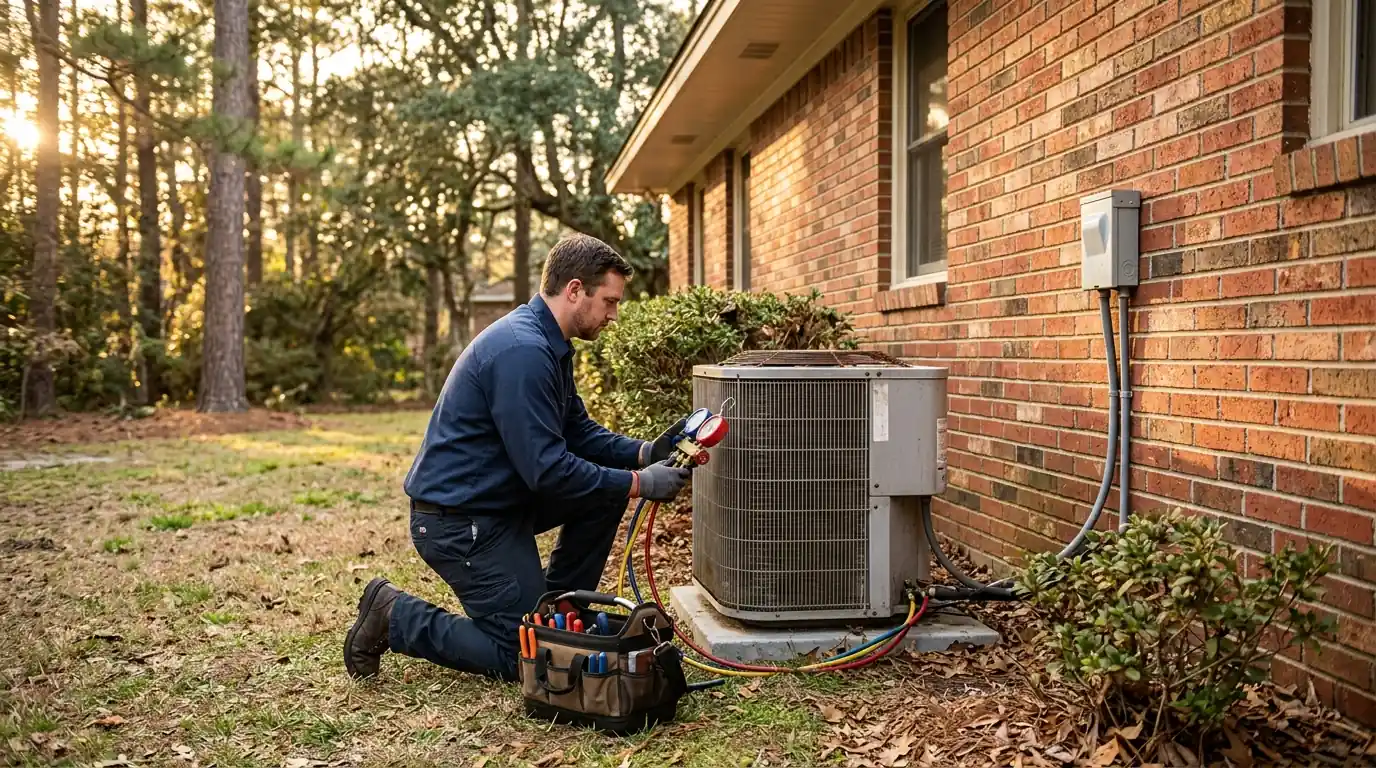
Furnace replacement in Atlanta starts with choosing between an 80 percent furnace that vents through a metal flue and a 95 percent condensing furnace that vents through PVC and needs a drain. With mild winters, the higher efficiency pays back slowly, so venting, location and blower match often decide it.
What furnace Replacement involves on a southwest Atlanta call
A furnace that is twenty years old, has a cracked heat exchanger, or needs repairs every winter is usually ready to go. The replacement should be sized to the actual heat loss of the house, not copied from the old unit, which in many older homes was oversized.
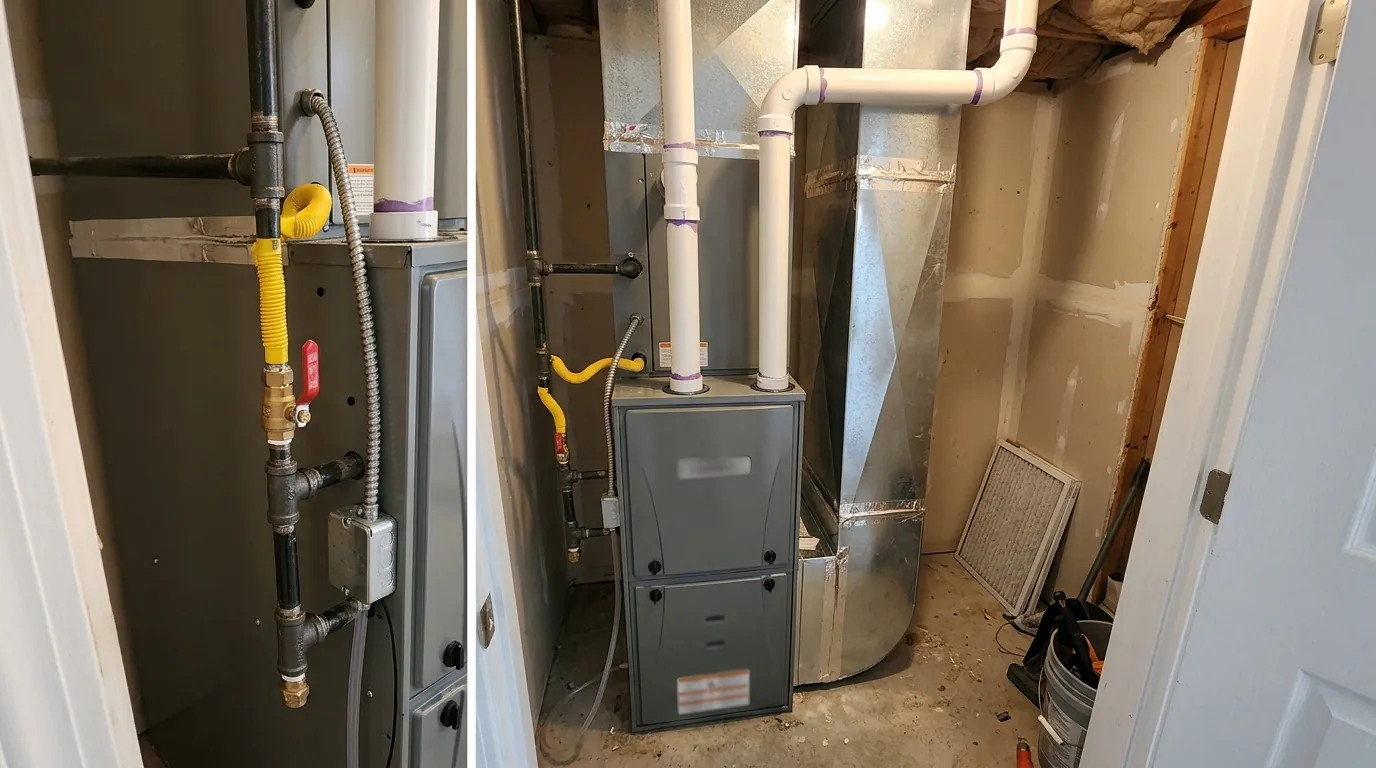
The furnace also moves the air for your air conditioner, so its blower, cabinet width and coil fit matter as much as its burners. If the AC is also aging, replacing both together is often more practical, as explained on our AC replacement page.
80 percent or 95 percent furnace for an Atlanta home?
How the two main efficiency levels compare here.
| 80 percent AFUE | 95 percent AFUE | |
|---|---|---|
| Venting | Metal flue, often existing | New PVC intake and exhaust |
| Condensate drain | Not needed | Required, with freeze protection |
| Upfront cost | Lower | Higher |
| Payback in Atlanta | Not applicable | Slower due to mild winters |
Published furnace replacement ranges
These are planning ranges from published cost guides, not our prices. The combined figure applies when the AC is replaced at the same time.
| Job | Published planning range | Source |
|---|---|---|
| Furnace replacement, national | $2,823 to $6,897 | How Much Does Furnace Replacement Cost in 2026? - HomeAdvisor |
| Furnace and AC together, Atlanta | $5,005 to $12,513 | How Much Does Furnace and AC Replacement Cost in Atlanta, GA? | Angi |
What moves the number
- 80 versus 95 percent efficiency
- Venting changes and water heater flue work
- Attic, closet or crawl space location
- Single-stage, two-stage or modulating burners
- Blower type: standard or variable-speed
These are ranges published by the sources linked above, shown for planning. They are not a quote and not our price; the real number depends on what we find at your home.
80 percent versus 95 percent furnaces
An 80 percent AFUE furnace sends about a fifth of its fuel energy up a metal flue, while a 95 percent model captures heat from the exhaust with a second heat exchanger, condensing water that has to drain. In a cold climate the condensing furnace usually wins. In Atlanta, with short heating seasons, the payback is slower and depends on gas use. Installation is also different: condensing units need PVC venting through a wall or roof and a condensate drain that cannot freeze. We compare both against your actual gas bills.
Attic furnace installs
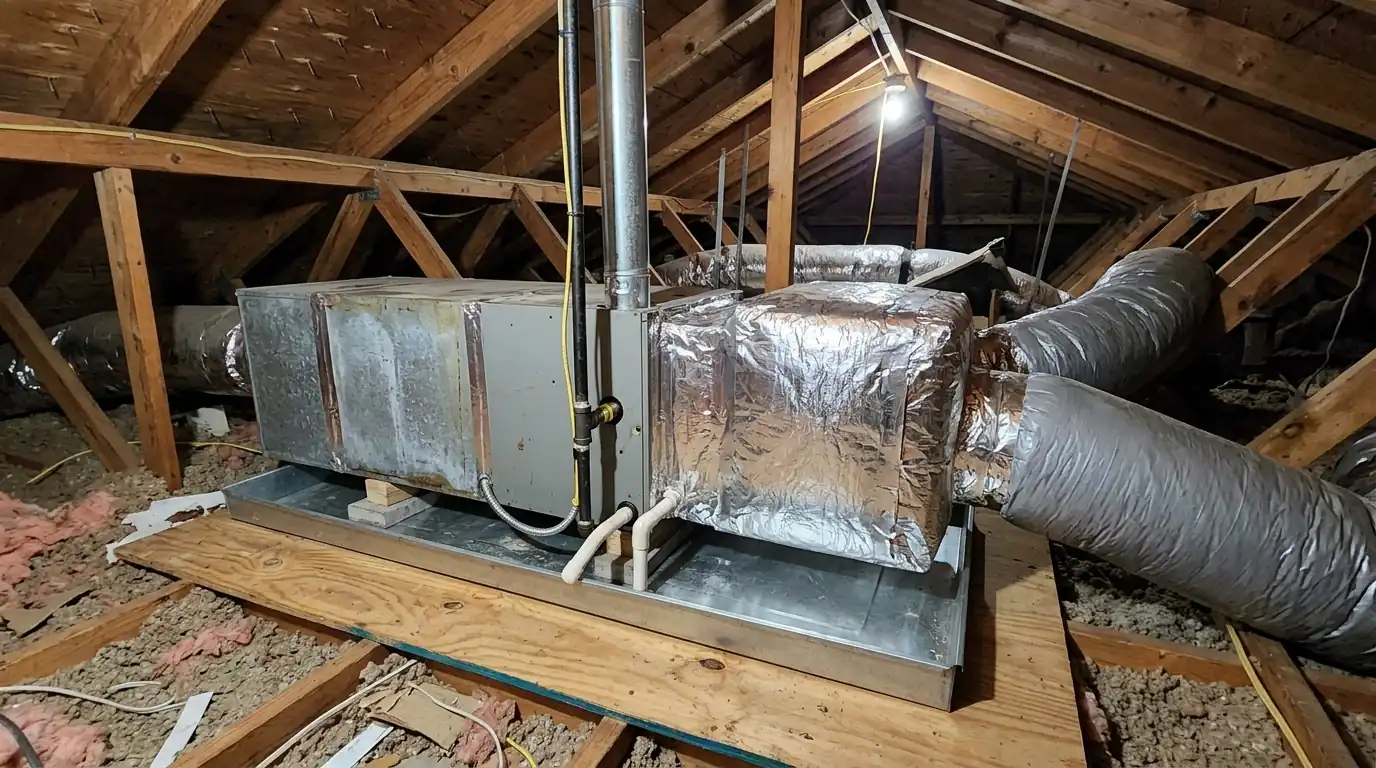
Many Atlanta homes have furnaces in the attic, often horizontal units on a platform. Replacing one involves getting the old unit out through the hatch, setting the new one level with a secondary drain pan underneath, and making sure the service clearance meets the manufacturer's requirements. A condensing furnace in an attic needs a condensate line that will not freeze and a pump if gravity drainage is not possible. We also inspect the attic ducts and insulation around the unit, since those often need attention when equipment is changed.
Venting changes
Moving from an 80 percent to a 95 percent furnace means a new PVC intake and exhaust, and the old metal flue may be left orphaning a water heater. A water heater alone on an oversized flue or masonry chimney may not draft properly, so the flue often needs a liner or resizing. Going the other way, from a condensing furnace to an 80 percent unit, requires a proper metal vent. We plan venting before the furnace is chosen, because it changes the cost and sometimes the location. Draft and combustion checks follow every install.
Matching the furnace to the AC
The furnace blower pushes air across the AC coil, so the two must match. A blower too weak for the coil reduces cooling and can freeze it. A blower too strong reduces dehumidification. Cabinet widths have to line up with the coil, or the plenum needs a transition. Variable-speed blowers can slow down in cooling to pull more moisture, which suits Atlanta's humid summers. When the AC stays, we size the furnace blower to its tonnage. Pairing with a heat pump for dual fuel heating is another option worth weighing.
What a full furnace replacement should include
Ask whether each of these is in the bid.
- A heat loss calculation, not a size copied from the old furnace
- Gas line leak test and a new shutoff valve and sediment trap
- Venting sized for the furnace and any shared water heater
- Condensate drain and pump for a condensing model
- Secondary drain pan for an attic install
- Blower setup matched to the AC coil
- Gas pressure and temperature rise checked against the data plate
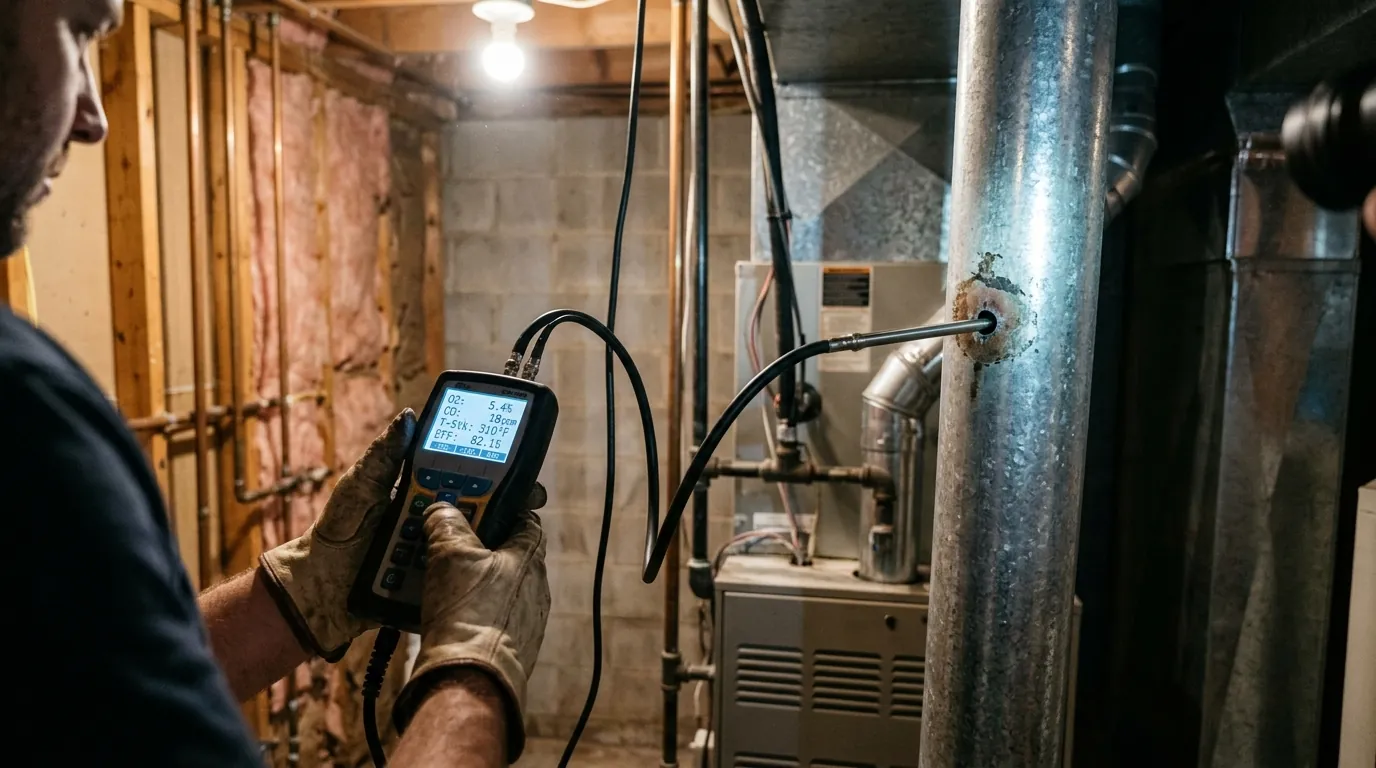
- Carbon monoxide reading in the flue and near the furnace
How we plan and install a new furnace
Calculate heat loss
We estimate the house's real heating load from insulation, windows and air leakage.
Plan venting and location
Flue, PVC routing, condensate drain and service clearance are mapped before choosing a model.
Match the blower to the coil
We confirm the blower can deliver the airflow the AC coil needs.
Install and connect
The furnace is set, the gas line tested for leaks, and venting and drains connected.
Commission with combustion checks
Gas pressure, temperature rise, draft and CO in the flue are measured and recorded.
Equipment brands we service and install
Most homes around Atlanta run equipment from a handful of major manufacturers. We diagnose, repair and replace Carrier, Trane, Lennox, Goodman, Rheem and Daikin systems, along with the other names below.
Brand names are shown to describe the equipment we work on. We are not claiming a dealer or factory relationship with any manufacturer.
The local side of furnace Replacement
Many furnaces we replace sit in postwar ranch houses. Peyton Forest was one of the Cascade Heights subdivisions carved from old farms during the 1950s building boom, alongside Audubon Forest, West Manor, Sewell Manor and Mangum Manor. Houses from that era often hold a furnace that has been replaced more than once in the same closet or crawl space, sometimes oversized for the house. Atlanta's January averages a low near 34F with roughly 40 freezing nights a year, so a right-sized furnace with steady runtime keeps rooms even without wasting gas. See our Peyton Forest page.
Furnace Replacement questions from Atlanta homeowners
Age over twenty years, a cracked heat exchanger, repeated major repairs or rising gas use without explanation are the usual signs. A cracked heat exchanger is a safety issue that can leak CO. Uneven heat and frequent cycling can also point to an oversized or worn furnace.
Sometimes. It saves gas, but Atlanta's short heating season stretches the payback. It makes the most sense when gas use is high, when venting is easy or when the old flue needs work anyway. We run the numbers with your actual bills before recommending either.
A straight swap in the same location with similar venting usually takes one day. Converting to a condensing furnace, moving the unit, adding returns or relining a water heater flue can add a second day. We keep heat off for as little time as possible.
It often makes sense if both are over twelve to fifteen years old. You save on labor, get a matched blower and coil, and avoid a second disruption. If the AC is newer, the furnace can be replaced alone as long as the blower matches its coil.
Yes. Modern heat pumps handle most Atlanta winters well, and pairing one with a gas furnace for the coldest nights is common. Our heat pump or gas furnace guide walks through the tradeoffs, and our heat pump installation page covers the work.
Not always, but two-stage and variable-speed furnaces need a thermostat that can control their stages to deliver the full benefit. A smart thermostat also helps with dual fuel setups. We check compatibility when planning the install.
Updated October 2026