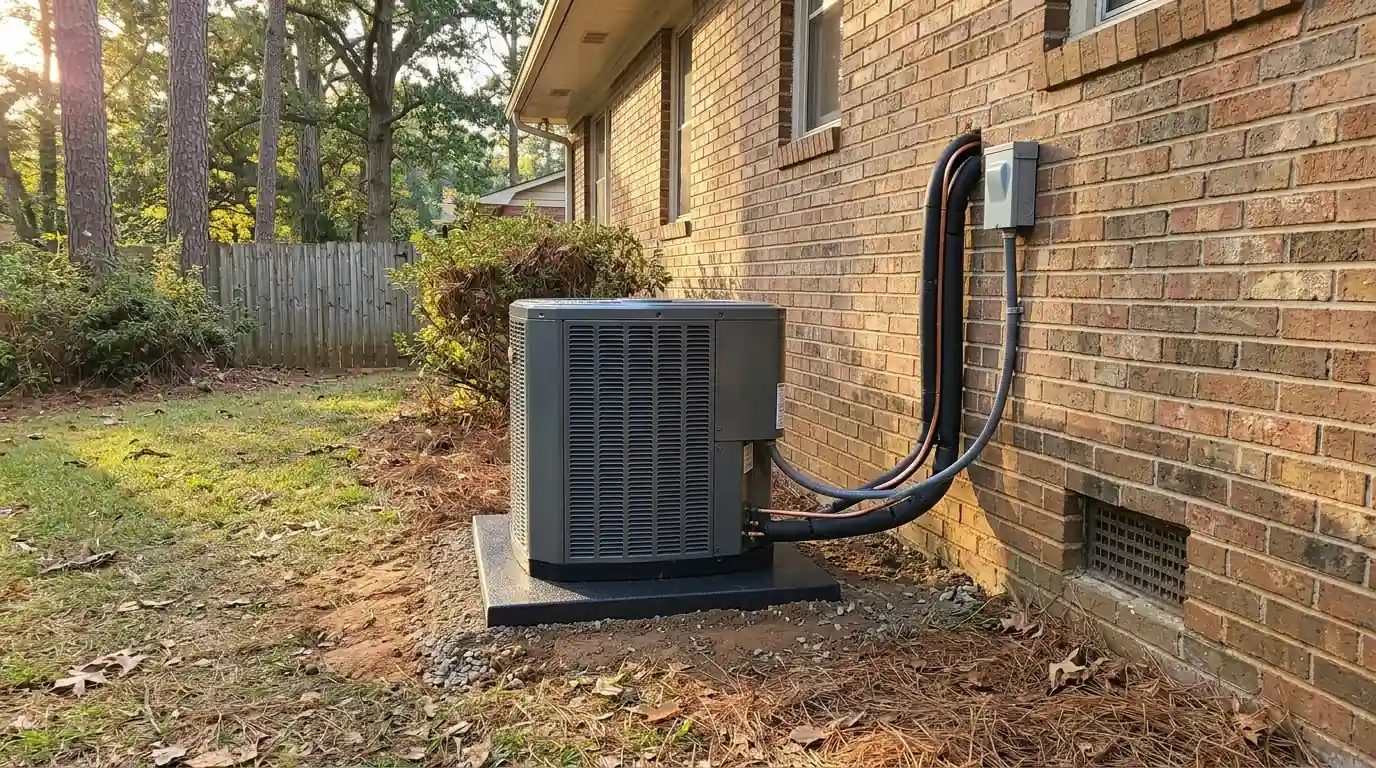
Published planning ranges for AC replacement in Atlanta cover a wide band, and the gap comes from scope more than brand. A condenser swap, a full split system with a new coil and air handler, and a furnace-plus-AC changeout are three different jobs. Tonnage, efficiency tier, duct condition and attic access move the final number most.
Why two published Atlanta ranges disagree so much
The ranges in the table on this page come from national cost publishers, not from us. One reflects AC replacement jobs reported in the Atlanta market. The other is a Georgia estimate built around a complete 3-ton condenser and air handler, which is why it runs noticeably higher.
Read them as planning bands. If a proposal covers only the outdoor unit, the lower Atlanta band is the fair comparison. If it includes a new indoor coil, air handler, line set work and a thermostat, the fuller Georgia figure is closer. When the furnace is being replaced in the same visit, the combined Atlanta range is the better yardstick, because one crew, one permit trip and one startup cover both pieces.
| Job | Published planning range | Source |
|---|---|---|
| Central AC replacement, Atlanta market | $3,354 to $6,637 | How Much Does AC Replacement Cost in Atlanta, Georgia? | Angi |
| 3-ton condenser and air handler, Georgia estimate | $9,800 to $12,800 | How Much Does It Cost to Replace an AC Unit in Georgia? | HVAC.com |
| Furnace and AC replaced together, Atlanta market | $5,005 to $12,513 | How Much Does Furnace and AC Replacement Cost in Atlanta, GA? | Angi |
These are ranges published by the sources linked above, shown for planning. They are not a quote and not our price; the real number depends on what we find at your home.
The line items that push an Atlanta replacement up or down
Two houses on the same street can land far apart. These are the pieces that usually explain it.
- System size in tons. A 2-ton unit for a compact ranch and a 5-ton unit for a large two-story are priced in different worlds, and the size should come from a load calculation, not the old nameplate.
- Efficiency tier. Single-stage, two-stage and variable-speed equipment step up in cost, and the higher tiers pay back fastest over long cooling seasons.
- Indoor coil and air handler. Pairing a new condenser with an old coil saves money up front but can cost capacity and reliability.
- Line set. Existing copper can sometimes be flushed, pressure-tested and reused. A line set buried in a finished wall or kinked in the attic usually means new copper.
- Equipment location. An attic air handler reached through a pull-down ladder takes more labor than a closet or basement unit.
- Electrical and pad work. A new disconnect, a corrected breaker size or a leveled pad adds smaller but real cost.
- Ductwork. Leaky or undersized ducts undercut any new system, and fixing them is its own line.
Condenser only, or the whole split system?
A condenser-only swap looks cheaper on paper, and sometimes it is the right call, for example when the indoor coil is recent and the outdoor unit failed early. The refrigerant rules complicate it now. Since January 1, 2025, newly manufactured residential systems must use refrigerant with a global warming potential of 700 or less, so most new condensers run on R-454B or R-32 and cannot be paired with an R-410A coil.
In May 2026 EPA lifted the planned 2026 installation cutoff for R-410A equipment built before 2025, so some older-refrigerant stock can still go in. That helps a partial swap, but stock is finite. Our plain-language refrigerant guide covers the details, and a full split-system replacement is usually the cleaner long-term choice when the coil is also aging.
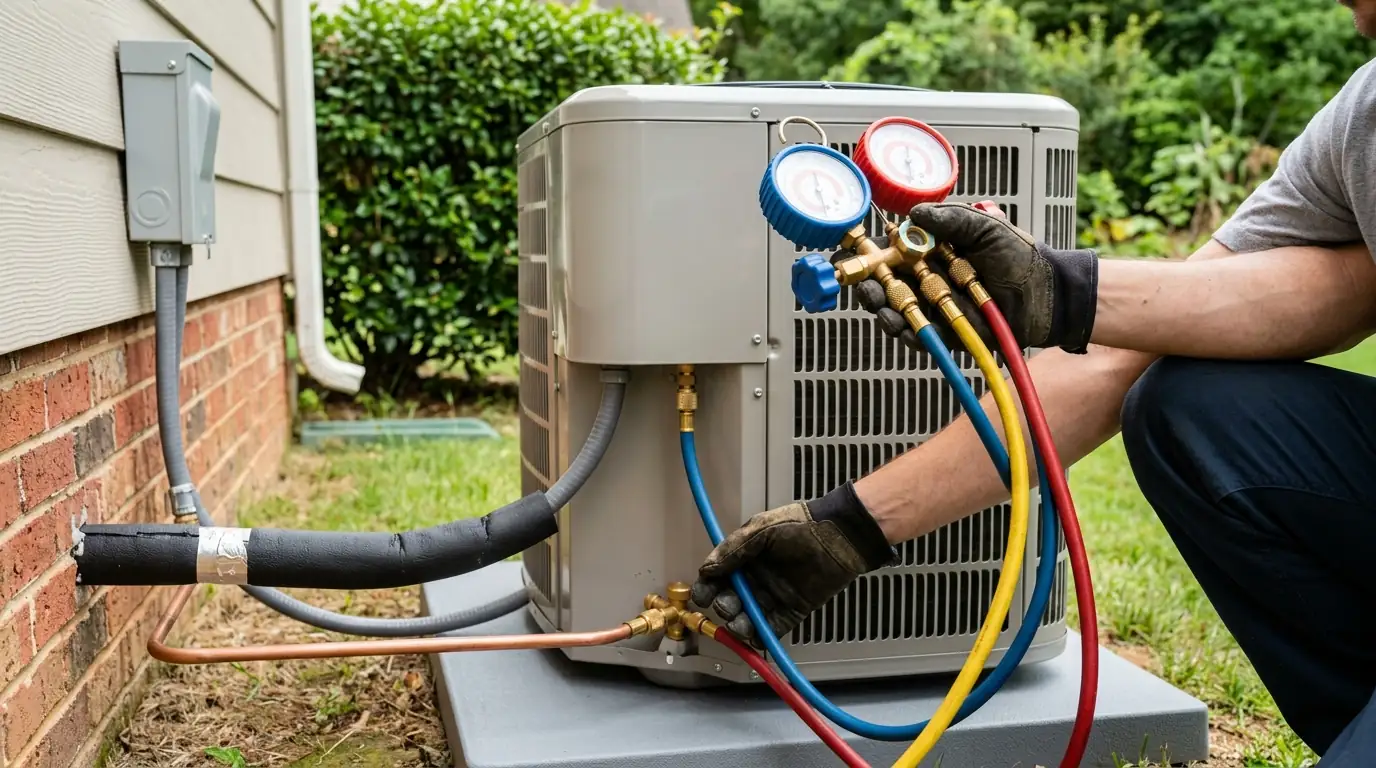
What a sizing visit should measure before equipment is priced
A fair replacement price starts with measurement. We run a room-by-room load calculation, measure static pressure across the existing blower and look at the ducts in the attic or crawl space. Those three readings tell us whether the old tonnage was right and whether the ducts can carry the airflow a new system needs.
Oversizing is the common mistake. An oversized system cools the air fast, shuts off and leaves moisture behind. In Atlanta that matters, because July humidity averages about 74 percent and the dew point sits close to 68F, so pulling water out of the air matters as much as the temperature. If the ducts are leaking into a hot attic, sealing the attic duct joints belongs in the same conversation as the new equipment.
Timing a replacement around a long Atlanta cooling season
Atlanta now averages about 44 days a year at 90F or hotter. In 2026 the city had logged 71 such days by mid-September, and the first arrived in April. A system that limps through spring can fail in the first real stretch of heat, when every contractor is busy and decisions get rushed.
If your unit is still running, spring and fall give you time to compare proposals calmly. Not every failure means replacement, though. A dead capacitor, a burned contactor or a failed fan motor is an ordinary AC repair. The replacement talk usually starts with a failed compressor, a leaking coil on an older system, or repeated refrigerant top-offs.
Comparing two replacement proposals line by line
Put the proposals side by side and check that each one answers the same questions. Missing items are where price gaps hide.
- Model numbers for both the outdoor unit and the indoor coil or air handler
- Tonnage, and whether it came from a load calculation
- Refrigerant type and whether the line set is new or reused
- Thermostat, disconnect and pad included or excluded
- Any duct repair, return upgrade or sealing in scope
- Removal and recovery of the old refrigerant and equipment
- Startup readings recorded: superheat or subcooling, static pressure and temperature split
Questions readers ask about this
The cheaper proposal is usually reusing your existing coil. That can work when the coil is recent and uses the same refrigerant as the new condenser. With most new outdoor units now on R-454B or R-32, an older R-410A coil often cannot be matched, so the coil line is not optional padding.
Not always. Square footage is only one input to the load. Window area, attic insulation, duct leakage and shade change the tonnage a house needs. A well-insulated larger home can need less capacity than a smaller one with leaky attic ducts and west-facing glass.
Yes, as long as the new coil fits the furnace cabinet and the blower can deliver the airflow the new AC needs. The tradeoff is that replacing both later means a second round of labor. Combined replacements in Atlanta tend to cost less than two separate jobs added together.
Often, because Atlanta runs air conditioning for a long season. The bigger gain usually comes from two-stage or variable-speed operation, which also pulls more moisture on humid nights. Our SEER2 guide for the Southeast explains the minimums and where extra efficiency pays.
Each publisher builds its range from different jobs. Some include only the outdoor unit, some a full split system, and some average national prices that ignore local labor. Use them to frame a budget, then compare real proposals by scope and model numbers.
It should. Matching the old nameplate repeats whatever mistake the last installer made, and many older Atlanta systems are oversized. A load calculation looks at insulation, windows, orientation and duct location so the new system runs long enough to dry the air as well as cool it.
Services this article points to
AC Replacement & Installation
AC replacement in Atlanta must meet the Southeast SEER2 minimum, which for most homes means 14.3 SEER2 on a split system under 45,000 Btu/h.
Evaporator Coil Replacement
Evaporator coil replacement in Atlanta makes sense when the indoor coil has leaks that cannot be sealed, usually from formicary corrosion.
Duct Repair & Sealing
Duct repair and sealing in Atlanta mostly means finding air lost before it reaches the rooms: flex duct crushed or kinked in the attic, runs that have slipped off their collars, and joints leaking at every seam.
Furnace Replacement
Furnace replacement in Atlanta starts with choosing between an 80 percent furnace that vents through a metal flue and a 95 percent condensing furnace that vents through PVC and needs a drain.