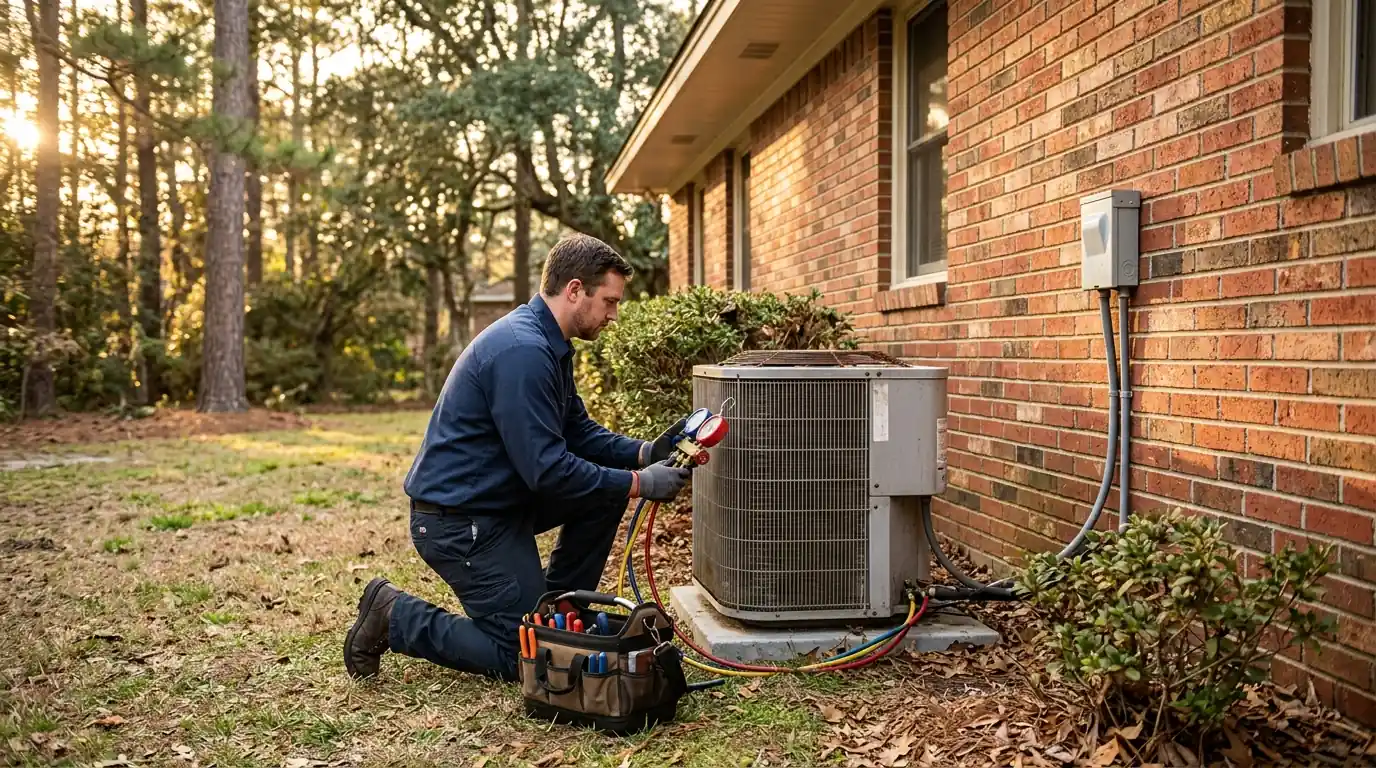
Mini-split repair in Atlanta starts with the error code: the blink pattern on the indoor head points to a sensor, communication or inverter fault before any panel comes off. Many calls turn out to be dirty coils and blower wheels or a badly sloped drain, which a deep clean and drain fix solve without new parts.
Mini-Split Repair & Cleaning: what we check and why it matters
A mini-split packs a lot into a small box. The indoor head holds a coil, a cross-flow blower wheel, a drain pan, thermistors and a board, and it talks to the outdoor unit over a communication wire. The outdoor inverter board drives a variable-speed compressor. When something is off, the system usually stops and posts a code instead of limping along.
The root cause is often the original install: flares that were never torqued, a drain hose sagging behind the wall. If a system is beyond saving, a new mini-split install can usually reuse the same wall opening.
Mini-split symptoms worth a service call
Some are simple cleaning jobs. Others point to refrigerant or electronics.
Blinking operation light
The head is posting a fault code; note the pattern first.
Water running down the wall
Sagging drain hose, clogged pan or a tilted head.
Sour smell at startup
Mold on the blower wheel or coil fins.
Frost on outdoor service valves
Low charge from a leak, often at a flare.
Head runs but the room stays warm
Dirty coil, low charge or a failing thermistor.
Clicking or scraping inside the head
Louver motor or wheel rubbing the housing.
Error codes and blinking lights
Every brand uses its own code table, so a blinking light means nothing until it's matched to the model. Common causes are a failed indoor or outdoor thermistor, a communication fault between units, high discharge temperature from low charge, or an inverter board protecting itself. We read the code, then verify with meters: thermistor resistance, voltage on the communication line, compressor winding checks. A code tells us where to look, not what to replace. Plenty of communication faults turn out to be a loose terminal or a nicked cable outside.
Indoor head leaking water
Water dripping from the head or running down the wall means condensate can't leave fast enough. The drain hose may sag or kink behind the wall, the pan may be clogged with slime, or the head may tilt back toward the wall. Ice on the coil from low airflow or low charge can also melt and overflow. We clear the pan and hose, check slope with a level and test with water before leaving. If a pump serves the head, we check its float and discharge line. Our guide on why drains clog in Atlanta humidity explains the slime.
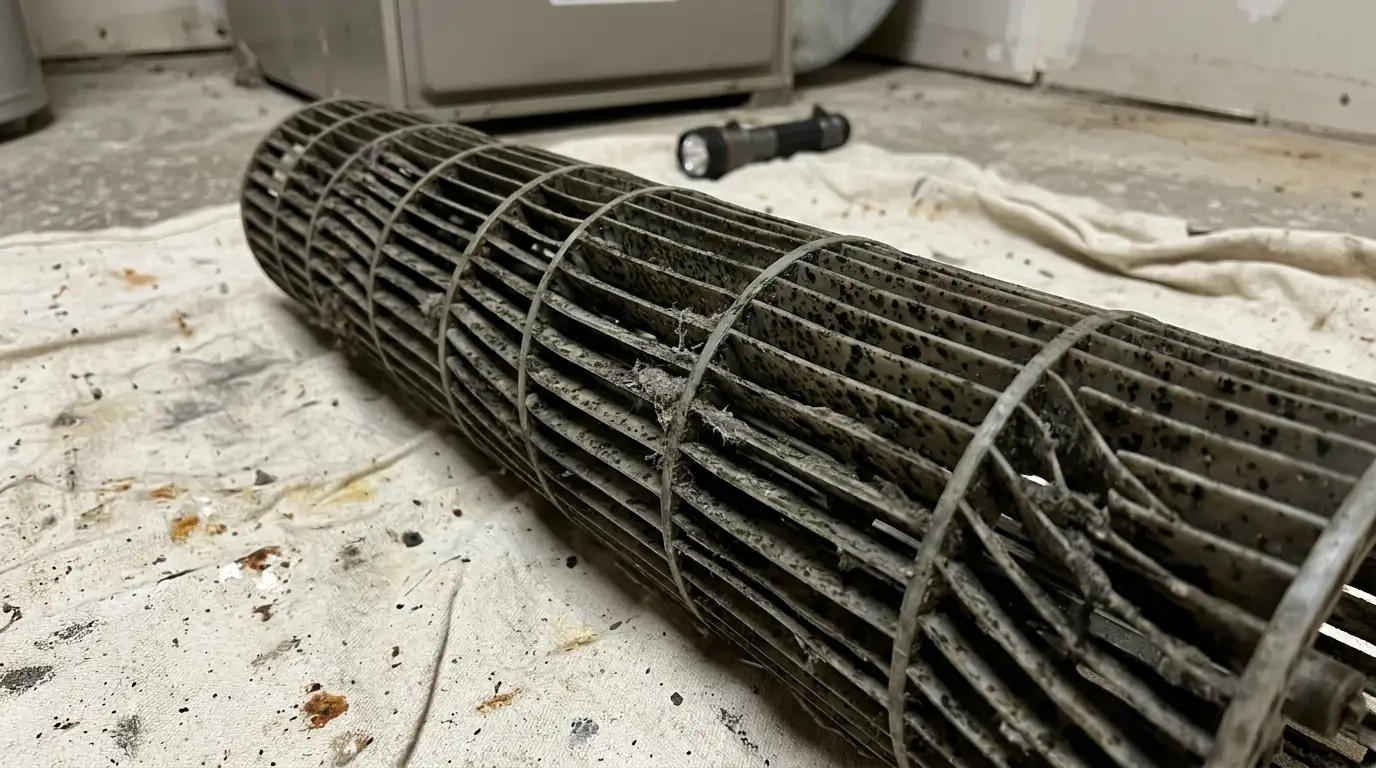
Mold in the blower wheel
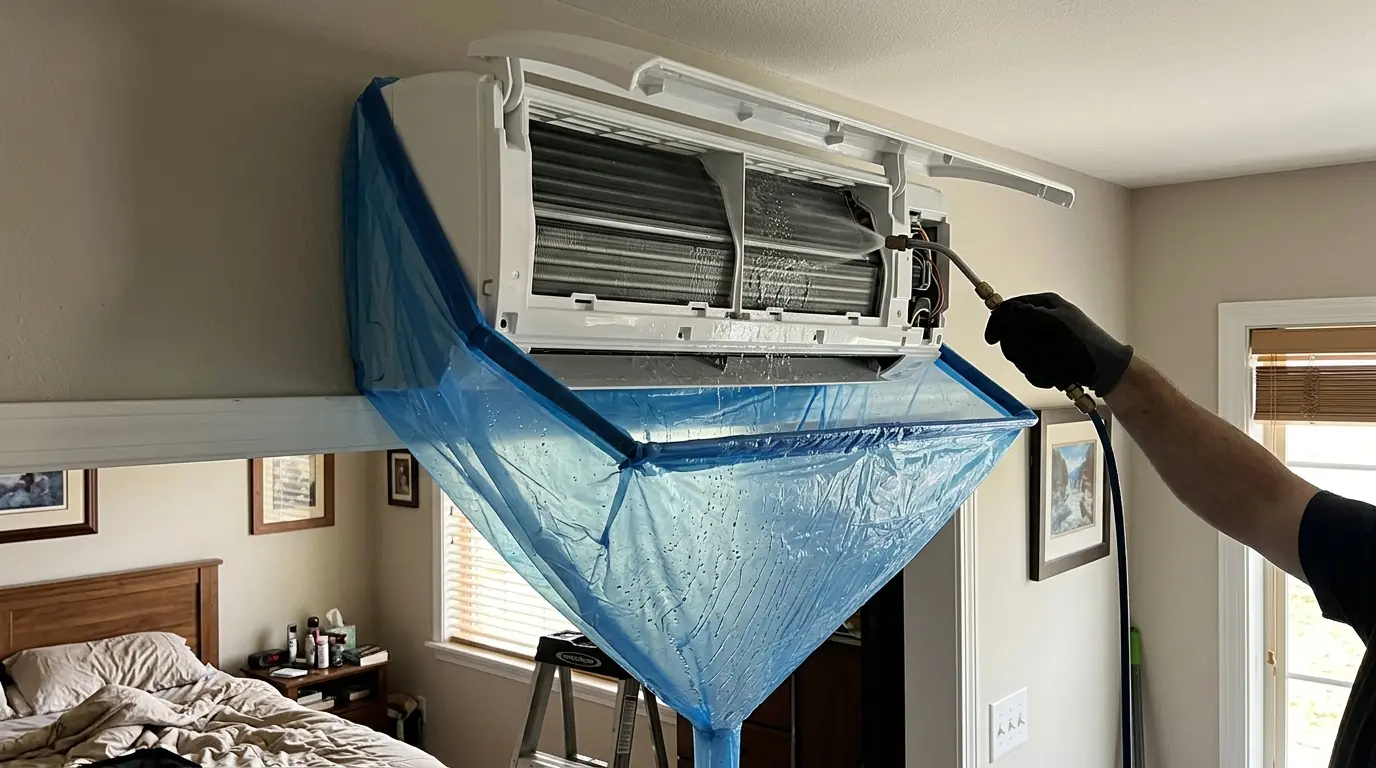
A mini-split's cross-flow wheel sits right behind the coil, and in humid weather it stays damp. Dust sticks and mold grows on the blades. You notice a musty or sour smell at startup and dark specks blowing from the louvers. Spraying cleaner at the front doesn't reach the wheel. A proper clean means taking off the front panel, covering the electronics, and flushing the coil and wheel with a bagged wash kit, or pulling the wheel when buildup is heavy. We check the drain afterward, since washing sends debris into it.
Line set leaks at the flares
Most mini-split leaks show up at flare connections, at the outdoor service valves or at the head. Flares that were under-torqued or made without reaming loosen over many heating and cooling cycles. Symptoms include weak cooling, frost on the outdoor valves and low-charge codes. We find the leak with an electronic detector and bubbles, then recut and reflare the joint or replace a damaged section. Afterward we pressure-test with nitrogen, pull a deep vacuum and weigh in the charge. Our refrigerant leak repair page covers the regulations.
Our mini-split repair visit
Code and history
We record the fault code, model and when the trouble started before touching the unit.
Indoor head check
We inspect the filters, coil, wheel and drain pan, and check that the head hangs level.
Outdoor readings
We check pressures, discharge temperature and inverter board voltages with the system running.
Fix the cause
We clean, reflare, replace a sensor or board, or clear the drain, based on the readings.
Run and confirm
We run heating and cooling, confirm the code clears and pour water through the drain.
Equipment brands we service and install
Most homes around Atlanta run equipment from a handful of major manufacturers. We diagnose, repair and replace Carrier, Trane, Lennox, Goodman, Rheem and Daikin systems, along with the other names below.
Brand names are shown to describe the equipment we work on. We are not claiming a dealer or factory relationship with any manufacturer.
Atlanta homes, weather and this job
Sylvan Hills was platted in 1922, and most of its houses went up between the 1920s and the 1950s, well before central air was standard. Homes from that era that never got full ductwork often lean on ductless heads for a bedroom, an addition or a whole floor. Those heads run hard through a long Atlanta cooling season, so drain slime and blower wheel buildup show up sooner than owners expect. We bring wash kits and flaring tools to mini-split calls in Sylvan Hills and nearby neighborhoods.
What you can clean yourself, and what needs tools
Mini-split filters are made for owners to clean. The refrigerant side is federally regulated and the boards carry line voltage.
| Task | What you can do | Where a technician comes in |
|---|---|---|
| Mesh filters | Rinse and dry every few weeks in heavy use | Coil and wheel wash when filters aren't enough |
| Fault codes | Note the blink pattern and power-cycle once | Confirm the code with meter readings |
| Drain overflow | Check the outside end of the hose | Clear the pan, fix slope or service the pump |
| Refrigerant leaks | Not a homeowner job under federal rules | Leak search, reflare, vacuum and weighed charge |
What mini-split repairs typically cost
Published planning ranges cover routine single-zone repairs. A failed compressor or sealed-system part sits above that range and changes the repair-or-replace math.
| Job | Published planning range | Source |
|---|---|---|
| Mini-split repair, single zone | $200 to $1,200 | Mini Split Running, Service and Repair Cost 2026 - PICKHVAC |
| Refrigerant leak repair | $200 to $1,500 | How Much Does AC Repair Cost? (2026) - HomeGuide |
What moves the number
- Cleaning versus a replacement part
- Indoor or outdoor board failure
- Leak location and line set access
- Number of heads on the system
- Parts availability for the brand
These are ranges published by the sources linked above, shown for planning. They are not a quote and not our price; the real number depends on what we find at your home.
Mini-Split Repair & Cleaning questions from Atlanta homeowners
Some faults are protective and reset on their own, such as high discharge temperature on a hot afternoon or a brief communication drop. If the same code keeps returning, the condition behind it is still there. Write down the pattern and timing; that history often points straight at a sensor or charge problem.
It cleans the face of the coil but doesn't reach the blower wheel, where most of the smell lives, and leftover foam can clog the drain. A bagged wash kit with a pump sprayer and the electronics covered is the right way to do it.
Heads that run most of the year in humid weather usually need a coil and wheel wash every year or two, sooner with pets or near a kitchen. Clean filters slow buildup but don't stop it. A musty smell at startup is the clearest sign it's due.
Often, if the system is fairly young and parts are available. An inverter board costs more than most repairs but far less than a new system. On an older unit with other problems, such as a leaking coil, replacement can make more sense. We give you both options.
That's usually normal. In heat mode the outdoor coil gets cold, collects frost, and the unit runs defrost to melt it, so water drains out the base. It becomes a problem when it refreezes into an ice mound under the unit, which a raised stand or base heater fixes.
Yes, within the maker's length and height limits. Extra length may need more refrigerant weighed in, and each new joint must be pressure-tested and vacuumed. Where the route allows, we'd rather run one new continuous line set than add couplings.
Updated October 2026