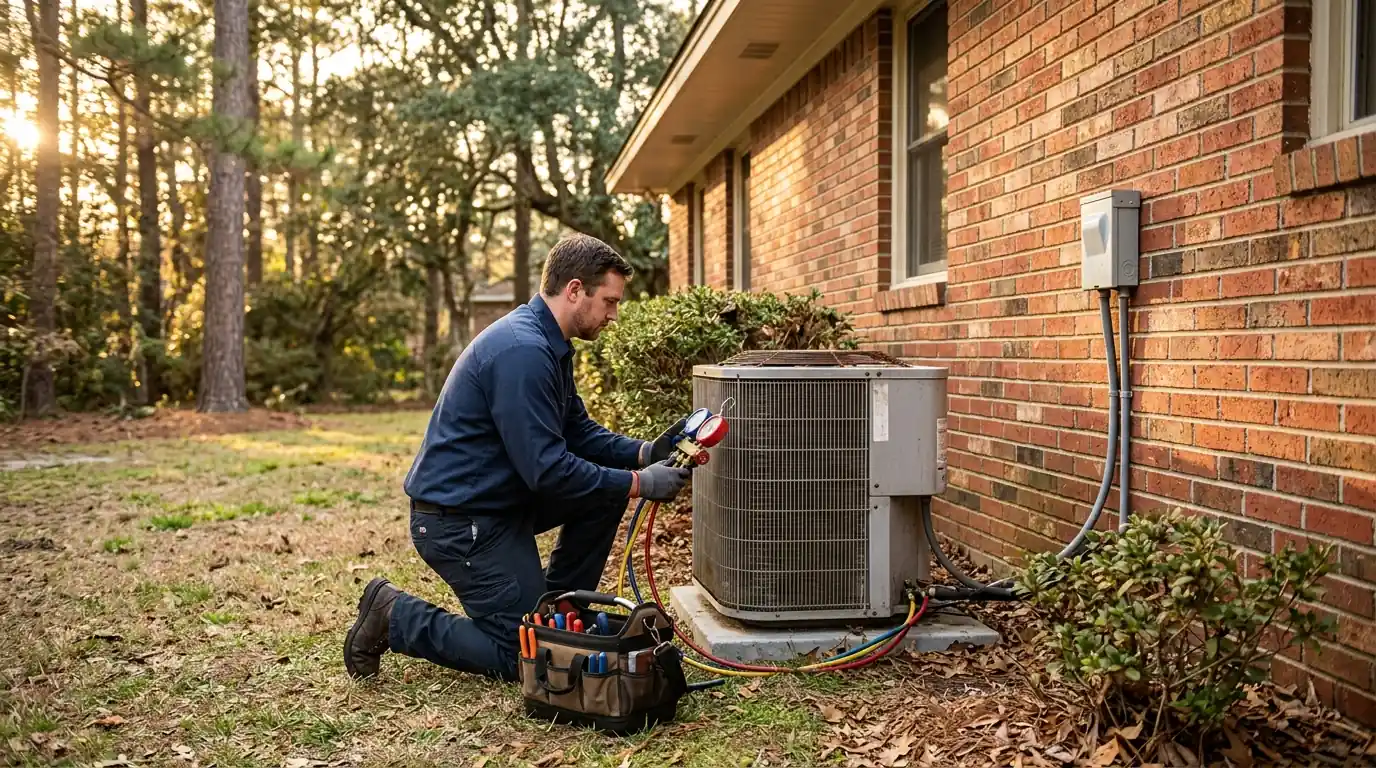
Heat pump installation in Atlanta must meet federal minimums of 14.3 SEER2 and 7.5 HSPF2 for split systems, and new equipment uses lower-GWP refrigerants such as R-454B. Sizing comes from a load calculation for both heating and cooling, with backup heat strips sized for the coldest nights.
How we handle heat Pump Installation in Atlanta
Atlanta is good heat pump country. Summers are long and winters are mild enough that a heat pump can carry most of the heating load. The installation decisions are sizing, the backup heat plan, and whether a single-stage, two-stage or variable-speed unit fits your house and budget.
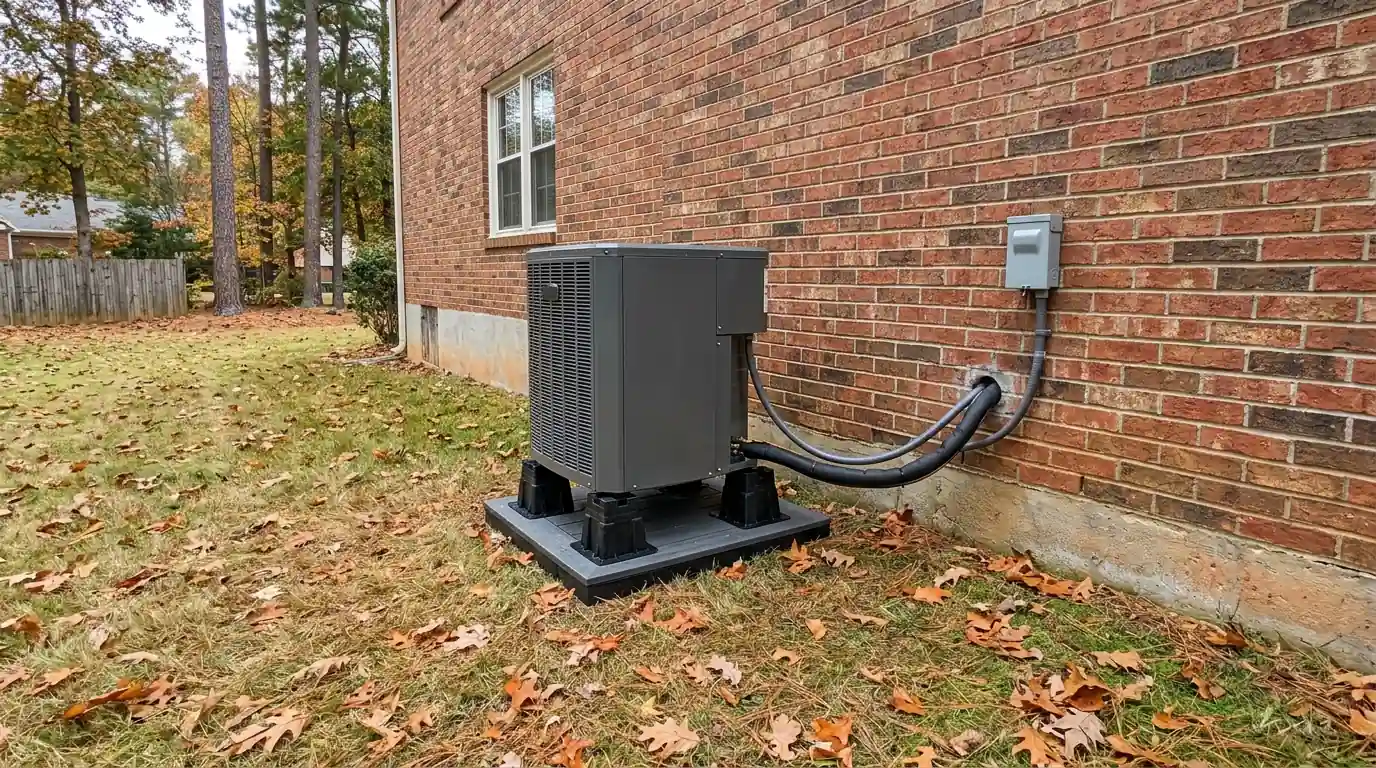
A heat pump replaces the AC condenser and pairs with an air handler, or with a gas furnace as a dual fuel system. If you are weighing gas against electric heat, read our guide to heat pumps and gas furnaces in Georgia before deciding.
Single-stage or variable-speed heat pump?
The main choice once sizing is set.
| Single-stage | Variable-speed | |
|---|---|---|
| Upfront cost | Lower | Higher |
| Humidity control | Basic | Stronger with long low-speed runs |
| Cold-weather capacity | Drops sooner | Holds more at low temperatures |
| Thermostat needs | Standard heat pump thermostat | Often a communicating control |
Published heat pump installation ranges
These planning ranges come from published sources and differ widely in what they count. None is our price.
| Job | Published planning range | Source |
|---|---|---|
| Heat pump installation, Atlanta | $3,080 to $5,492 | How Much Does a Heat Pump Cost in Atlanta, GA? | Angi |
| Air-source heat pump, national installed | $10,000 to $25,000+ | How Much Does a Heat Pump Cost? (2026) - HomeGuide |
What moves the number
- Tonnage and heating load
- Single-stage, two-stage or variable-speed
- New air handler or reusing the existing one
- Electrical panel and circuit upgrades
- Line set replacement and ductwork corrections
These are ranges published by the sources linked above, shown for planning. They are not a quote and not our price; the real number depends on what we find at your home.
Replacing an older heat pump
Most heat pumps we replace are fifteen years old or more, many running R-22 or early R-410A. A like-for-like swap keeps the line set location and the air handler footprint, but we still check whether the old system was sized correctly and whether the air handler can stay. A new outdoor unit with an old air handler rarely performs as rated, because the coil, metering device and blower need to match. We recover the old refrigerant, flush or replace the line set, and size the backup heat strips to the house rather than to the old equipment.
Switching from an electric furnace
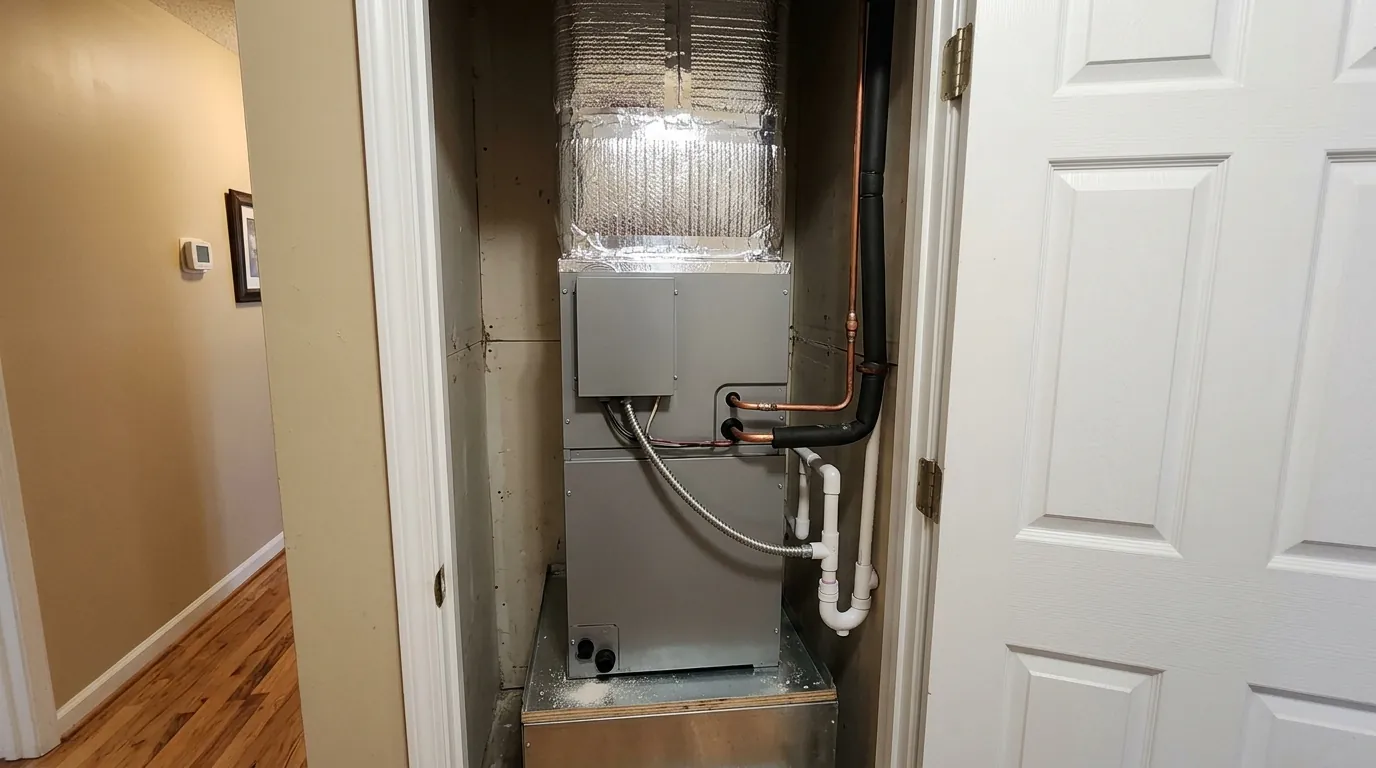
If your home heats with an electric furnace or air handler with strips alone, a heat pump can cut winter electric use substantially, because it moves heat rather than generating it with resistance coils. The existing ductwork usually stays. The work involves adding an outdoor unit, a matched air handler with a coil, a line set, and a thermostat that stages the heat pump first and the strips second. We also check the electrical panel, since some homes need a new circuit or breaker sizing for the outdoor unit.
Variable-speed heat pumps
Variable-speed or inverter heat pumps change compressor speed to match the load instead of cycling on and off. In Atlanta's humid summers, that means longer, slower runs that pull more moisture from the air. In winter, many models hold more capacity at low outdoor temperatures, so heat strips run less. They cost more and need a compatible thermostat or communicating control. They make the most sense in homes with comfort complaints, two stories or high electric bills. Single-stage units remain a sound choice for simple layouts.
Load calculation and sizing
Sizing a heat pump means balancing two loads. Size it for heating and it may be too large for cooling, leaving the house clammy. Size it for cooling and it may need more backup heat on cold nights. A Manual J calculation gives both loads, and the balance point, the outdoor temperature where the heat pump alone stops keeping up, tells us how much strip heat to plan. In Atlanta, sizing slightly toward cooling with good backup heat usually works well. Variable-speed units narrow the tradeoff.
What a heat pump installation should cover
Heat pump bids differ in scope. Confirm each item.
- A load calculation for both heating and cooling
- Backup heat strips sized to the balance point
- An AHRI-matched outdoor unit and air handler
- A new or properly flushed line set
- The outdoor unit raised on risers or a pad for defrost drainage
- Nitrogen pressure test and deep vacuum before charging
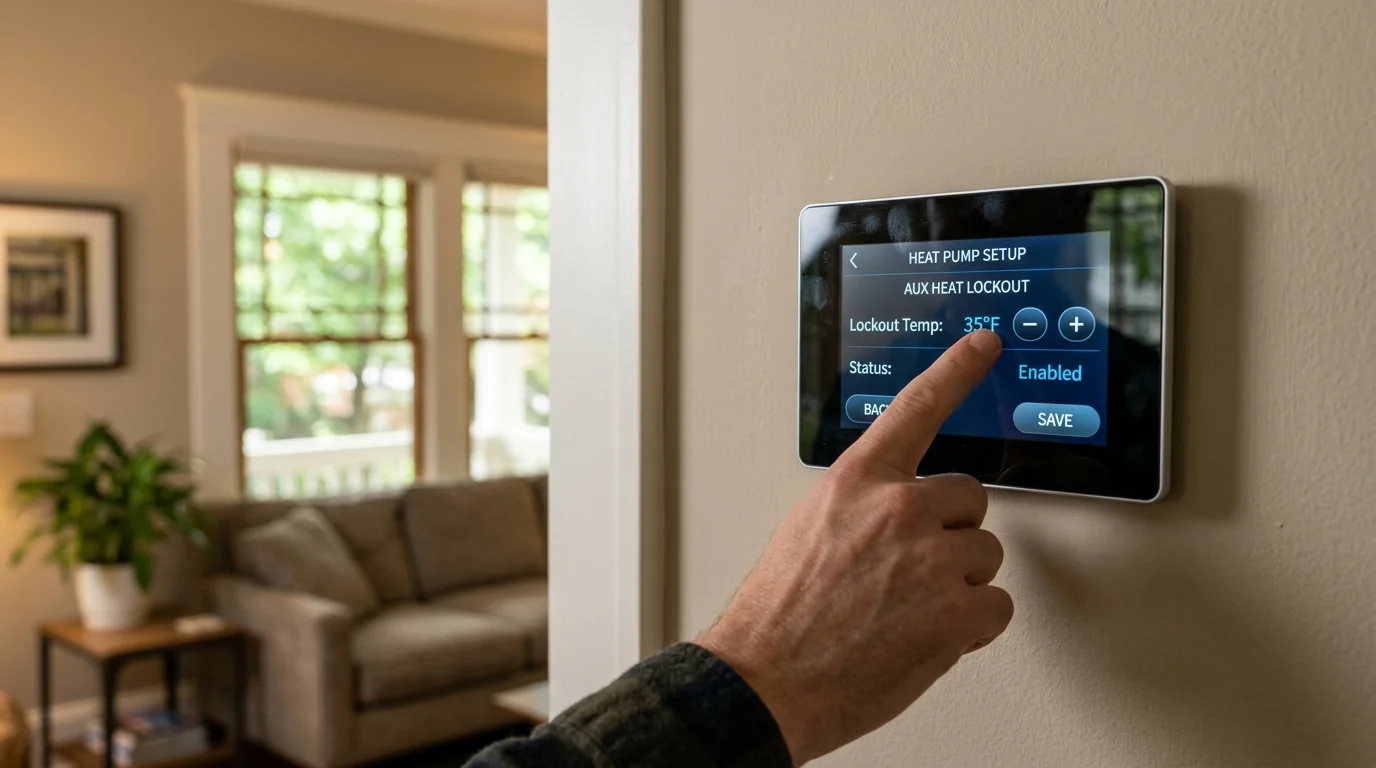
- A thermostat wired for heat pump staging and aux lockout
- Operation verified in both heating and cooling modes
How we plan and install a heat pump
Run heating and cooling loads
A Manual J gives both loads and the balance point for backup heat sizing.
Choose staging and refrigerant
We compare single-stage, two-stage and variable-speed options with their refrigerant types.
Install the matched set
Outdoor unit, air handler, line set and drain go in with brazing under nitrogen.
Evacuate and charge
A deep vacuum and a weighed charge are followed by checks in both heating and cooling.
Set defrost and aux heat
Thermostat staging and aux heat lockout are set so strips only run when truly needed.
Equipment brands we service and install
Most homes around Atlanta run equipment from a handful of major manufacturers. We diagnose, repair and replace Carrier, Trane, Lennox, Goodman, Rheem and Daikin systems, along with the other names below.
Brand names are shown to describe the equipment we work on. We are not claiming a dealer or factory relationship with any manufacturer.
Where this shows up around Atlanta
New equipment rules shape every heat pump installed in Georgia now. Split-system heat pumps must meet at least 14.3 SEER2 and 7.5 HSPF2, a national minimum since January 1, 2023. Under the EPA Technology Transitions rule, new residential systems must use refrigerant with a GWP of 700 or less, with a manufacture and import compliance date of January 1, 2025, which is why most new heat pumps now ship with R-454B or R-32. Systems built entirely before that date can still be installed.
Heat Pump Installation questions from Atlanta homeowners
For most of the winter, yes. On the coldest nights it gets help from backup strips or a gas furnace. A properly sized heat pump with the aux heat set correctly keeps strip use low. Variable-speed models narrow the gap further.
A replacement in the same location usually takes one day. Converting from an electric furnace or adding a new air handler can add a day, especially if electrical work or duct changes are needed. We set up and test both modes before we leave.
Yes. This is a dual fuel system. The heat pump handles mild weather and the furnace takes over in the cold, switching at a balance point set on the thermostat. Our dual fuel systems page covers it in detail.
Most new heat pumps use R-454B or R-32, both A2L refrigerants with lower global warming potential. Some remaining R-410A units built before 2025 can still be installed. We explain the service and parts outlook for each before you choose.
Usually, if the ducts are sized and sealed properly. Heat pump air is cooler than furnace air, so leaky or undersized ducts are more noticeable. We check static pressure during planning and may recommend duct repair and sealing for even airflow.
A heat pump runs year-round, so it benefits from a maintenance visit each spring and fall. That covers the coil, refrigerant readings, defrost controls and backup heat. Our heat pump maintenance page lists what each visit includes.
Updated October 2026