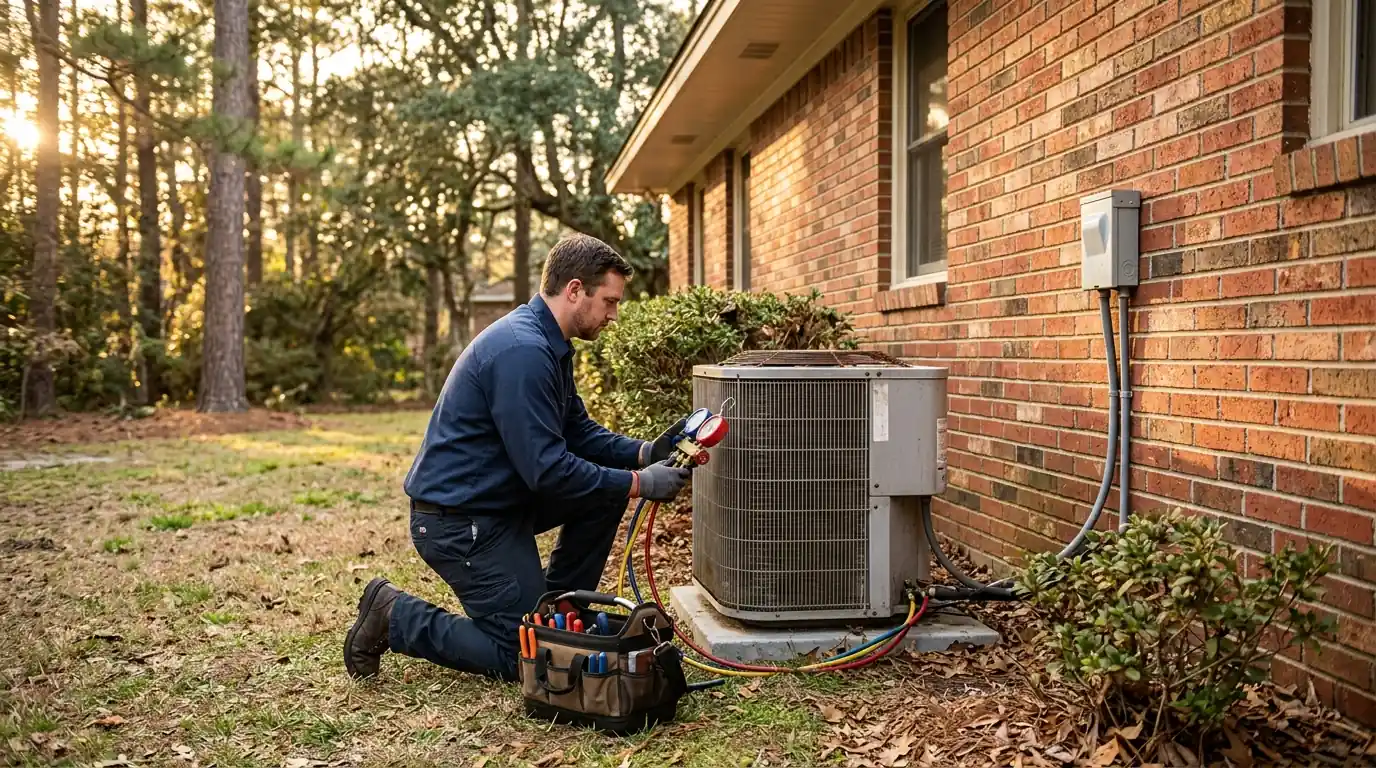
A UV light in an Atlanta AC system does its real work aimed at the wet evaporator coil and drain pan, where mold and bacterial film grow every cooling season. It does little to air rushing past at duct speed. In-duct purifiers and bipolar ionization units target airborne particles and odors, each with tradeoffs we explain before installing anything.
How we handle UV Lights & Air Purifiers in Atlanta
Every summer the evaporator coil runs wet for months. Dust that slips past the filter sticks to the damp fins, and a film of mold and bacteria builds there and in the drain pan. That film restricts airflow, feeds condensate line clogs, and is usually the source of the smell at startup.
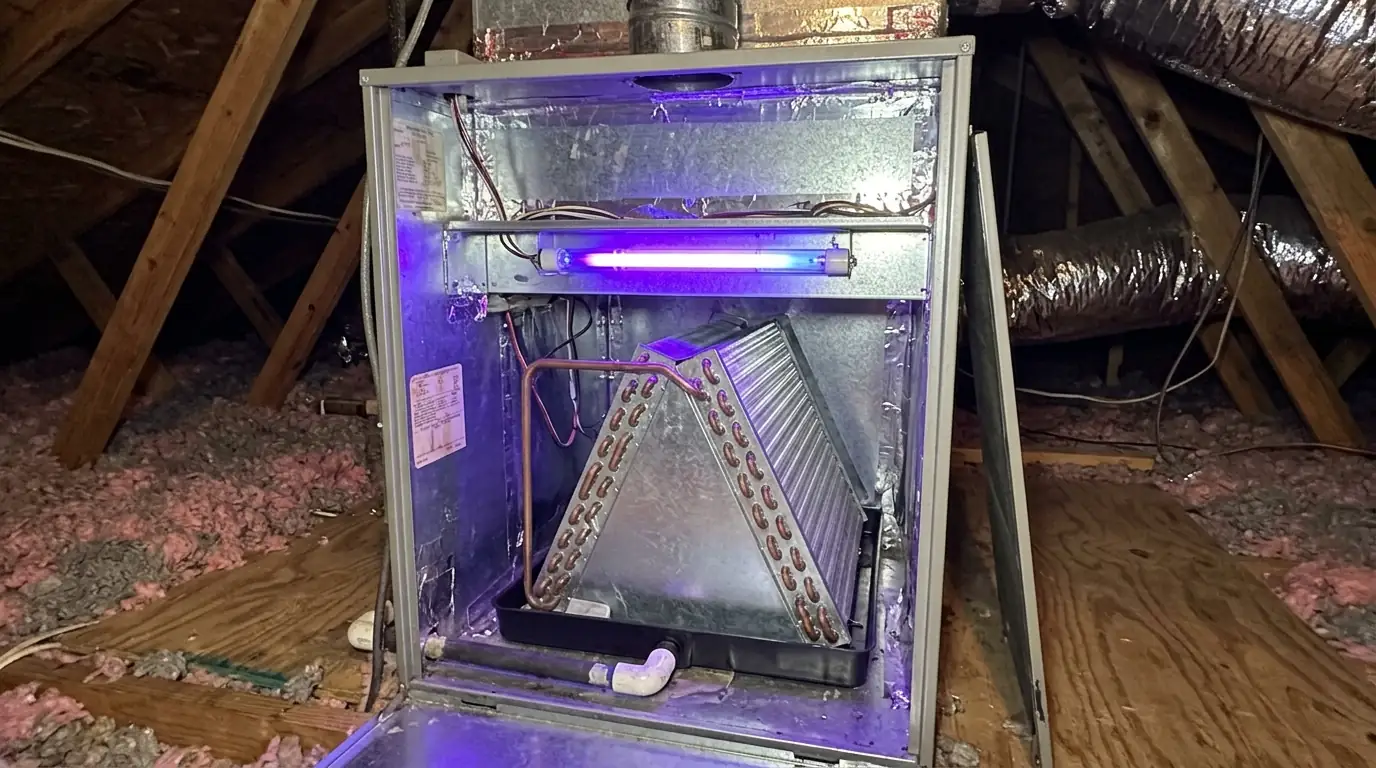
Air cleaning products fall into a few groups that do different jobs. A coil-facing UV-C lamp keeps surfaces clean. In-duct purifiers with media or photocatalytic stages capture or break down particles and odors. Ionizers charge particles so they clump. None of them replaces a good filter, so we usually look at whole-home filtration at the same visit.
Coil UV lamp or bipolar ionizer: which job do you need done?
These two products are often sold for the same problem. They are not interchangeable.
| UV-C lamp at the coil | Bipolar ionization unit | |
|---|---|---|
| Main job | Keeps the wet coil and pan clean | Clumps airborne particles for the filter |
| Airflow resistance | None | Very little |
| Ongoing upkeep | Lamp replacement on a schedule | Periodic emitter cleaning |
| Watch for | UV damage to nearby plastics | Ozone output; ask for UL 2998 data |
Planning range for a coil UV light
The range below covers a typical UV-C coil light installed, from a published source rather than our pricing. In-duct purifiers vary too much by type for a single range.
| Job | Published planning range | Source |
|---|---|---|
| UV light installed at the coil | $200 to $1,000 | How Much Do UV Lights Cost For HVAC Systems? - HomeServe |
What moves the number
- Single or dual lamp fixture
- Mounting location in the cabinet or plenum
- Interlock wiring to the access panel
- Purifier type and media size
- Replacement lamp or media schedule
These are ranges published by the sources linked above, shown for planning. They are not a quote and not our price; the real number depends on what we find at your home.
UV lights at the coil
If you see dark growth on the coil face, a slimy drain pan or recurring drain line clogs, a UV-C lamp aimed at the coil is the most direct fix. We mount the lamp in the plenum or air handler cabinet so it bathes the wet surfaces around the clock, wire it to a panel interlock so it shuts off when the cabinet opens, and shield plastic parts that UV breaks down over time. Lamps lose output with age, so they need replacing on schedule even while they still glow. It makes sense on any system with a coil in a hot attic or damp crawl space.
In-duct air purifiers
These sit in the return duct or filter rack and treat the air moving through. Some pair a deep media filter with a carbon stage for odors; others use UV with a catalyst to break down certain gases. You would consider one when cooking smells, pet odors or smoke linger after the filter has already been upgraded. The tradeoff is pressure drop and upkeep: every added stage adds resistance the blower has to overcome, so we measure static pressure before and after installing and set a replacement schedule for the media, lamps or catalyst.
Bipolar ionization units
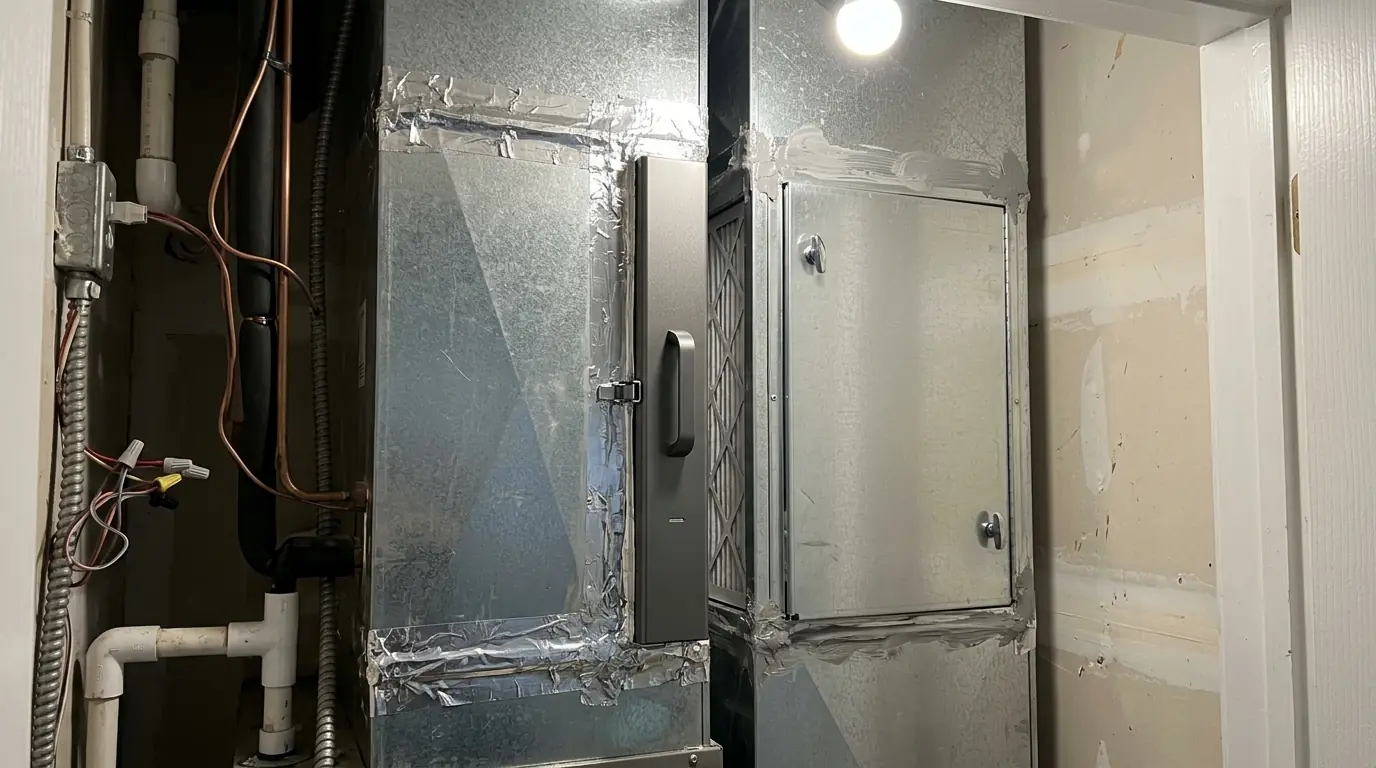
Ionizers mount in the duct near the blower and release charged ions that make small particles cluster, so the filter catches them more easily. They draw little power and add almost no airflow resistance, which is the appeal. The tradeoffs are real: independent results have been mixed, lab chamber numbers do not always carry over into a house, and some designs give off small amounts of ozone. If you are weighing one, we look for ozone testing under the UL 2998 standard and pair the unit with a filter that can actually trap the clumped particles.
UV and purifier upkeep you can handle, and the parts to avoid
Some upkeep is fine for a homeowner. Direct UV-C exposure is not: a few seconds can burn eyes and skin.
| Task | What you can do | Where a technician comes in |
|---|---|---|
| Changing the HVAC filter | Yes, on the interval for your filter depth | When the rack sits on a tight attic platform |
| Replacing a UV lamp | Only with power off at the disconnect | When the lamp sits inside the coil plenum |
| Cleaning an ionizer emitter | Light brushing if the manual allows it | Output checks or wiring repairs |
| Cleaning a coated coil | No, cleaners and fin damage are easy to get wrong | Coil cleaning, pan treatment and drain flush |
From a musty smell to a cleaner coil
Look at the coil and pan
We open the cabinet and check the coil face, drain pan and blower wheel for film, rust and standing water.
Clean before adding anything
A lamp keeps a clean coil clean, so we clean the coil, treat the pan and flush the drain first when they need it.
Match the device to the goal
Surface growth calls for a coil lamp; odors and fine particles call for media, carbon or a purifier stage.
Mount, shield and interlock
We position the lamp on the coil, shield nearby plastics and wire the safety interlock to the panel.
Label the service date
We mark the install date on the cabinet so you know when the lamp or media is due.
Equipment brands we service and install
Most homes around Atlanta run equipment from a handful of major manufacturers. We diagnose, repair and replace Carrier, Trane, Lennox, Goodman, Rheem and Daikin systems, along with the other names below.
Brand names are shown to describe the equipment we work on. We are not claiming a dealer or factory relationship with any manufacturer.
Where this shows up around Atlanta
Homes near the airport raise a specific indoor air question. Hartsfield-Jackson's Noise Insulation Program treats eligible houses built before April 10, 1985 inside the 65 dB DNL contour, in places such as College Park, East Point and Hapeville, with new windows and doors, air conditioning modifications and exhaust fans, and College Park leaders want another round of funding. A quieter, tighter house recirculates more of its own air, so a wet coil that grows film or a lingering odor matters more there, and a coil lamp or purifier earns its place.
UV Lights & Air Purifiers questions from Atlanta homeowners
Only a small share. Air passes a duct lamp in a fraction of a second, too fast for a full dose. Coil-facing lamps work because the coil sits under the light all day. For airborne particles, filter efficiency and air changes matter more than a lamp.
Most HVAC UV-C lamps are rated for roughly a year of continuous use before output drops, even though they keep glowing. We note the install date on the cabinet so you know when the next one is due.
UV-C breaks down some plastics, wire insulation and flex duct jackets in its direct path. We aim lamps at the coil, add shielding where needed, and keep the light off plastic drain fittings when the cabinet layout allows.
Some do. Designs vary, and ozone irritates lungs. Ask for results showing the unit passed UL 2998 zero-ozone validation. If a product cannot show that, we do not recommend running it in an occupied house.
Pollen grains are large, and a good filter catches them easily, so filtration does most of the work. A purifier helps more with fine particles and odors. If spring is your main problem, start with our pollen season filter guide.
Usually water sits on the coil and in the pan between cycles and grows a film. Cleaning the coil, clearing the drain and adding a coil lamp tends to stop it. A leaky return duct in a damp crawl space can cause the same smell.
Updated October 2026