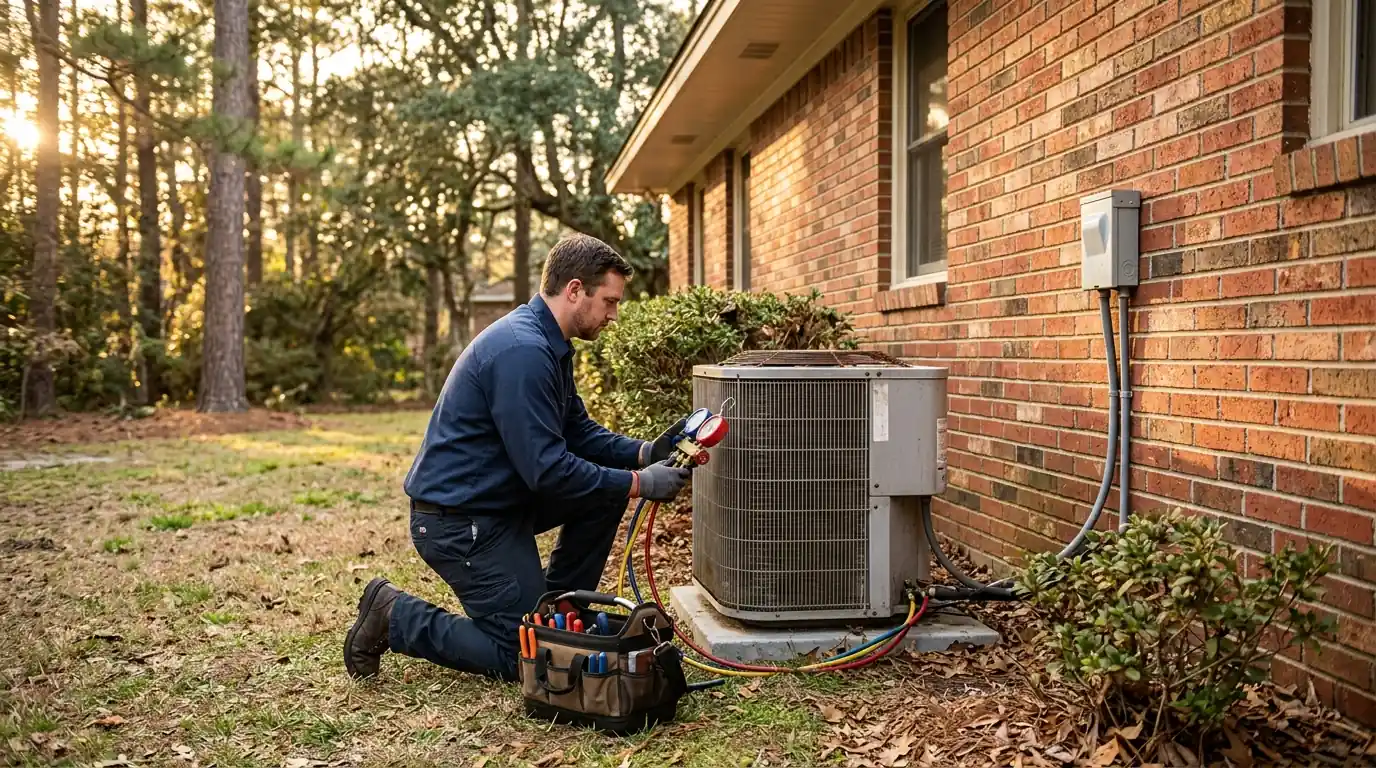
AC repair in Atlanta usually traces back to one of four things: a failed capacitor, a stuck contactor, a dead condenser fan motor, or an evaporator coil frozen by poor airflow or low charge. We test each with meters and gauges before replacing anything, so you pay for the part that actually failed.
What AC Repair involves on a southwest Atlanta call
A system that runs without cooling has a short list of causes. A weak capacitor is a small part, a compressor is not, and a coil frozen by a choked filter may need only a thaw and a new filter.
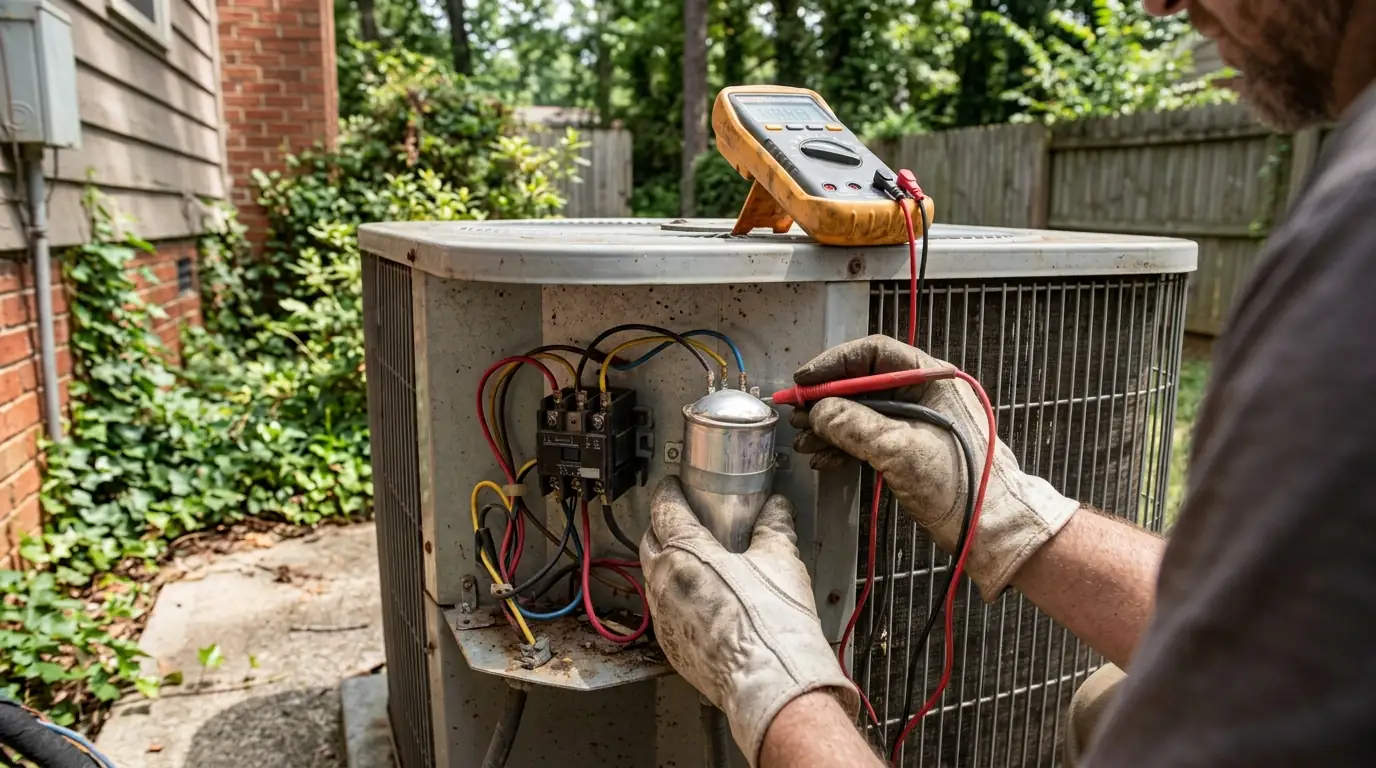
On a repair visit we read voltage at the contactor, test the capacitor in microfarads, check fan motor amp draw and put gauges on for superheat and subcooling. If the charge is low, topping it off without finding the leak only buys a few weeks, so we will point you toward tracking down the leak itself.
Signs your AC needs a repair visit
These show up before the system stops outright.
Humming with no fan
The outdoor unit buzzes but the top fan is still, often a capacitor or fan motor.
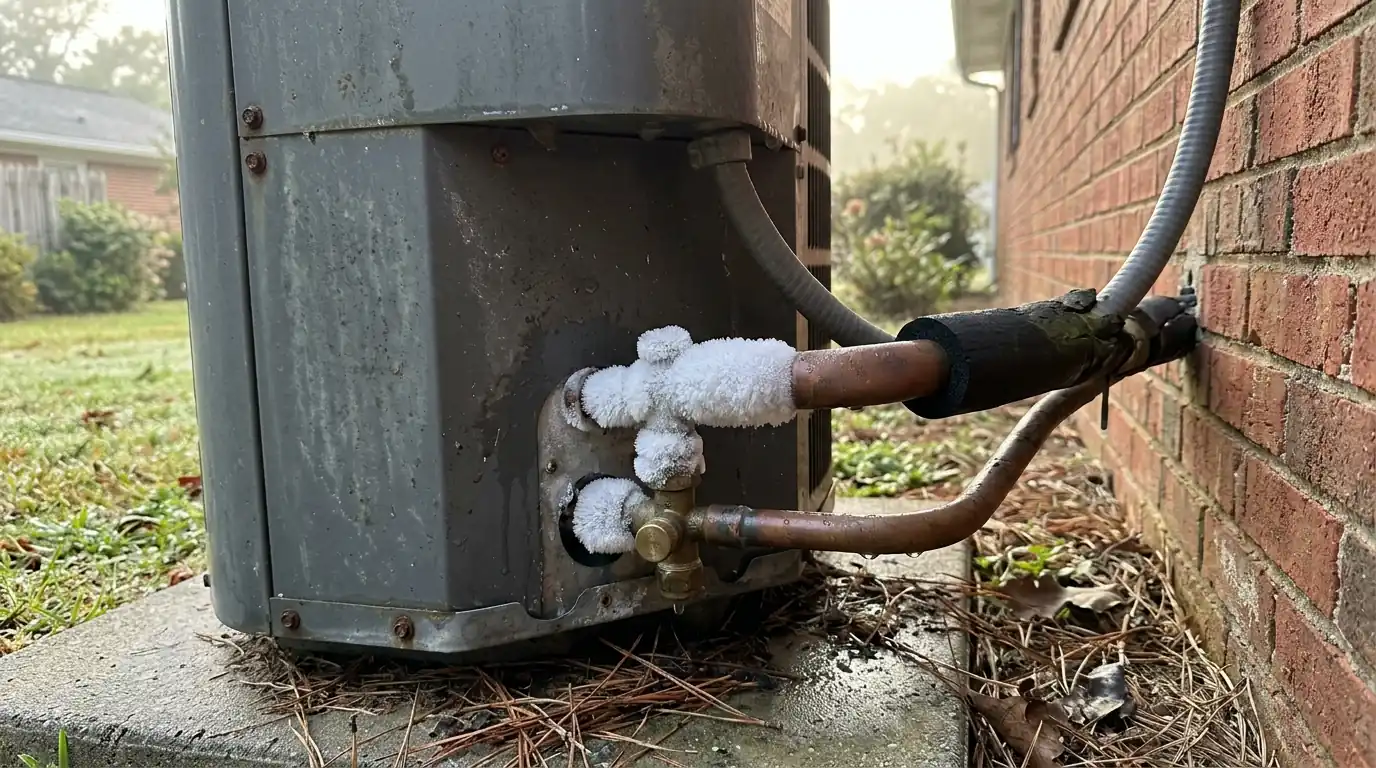
Ice on the suction line
Frost on the larger insulated copper line points to low airflow or low charge.
Short bursts of cooling
The condenser starts, runs a few minutes and stops, a sign of an overload trip.
Lukewarm registers
Air moves but never feels cold, even after an hour.
Clicking with no start
Repeated clicks at the outdoor unit can mean a contactor or control fault.
A breaker that trips again
A repeat trip after reset suggests a short or a hard-starting compressor. Leave it off.
How long a typical AC repair takes
Most capacitor, contactor and fan motor repairs finish in one visit when the part is in stock, usually an hour or two of work. A frozen coil adds several hours of thaw time before pressures read accurately. Leak searches and compressor jobs take longer and may need a second visit for parts. If someone at home is elderly, very young or unwell, tell us when you call so we can talk through keeping one room cool meanwhile.
AC not cooling or blowing warm air
Warm air at the registers usually means the outdoor unit is not doing its half of the job. If the condenser fan and compressor are both off, the cause is often electrical: a tripped breaker, a pulled disconnect, a blown low-voltage fuse or a contactor that never closed. If the fan spins but the compressor does not, the run capacitor or the compressor is suspect. If everything runs and the air is only cool, we look at the filter, the indoor coil and refrigerant pressures.
Capacitor and contactor failures
A failing run capacitor shows up as a condenser that hums, clicks or starts slowly while the compressor strains. Cabinet heat and long cooling seasons shorten capacitor life. We measure microfarads with a meter rather than judging by a bulged top, because a capacitor can test weak and still look normal. Contactors fail differently: pitted contacts may never close, leaving the outdoor unit dead, or weld shut, so the condenser runs with the thermostat off. Both are quick replacements once confirmed, and we look for the reason, such as low voltage or ants packed into the contacts.
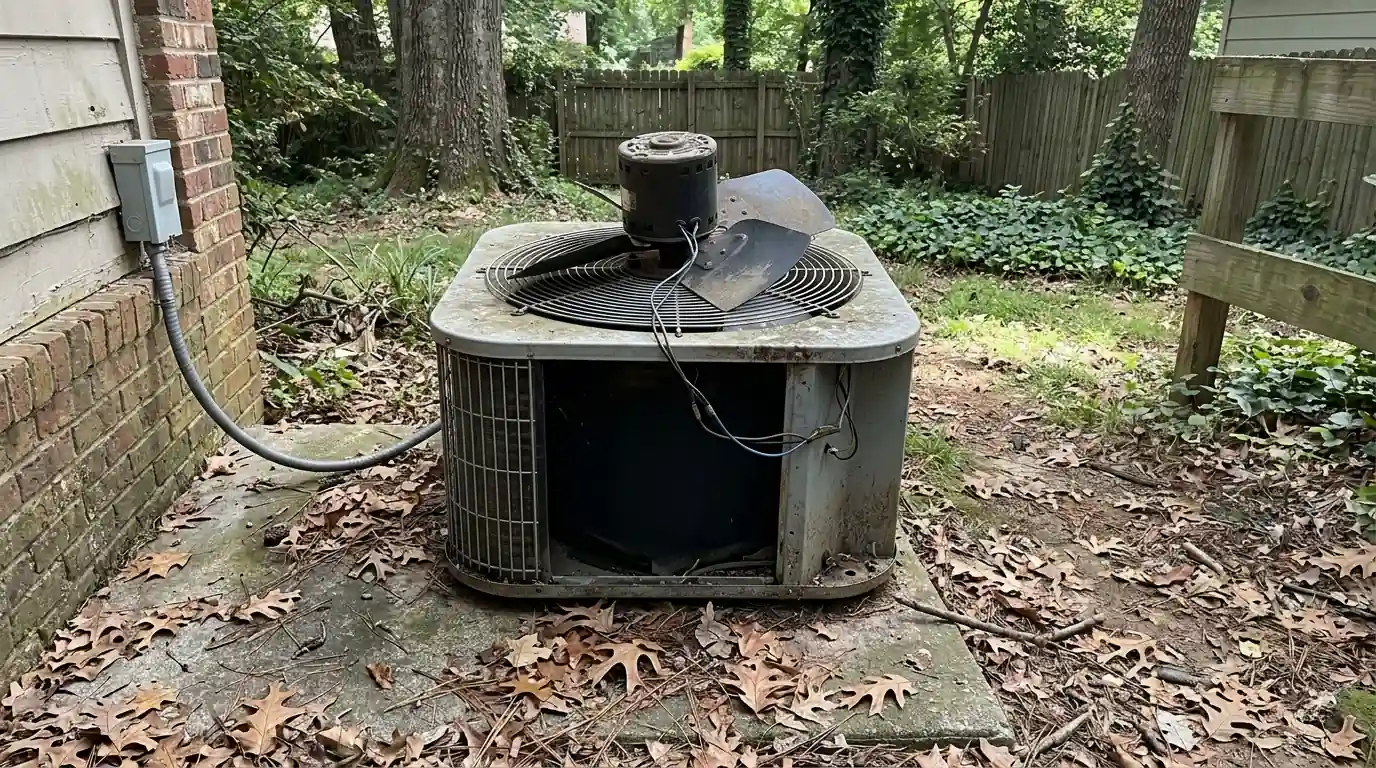
Condenser fan motor problems
If the fan on top of the outdoor unit sits still while the unit hums, the compressor is running with nothing carrying heat off the coil. Head pressure climbs, the compressor trips on its internal overload, and cooling fades through the afternoon. Typical causes are a seized bearing, a burned winding or a failed fan capacitor. With power locked out we spin the blade by hand, then read amp draw against the motor nameplate. Running for days with a dead fan risks the compressor, so shut it off and call.
Frozen evaporator coil
Ice on the larger copper line outside, or frost on the indoor coil, means the coil is running below freezing. Low airflow is the usual cause: a clogged filter, closed registers, a dirty coil face or a weak blower motor. Low refrigerant charge does it too. Turn cooling off and run the fan alone for a few hours to thaw it. Once it thaws we check static pressure and blower speed before connecting gauges, because adding refrigerant to a coil that froze from poor airflow makes things worse.
How we track down an AC failure
Hear what changed
We start with what you noticed: warm air, a buzzing condenser, ice on the line or water near the air handler.
Check power and controls
We confirm the 24-volt call at the contactor and line voltage at the disconnect before touching refrigerant.
Test parts under load
Capacitors are read in microfarads and motors by amp draw against their nameplates.
Read the refrigerant side
Gauges and pipe clamps give superheat and subcooling, which show whether the charge or the metering device is off.
Repair and verify
You hear the cause and the options first, then we confirm the temperature drop across the coil after the repair.
Equipment brands we service and install
Most homes around Atlanta run equipment from a handful of major manufacturers. We diagnose, repair and replace Carrier, Trane, Lennox, Goodman, Rheem and Daikin systems, along with the other names below.
Brand names are shown to describe the equipment we work on. We are not claiming a dealer or factory relationship with any manufacturer.
Where this shows up around Atlanta
Summer 2026 pushed Atlanta equipment harder than usual. By mid-September the city had logged 71 days at 90F or above, nearly double the typical count, and the first arrived in April. Capacitors, contactors and fan motors wear by run hours, so a year like that moves failures forward. In Cascade Heights, large homes on hilly lots sit under the city's second densest tree canopy, which sends leaves and twigs into condenser fins and raises head pressure on the hottest days.
What AC repair typically costs in Atlanta
These are published planning ranges from a national cost guide, not our prices. The part that failed sets where a repair lands.
| Job | Published planning range | Source |
|---|---|---|
| Typical AC repair visit | $150 to $650 | How Much Does AC Repair Cost? (2026) - HomeGuide |
| Refrigerant recharge after a leak is fixed | $100 to $600 | How Much Does AC Repair Cost? (2026) - HomeGuide |
What moves the number
- Which part failed: a capacitor or contactor versus a fan motor or compressor
- Whether refrigerant must be recovered, added or a leak found first
- Refrigerant type, since R-22 is no longer produced
- Access to an attic air handler or a tight side-yard condenser
- Night or weekend calls in peak heat
These are ranges published by the sources linked above, shown for planning. They are not a quote and not our price; the real number depends on what we find at your home.
AC Repair questions from Atlanta homeowners
No. Switch cooling off at the thermostat. If the compressor is running without the condenser fan, or with a low charge, it overheats, and a small capacitor problem can turn into a compressor replacement. If the indoor coil is iced, leave the fan on so moving air helps it thaw.
Outdoor temperature peaks then, so the condenser has its hardest time rejecting heat. A dirty outdoor coil, a weak fan motor or a slightly low charge may keep up in the morning and lose ground by four o'clock. That pattern needs a diagnosis, not a lower setpoint.
We can, but refrigerant is not used up. A low charge means a leak, and topping off without finding it means paying again later, especially on scarce R-22. We will explain what we found and the options, including replacing the system when repair stops making sense.
It can be. Buzzing usually means a motor or compressor is trying to start and cannot, which heats windings and trips breakers. Switch the system off at the thermostat and the outdoor disconnect, and keep hands out of the unit, because capacitors hold a charge with the power off.
Yes. We answer the phone 24/7, weekends and holidays included. Call any hour, describe what the system is doing, and we will talk through what is safe to run until a technician arrives.
Weigh age, refrigerant type and the size of the repair. A capacitor on a ten-year-old R-410A system is an easy yes. A failed compressor on an R-22 system from the early 2000s usually is not. Our Atlanta AC replacement cost guide shows what the other side of that decision looks like.
Updated October 2026