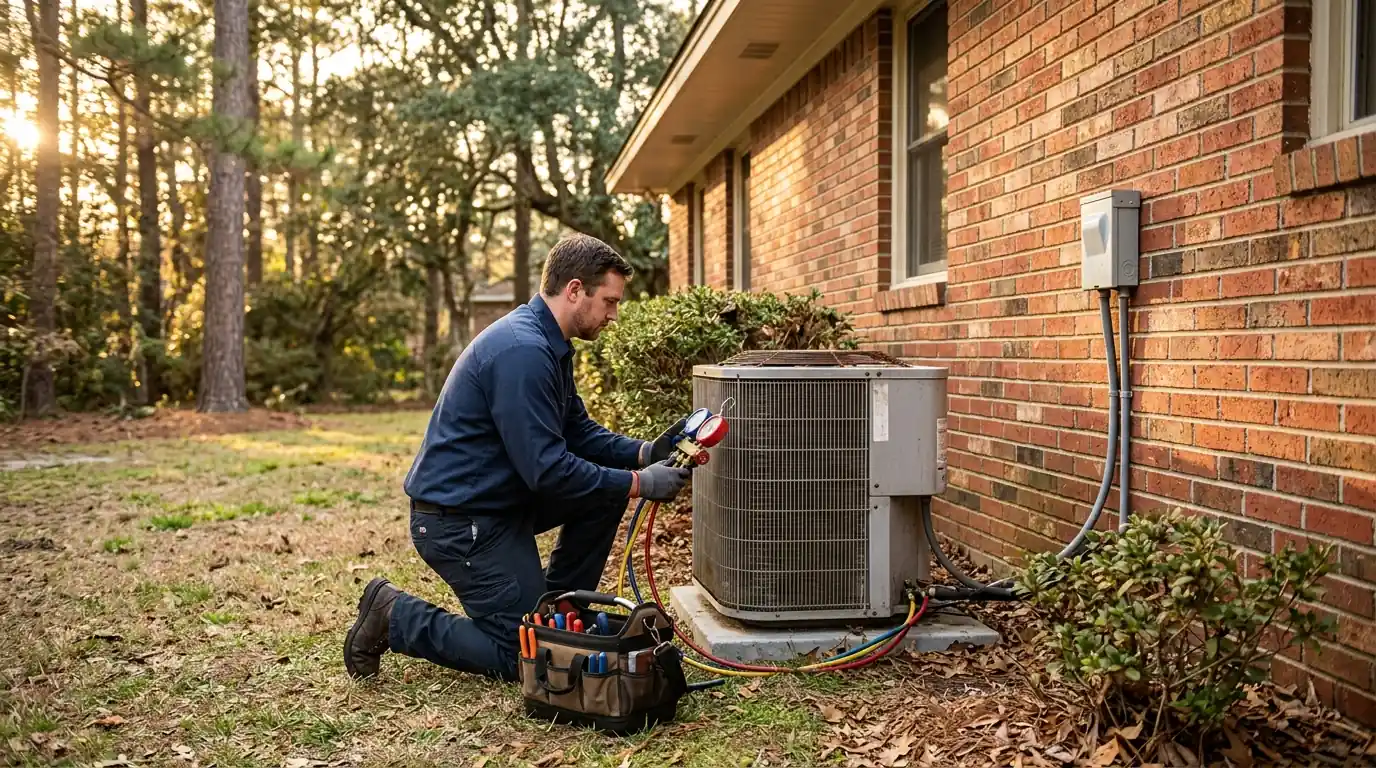
A gas furnace safety check in Atlanta tests whether combustion gases leave the house the way they should: through an intact heat exchanger and a flue with steady draft. We measure carbon monoxide in the flue and in the living space, inspect the heat exchanger, and prove every safety switch shuts the burners off.
How we handle gas Furnace Safety & CO Testing in Atlanta
A furnace burns gas inside a sealed metal heat exchanger. House air passes over the outside of that metal, and the exhaust stays inside it and goes up the vent. Every safety test we run checks one link in that chain: the metal is intact, the exhaust is moving out, and the controls kill the flame if either fails.
This differs from a routine furnace tune-up, which centers on cleaning and efficiency. A safety visit is about combustion and venting, and it's the right call after a CO alarm, before buying a house, or when an older furnace starts acting strangely. If we find a failed part, furnace repair or replacement is a separate decision.
Items a real furnace safety test covers
Some safety checks are a glance at the flame. These are the items we record so you can compare.
- CO reading in the living space and furnace room
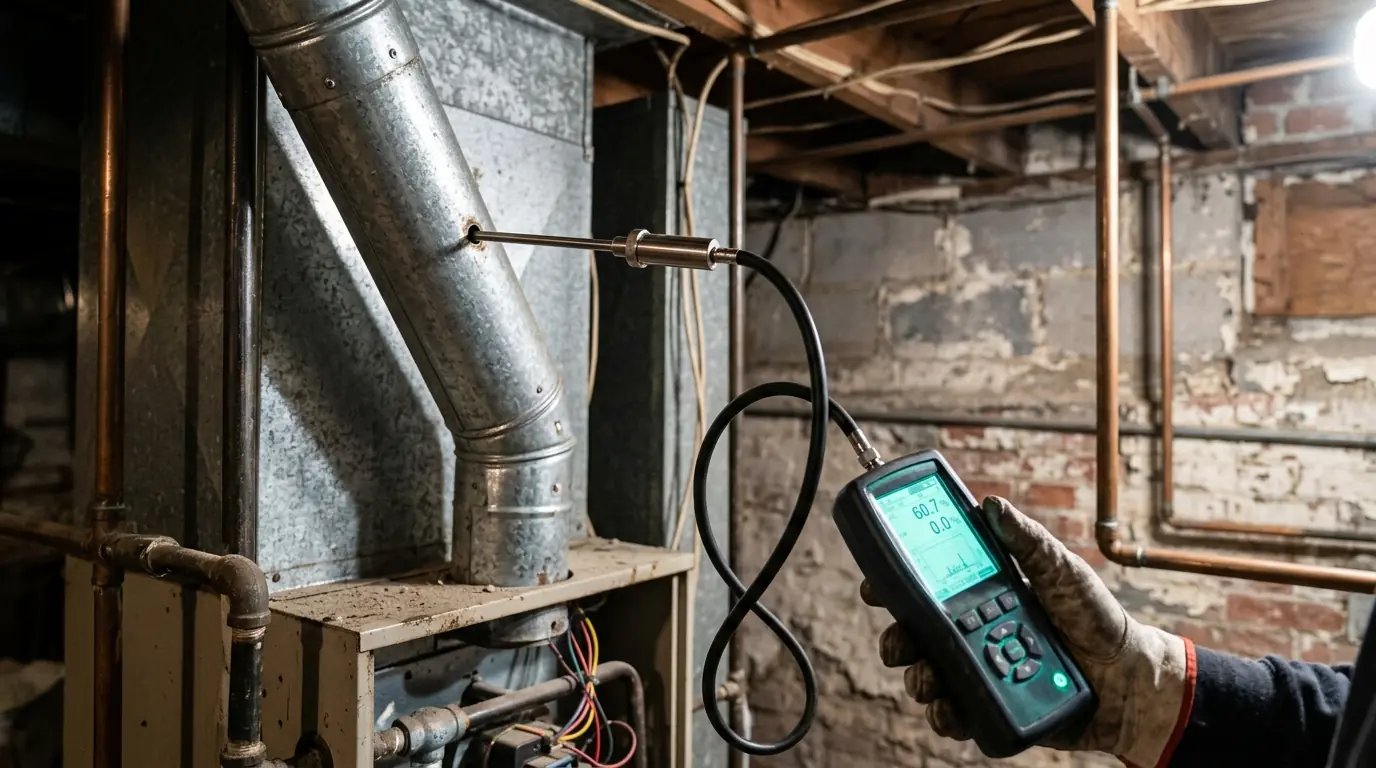
- Flue gas CO and oxygen with a combustion analyzer
- Heat exchanger camera inspection
- Draft test with exhaust fans running
- Vent connector pitch, joints and clearance to combustibles
- Rollout and high limit switch function
- Gas pressure at the valve checked against the data plate
- Detector placement and age review
Cracked heat exchanger checks
Heat exchangers crack from years of heating and cooling, and the damage speeds up when airflow is low and the metal runs hot. A breach can let combustion gases mix with the air your blower sends through the house. We look with a camera through the burner openings and flue collar, watch the flame for lift or rollout when the blower starts, and measure CO in the supply air. A flame that dances the moment the blower kicks on is a classic sign. A confirmed crack in an older furnace almost always means replacement, not repair.
Where carbon monoxide detectors belong
Detectors only help if they sit where CO shows up and where you'll hear them. We suggest one on each sleeping level outside the bedrooms, plus one near the furnace room but not right beside the burner, where brief startup readings cause nuisance alarms. Skip kitchens, garages and steamy bathrooms. A digital display shows low readings that never trip an alarm, and most units carry a replace-by date on the back. During the visit we test your units and point out gaps in coverage.
Flue draft testing
A natural-draft furnace relies on warm exhaust rising up the vent. If the vent is blocked, undersized, or loses heat in a cold masonry chimney, exhaust spills back out at the draft hood. We measure draft with a manometer and run a smoke test with the bath fans, range hood and dryer running, the worst case for backdrafting. When the furnace is swapped for a condensing model, the old chimney often serves only the water heater and may be too big to draft well.
Rollout switch trips
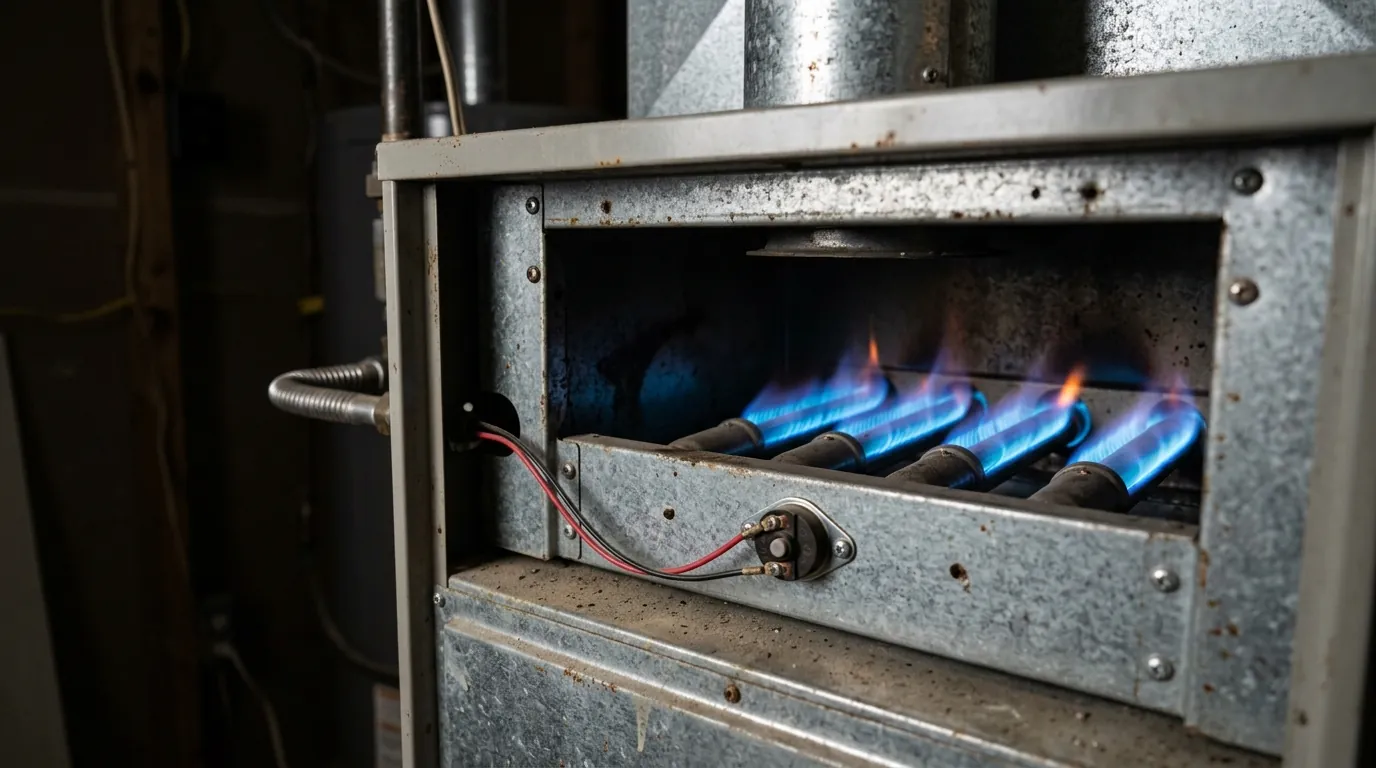
A flame rollout switch is a small heat-sensitive disc near the burners. If flames roll out of the combustion chamber instead of into the heat exchanger, the switch opens and shuts the gas valve. Many are manual-reset, and the common reaction is to press the button and carry on. Don't. A trip means the exhaust path is blocked somewhere: a plugged heat exchanger, a failing inducer or an obstructed flue. We find the cause before resetting anything. A switch that trips again and again is a warning, not a bad part.
What happens during a combustion safety visit
Ambient CO reading
We sample air at the door and in the furnace room before touching anything, so we have a baseline.
Flame review
We fire the furnace and watch the flame through a full cycle, including the moment the blower starts.
Heat exchanger camera
We pull burners where needed and run a camera into the cells to look for cracks and rust-through.
Draft under worst case
We measure draft with exhaust fans running and check vent pitch, joints and the chimney connection.
Prove the safeties
We test rollout, high limit and pressure switches and confirm each one drops the gas valve.
Furnace safety tasks you can and can't take on
A few checks are safe for any homeowner. Anything inside the burner compartment involves gas and combustion, and that's where we draw the line.
| Task | What you can do | Where a technician comes in |
|---|---|---|
| Testing CO detectors | Press test monthly and replace units past their date | Placement review and a calibrated reading |
| Clearing the furnace area | Move paint, solvents and laundry away | Check combustion air openings are sized right |
| Tripped rollout switch | Turn the furnace off; don't reset it | Find the blocked exhaust path first |
| Smelling gas | Leave the house and call the gas utility from outside | Leak test fittings and valve once it's cleared |
The local side of gas Furnace Safety & CO Testing
Older houses in West End and College Park deserve a careful venting check. West End filled in with Queen Anne, Folk Victorian and Craftsman homes between 1894 and 1930, and the College Park historic district is mostly buildings from 1882 to 1946. Gas furnaces in houses that old were added long after construction, and many still vent into an original brick chimney. An unlined or crumbling masonry flue is a frequent cause of weak draft and condensation damage, so we inspect the chimney connection and liner on these homes. More on heating older West End houses.
Planning numbers for a furnace safety visit
Published figures for HVAC inspections and detectors give a planning range. A visit that finds a cracked heat exchanger turns into a repair or replacement decision.
| Job | Published planning range | Source |
|---|---|---|
| HVAC inspection visit | $70 to $500 | How Much Does an HVAC Inspection Cost? [2026 Data] | Angi |
| Carbon monoxide detector, unit only | $20 to $150 | How Much Does It Cost to Install Smoke and Carbon Monoxide Detectors? - HomeAdvisor |
What moves the number
- Gas appliances sharing the flue
- Camera access to the heat exchanger
- Plug-in or hardwired detectors
- Chimney liner condition
- Findings that need parts or replacement
These are ranges published by the sources linked above, shown for planning. They are not a quote and not our price; the real number depends on what we find at your home.
Gas Furnace Safety & CO Testing questions from Atlanta homeowners
Not until someone measures. Open windows, get everyone out, and call the fire department if anyone feels dizzy or sick. A short alarm can come from a backdraft that clears itself and returns. We answer 24/7 and can test every gas appliance to find the source.
We want more than one piece of evidence: a visible crack or hole on camera, flame disturbance when the blower starts, or CO rising in the supply air. A rust streak alone is not proof. If we tell you a heat exchanger has failed, we show you the photo or the reading.
Yes. A blue flame tells you the burner mixes gas and air well, but says nothing about where the exhaust goes. A blocked flue or weak draft can spill CO from a perfect flame. That's why we test draft and measure CO separately instead of judging by the flame.
It's worth it, especially if the furnace is past midlife or vents into an old chimney. A general home inspector usually looks at the outside of the furnace. A combustion test and camera look go further. See our HVAC inspection for home buyers for the full scope.
Usually not. Dust settles on the heat exchanger over summer and burns off in the first few cycles, and it should fade within a day. A rotten-egg, sharp chemical or hot-electrical smell is different. Our guide to furnace smells on the first cold night sorts normal from worrying.
Mostly, with different venting. A condensing furnace pushes exhaust out through PVC with an inducer, so we check pipe slope, condensate drainage and both outdoor terminations. Its secondary heat exchanger can also fail from acidic condensate, which a camera can catch.
Updated October 2026