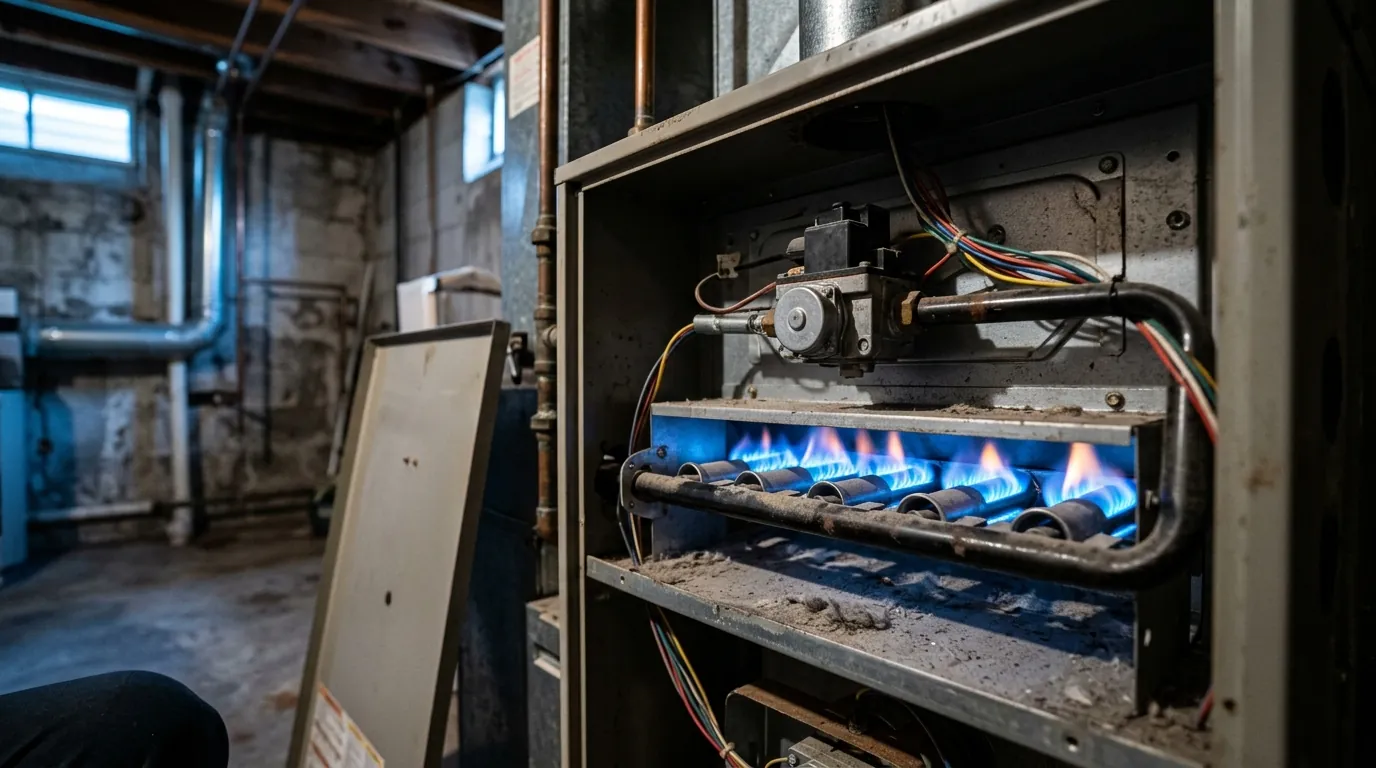
A dusty, slightly burnt smell for the first 20 to 60 minutes of heating season is normal; months of dust is burning off the heat exchanger or heat strips. A rotten egg smell, burning plastic, electrical odor or exhaust that does not fade is not normal. Leave the house and call the gas utility for rotten egg odor.
Why the first cold night smells the way it does
Through Atlanta's long cooling season, a gas furnace or an electric air handler sits idle with dust settling on the burners, the heat exchanger and the heat strips. The first time the heat runs, those surfaces get hot fast and the dust cooks off. The smell is dry and toasty, a little like a hair dryer or a space heater that has not been used in a while.
Many Atlanta homes wait until a real cold snap to switch on the heat, so the first run is often a long one. The odor should fade within an hour and not return the next day. Opening a window briefly and running the fan helps clear it.
Rotten eggs or sulfur: leave first, diagnose later
Natural gas has no smell of its own. Utilities add a sulfur-like odorant so you will notice a leak. If you smell rotten eggs near the furnace, water heater or range, do not flip switches, light anything or use the thermostat. Get everyone out, then call the gas emergency line from outside.
Atlanta Gas Light delivers the gas on its system and handles leak response, even though customers buy their gas from separate marketers under Georgia's deregulated setup. Once the utility has made the line safe, a furnace repair visit can check the gas valve, connector and burner assembly before the system is relit.
A field guide to the other smells
Not every odor is an emergency, and not every one is harmless. Match what you smell to the likely cause.
- Dusty or toasty, fading within an hour: normal burn-off, no action needed
- Musty or damp, from the registers: moisture or mold in the ducts or on the coil, often worse in homes with crawl space ducts
- Burning plastic or rubber: a failing blower motor, an overheated wire or something touching a hot surface; turn the system off
- Electrical or ozone smell: a motor or control board overheating; shut the power off at the furnace switch
- Sharp exhaust or fumes, with headaches: possible venting problem or cracked heat exchanger; turn off the furnace, get to fresh air and check CO alarms
- Smoky smell from a fireplace when the heat runs: a pressure imbalance pulling chimney air into the house
Carbon monoxide: what a smell will not tell you
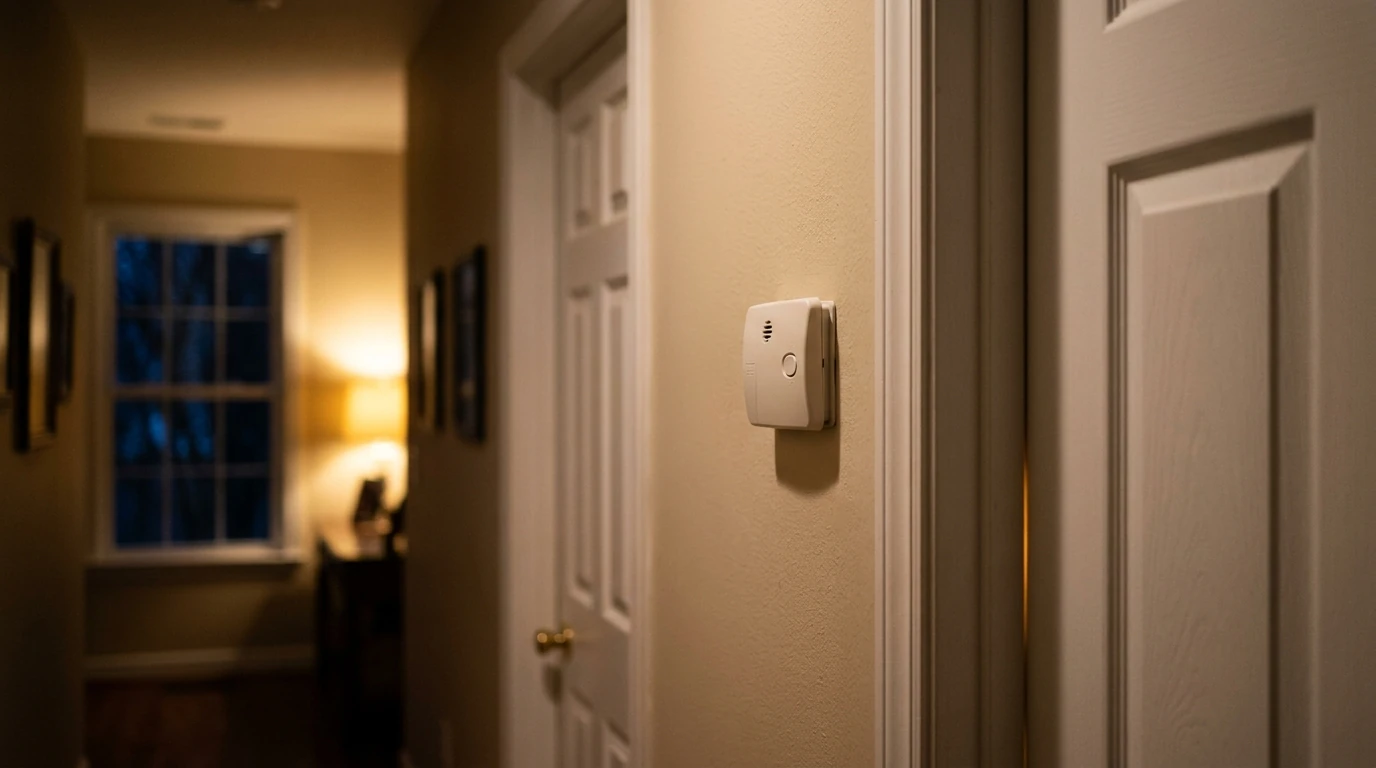
Carbon monoxide has no odor. You can have a dangerous level with no smell at all, and you can smell exhaust without much CO present. That is why the alarm, not your nose, is the safety device.
Every home with a gas furnace, water heater or attached garage should have working CO alarms on each sleeping level, near bedrooms. Test them as heating season starts. If an alarm sounds, leave the house and call 911. Before restarting the furnace, it should be checked by a technician. A gas furnace safety and CO test looks at the heat exchanger, flue draft and burner flame, and measures CO in the flue and the living space.
Electric heat and heat pump smells
Homes that heat with a heat pump or an electric air handler get the same dusty burn-off when the heat strips first energize. On a heat pump, that usually happens on the first truly cold morning, when the backup strips kick in to help.
A strong burning smell that returns every time the strips come on is different. It can mean a strip element sagging against the cabinet, a failing sequencer or relay, or a wire connection overheating. Heat strip and sequencer repair covers those parts. With electric heat, a repeated burning smell is a reason to switch the system off at the breaker until it is checked.
Reducing the first-night smell next year
A fresh filter before the first cold night keeps dust from blowing across hot surfaces. A fall furnace tune-up cleans the burners and flame sensor, checks the flue and tests the safety controls, which removes much of the dust that causes the smell. Running the heat for a short cycle on a mild fall afternoon, with a window cracked, lets burn-off happen before you need the heat overnight. If cold-weather planning is on your mind, our heat pump versus gas furnace guide covers how Atlanta winters shape that choice.
Questions readers ask about this
Usually 20 minutes to an hour on the first long run, and sometimes faintly on the second day. If it is still strong after several cycles, or it smells like plastic or wiring rather than dust, turn the system off and have it checked.
It often means moisture collected in ducts or on the coil during summer and is now being stirred up. It is not usually dangerous but can bother allergies. Checking duct insulation, crawl space moisture and the coil drain usually finds the source.
For normal dust burn-off, cracking a window and running the fan clears the air faster. For a gas, exhaust or electrical smell, open windows only on your way out, and do not stay inside to air the house.
Yes. A clogged filter limits airflow, so the heat exchanger runs hotter and dust on it cooks more. In some cases the furnace trips its high-limit switch and cycles on and off. Replacing the filter often fixes both the smell and the cycling.
If you have a fireplace, the heating system or bath fans may be pulling air down the chimney when the damper leaks. Close the damper fully. If the smell persists without a fireplace, have the flue and venting checked.
Place one outside each sleeping area and one on every level, including the basement. Keep them away from the furnace itself and from bathrooms. Replace units at the end of their rated life printed on the back.
Services this article points to
Furnace Repair
Furnace repair in Atlanta most often comes down to the ignition sequence: the inducer starts, the pressure switch closes, the hot surface ignitor glows, the gas valve opens and the flame sensor proves flame.
Gas Furnace Safety & CO Testing
A gas furnace safety check in Atlanta tests whether combustion gases leave the house the way they should: through an intact heat exchanger and a flue with steady draft.
Furnace Tune-Up
A furnace tune-up in Atlanta should clean the burners and flame sensor, inspect the flue and venting, test the limit, rollout and pressure switches, and measure gas pressure and temperature rise.
Air Handler & Heat Strip Repair
Air handler repair in Atlanta usually comes down to four parts: the blower motor, the heat strip sequencer or relay, the control board, or a cabinet rusted through by condensate.