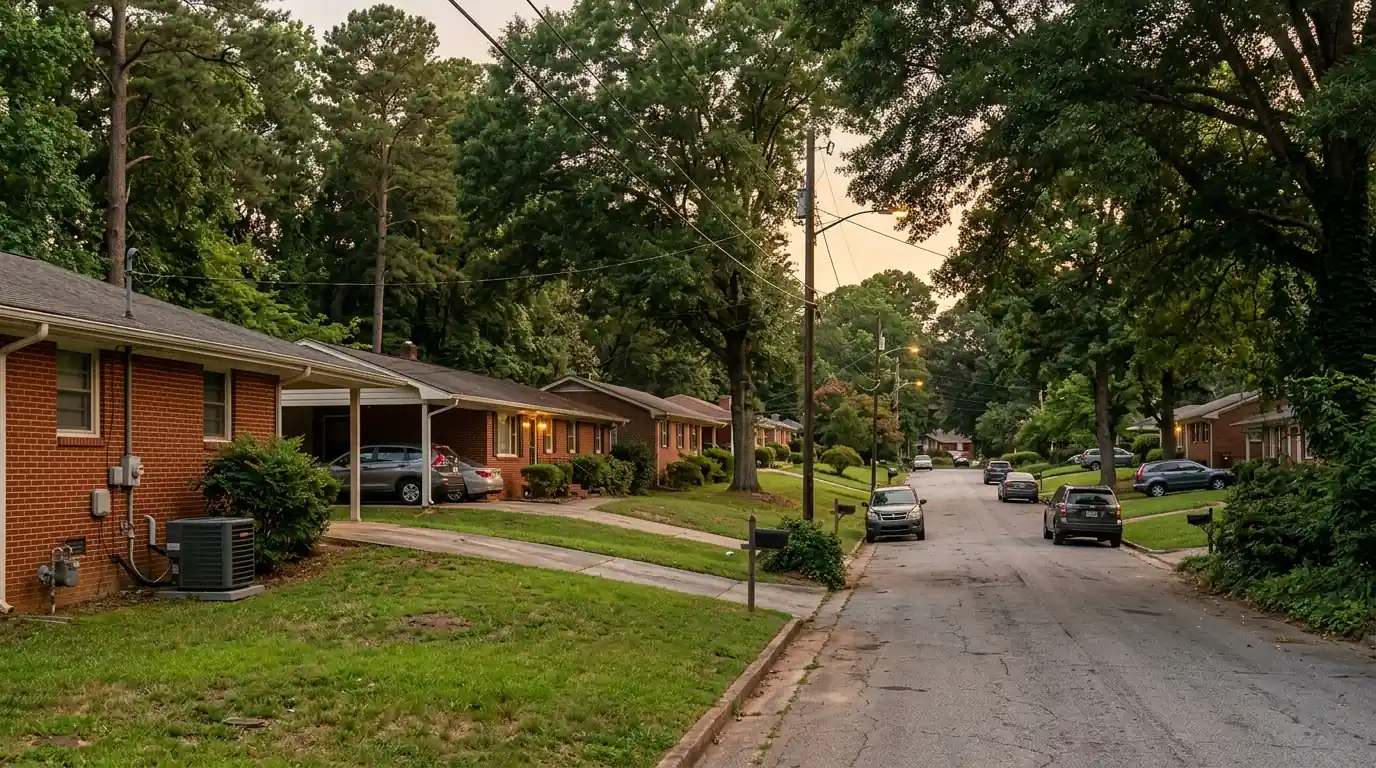
Union City homes get heat pump repair, AC repair and electric heat service from us. Summer nights here rarely cool off much, so a heat pump or AC can run nearly around the clock from June to September, and then switch to heating for a winter of freezing mornings. That year-round duty is what wears these systems down.
Eleven thousand homes and a lot of electric heat
Union City was incorporated in 1908 and had grown to 26,830 residents in 11,414 housing units by 2020. Homes across that range of years run both gas furnaces and all-electric heat pump systems, and we work on both. Georgia Power, headquartered in downtown Atlanta, serves more than 2.8 million customers across all but four of Georgia's 159 counties, so for many households the power bill is where a struggling heat pump shows up first.
A jump in winter usage usually means the heat strips are carrying load the heat pump should be handling. A jump in summer usage often points to a dirty coil, low charge or a failing condenser fan motor.
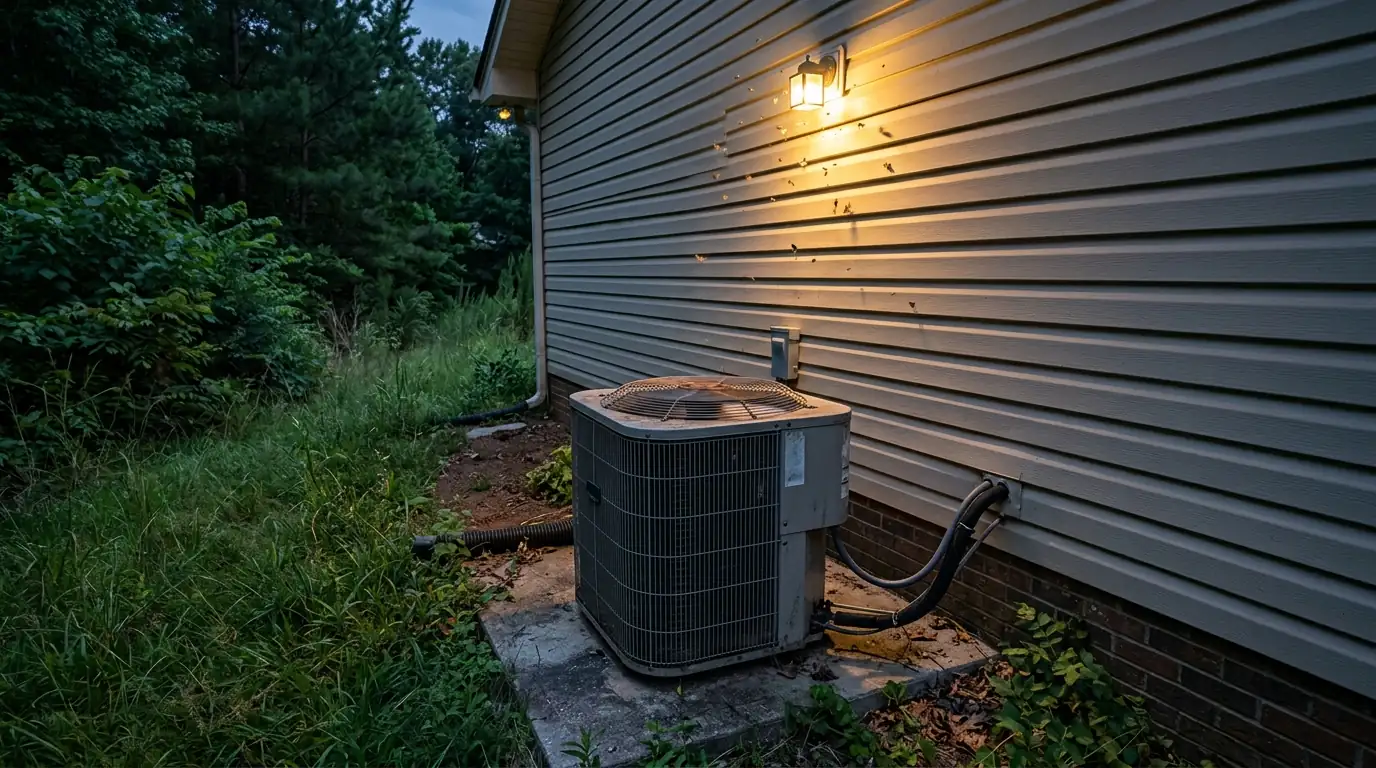
Why a July night does not give the AC a break
Atlanta's July averages a high near 89F with overnight lows around 71F. That low matters. When the night barely cools, the system never gets a long off cycle to catch up, and attic air handlers stay warm. Components like run capacitors and contactors live their whole summer under load.
That is why many AC repair calls arrive in late July and August rather than on the first hot day. The part has been weakening for weeks.
When the heat pump switches to heat
A heat pump moves heat rather than making it, so its heating output drops as the outdoor air gets colder. On frosty mornings it runs a defrost cycle and may lean on electric strips. If you see ice building on the outdoor coil for hours, or your bill spikes on mild days, have the heat pump checked. Common faults are a failed defrost sensor, a sticking reversing valve or a thermostat calling backup heat too early.
When it is time to replace, a split-system heat pump installed since January 1, 2023 must meet at least 14.3 SEER2 and 7.5 HSPF2. Our comparison of heat pumps and gas furnaces in Georgia helps if you are weighing a switch. Union City is part of Fulton County.
Heating and cooling work that fits Union City
Heat Pump Repair
Union City heat pumps run in both seasons, so defrost controls and reversing valves see heavy use.
Air Handler & Heat Strip Repair
Electric heat strips and their sequencers are the backup many Union City homes rely on during freezes.
AC Repair
Warm July nights near 71F keep capacitors and contactors loaded around the clock.
Heat Pump Maintenance
A fall check of defrost and backup heat prevents surprise power bills.
Heat Pump Installation
Replacement heat pumps must now meet 14.3 SEER2 and 7.5 HSPF2, which changes the options.
Smart Thermostat Installation
A thermostat set up for heat pump staging keeps strip heat from running on mild days.
Union City heating and air questions
The heat strips may be doing work the heat pump should handle. A low refrigerant charge, a failed defrost control or a thermostat that calls auxiliary heat too soon all cause it. The house stays warm, so the fault hides until the bill arrives.
Light frost that clears every so often is normal; the defrost cycle melts it. A coil that turns into a solid block of ice, or ice that never clears, means the defrost sensor, board or a low charge needs attention. Do not chip at the ice, which can bend the fins.
With July lows around 71F, the house sheds little heat overnight, so a healthy system runs long cycles. If it runs constantly and the house still warms up, the cause is often a dirty coil, low charge or weak blower rather than the weather alone.
Yes. The heat pump can replace the AC and become the main heat source, with either the old furnace as a dual fuel backup or electric strips. Electrical capacity, duct size and how you feel about strip heat on hard freezes decide which setup fits.
Usually a few minutes, often less than ten, triggered when frost builds on the outdoor coil. You may see steam rising from the unit and feel cooler air indoors for a moment. Cycles that repeat very often or run much longer suggest a sensor or control fault.
Updated October 2026