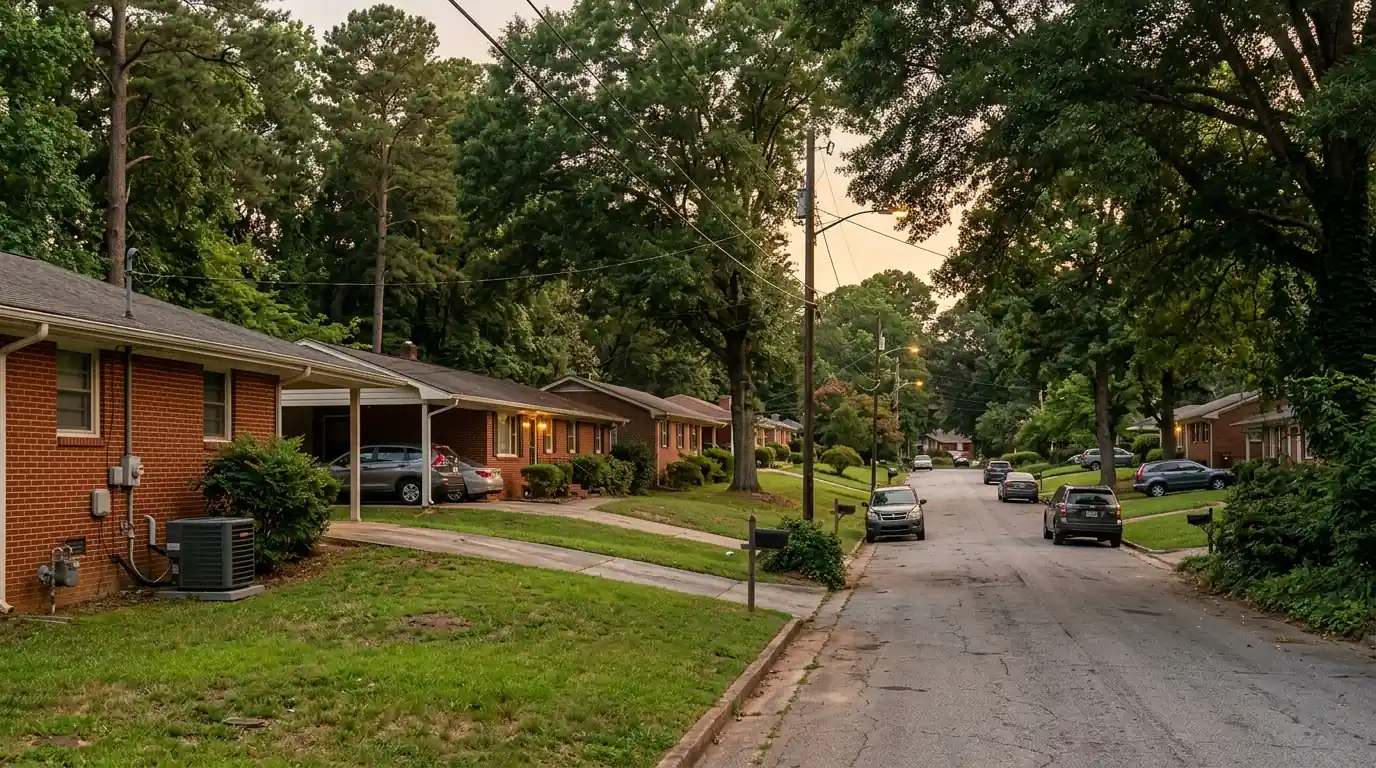
Collier Heights is mostly brick ranches from the 1950s and 1960s, so the work we do here centers on AC repair, duct sealing and replacing aging systems. A ranch spreads its ducts across a long attic or crawl space, and after this many years the joints, insulation and returns usually need attention before any new equipment can perform as rated.
About 1,750 homes, mostly 1950s and 1960s brick ranches
Collier Heights holds about 1,750 homes, mostly brick ranches from the 1950s and 1960s, and it was listed on the National Register as a historic district in 2009. A one-story ranch is simple to heat and cool in principle: one floor, one thermostat, no stairwell pulling heat upward.
The catch is age. Duct systems installed with these houses, or added soon after, have been through many summers of attic heat or crawl space damp. Cloth tape lets go, insulation sags, and a supply run that came loose years ago may be blowing cooled air into the attic right now.
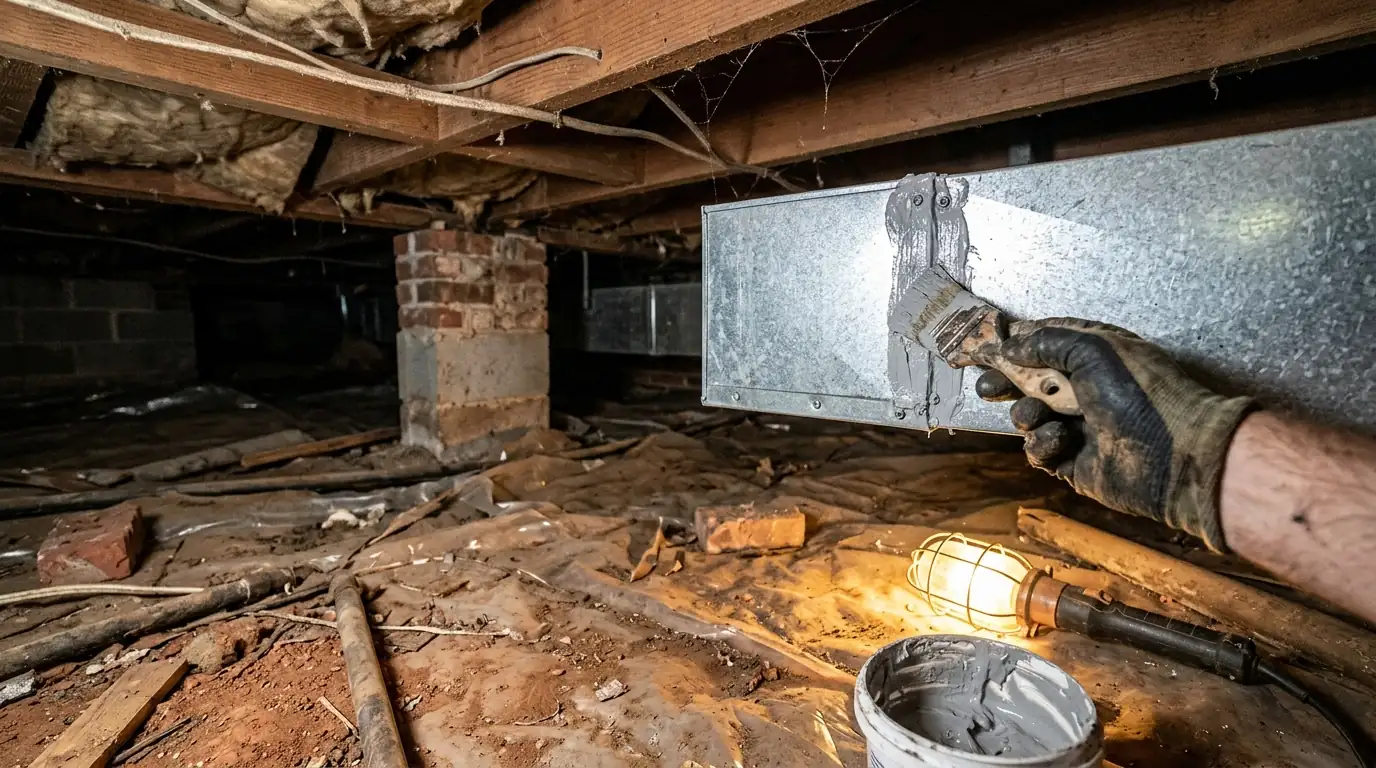
Finding the leaks in a long ranch duct layout
A ranch lines its rooms up along one level, so the main trunk tends to run the length of the house with branches to each end. Leaks at trunk seams and branch take-offs add up over that distance. Rooms at the far ends get weaker airflow, and the system runs longer to make up for it.
We seal joints with mastic rather than cloth tape, reattach and hang sagging runs, and add insulation where it has fallen away. Georgia's current code for new work holds duct leakage to 6 CFM25 per 100 square feet with ducts at R-8. Existing houses are not required to meet that, but it is a useful target when we seal and repair old duct runs.
Return grilles that are too small for today's equipment
Many ranches of this age rely on a single central return grille in a hallway. Put a modern blower behind a small return and it starves for air, which raises static pressure, noise and energy use. Bedrooms with closed doors make it worse because their supply air has no easy path back.
Adding a return, enlarging the existing one or installing jump ducts above bedroom doors often fixes complaints that a bigger AC never would. When the duct system is past saving, replacing the ductwork together with the equipment lets us size both to each other.
Cooling a single story through Atlanta's 74 percent humidity
Atlanta averages about 74 percent relative humidity in July and August, with July highs near 89F and overnight lows around 71F. Warm nights mean the AC rarely gets a break, and a leaky return in a crawl space or attic pulls in moist air that the coil then has to dry.
If your house feels damp even at a low thermostat setting, ask about return leakage before anything else. Collier Heights shares its postwar timing with subdivisions such as Peyton Forest in Cascade Heights, so the same duct testing applies there.
Heating and cooling work that fits Collier Heights, Atlanta
Duct Repair & Sealing
Ranch duct runs leak at trunk seams and branch take-offs along the full length of the house.
Ductwork Replacement
When ducts are past repair, replacing them alongside the equipment lets both be sized together.
AC Replacement & Installation
A new system here should be matched to the coil and to the airflow the ducts can actually deliver.
Whole-Home Dehumidifiers
A ranch over a damp crawl space can feed moisture into leaky returns all summer.
Attic Insulation
Ducts running through a ranch attic sit in the hottest part of the house, so insulation around them pays back.
AC Repair
Overnight lows near 71F keep the AC running, which wears capacitors and fan motors steadily.
Collier Heights heating and air questions
Distance and leakage. The rooms farthest from the air handler sit at the end of the longest duct runs, and every leaky joint along the way steals airflow. We measure airflow at those registers and pressure at the trunk, then seal, rebalance or add a run as needed.
No. Cloth duct tape dries out and lets go in attic heat, which is why so many old joints are open today. We use mastic, a thick paste that cures in place, with fiberglass mesh across wider gaps. Foil tape rated for ducts works on some joints, but mastic is the long-term fix.
It can be. A single return often cannot pull enough air for a modern system, and bedrooms with doors closed get pressurized and stuffy. Signs include whistling at the grille and doors that drift shut on their own. Adding a return or jump ducts usually costs less than oversizing new equipment to compensate.
If the ducts fail inspection, yes. Doing both together means the new system is sized to ducts that can deliver its airflow, and the attic or crawl space only gets opened once. If the ducts test reasonably tight, sealing and keeping them is the cheaper path. Our Atlanta AC replacement cost guide covers planning ranges.
Yes. A return duct leaking in a crawl space or attic draws in hot, wet air, and the coil has to remove that moisture on top of the house's own. With July dew points near 68F, the extra load shows up as clammy rooms and long run times. Sealing returns often helps more than lowering the thermostat.
Updated October 2026