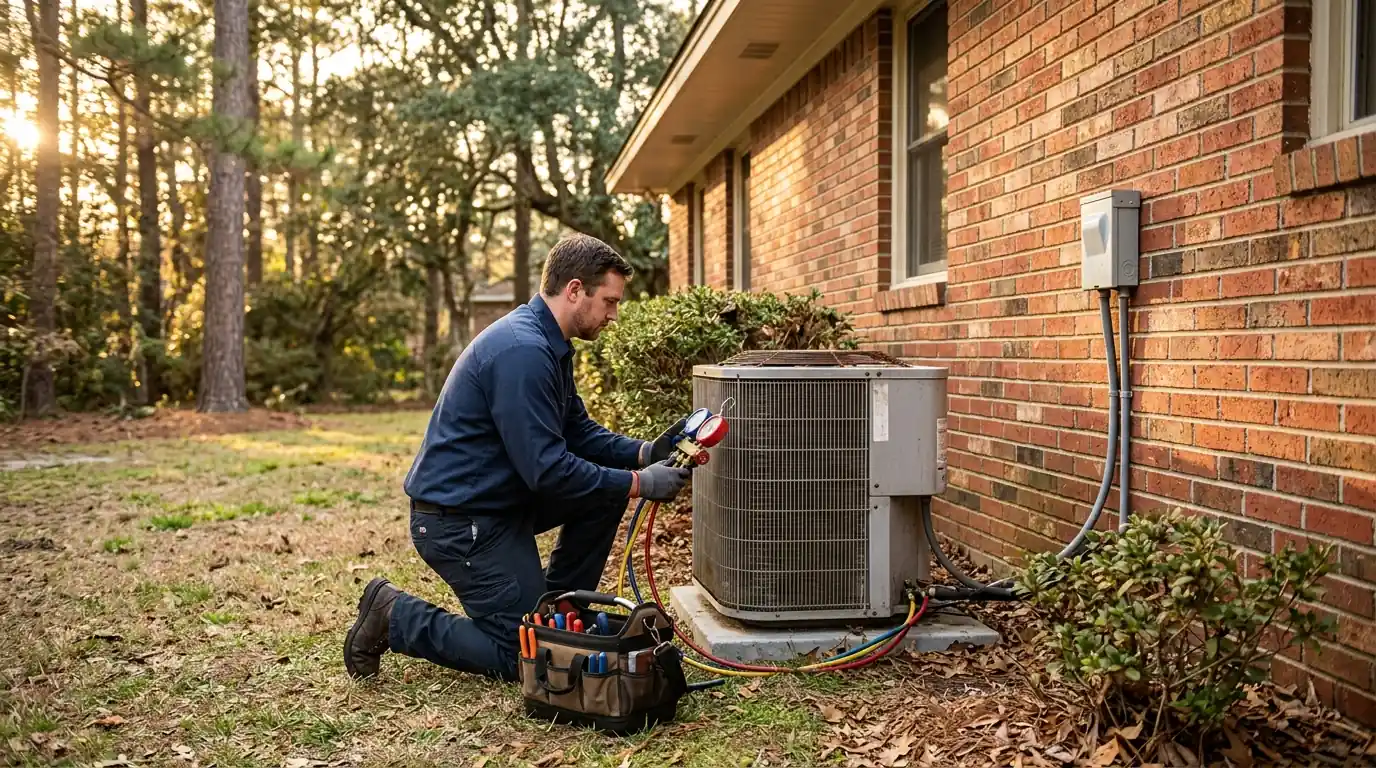
Manufactured home HVAC in Atlanta usually means a downflow furnace or air handler feeding a main duct inside the belly wrap, with a crossover duct linking sections of a double-wide. Parts must be approved for manufactured housing, and many airflow problems trace to a torn belly or a crossover duct that has sagged or come loose.
What manufactured Home HVAC involves on a southwest Atlanta call
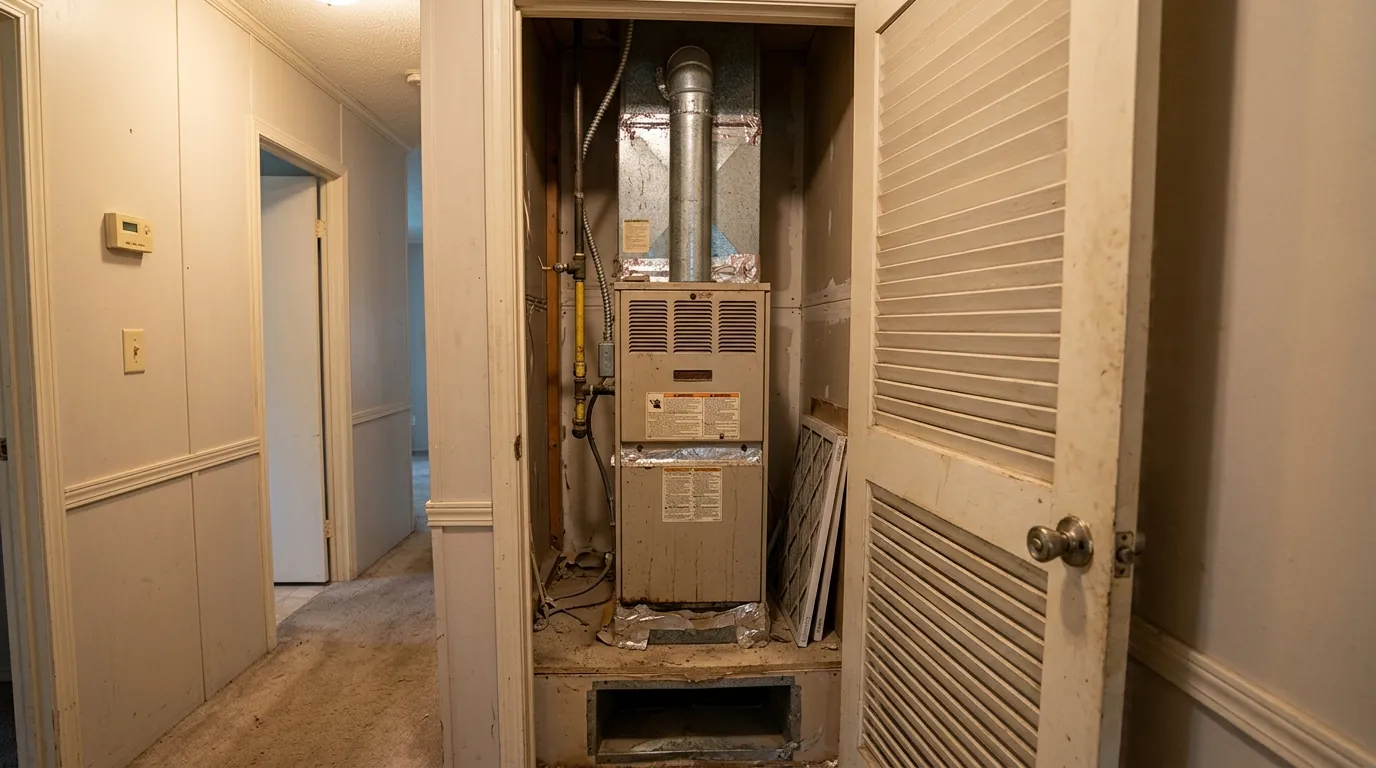
The equipment in a manufactured home differs from a site-built house. The furnace is a downflow design built for manufactured housing, often in a hall closet, pushing air down into a main trunk under the floor. Combustion air and venting come through the roof or floor in a sealed system, which is why replacement furnaces must be listed for manufactured home use.
Most comfort complaints come from below the floor. The belly wrap, the fabric or plastic sheet under the home, holds the insulation and protects the duct. When it tears, animals get in, ducts come loose and insulation falls. We look under the home first when rooms are weak or the floor feels cold, then work on the equipment. Our duct repair page covers the sealing side.
What moves the cost of manufactured home HVAC work
Published ranges for manufactured home equipment are thin, so the furnace repair range below is the closest planning figure. It is not our pricing.
| Job | Published planning range | Source |
|---|---|---|
| Furnace repair, national range | $133 to $505 | How Much Does It Cost to Repair a Furnace? [2025 Data] - HomeAdvisor |
What moves the number
- Manufactured-home-listed parts
- Belly access and patch size
- Crossover duct replacement
- Packaged unit or split system
- Skirting and pad condition
These are ranges published by the sources linked above, shown for planning. They are not a quote and not our price; the real number depends on what we find at your home.
Downflow furnaces
Downflow furnaces in manufactured homes sit on a base that opens directly into the floor duct. Common problems include failed ignitors, flame sensors, limit switches tripping from poor airflow, and blower motors worn out by a clogged filter in a cramped closet. When a furnace needs replacing, it has to be one listed for manufactured housing with the right venting and combustion air setup, and it has to fit the closet and base. We also check the closet door louvers, since blocked return air in that closet is a common cause of limit trips. See gas furnace breakdowns for related causes.
Belly duct repair
If one end of the home cools poorly, a floor register barely blows, or you hear animals under the floor, the belly duct is the likely culprit. The main trunk runs inside the insulated belly, and the crossover duct on a double-wide often sags, crushes or pulls apart at its collars. We open the belly at the problem area, reconnect or replace the duct, seal it with mastic and tape listed for duct use, and patch the belly with matching material. Torn belly wrap also lets humid crawl air reach the duct, which can make it sweat in summer.
Packaged heat pump units
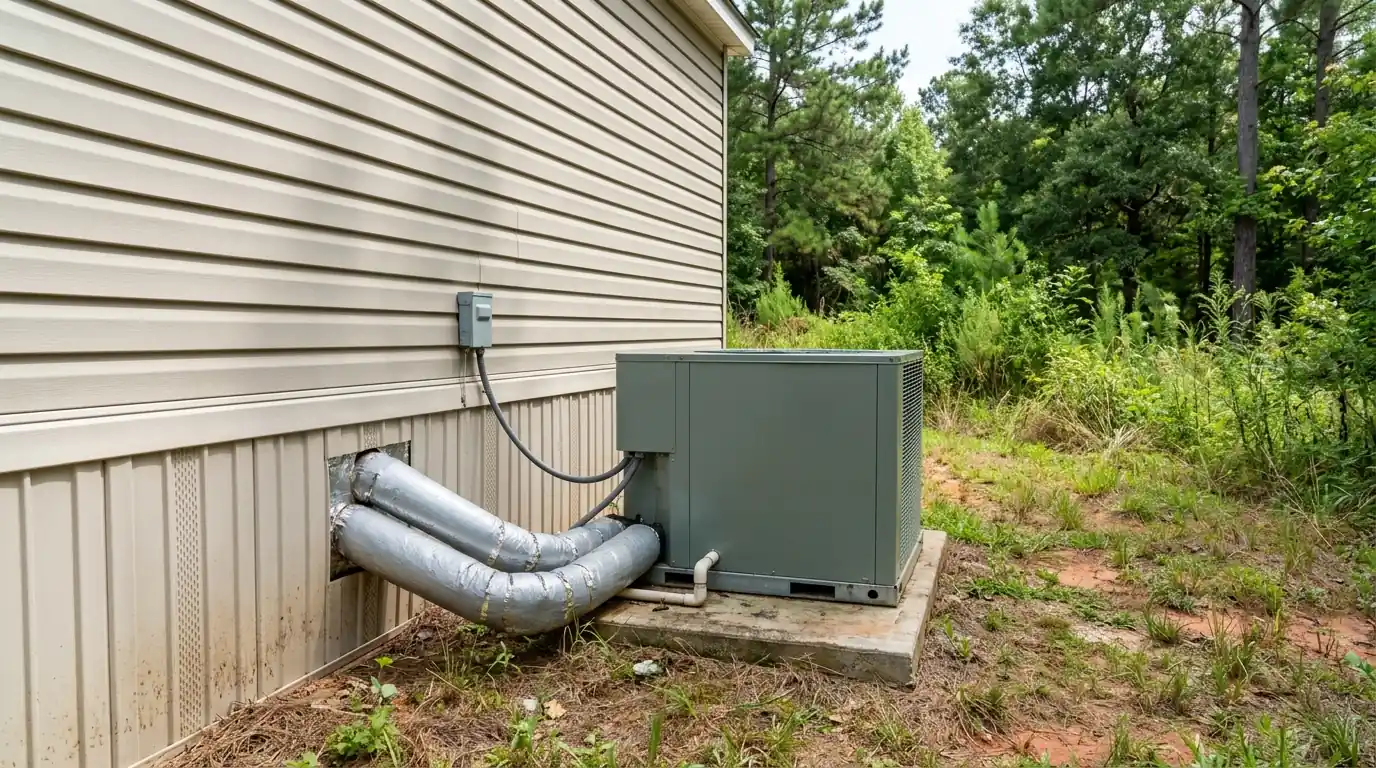
Many manufactured homes use a packaged heat pump or packaged gas-electric unit set beside the home, with supply and return ducts connecting through the skirting into the belly. Problems include frozen coils, failed defrost controls, and duct connections that come loose as the home settles. When replacing a packaged unit, we match the duct connections, check the pad, and confirm the electrical service. Packaged units are also a common way to add central air to a home that only had a furnace. Our guide to heat pump breakdowns explains the defrost and backup heat side.
What owners can check and what needs a technician
Some checks are safe for owners. Gas furnaces and belly duct work are not.
| Task | What you can do | Where a technician comes in |
|---|---|---|
| Changing the closet furnace filter | Yes, monthly in heavy use | Blower or limit switch problems |
| Keeping closet louvers clear | Yes, never block the return door | Return air modifications |
| Looking at the belly from the skirting | Yes, with a flashlight from the access door | Opening the belly and repairing ducts |
| Replacing a furnace part | No, gas and listed parts are involved | Listed replacement parts and testing |
How we work on a manufactured home system
Confirm the equipment type
We check the data plates for manufactured home listing and whether the system is downflow, packaged or split.
Look under the home
We inspect the belly, crossover duct and connections at the packaged unit from the skirting access.
Test the equipment
We check ignition, limits, blower, refrigerant readings and defrost operation as the system type calls for.
Repair ducts and parts
We reconnect or replace ducts, seal them, and replace failed parts with listed components.
Patch and verify airflow
We patch the belly, then check airflow at the far registers and the temperature split.
Equipment brands we service and install
Most homes around Atlanta run equipment from a handful of major manufacturers. We diagnose, repair and replace Carrier, Trane, Lennox, Goodman, Rheem and Daikin systems, along with the other names below.
Brand names are shown to describe the equipment we work on. We are not claiming a dealer or factory relationship with any manufacturer.
Where this shows up around Atlanta
Ducts under a raised floor face a moisture problem that shows up every summer. Average relative humidity in Atlanta runs about 74 percent in July and August, with a July dew point near 68F. A supply duct carrying cold air inside a torn belly sits below that dew point, so humid air under the home condenses on it, soaks the insulation and drips onto the ground. That is why we treat a torn belly as a cooling and moisture repair, not just a cosmetic one, and why we reseal the belly after any duct work.
Signs your manufactured home HVAC needs a look
These usually point under the floor before they point at the equipment.
One end of the home stays warm
A crossover duct may be disconnected or crushed.
Weak air at far registers
The belly duct may have come loose or sagged.
Cold floors in winter
Insulation has fallen out of a torn belly.
Furnace shuts off and restarts
Blocked return air or a clogged filter can trip the limit switch.
Noises under the floor
Animals may have entered through the belly.
Water dripping under the home
A sweating duct or a loose condensate line from the unit.
Manufactured Home HVAC questions from Atlanta homeowners
No. Furnaces in manufactured homes must be listed for that use, with sealed combustion and venting designed for the home's construction. Installing a standard furnace creates safety and code problems.
Usually the crossover duct linking the two halves has sagged, crushed or come loose. Air leaks under the home instead of reaching the far rooms. Reconnecting and supporting the crossover usually fixes it.
Yes. Options include adding a coil to the furnace with an outdoor condenser, or switching to a packaged heat pump. The ducts and electrical service need to handle it, which we check before recommending one.
Yes. Insulation falls out, ducts lose support and moisture reaches the duct. Floors get colder in winter and ducts sweat in summer. Patching the belly is part of fixing the HVAC, not separate from it.
Closet furnace filters are often small and load quickly, so check monthly during heavy heating or cooling and change as needed. A clogged filter is one of the most common reasons these furnaces trip their limit switch.
Often yes, since winters here are mostly mild and heat pumps handle most heating hours efficiently. Our heat pump or gas furnace guide explains the tradeoffs for Georgia homes.
Updated October 2026