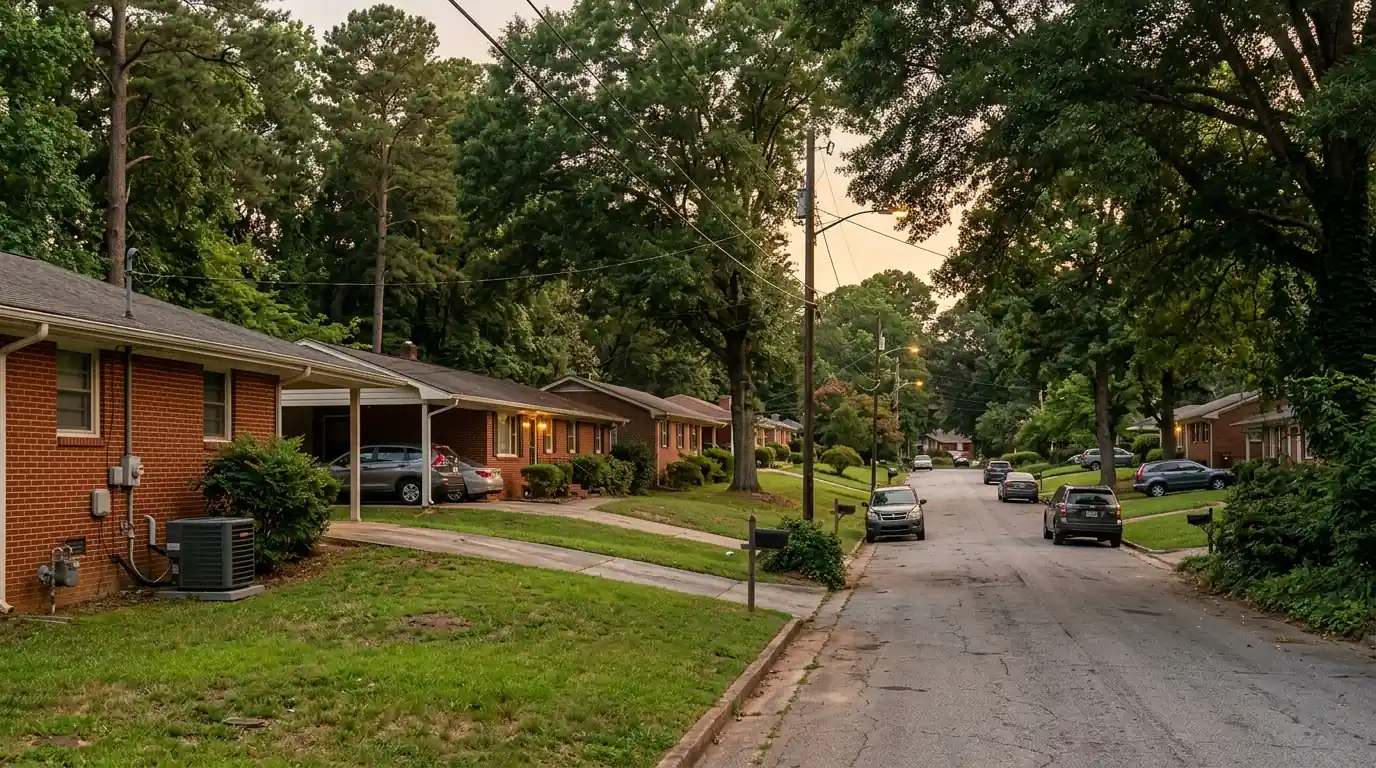
Peachtree City homes get AC service, heat pump repair and system replacement from us. The city was planned from 1959 onward, so most houses were built with central air and many have now gone through more than one system. The practical questions are usually upstairs comfort, humidity and choosing replacement equipment under the newer federal rules.
A planned city built for central air
Peachtree City was settled in 1959 and incorporated in 1962, has more than 100 miles of golf cart paths, and had 38,244 residents in 2020. Unlike the older towns around it, it grew up after central air became standard, so ducts were part of the original design rather than an afterthought.
That shifts the work. Instead of fitting ducts into old walls, we spend more time on second systems, upstairs comfort and replacement choices. In two-story homes the upstairs often runs warmer because heat rises and attic ducts gain heat on the way. Our guide to hot upstairs rooms covers the causes, and zoning with motorized dampers is one fix when a single system serves both floors.
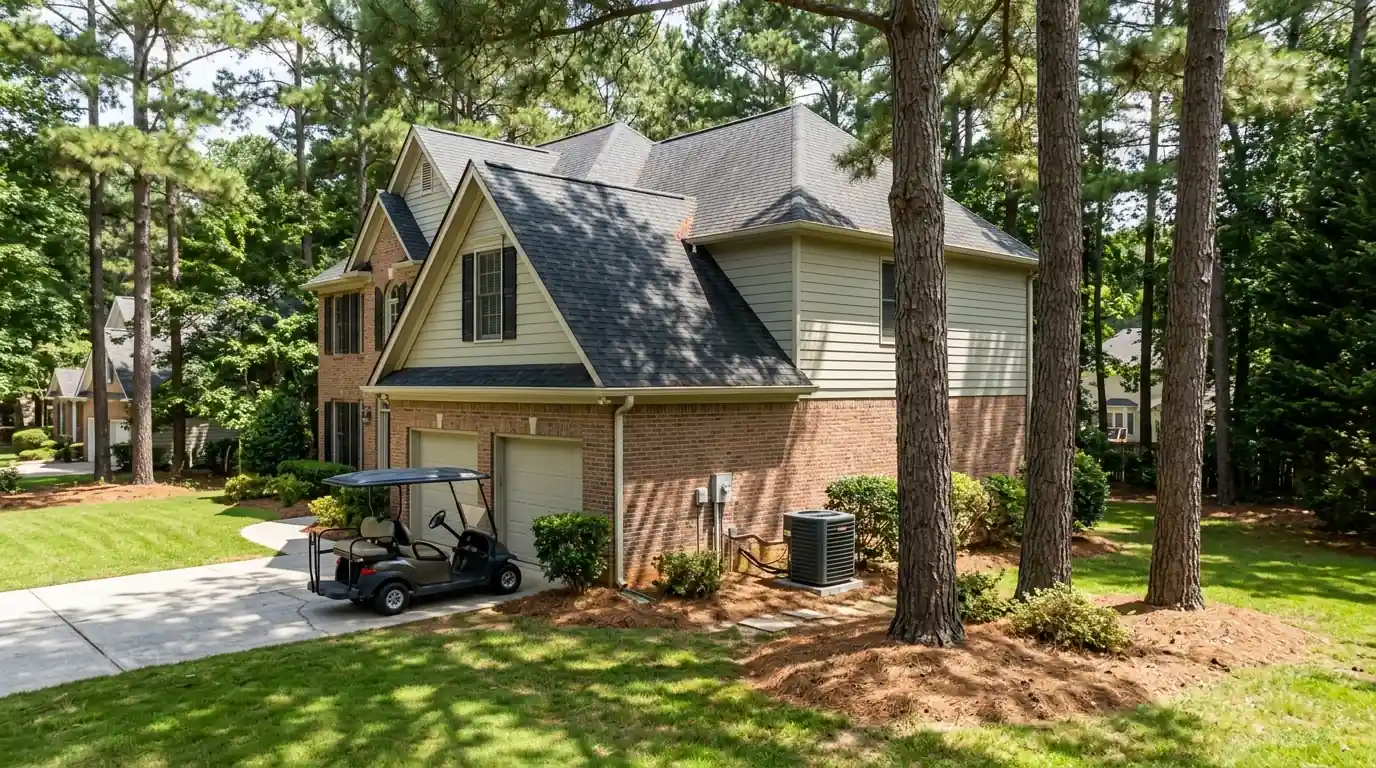
Moisture is half the cooling load
Average relative humidity in the Atlanta area is about 74 percent in July and August, with a July dew point close to 68F. A system that hits the thermostat setting but leaves the house sticky is not finishing the job.
Variable-speed heat pumps and air handlers help because they run longer at lower speed, which gives the coil time to pull water out. On single-speed systems we check blower settings and refrigerant charge, since an overly fast blower or low charge both hurt dehumidification.
Replacing under the 2023 and 2025 rules
Since January 1, 2023, a new split-system heat pump must meet at least 14.3 SEER2 and 7.5 HSPF2. From January 1, 2025, newly manufactured residential systems must use refrigerant with a GWP of 700 or less, which means R-454B or R-32 in most equipment, though systems with all parts made before that date can still be installed.
For a Peachtree City owner, that means comparing heating efficiency as well as cooling, and asking which refrigerant the quoted equipment uses. Our heat pump installation work starts with a load calculation. Peachtree City sits in Fayette County, alongside Fayetteville.
Heating and cooling work that fits Peachtree City
Heat Pump Installation
Many Peachtree City systems are on their second or third replacement and now face SEER2 and HSPF2 minimums.
HVAC Zoning Systems
Two-story Peachtree City homes on a single system often run hot upstairs.
Heat Pump Repair
Heat pumps here carry most of the winter and all of the summer, so they log heavy hours.
Whole-Home Dehumidifiers
A 68F July dew point leaves some well-cooled homes still sticky.
AC Tune-Up & Maintenance
A refrigerant charge and blower check keeps dehumidification working before the humid months.
Smart Thermostat Installation
Variable-speed and communicating systems need compatible controls to run at their low stages.
Peachtree City heating and air questions
Heat rises, the upstairs sits under a hot attic, and supply ducts for that floor often run through the attic and gain heat on the way. Undersized returns upstairs make it worse. Fixes range from duct sealing and return upgrades to zoning or a separate upstairs system.
Most newly made residential equipment uses R-454B or R-32, because systems manufactured from January 1, 2025 must use refrigerant with a GWP of 700 or less. Some R-410A equipment built earlier can still be installed. Ask which one any proposal includes.
It can, especially for humidity. Running longer at low speed removes more moisture and evens out temperatures between floors. It costs more up front, and its controls need a compatible thermostat. In a humid climate the comfort gain is real.
Blower speed, refrigerant charge and system size. A blower set too fast or a low charge both reduce moisture removal, and an oversized system shuts off before it dries the air. If those check out, a dehumidifier on the ductwork is the next option.
Often, yes. Motorized dampers in the ducts and a zone panel let one system serve two floors separately. We check static pressure first, because closing zones on undersized ducts can overwork the blower without bypass or a variable-speed unit.
Updated October 2026