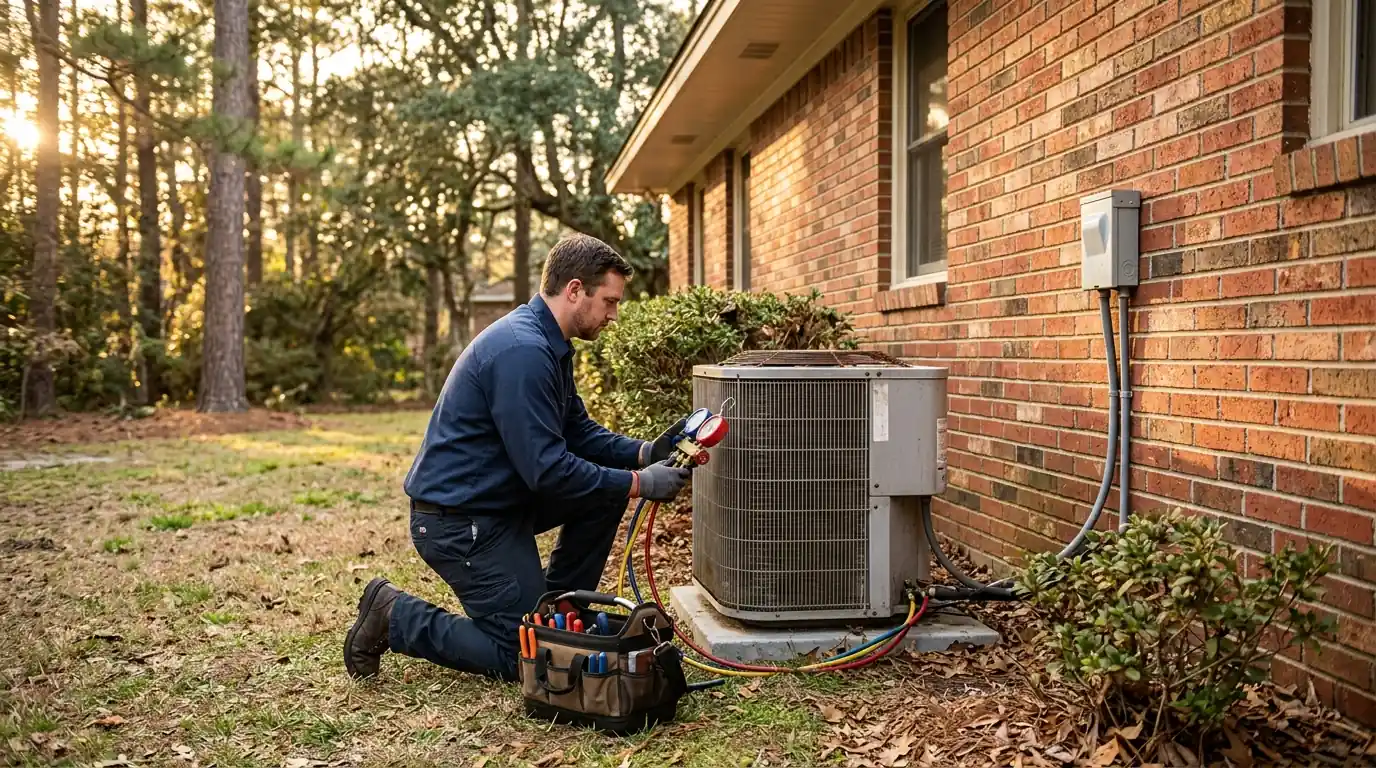
A dual fuel system in Atlanta pairs an electric heat pump with a gas furnace, and the controls hand off to gas below a set outdoor temperature called the balance point. Most winter days sit above that point, so the heat pump does the bulk of the heating while the furnace covers hard freezes.
What dual Fuel Heat Pump Systems involves on a southwest Atlanta call
Dual fuel is not a special box. It is a heat pump outdoors, a gas furnace indoors with a heat-pump-rated coil on top, and a control that decides which one runs. The heat pump moves heat cheaply in mild weather. As it gets colder its output drops while the house needs more, and at some temperature the furnace becomes the smarter source. Getting that handoff right is most of the job.
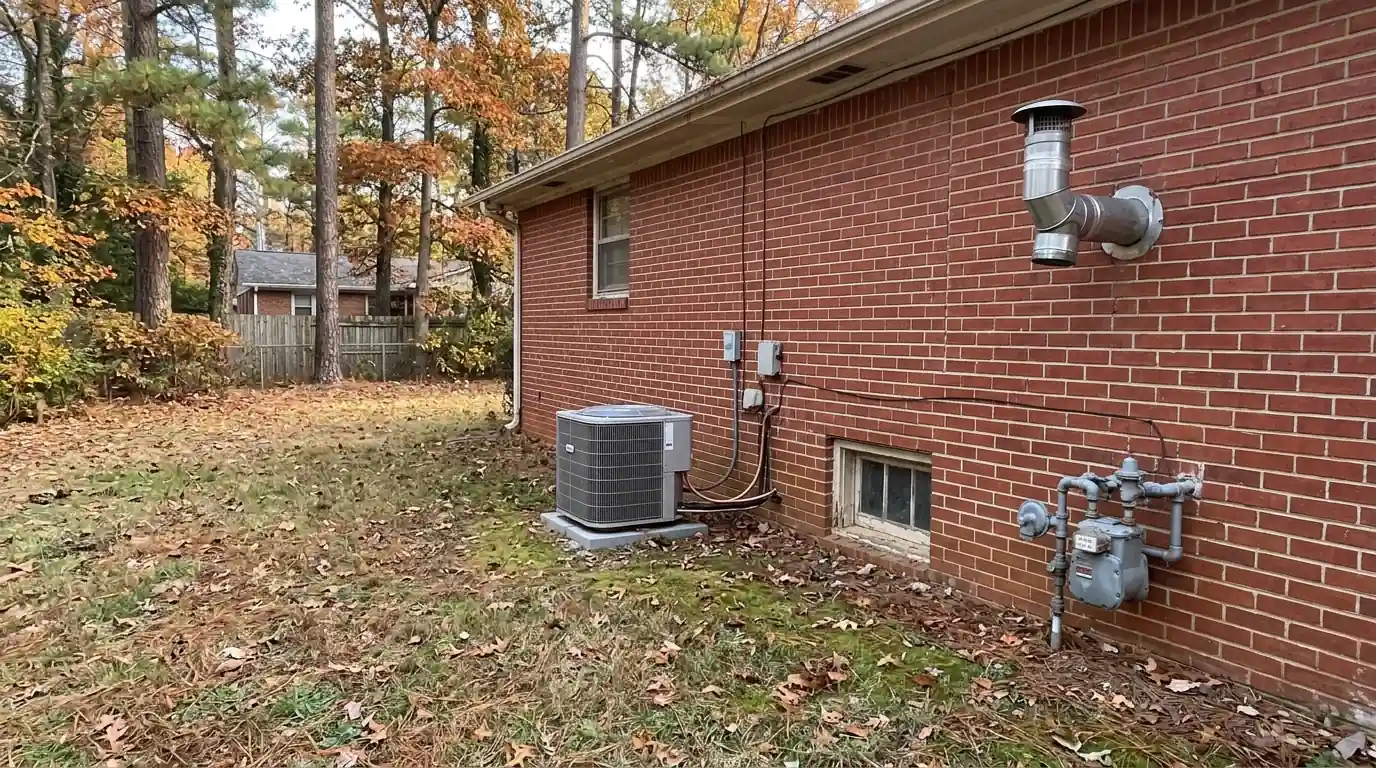
It makes sense when your furnace is sound but the AC is due, because the heat pump replaces the condenser anyway. If you're weighing a full switch away from gas, our guide on choosing a heat pump or gas furnace in Georgia lays out the tradeoffs, and a standalone heat pump may suit an all-electric house better.
Dual fuel or a heat pump with electric strips
Both lean on a heat pump for most of the winter. The difference is what carries the coldest hours.
| Dual fuel | Heat pump with heat strips | |
|---|---|---|
| Cold-night heat source | Gas furnace | Electric resistance strips |
| Feel at the registers | Warm furnace air on freezing nights | Cooler air, strips add heat in stages |
| Needs gas service | Yes | No |
| Fits well when | Furnace is sound and gas is piped | Home is all-electric or has no gas line |
What a dual fuel system costs to plan for
Published ranges for hybrid heat pump installs cover the heat pump, coil and controls. Keeping a furnace that's in good shape usually pulls the total down compared with replacing both.
| Job | Published planning range | Source |
|---|---|---|
| Dual fuel heat pump system installed | $7,500 to $12,000 | Dual Fuel Heat Pump Cost | Hybrid Heat Pump Cost | Fixr.com |
| Heat pump installation in Atlanta | $3,080 to $5,492 | How Much Does a Heat Pump Cost in Atlanta, GA? | Angi |
What moves the number
- Whether the furnace and coil can stay
- Single-stage or variable-speed heat pump
- New refrigerant line set or reuse
- Fuel-switching control or thermostat
- Electrical circuit for the outdoor unit
These are ranges published by the sources linked above, shown for planning. They are not a quote and not our price; the real number depends on what we find at your home.
A heat pump paired with your gas furnace
Most dual fuel jobs start with a furnace that has life left and an AC condenser that doesn't. We swap the condenser for a heat pump of matched capacity, replace or confirm the indoor coil, and run refrigerant piping that lets the coil work in reverse for heating. The furnace blower moves air for both sources. One rule matters: the coil sits downstream of the furnace heat exchanger, so the two must never run together in heating mode, or hot furnace air would drive head pressure in the coil sky high. The control logic and wiring prevent that overlap.
Setting the balance point for your house
The balance point is the outdoor temperature where the heat pump can no longer keep up with the house's heat loss. Above it, the heat pump runs alone. Below it, the furnace takes over. We work it out from a Manual J heat loss figure and the heat pump's published low-temperature capacity, then adjust for what you pay for gas and electricity. The economic changeover can sit higher than the thermal balance point when gas is cheap for you. Set too low, the heat pump runs long cycles of lukewarm air. Set too high, you burn gas you didn't need to.
Adding a heat pump to an existing furnace
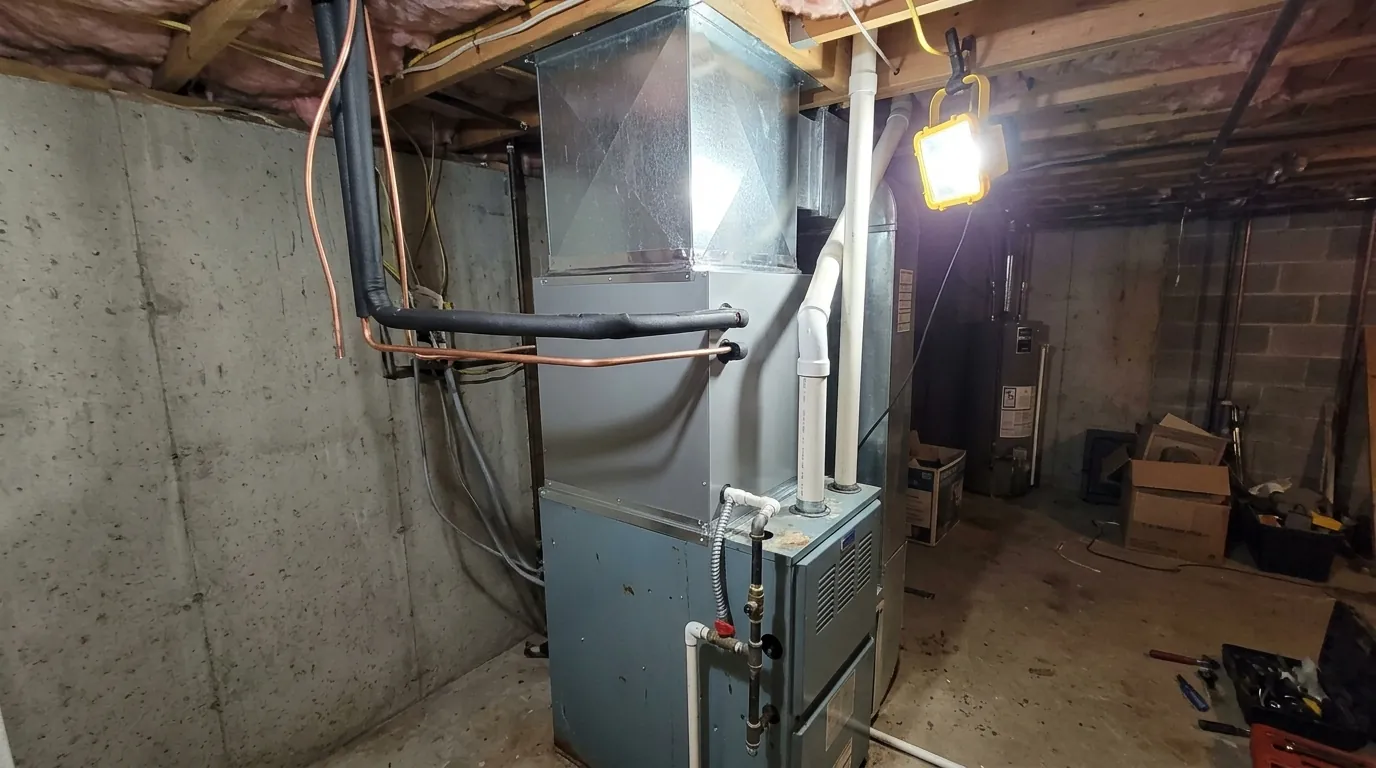
Adding a heat pump to a working furnace starts with checking the furnace itself. We look at the heat exchanger, the blower, and whether the cabinet and plenum leave room for a coil sized to the heat pump. A multi-speed or variable-speed blower helps, because heat pump heating wants more airflow per ton than gas heat does. The furnace needs a fuel-switching kit or a thermostat that handles changeover with an outdoor sensor. When the existing coil is older or the wrong size, we replace it rather than mismatch the system and give up capacity.
What a complete dual fuel install includes
Scope varies a lot between installers. These are the items we include, and the ones worth asking about anywhere.
- Manual J heat loss and heat gain calculation
- Heat pump coil matched to the outdoor unit
- Furnace heat exchanger and flue inspection
- Nitrogen pressure test and deep vacuum on the line set
- Fuel-switching control or compatible thermostat
- Outdoor temperature sensor placement
- Changeover point set from your gas and power rates
- Defrost check, with the furnace tempering air during defrost
How we set up a dual fuel changeover
Heat loss load
We run a Manual J calculation so the heat pump is sized to the cooling load and its heating curve is known.
Furnace check
We inspect the heat exchanger, blower and venting, since the furnace becomes your cold-weather backup.
Coil and line set
We set a heat-pump-rated coil, braze the line set, pressure-test with nitrogen and pull a deep vacuum.
Controls and sensor
We wire the fuel-switching control and mount the outdoor sensor out of direct sun.
Changeover test
We run heat on both sources, confirm they never overlap, and set the changeover from your rates.
Equipment brands we service and install
Most homes around Atlanta run equipment from a handful of major manufacturers. We diagnose, repair and replace Carrier, Trane, Lennox, Goodman, Rheem and Daikin systems, along with the other names below.
Brand names are shown to describe the equipment we work on. We are not claiming a dealer or factory relationship with any manufacturer.
Atlanta homes, weather and this job
Two separate utilities shape the dual fuel math for an Atlanta home. Electricity for much of the metro comes from Georgia Power, which serves more than 2.8 million customers across all but four of the state's counties. Gas arrives through Atlanta Gas Light pipes, but since 1998 that company only delivers it, so you buy the gas itself from a marketer approved by the Public Service Commission. Because your gas rate depends on the plan you picked, we ask to see a recent gas bill and power bill before we set the economic changeover point.
Dual Fuel Heat Pump Systems questions from Atlanta homeowners
No. The furnace still needs power for its inducer, igniter, control board and blower, and the heat pump can't run at all without it. Dual fuel gives you two heat sources, not backup power. A generator sized for the furnace circuit is the usual answer if outages worry you.
Sometimes. It needs heat pump terminals, an auxiliary heat output and fuel-switching logic, ideally with an outdoor sensor. Many basic models lack that last part. We check the model first, and when it can't decide the changeover itself we wire a fuel-switching kit at the furnace or fit a thermostat that handles dual fuel.
There isn't one right number. It depends on your heat pump's low-temperature capacity, how fast the house loses heat, and your gas and power rates. We calculate it for your house, then tune it after the first real cold snap if the furnace is starting earlier or later than it should.
It runs more hours than an AC-only condenser, since it now works in both seasons, and it is built for that duty. What shortens its life is low airflow, a wrong charge or a defrost fault that lets ice build. We check all three at setup and during seasonal heat pump maintenance.
Usually not as a retrofit. A furnace that old is near the end of its heat exchanger life, and dual fuel relies on it for the coldest nights. Replacing both together lets us match the blower, coil and controls from the start instead of pairing a new heat pump with a failing furnace.
Not for dual fuel itself. The furnace you keep uses the same gas piping and venting it always has, and the heat pump adds only refrigerant lines and an electrical circuit. If we replace the furnace at the same time and move to a condensing model, the venting changes to PVC.
Updated October 2026