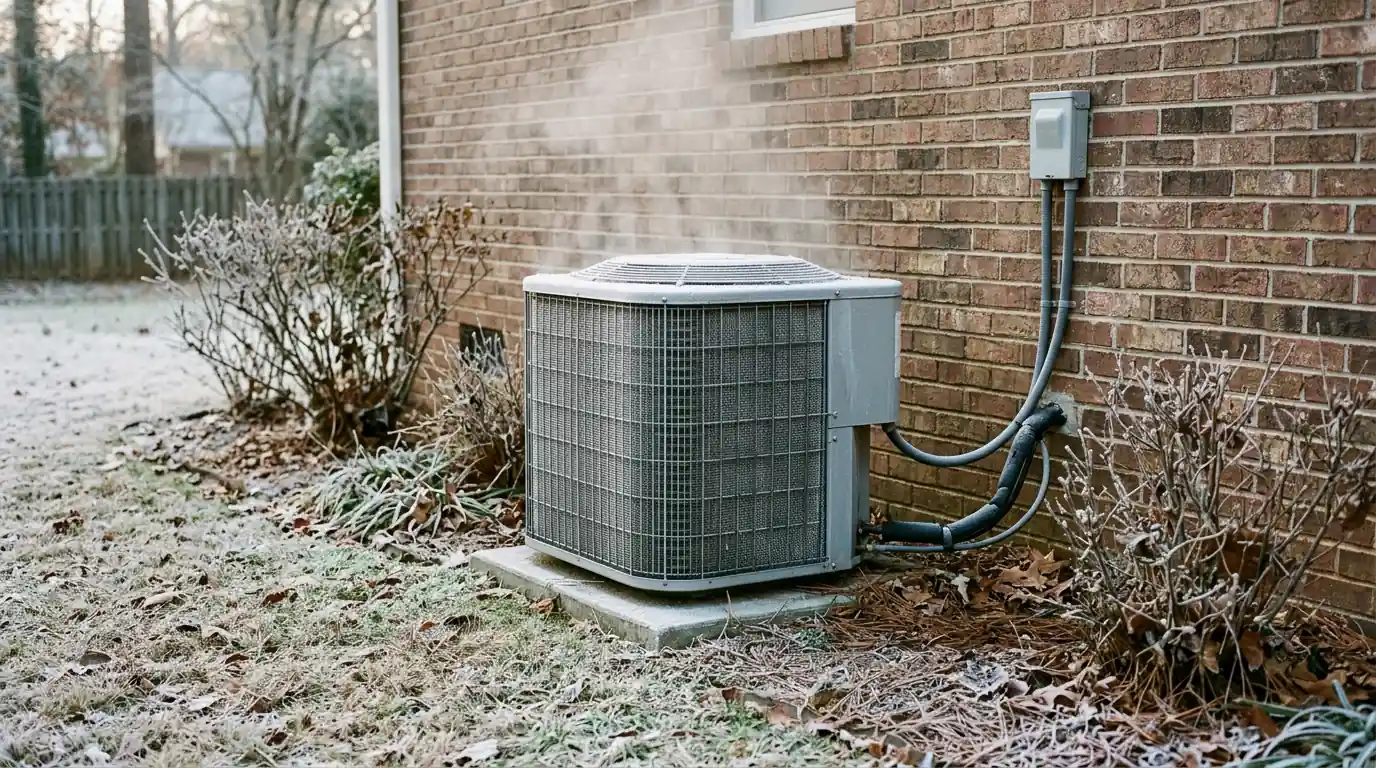
For most Atlanta homes, a heat pump handles the bulk of winter comfortably because January lows average near 34F. A gas furnace still wins on the rare hard freezes, like the 8F night in December 2022. The deciding questions are whether gas is already piped to the house, what your ductwork can carry, and how you feel about those few coldest nights.
Start with what an Atlanta winter actually asks of a system
January in Atlanta averages a high near 52F and a low near 34F, and the city sees overnight freezes on roughly 40 days a year. That is mild heating weather for a modern heat pump, which moves heat from outdoor air into the house instead of making it from fuel.
The exceptions are what make this a real decision. The National Weather Service recorded 8F in Atlanta on December 24, 2022, and January 2025 ran about 4F colder than normal, with a low of 14F on January 22. On nights like those, a heat pump loses capacity just as the house needs more, and its electric backup strips carry the difference.
Question one: is gas already at the house?
If your home has a gas line, a working flue and a furnace already in place, keeping gas heat is the path of least disruption. If the house is all-electric, adding gas means a new service line, piping and venting, which is a project in its own right.
Gas service in this part of Georgia also works differently than in many states. Atlanta Gas Light has been a pipes-only delivery company since 1998 under Georgia's gas deregulation law, so customers on its system buy their gas from a marketer approved by the state Public Service Commission. Electricity for most homes comes from Georgia Power, which serves all but four of the state's 159 counties. Compare both bills over a full year before deciding which fuel to lean on.
Question two: how cold is too cold for you?
A heat pump delivers steady, lower-temperature air. The registers feel warm rather than hot, and runtimes are long. Some people love the even comfort. Others miss the blast of a gas furnace and find the air feels cool on the hand, even when the room is at setpoint.
On the coldest nights, a heat pump with backup heat strips will still keep the house warm, but those strips draw heavily on electricity. A gas furnace produces the same heat output whether it is 40F or 8F outside. If comfort on those handful of hard-freeze nights matters a lot to you, that pushes toward gas or a hybrid.
Question three: what will the ductwork and equipment location allow?
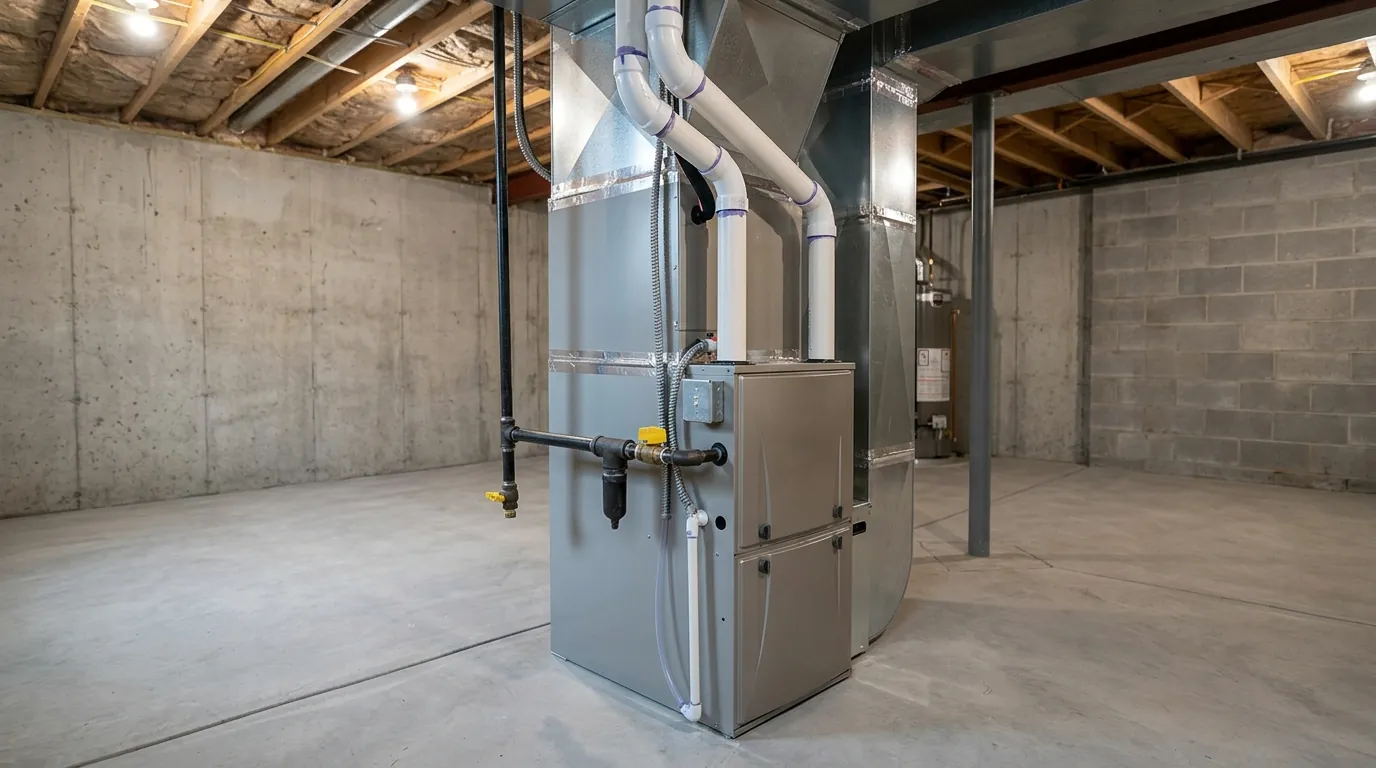
A heat pump air handler and a gas furnace have different footprints, different venting needs and different airflow targets. Heat pumps generally want more airflow per ton than a furnace delivers on heat, so small or leaky ducts hurt a heat pump more. Before choosing, we measure static pressure and look at duct sizing.
Location matters too. An attic furnace needs proper venting, a condensate route if it is a high-efficiency model and safe clearance from framing. A heat pump air handler in the same attic needs only power, a condensate drain and refrigerant lines.
The middle path: a dual fuel system
A dual fuel setup pairs an outdoor heat pump with a gas furnace indoors. The heat pump runs through most of the winter, and when the temperature falls below a set balance point, the system switches to gas. You get the efficiency of a heat pump on mild days and the full output of gas on the rare deep freeze.
It is not free of tradeoffs. Two kinds of equipment mean two kinds of maintenance, and the balance point has to be set carefully against your utility rates. For a house that already has gas and a furnace in decent shape, adding a heat pump to the existing furnace can be a sensible step.
A quick decision table for Georgia homeowners
These are starting points, not rules. Your house, utility rates and comfort preferences can tip any of them.
- All-electric house, decent ducts: a properly sized heat pump with modest backup strips is usually the natural fit
- Gas already piped, furnace near end of life: compare a new furnace plus AC against a dual fuel pairing
- Gas furnace still healthy, AC failing: a heat pump in place of the AC turns the setup into dual fuel
- Older home with small ducts: fix the duct system first, because a heat pump is less forgiving of low airflow
- Strong preference for hot air at the register: gas or dual fuel will feel more familiar
Questions readers ask about this
Yes, but with reduced capacity. A standard heat pump keeps running and leans more on its electric heat strips as the temperature falls. Cold-climate variable-speed models hold capacity further down. Either way, the house stays warm; the question is how much electricity the backup uses.
Look at SEER2 for cooling and HSPF2 for heating. Since January 1, 2023, split-system heat pumps must meet at least 14.3 SEER2 and 7.5 HSPF2 nationally. Higher numbers mean more heat moved per unit of electricity, which matters more in a long cooling season.
In summer they sound similar, because they are the same kind of outdoor unit. In winter you may notice defrost cycles: a brief whoosh and some steam from the outdoor coil. That is normal. Our heat pump troubleshooting page covers what abnormal defrost behavior looks like.
Yes. The water heater and the space heating system are separate. Many Atlanta homes run a heat pump for heating and cooling while keeping gas for the water heater, range or fireplace, so the gas account stays open either way.
Any fuel-burning appliance needs working venting and CO alarms. A heat pump burns nothing, so it adds no combustion risk. With a furnace, an annual check of the heat exchanger, flue and draft is a reasonable habit, and a gas safety and CO test covers it.
Neither one adds or removes much moisture in heating mode. Dry winter air comes from cold outdoor air leaking in and being warmed. The lower supply air temperature of a heat pump can feel less parching, but sealing air leaks does more for winter dryness than the heat source.
Services this article points to
Heat Pump Installation
Heat pump installation in Atlanta must meet federal minimums of 14.3 SEER2 and 7.5 HSPF2 for split systems, and new equipment uses lower-GWP refrigerants such as R-454B.
Furnace Replacement
Furnace replacement in Atlanta starts with choosing between an 80 percent furnace that vents through a metal flue and a 95 percent condensing furnace that vents through PVC and needs a drain.
Dual Fuel Heat Pump Systems
A dual fuel system in Atlanta pairs an electric heat pump with a gas furnace, and the controls hand off to gas below a set outdoor temperature called the balance point.
Heat Pump Repair
Heat pump repair in Atlanta usually involves one of three systems: the defrost controls that clear ice from the outdoor coil, the reversing valve that switches between heating and cooling, or the backup heat strips.