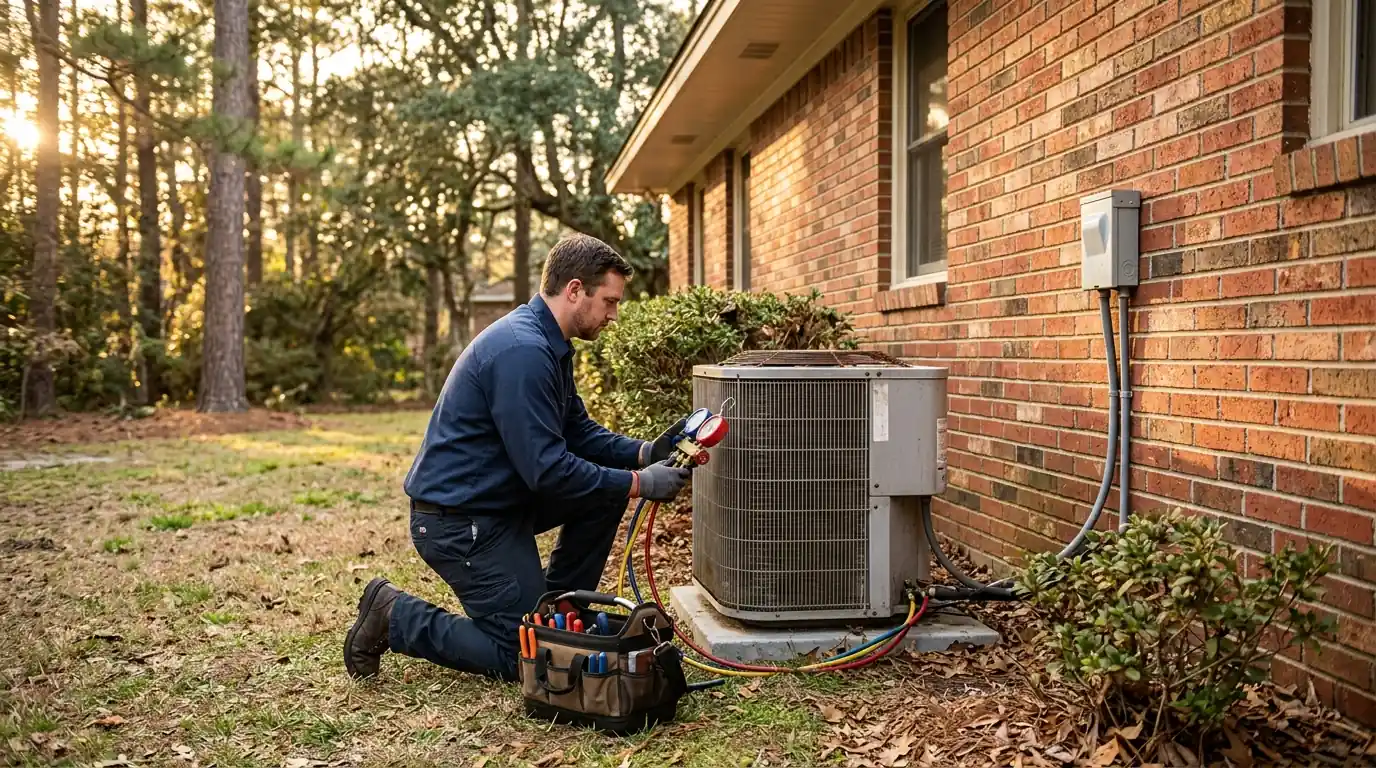
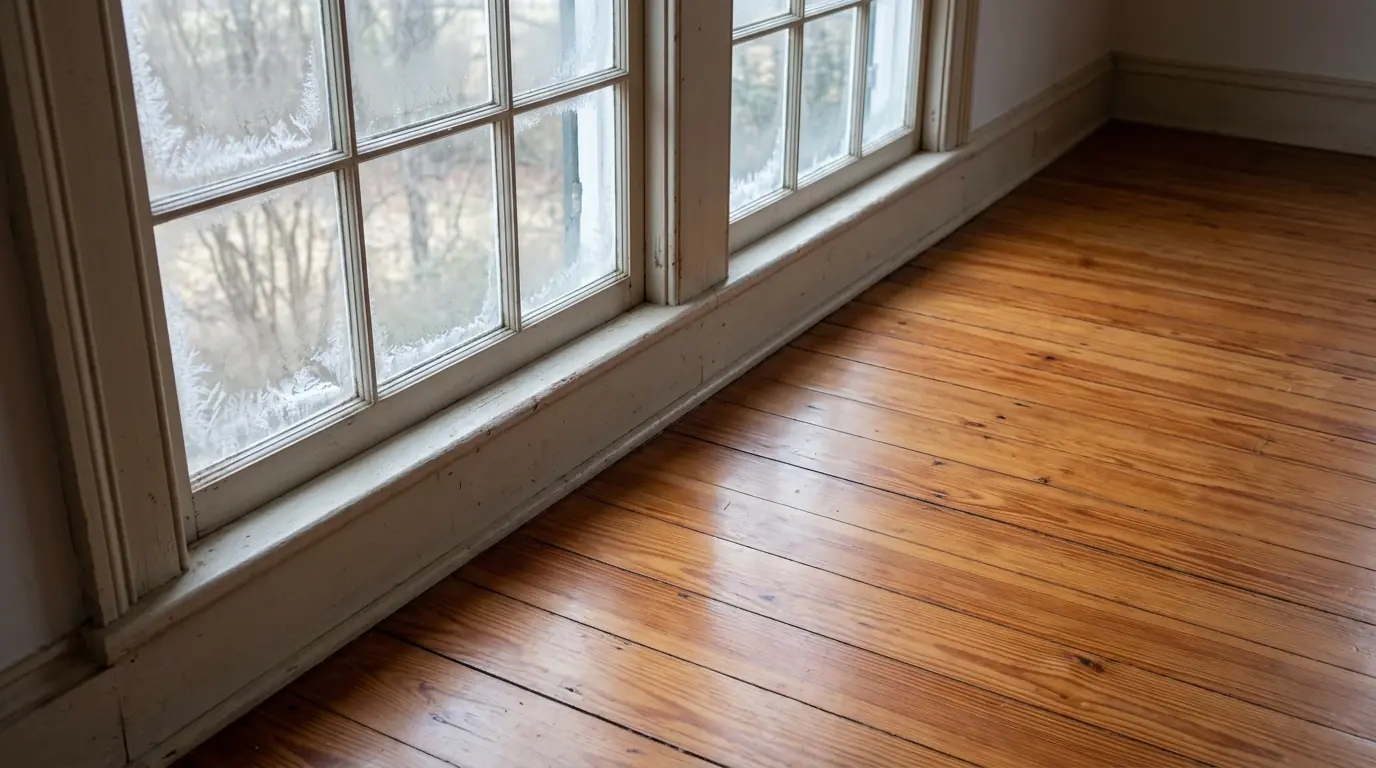
A whole-home humidifier in Atlanta adds moisture to heated air during the coldest weeks, when indoor humidity can drop into the 20s. Most homes here do well with a bypass unit on the furnace; steam units suit heat pumps and tighter houses. Either way, the setpoint has to come down on freezing nights to keep condensation off windows.
Whole-Home Humidifiers: what we check and why it matters
Warming cold outdoor air lowers its relative humidity sharply, so a house that feels fine in October can feel parched in January. Portable humidifiers help one room and need daily refills. A whole-home unit mounts on the furnace or air handler, feeds from a water line, drains to the condensate system and is run by a humidistat.
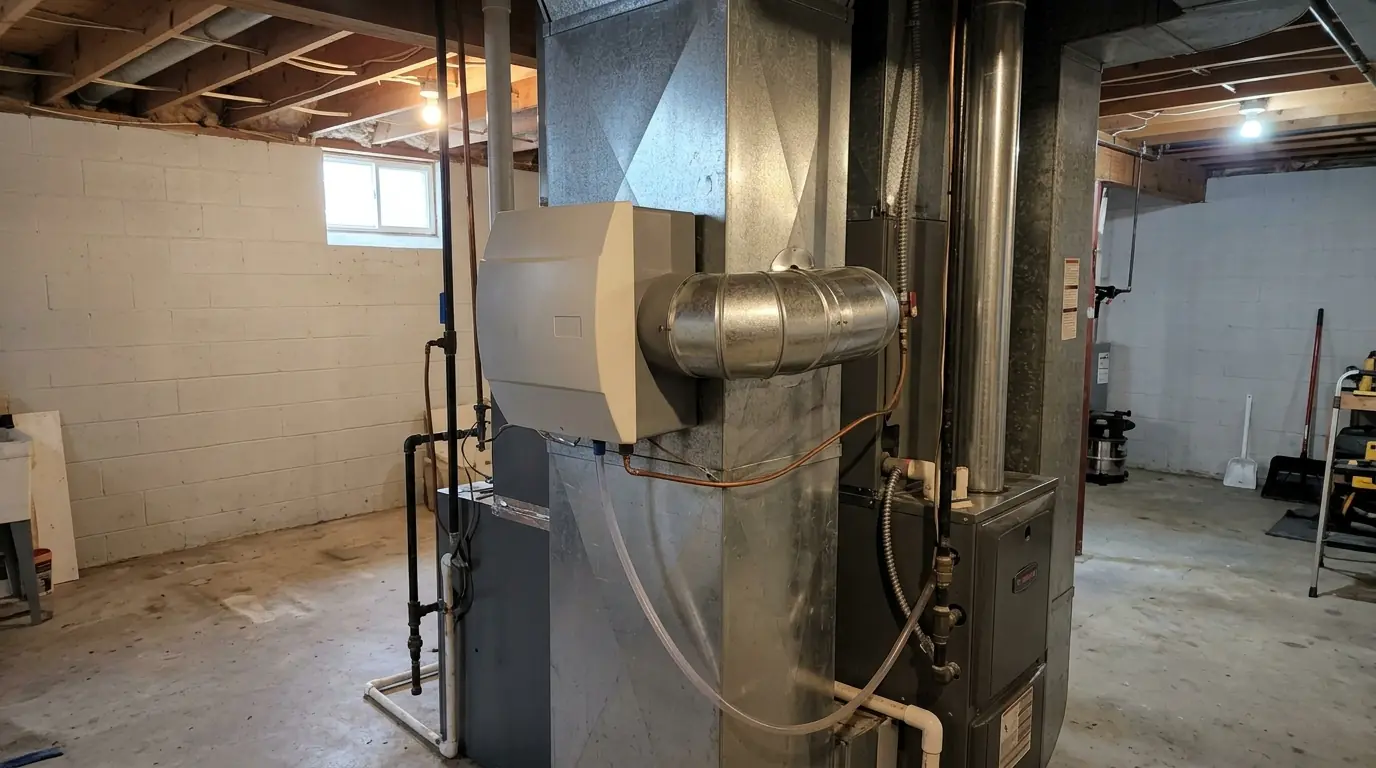
Atlanta is not a dry climate most of the year, which is why sizing and control matter. Too much moisture on a cold night ends up as condensation on windows and in exterior walls. We usually fit an outdoor temperature sensor so the target lowers automatically as it gets colder, and we take care of the furnace tune-up side while we are at the equipment.
Bypass pad or steam canister for your house?
Both add moisture through your ducts. The heat source and how much control you want usually decide it.
| Bypass humidifier | Steam humidifier | |
|---|---|---|
| Works with | Gas furnaces mostly | Furnaces and heat pumps |
| Power needed | Small valve only | Dedicated electrical circuit |
| Yearly upkeep | Replace the evaporator pad | Clean or replace the canister |
| Output | Depends on furnace run time | Steady and independent of heat |
Planning range for a whole-home humidifier
The published range below includes the unit and labor and is a planning figure, not our pricing. Steam units with their own circuit tend to sit above it.
| Job | Published planning range | Source |
|---|---|---|
| Whole-home humidifier, unit and labor | $392 to $768 | How Much Does It Cost to Install a Whole-House Humidifier? [2025 Data] - HomeAdvisor |
What moves the number
- Bypass, fan-powered or steam design
- Water supply run to the furnace
- Drain access near the equipment
- Dedicated circuit for steam units
- Outdoor temperature sensor and control
These are ranges published by the sources linked above, shown for planning. They are not a quote and not our price; the real number depends on what we find at your home.
Bypass humidifiers
A bypass unit mounts on the supply or return plenum with a small duct between them. When the furnace runs and the humidistat calls, a solenoid lets water trickle over an evaporator pad, and warm air pushed through the bypass picks up moisture. It is simple, quiet and uses no extra electricity beyond the valve. The tradeoffs: it only works while the heat is on, it sends some water to the drain, and the pad needs replacing each season. It makes sense on gas furnaces in homes of typical tightness, which covers most of the houses we see.
Steam humidifiers
A steam unit boils water in a canister and injects the vapor into the duct, so it does not rely on warm supply air. That makes it the stronger choice with heat pumps, whose supply air is cooler than a gas furnace's, and in homes that need precise control. It needs a dedicated electrical circuit, a drain that can handle hot water, and canister or electrode service depending on water hardness. It makes sense when a bypass unit cannot keep up or the system is a heat pump. See our heat pump installation page if a system change is coming.
Winter static and dry air
The signs are easy to notice: shocks from door handles, dry skin and lips, nosebleeds, guitars going out of tune, and gaps opening between hardwood boards. A hygrometer reading under 30 percent confirms it. Before adding a humidifier, we check for big air leaks, since a drafty house loses moisture as fast as you add it and pulls in more dry outdoor air. Holding 35 to 40 percent on milder days and lower on hard freezes usually eases the symptoms without wetting windows. If moisture is a problem in summer instead, a dehumidifier is the opposite tool.
Questions to settle before a humidifier goes in
These details separate an install that works for years from one that drips or overshoots.
- Which unit type fits your heat source
- Supply or return plenum mounting and access
- Where the water supply line will be tapped
- Where the drain line will run
- Whether an outdoor temperature sensor is included
- Which control holds the humidity setpoint
- When pads or canisters will need replacing
- How the unit gets shut down for summer
How a humidifier goes onto your system
Check the house and system
We read indoor humidity, look for major air leaks, and confirm whether the heat source is a gas furnace or heat pump.
Pick the type and mount point
We choose bypass or steam and decide on supply or return mounting based on plenum space and airflow.
Run water and drain
We tap a cold water line with a saddle or tee valve and route the drain to the condensate line or a floor drain.
Wire the controls
We wire the humidistat, solenoid or steam controller and the outdoor temperature sensor.
Set targets and test
We run a heating cycle, confirm water flow and set the humidity target for the current outdoor temperature.
Equipment brands we service and install
Most homes around Atlanta run equipment from a handful of major manufacturers. We diagnose, repair and replace Carrier, Trane, Lennox, Goodman, Rheem and Daikin systems, along with the other names below.
Brand names are shown to describe the equipment we work on. We are not claiming a dealer or factory relationship with any manufacturer.
Atlanta homes, weather and this job
Older houses in our home county pose a particular winter problem. Newnan, the seat of Coweta, calls itself the City of Homes for its antebellum houses and has six historic districts on the National Register, and about 73 percent of occupied homes across Coweta are owner-occupied. Old plaster, heart pine floors and original millwork shrink when indoor air gets too dry, yet a loose older envelope also leaks out the moisture you add. In those houses we set humidity targets conservatively and look at air leakage before deciding between a bypass pad and steam.
Whole-Home Humidifiers questions from Atlanta homeowners
Roughly 35 to 40 percent on milder days, lowering to 25 to 30 percent when nights drop near freezing. If you see fog or droplets on the inside of windows, the setting is too high for that night. An outdoor sensor makes those adjustments for you.
It can if it is oversized, left on a high setting or not shut down for summer. Water condensing in walls or on windows feeds mold. Correct sizing, an outdoor reset control and turning the water off when cooling season starts prevent that.
Usually. Heat pump supply air is cooler than a gas furnace's, so a bypass pad picks up less moisture. Steam units add moisture regardless of air temperature, which is why we often recommend them for heat pump homes.
For a single room, often yes, if you clean and refill it daily. Whole-home units make sense when the whole house feels dry or you are tired of tanks. Portable units also tend to overshoot near windows in small rooms.
Moist air feels a little warmer at the same temperature, so some people turn the thermostat down a degree. The bigger savings usually come from sealing leaks, since a drafty house also dries out faster. Our attic air sealing work addresses both.
Replace the evaporator pad before heating season, clear mineral scale from the distribution tray, check that the solenoid opens and closes, and close the bypass damper for summer so humid cooling air does not short-circuit the coil.
Updated October 2026