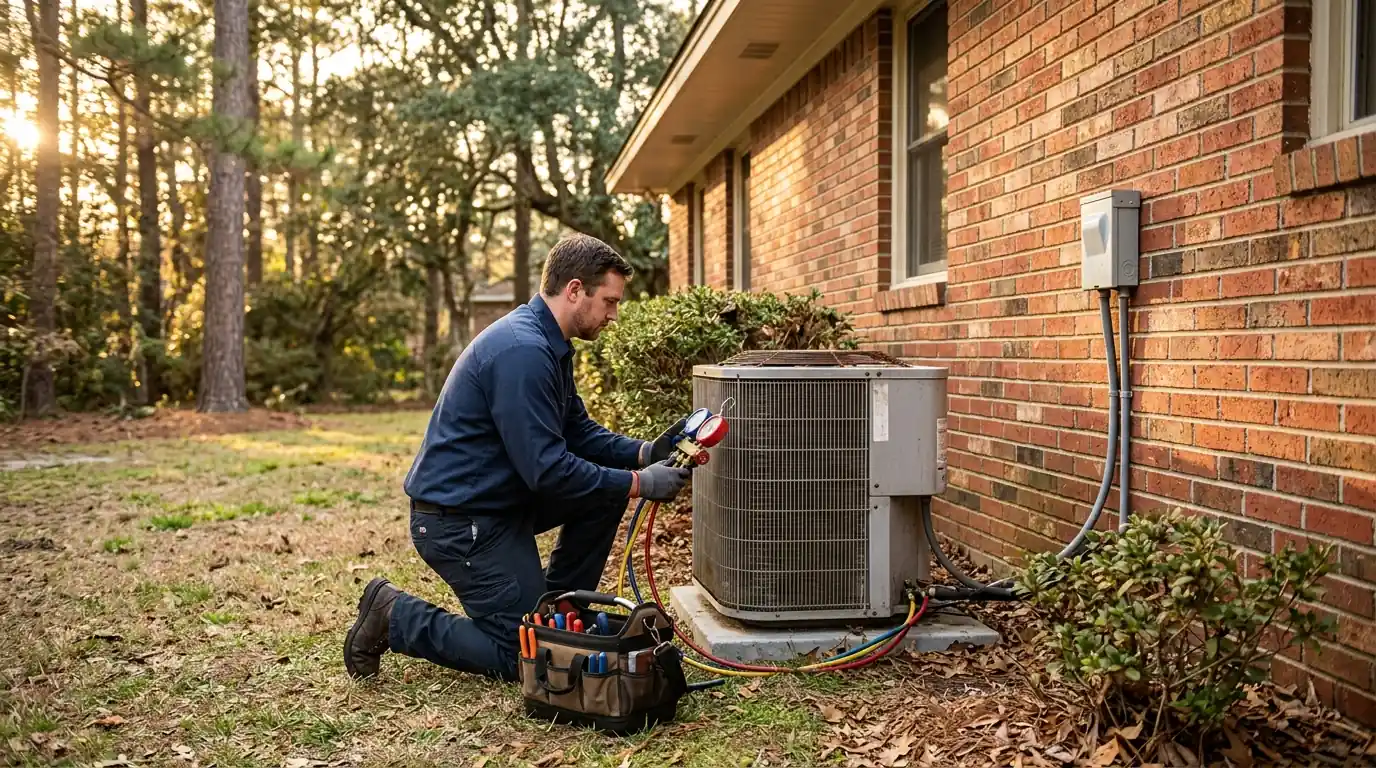
Smart thermostat installation in Atlanta usually hinges on the C-wire, the common wire that gives the thermostat steady 24-volt power. Many older homes don't have one at the wall. We add a wire or an adapter at the equipment, then set the thermostat for your exact system type so heat pumps and auxiliary heat behave.
Smart Thermostat Installation: what we check and why it matters
A thermostat is a set of switches on low-voltage wires. Each wire tells the equipment to do one thing: cool, heat, run the fan, switch the reversing valve, bring on backup heat. A smart thermostat adds a radio and a screen, and those need constant power, which older thermostats never did. Most installation trouble traces back to that or to setup menus that don't match the equipment.
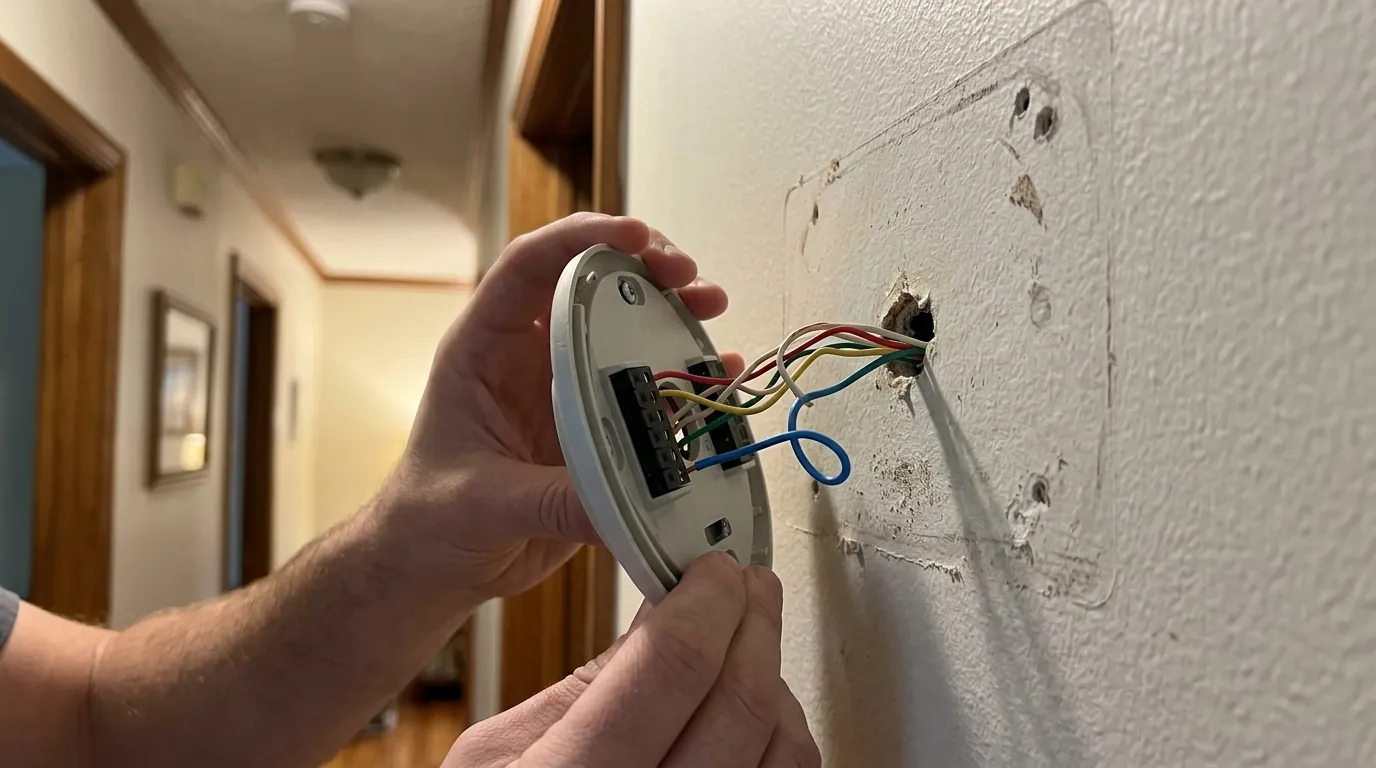
Wiring a heat pump wrong is common and costly. If the reversing valve output is set backward, the system cools in heat mode. If aux heat isn't locked out above a sensible temperature, strips run on mild mornings. When the equipment itself has faults, that's air handler repair, not a thermostat problem.
Third-party smart thermostat or the maker's own control
On basic systems any good smart thermostat works. On staged and communicating systems, the choice matters.
| Third-party smart thermostat | Maker's communicating control | |
|---|---|---|
| Works on basic single-stage systems | Yes | Usually not needed |
| Variable-speed and staging | Limited to wired stages | Full range |
| Fault codes on the screen | No | Yes |
| Fits well when | Standard 24-volt equipment | Communicating or variable-speed equipment |
What smart thermostat installation runs
The published range below includes the thermostat itself and professional installation. Wiring work at the equipment adds to it.
| Job | Published planning range | Source |
|---|---|---|
| Smart thermostat with installation | $200 to $500 | How Much Does It Cost to Install a Smart Thermostat? (2026) - HomeGuide |
What moves the number
- Whether a C-wire is available
- Heat pump or dual fuel configuration
- Communicating system compatibility
- Zone panel or humidifier on the same transformer
- Wall patching where the old base sat
These are ranges published by the sources linked above, shown for planning. They are not a quote and not our price; the real number depends on what we find at your home.
Missing C-wire fixes
Without a C-wire, many smart thermostats try to steal power through the heating or cooling wire. That works until it doesn't: the screen goes dark, Wi-Fi drops, or the furnace short-cycles because the thermostat is leaking current into the call. The fix is a real common. Often there's an unused conductor in the cable already, and we connect it at both ends. If not, we pull a new cable or fit an add-a-wire adapter at the air handler or furnace board. We check transformer capacity too, since a zone panel or humidifier may share it.
Heat pump and dual fuel wiring
Heat pumps add an O/B wire for the reversing valve and a W2 or AUX wire for backup heat. The thermostat must know whether the valve energizes in cooling or heating, which differs by brand. Then it needs aux heat lockout and compressor lockout temperatures set sensibly, ideally with an outdoor sensor. On a dual fuel system, the thermostat must never call gas heat and the heat pump at the same time. We set those menus, then test every mode before leaving.
Communicating systems
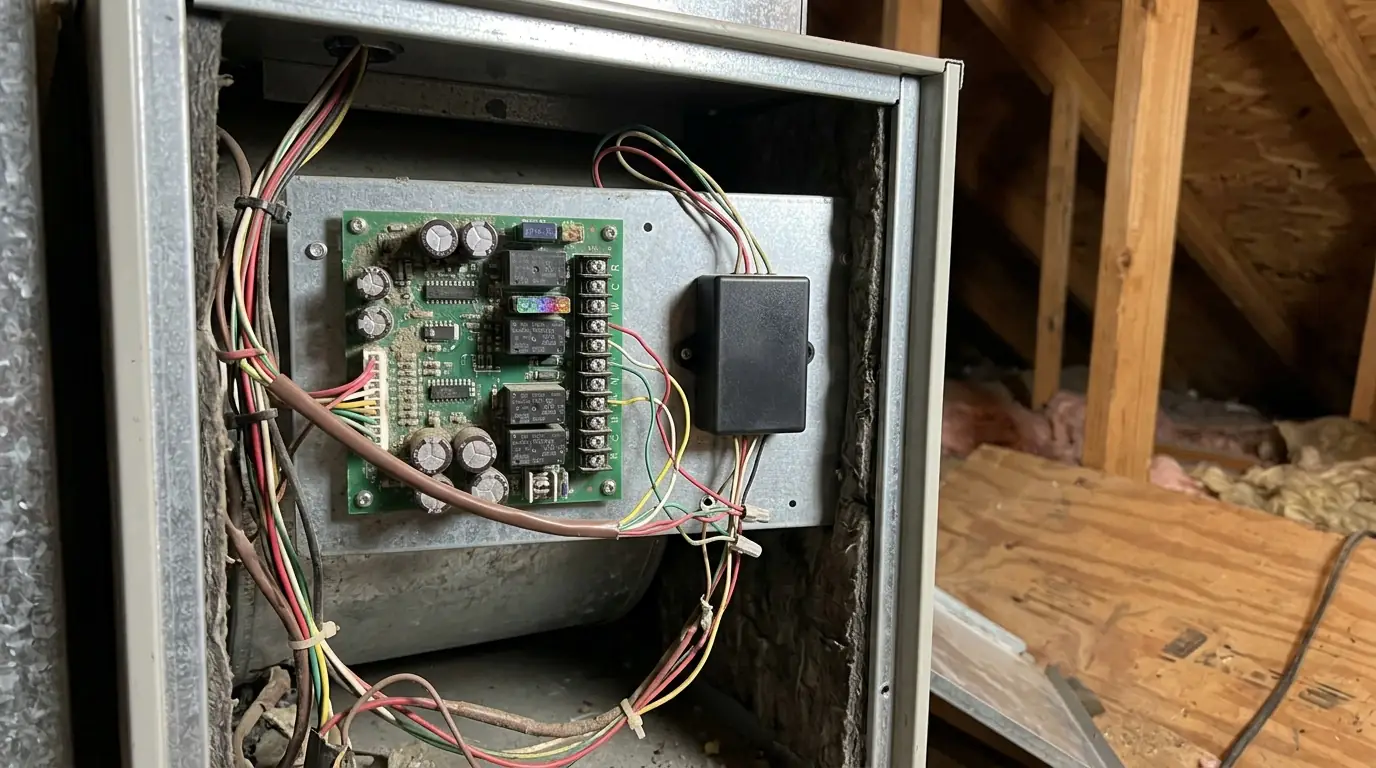
Some variable-speed systems use communicating controls: the thermostat, air handler and outdoor unit talk over a digital bus, often on just four wires. They share fault codes, set airflow and run the compressor at partial speed. A generic smart thermostat on those terminals can't speak that language. It may run the system as basic single-stage equipment, or not at all, and you lose the efficiency you paid for. If you want app control on a communicating system, we usually recommend the maker's own thermostat or a gateway built for it.
Doing it yourself versus calling us
Plenty of owners swap thermostats themselves. These are the spots where it goes sideways.
| Task | What you can do | Where a technician comes in |
|---|---|---|
| Simple gas furnace and AC swap | Doable with photos of the old wiring | Needed if there's no C-wire |
| Heat pump with aux heat | Risky: O/B and lockout settings are easy to get wrong | Wire and set lockouts, test defrost |
| Dual fuel or communicating system | Not recommended | Match controls to the equipment |
| Thermostat on line voltage baseboard heat | Don't: these carry 120 or 240 volts | Line-voltage rated thermostat only |
Our thermostat wiring and setup steps
Identify the equipment
We read the air handler, furnace and outdoor unit data plates to confirm system type and stages.
Trace every wire
We match each conductor at the wall to its terminal at the equipment, not just the label on the old base.
Provide a common
We connect a spare conductor, pull new cable, or install an adapter at the board.
Configure menus
We set O/B polarity, stages, aux lockout and fan timings for your system.
Test each mode
We run cool, heat, emergency heat and fan, checking temperatures at the supply register.
Equipment brands we service and install
Most homes around Atlanta run equipment from a handful of major manufacturers. We diagnose, repair and replace Carrier, Trane, Lennox, Goodman, Rheem and Daikin systems, along with the other names below.
Brand names are shown to describe the equipment we work on. We are not claiming a dealer or factory relationship with any manufacturer.
The local side of smart Thermostat Installation
Gas prices are one input a dual fuel thermostat needs, and in metro Atlanta they depend on you. Atlanta Gas Light has been delivery-only since 1998 under Georgia's 1997 deregulation law, so homes on its pipes buy gas from a marketer approved by the Public Service Commission, each with its own rates. A smart thermostat with a fuel-cost setting can only choose the cheaper heat source if it knows your actual price per therm. During setup we enter your rate, not a default, and show you where to update it if you switch marketers.
Smart Thermostat Installation questions from Atlanta homeowners
Almost always a power problem. Without a C-wire, the thermostat runs on a battery or trickle current and drops out when the battery sags or the system is idle. A proper common wire ends it. A blown low-voltage fuse at the equipment can cause it too.
It can, mostly by keeping backup heat off when the heat pump can handle the load and by avoiding big setback recoveries that trigger strips. Settings matter more than the brand. A thermostat set up badly can raise the bill.
Usually yes, if the furnace has a standard 24-volt control circuit. Very old millivolt gas systems and wall furnaces need a different kind of thermostat. We confirm the control voltage before you buy anything.
On an interior wall, roughly chest height, away from supply registers, sunny windows, kitchens and exterior doors. In a two-story house, one thermostat downstairs can't read the upper floor. Remote sensors help, and zoning goes further.
On a heat pump, the reversing valve setting is backward: the thermostat energizes the O/B wire in the wrong mode. It's a menu change, not a broken system. We set it and confirm by checking supply air in both modes.
Yes. We'll check compatibility first. If it can't run your system properly, such as a communicating variable-speed unit, we'll tell you before installing it so you can return it.
Updated October 2026