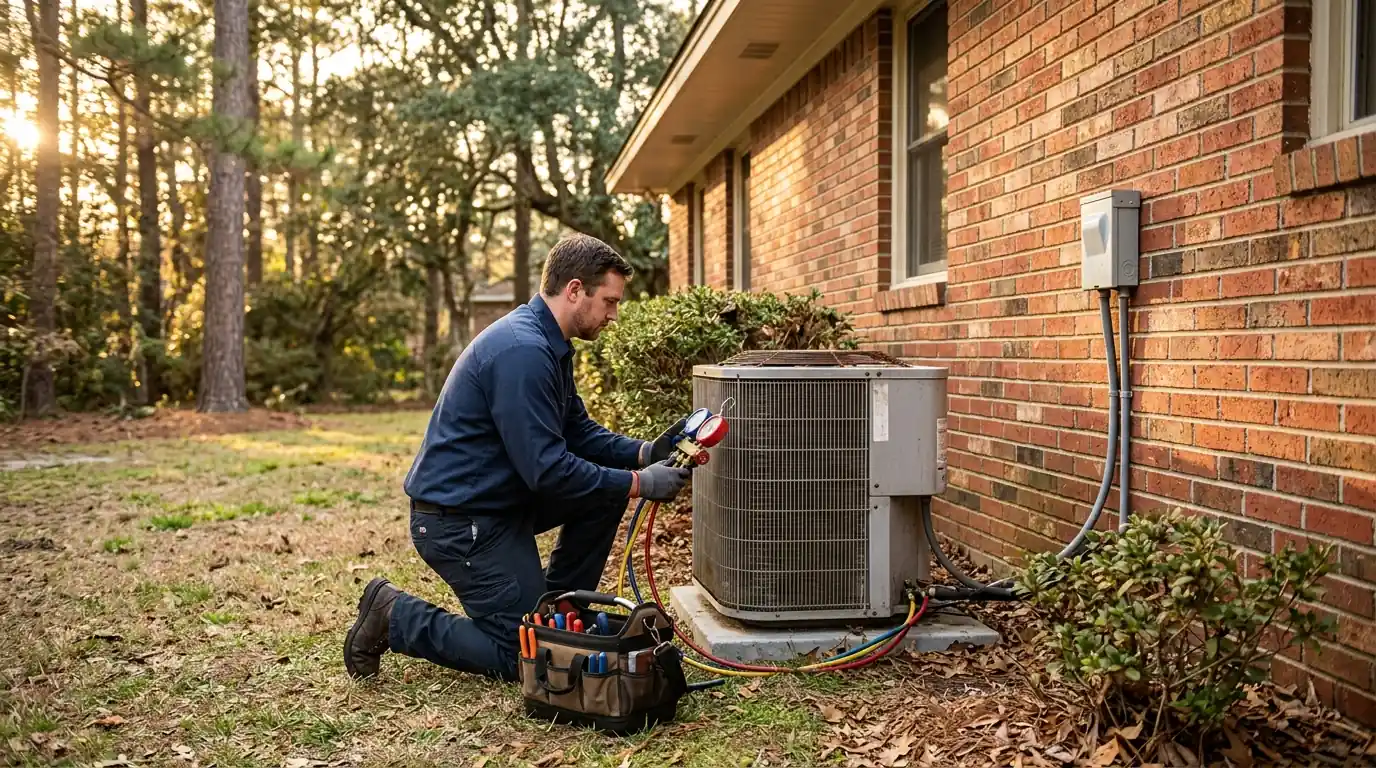
AC replacement in Atlanta must meet the Southeast SEER2 minimum, which for most homes means 14.3 SEER2 on a split system under 45,000 Btu/h. Above that floor, the choices that matter are sizing from a load calculation, matching the indoor coil to the condenser, and picking between remaining R-410A stock and a newer A2L system.
How we handle AC Replacement & Installation in Atlanta
Replacement is the moment to fix what the old system never did well. Hot bedrooms, a clammy house at 75 or short cycling on mild days often trace to sizing or ductwork rather than equipment. We start with a Manual J load calculation and a look at the ducts, not the tonnage on the old data plate.
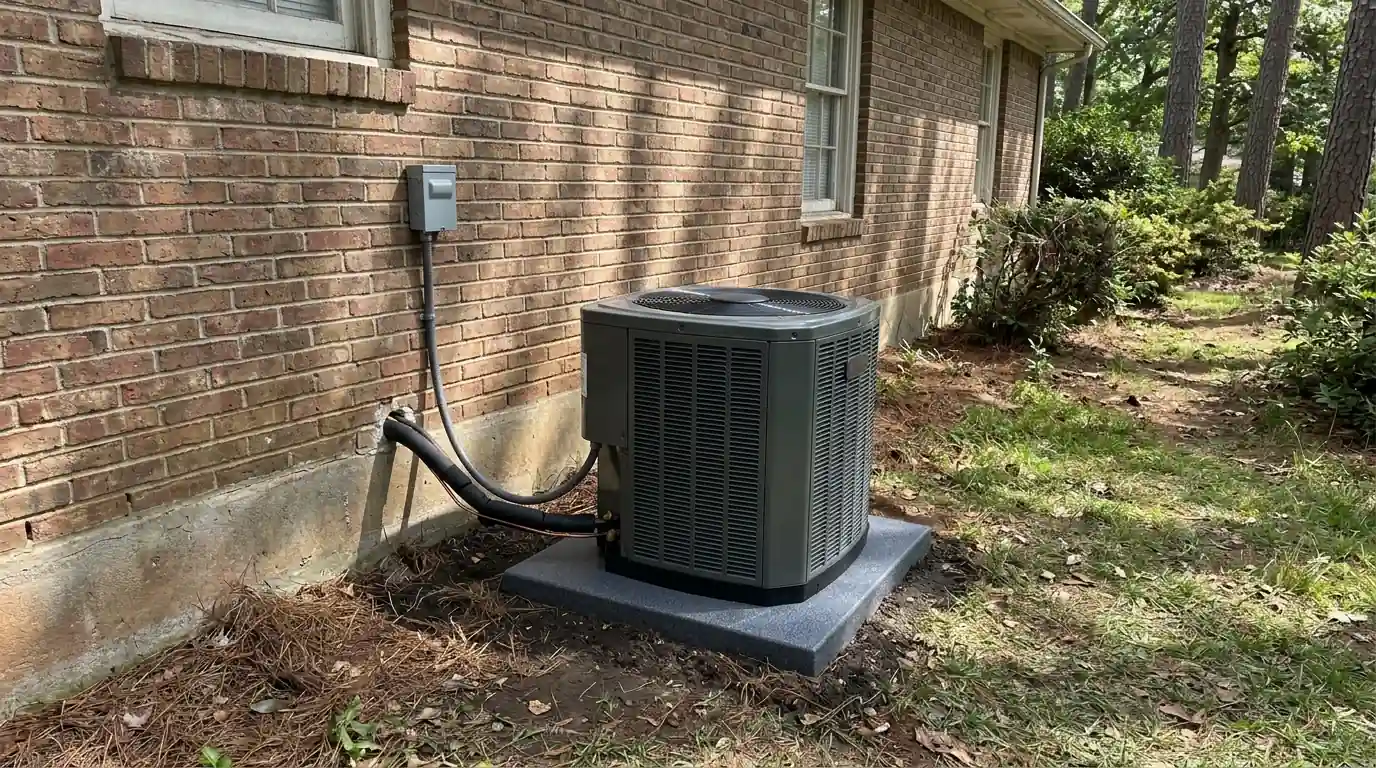
Refrigerant is part of the decision now. New production uses mildly flammable A2L refrigerants such as R-454B and R-32, while some R-410A equipment built earlier can still be installed. Our refrigerant guide for Georgia homes lays out the tradeoffs, and we go over parts availability for each before you choose.
Full system or condenser only?
How the two common replacement routes compare.
| Full split system | Condenser only | |
|---|---|---|
| Upfront cost | Higher | Lower |
| Efficiency rating | Valid as a matched set | Valid only if the old coil is a listed match |
| Refrigerant choice | Can move to an A2L system | Locked to the coil's refrigerant |
| Next likely failure | No old parts left | Older coil or blower |
Published AC replacement ranges for Atlanta and Georgia
Published ranges vary with what each source counts. The Atlanta figure reflects typical condenser and coil jobs, while the Georgia figure assumes a full condenser and air handler. None is our price.
| Job | Published planning range | Source |
|---|---|---|
| Central AC replacement, Atlanta | $3,354 to $6,637 | How Much Does AC Replacement Cost in Atlanta, Georgia? | Angi |
| Condenser plus air handler, Georgia | $9,800 to $12,800 | How Much Does It Cost to Replace an AC Unit in Georgia? | HVAC.com |
| Furnace and AC replaced together, Atlanta | $5,005 to $12,513 | How Much Does Furnace and AC Replacement Cost in Atlanta, GA? | Angi |
What moves the number
- Tonnage from the load calculation
- Whether the furnace or air handler is replaced too
- New line set versus flushing the old one
- Return air and duct corrections
- Single-stage versus two-stage or variable-speed equipment
- Attic, closet or crawl space access
These are ranges published by the sources linked above, shown for planning. They are not a quote and not our price; the real number depends on what we find at your home.
Full split-system replacement
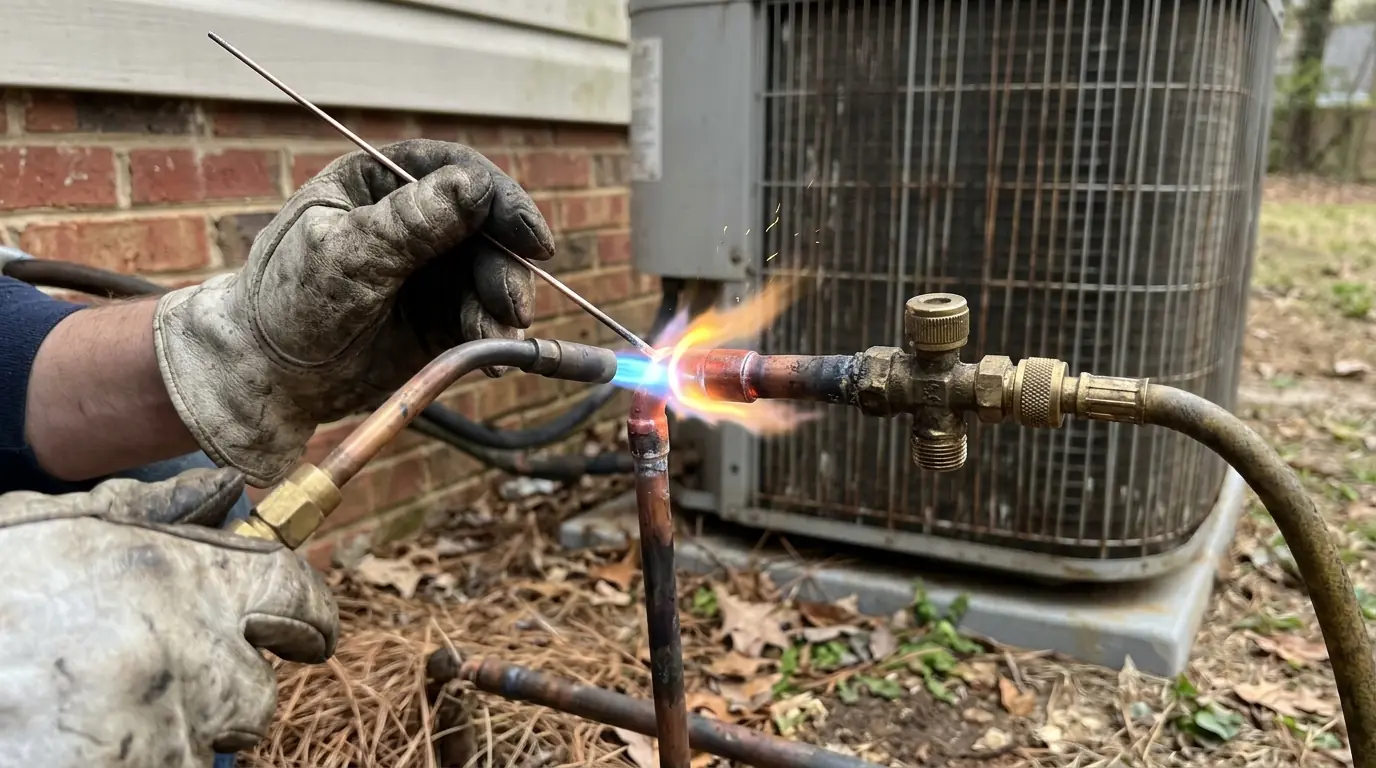
Replacing the outdoor condenser, indoor coil and furnace or air handler together is the cleanest path when a system is past fifteen years or still runs R-22. Every part is rated to work together, the line set can be replaced or flushed, and the blower is matched to the coil. We recover the old refrigerant, braze under a nitrogen purge, pressure-test, evacuate to a deep vacuum and charge by subcooling. It costs more up front, but it resets the clock on every major component instead of leaving an old blower or coil as the next failure.
Condenser-only replacement
Swapping only the outdoor unit looks cheaper when the indoor coil is fairly new. It can work if the coil uses the same refrigerant, has a compatible metering device and appears in an AHRI-matched combination with the new condenser. Without that match, the rated efficiency is not real and the system may run with the wrong superheat. It never works across refrigerants: an R-22 coil cannot be paired with an R-410A or A2L condenser. We check the coil model number against the manufacturer's match tables before recommending this route, and we will tell you plainly when it does not fit.
First central AC in an older home
Houses built before central air was common, or cooled for years by window units, need more than equipment. The work includes finding room for an air handler or a furnace coil, running supply and return ducts through an attic or crawl space, adding a dedicated circuit and planning a condensate route. Return air is where these jobs go wrong, because one undersized return starves the blower and makes the system loud. Where ducts cannot reach without tearing into plaster, a ductless mini-split may cover a room or wing better than a forced duct run.
Matching the coil and air handler
The rating on a new condenser only holds when the indoor coil and blower are a listed match. A mismatched coil can be too small to carry the capacity, too large to pull moisture, or fitted with a fixed piston when the condenser calls for a TXV. We size the coil to the condenser, confirm the blower can move roughly 350 to 400 CFM per ton at the duct system's static pressure, and slow the fan where humidity removal matters more than raw airflow. In a muggy Atlanta summer, that dehumidification setting is often what makes the house feel right at a normal thermostat setting.
What a complete AC replacement should include
Bids that look alike on paper can cover very different work. Ask whether each of these is included.
- A written load calculation, not a tonnage copied from the old unit
- An AHRI-matched condenser, coil and blower combination
- Refrigerant recovery from the old system
- A new or properly flushed line set sized for the new unit
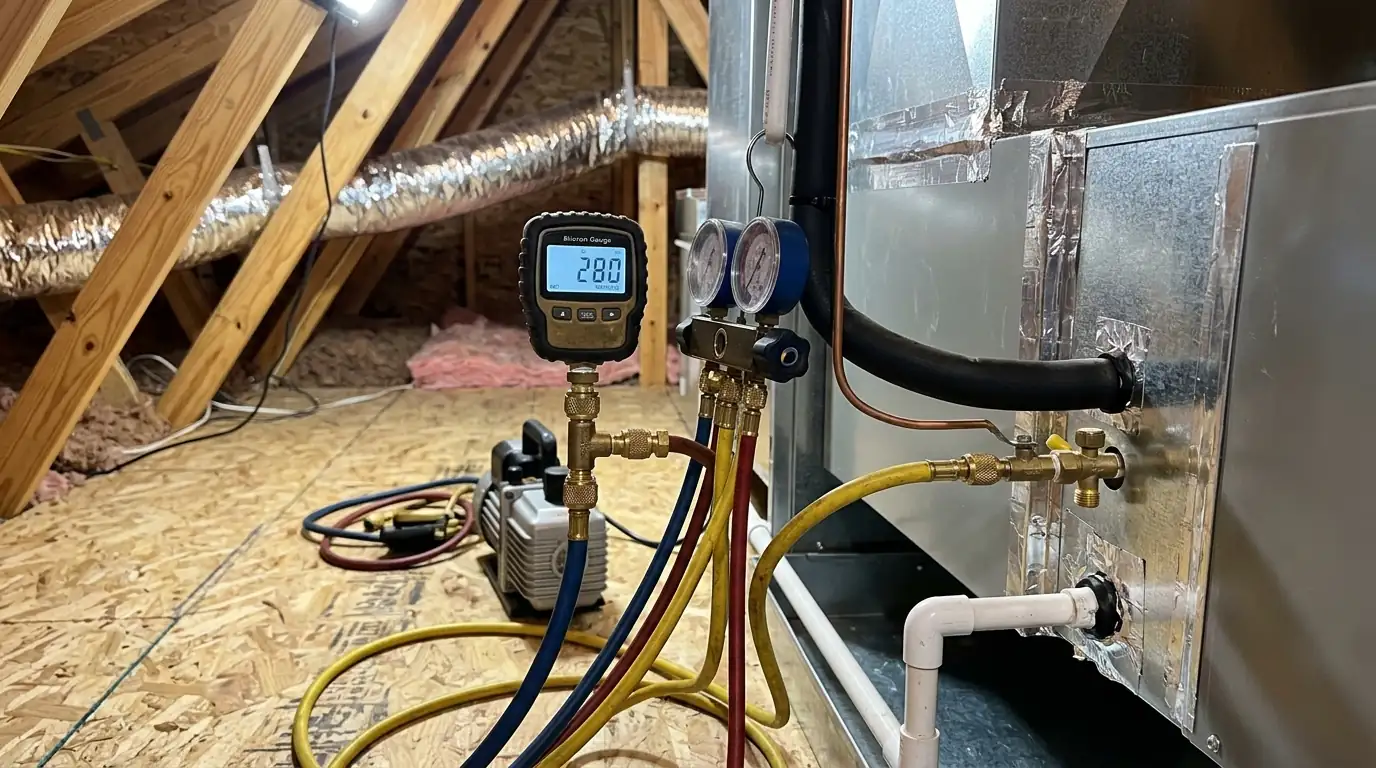
- Nitrogen pressure test and a deep vacuum confirmed on a micron gauge
- Charge set by subcooling or superheat to the manufacturer's chart
- A new float switch and a cleared condensate drain
- A level pad, disconnect and electrical whip in good condition
From load calculation to commissioning
Measure the house
We run a room-by-room load calculation using window area, insulation and orientation, then compare it with the existing tonnage.
Inspect ducts and returns
Static pressure readings and a duct walk show whether the new system can breathe or needs return work first.
Choose a matched system
We lay out matched condenser, coil and air handler options, including refrigerant type and staging, with the tradeoffs in plain terms.
Install and evacuate
Old refrigerant is recovered, joints are brazed under nitrogen, and the system is pressure-tested and pulled to a deep vacuum.
Commission and walk through
We charge by subcooling, verify airflow and temperature drop, set up the thermostat and show you the filter and drain.
Equipment brands we service and install
Most homes around Atlanta run equipment from a handful of major manufacturers. We diagnose, repair and replace Carrier, Trane, Lennox, Goodman, Rheem and Daikin systems, along with the other names below.
Brand names are shown to describe the equipment we work on. We are not claiming a dealer or factory relationship with any manufacturer.
Atlanta homes, weather and this job
Collier Heights shows how housing era shapes an AC replacement. Its roughly 1,750 homes are mostly brick ranches from the 1950s and 1960s, so a central system in one of them was likely added after the house was built, and the duct layout deserves a hard look before new equipment goes in. See our Collier Heights page for more on that housing. Any system installed in Georgia today must meet the Southeast standard: 14.3 SEER2 below 45,000 Btu/h and 13.8 SEER2 at or above it, judged by installation date.
AC Replacement & Installation questions from Atlanta homeowners
Most like-for-like split-system swaps take one full day. Relocating equipment, adding returns or installing central air for the first time can stretch it to two or three days. We plan the cutover so the house goes without cooling for as few hours as possible.
No square-foot rule holds up. A Manual J calculation accounts for walls, windows, orientation and air leakage. Oversizing is the common mistake, and it leaves rooms cold but clammy because the system shuts off before it removes moisture.
In some cases. EPA lifted the original installation deadline for residential R-410A equipment built before 2025, so remaining stock can still go in. New production uses A2L refrigerants like R-454B. We explain parts and refrigerant availability for both so you are not surprised by service costs years from now.
Above the minimum, gains shrink as you climb. With a long cooling season, a two-stage or variable-speed unit often earns more through comfort and humidity control than through the efficiency number. Our SEER2 guide for the Southeast explains the ratings.
Not always. If the furnace is sound and its blower can deliver the airflow the new coil needs, it can stay. If it is near the end of its life, replacing both together avoids a second labor bill and lets us match the blower properly. Our furnace replacement page covers that side.
We recover the refrigerant into a recovery cylinder as federal rules require, then haul off the condenser, coil and old line set for metal recycling. Nothing is vented, and the pad area is cleaned before the new unit is set.
Updated October 2026