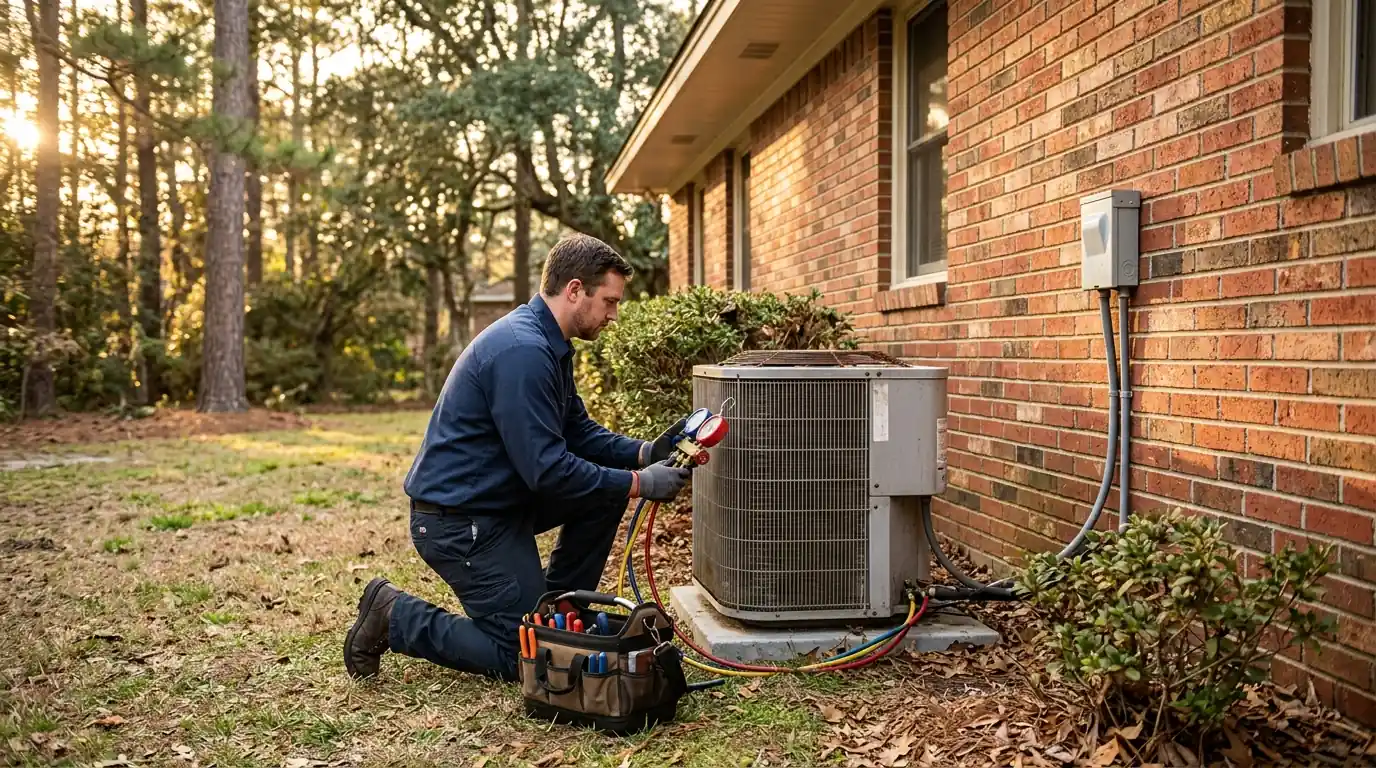
Evaporator coil replacement in Atlanta makes sense when the indoor coil has leaks that cannot be sealed, usually from formicary corrosion. The new coil must match the condenser's refrigerant, capacity and metering device, so we check the outdoor model number before ordering and replace the drier and nitrogen-test every joint before recharging.
How we handle evaporator Coil Replacement in Atlanta
The evaporator coil sits on top of the furnace or inside the air handler, where it absorbs heat and pulls moisture from the air. Copper coils can develop dozens of pinholes over time, and aluminum coils can fail at their brazed connections. Once a coil leaks in several places, replacement is the repair.
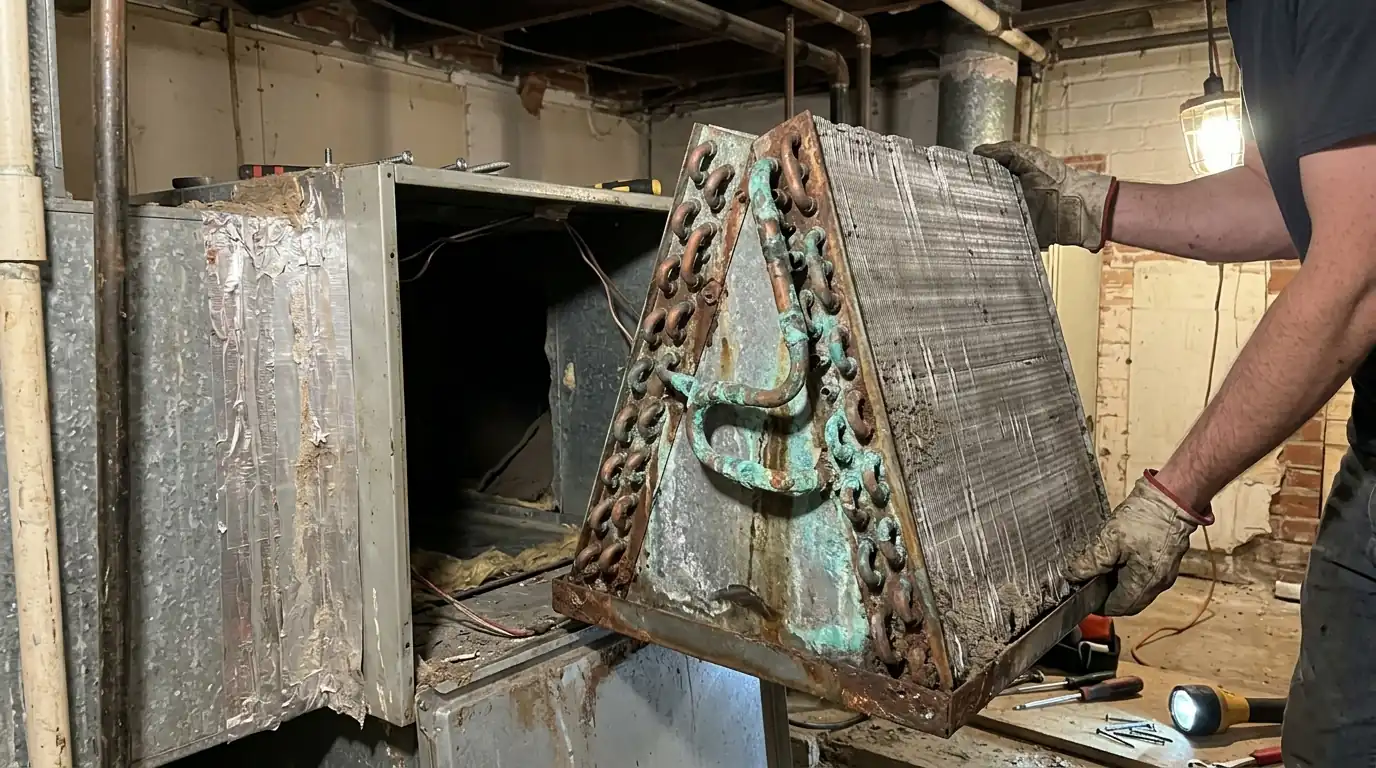
The real question is whether a new coil fits the rest of the system. On a younger R-410A condenser it usually does. On a system near the end of its life, or one running R-22, replacing the coil alone can mean paying twice. Our page on replacing an air conditioner covers that larger route.
New coil or a whole new system?
The age and refrigerant of your condenser usually decide this.
| Coil only | Full system | |
|---|---|---|
| Condenser age | Under about ten years | Twelve years or older |
| Refrigerant | R-410A or A2L | R-22 or end-of-life R-410A |
| Upfront cost | Lower | Higher |
| Efficiency | Unchanged | Moves to current SEER2 levels |
Published evaporator coil replacement range
A national planning range from a published cost guide, not our price. Labor and refrigerant are a large share of this job.
| Job | Published planning range | Source |
|---|---|---|
| Evaporator coil replacement | $1,000 to $4,500 | How Much Does AC Repair Cost? (2026) - HomeGuide |
What moves the number
- Coil size and whether it is cased or uncased
- Refrigerant type and the charge to replace
- Attic, closet or crawl space access
- Whether the drain pan or plenum must be modified
- Metering device and filter drier changes
These are ranges published by the sources linked above, shown for planning. They are not a quote and not our price; the real number depends on what we find at your home.
Pinhole corrosion leaks
Formicary corrosion forms tiny tunnels through thin copper coil tubes, driven by organic acids from household cleaners, adhesives, and building materials mixed with moisture. The holes are too small to see and often appear across the coil at once, so one repair is followed by another leak months later. A leak search that finds hits in the coil face, rather than at a joint, is the usual trigger for replacement. Many manufacturers now use aluminum or coated coils that resist this corrosion, and we discuss whether that option fits your equipment.
Cased and uncased coils
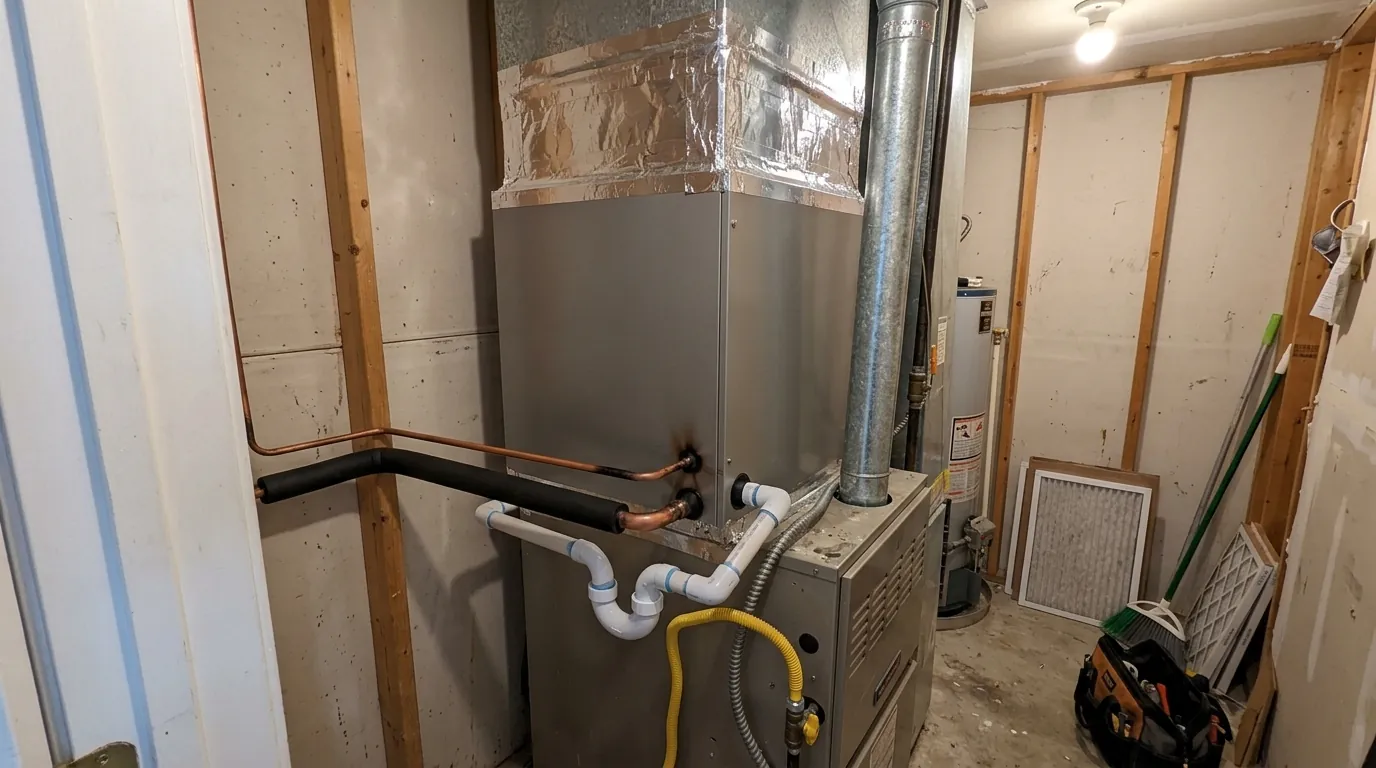
A cased coil comes in its own sheet metal cabinet and sits on top of a gas furnace. An uncased coil slides into an existing plenum or air handler box. Swapping a cased coil is cleaner, though the replacement must match the furnace width and the height available under the supply plenum. Uncased coils need careful sealing to the existing cabinet so air does not bypass the fins. Either way, we confirm the coil's drain pan orientation, whether it is built for upflow, downflow or horizontal mounting, and that the drain connections line up.
Attic air handler coils
Many Atlanta homes have the air handler or furnace in the attic, where coil replacement means working on a platform in summer heat with the ceiling below. We protect the ceiling, recover the refrigerant, disconnect the line set and drain, and lift the old coil out through the attic hatch. If the secondary pan beneath the unit is rusted or holds standing water, we replace it at the same time. A float switch in that pan matters more in an attic than anywhere else, as covered on our drain line repair page.
What a coil replacement quote should cover
Coil jobs vary between contractors. Confirm each of these is included.
- A coil confirmed as a listed match for your condenser
- The correct metering device, TXV or piston, for the condenser
- Refrigerant recovery from the old coil
- A new filter drier on the liquid line
- Brazing under a nitrogen purge
- A standing nitrogen pressure test before evacuation
- A deep vacuum confirmed on a micron gauge
- Drain connections, trap and float switch reconnected and tested
How an evaporator coil swap is done
Confirm the coil is leaking
We verify the leak is in the coil face, not a joint or valve that could be repaired.
Match the replacement
Condenser model, refrigerant, tonnage and metering device decide which coil fits.
Recover and remove
Refrigerant is recovered, the old coil is cut out, and the plenum opening is cleaned.
Install and braze
The new coil is set level, brazed under nitrogen, and a new filter drier is installed.
Test, vacuum and charge
A nitrogen standing test, deep vacuum and a weighed charge are followed by superheat or subcooling checks.
Equipment brands we service and install
Most homes around Atlanta run equipment from a handful of major manufacturers. We diagnose, repair and replace Carrier, Trane, Lennox, Goodman, Rheem and Daikin systems, along with the other names below.
Brand names are shown to describe the equipment we work on. We are not claiming a dealer or factory relationship with any manufacturer.
Where this shows up around Atlanta
July in Atlanta averages a high near 89F with overnight lows around 71F, and the climate is humid subtropical. That means an evaporator coil spends much of the summer wet, and it stays wet late into the night because the house still needs cooling after dark. Moisture is half of what formicary corrosion needs, so indoor coils in this climate are exposed to it for long stretches. That is one reason we suggest coated or aluminum coils when they are available for your system.
Evaporator Coil Replacement questions from Atlanta homeowners
A leak search tells you. If the electronic detector hits at the coil face inside the plenum, or a nitrogen test shows the indoor section losing pressure while the outdoor side holds, the coil is the source. Oily residue on the coil or drain pan is another clue.
Single leaks at a brazed return bend sometimes can be. Pinholes from formicary corrosion usually cannot, because they spread across many tubes and new ones open after the first is sealed. We will tell you which kind of leak you have before recommending a patch or a replacement.
Not beyond its original rating. A new coil restores the capacity the system lost from leaking and fouling, so it cools like it did when new. Efficiency gains come from replacing the condenser as well. If your system is older, that comparison is worth making before buying a coil.
The coil and condenser are rated as a pair. A mismatched coil can be too small for the compressor, run the wrong superheat, or carry a metering device built for a different refrigerant. That leads to poor cooling and can damage the compressor over time.
For a short time, carefully. As the charge drops, cooling weakens, the coil may freeze, and the compressor runs hot. If you notice ice or warm air, shut the system off. Running it low for weeks risks turning a coil job into a compressor replacement.
Organic acids from sources like cleaning products, paints, adhesives and some building materials combine with moisture on the copper. Homes with tight construction and high humidity are more exposed. Better ventilation and aluminum coils reduce the risk. See our article on crawl space moisture for moisture sources under the house.
Updated October 2026