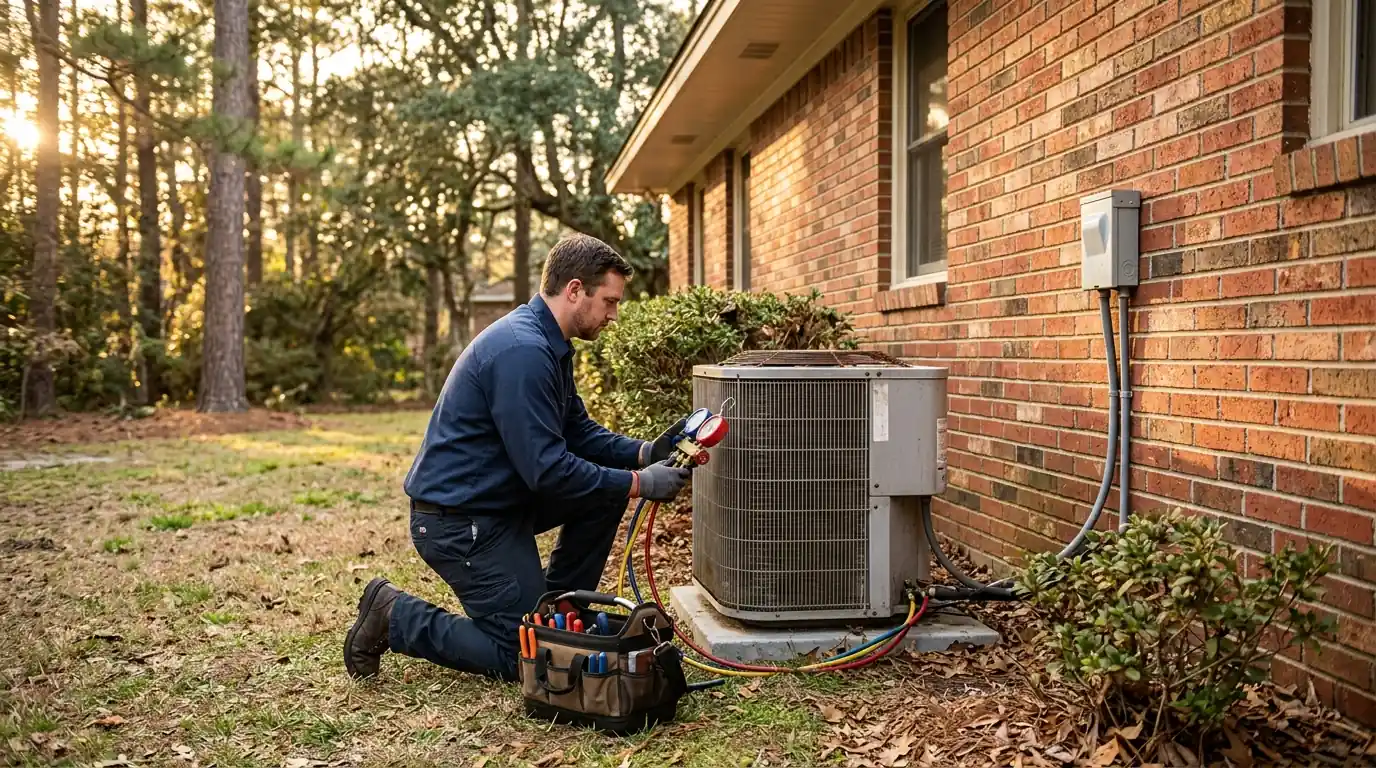
An AC tune-up in Atlanta should do four things: clean the outdoor coil, verify refrigerant charge with superheat or subcooling, test the capacitor and contactor under load, and flush the condensate drain. A visit that only swaps the filter and glances at the thermostat misses the parts most likely to fail in July.
What AC Tune-Up & Maintenance involves on a southwest Atlanta call
A tune-up is measurement, not a wipe-down. We record readings each visit so the next technician can see a capacitor drifting toward failure or a charge slowly dropping, which is how a small leak shows itself before it becomes a warm-air call.
Spring is the right time. Pollen coats the outdoor coil, the drain line has sat dry all winter and the capacitor is about to face months of heat. If your system is due for more than maintenance, our AC repair page covers the failures we find most often during these visits.
What a thorough AC tune-up covers
Tune-up offers vary a lot in scope. A complete visit includes all of these.
- Outdoor coil washed from the inside out, not just hosed from outside
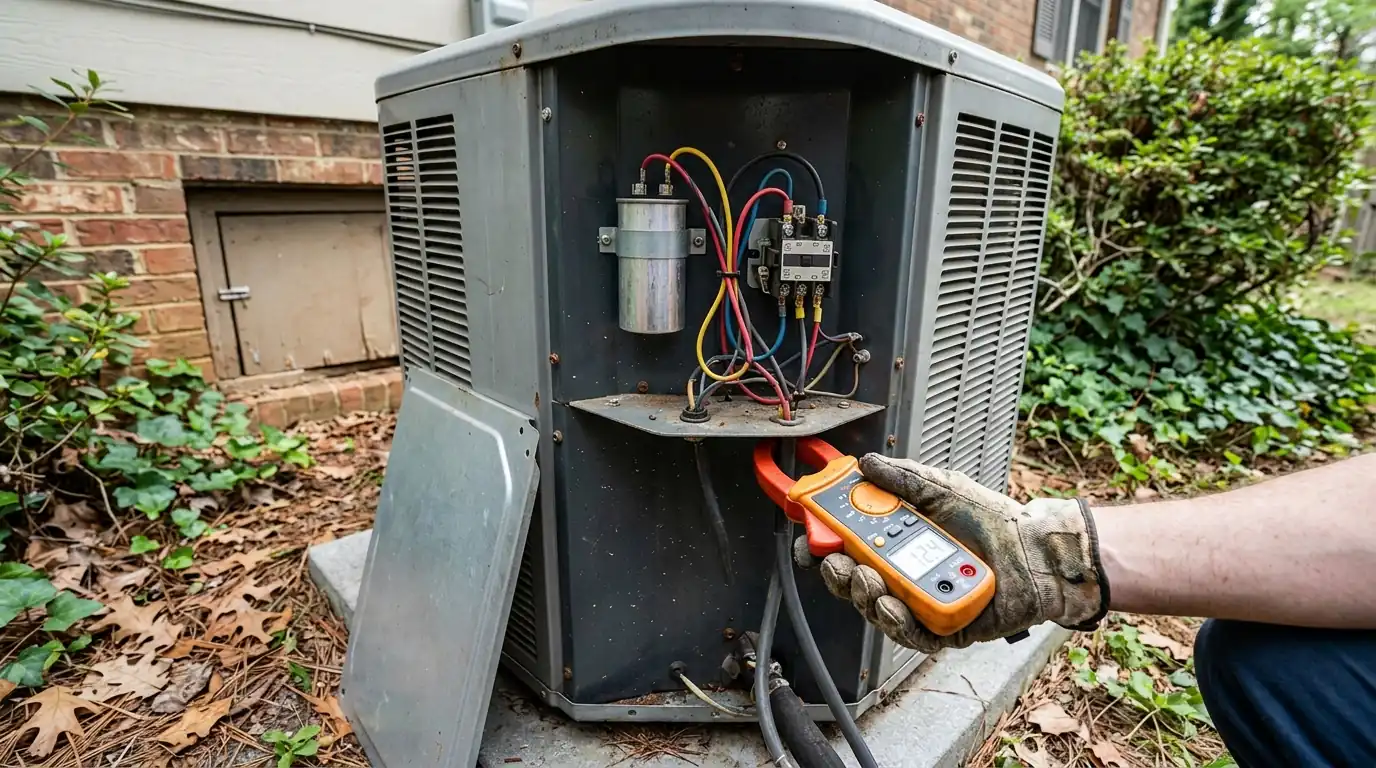
- Run capacitor tested in microfarads against its rating
- Contactor points inspected and electrical lugs tightened
- Compressor and condenser fan amp draw recorded
- Superheat or subcooling measured and logged
- Temperature drop across the indoor coil measured
- Condensate drain flushed and float switch tested
- Filter checked and blower wheel inspected for buildup
Outdoor coil cleaning
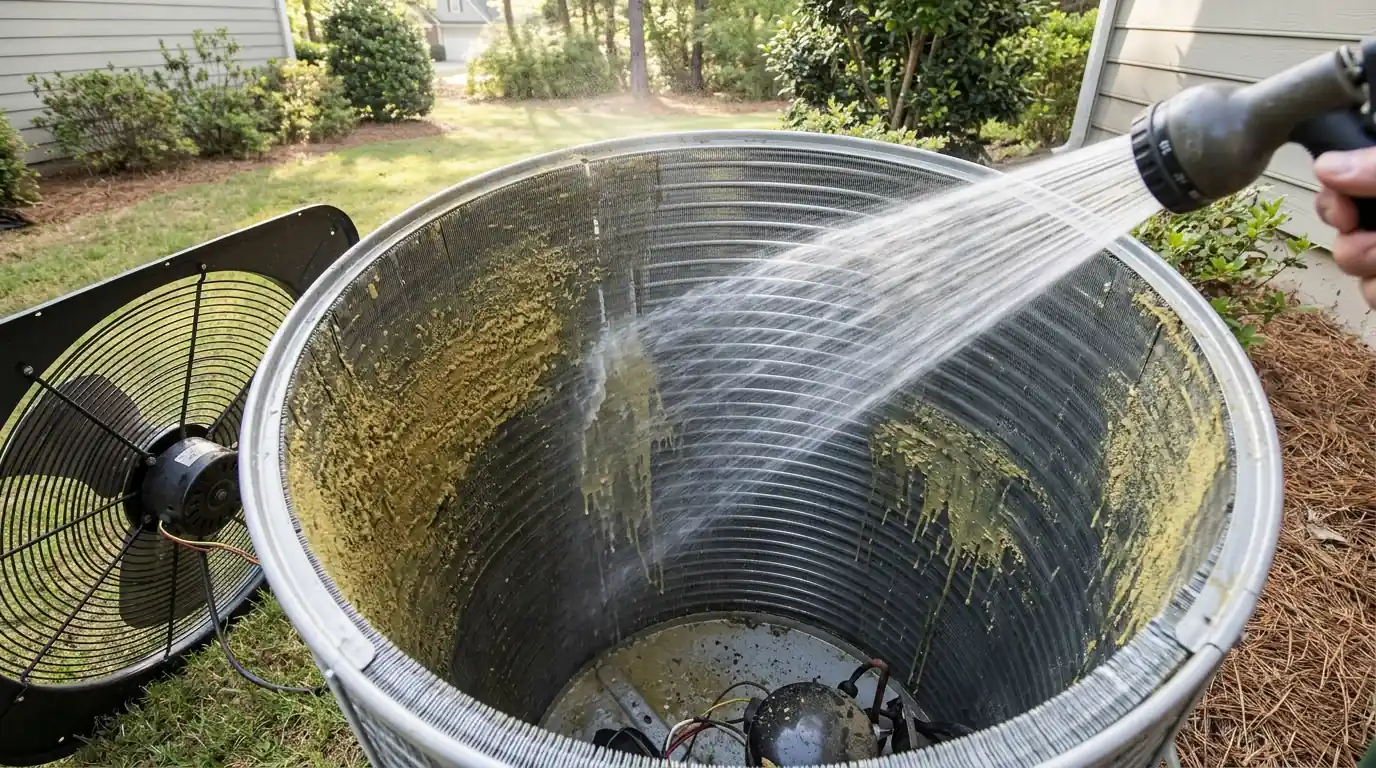
The condenser coil sheds the heat your house collects. When its fins are packed with pollen, cottonwood fluff, grass clippings or dryer lint, head pressure rises, the compressor draws more current and capacity drops on the hottest afternoons. We shut off power at the disconnect, pull the top fan assembly when access needs it, and wash the coil from the inside out with a coil cleaner and low-pressure water so debris leaves the way it came in. Bent fins get straightened with a fin comb. A clean coil can bring condensing temperature back down several degrees, which you feel as steadier cooling late in the day.
Refrigerant charge check
Refrigerant should stay at the factory charge for the life of the system, so the check is really a leak screen. On a system with a fixed piston we read superheat against the manufacturer's chart using indoor wet-bulb and outdoor dry-bulb temperatures. On a TXV system we read subcooling. A charge that is off by a little this spring and more next spring points to a slow leak, and we log the numbers so the trend shows up. We do not add refrigerant just to make the gauges look right, because that hides a leak instead of finding it.
Electrical and capacitor test
Most summer no-cool calls are electrical, and many are visible in advance. We test the run capacitor's microfarads against its rated value, inspect the contactor points for pitting and burn marks, tighten lugs, and measure compressor and fan amp draw against their nameplates. A capacitor reading below its tolerance is cheap to replace now and expensive to ignore in August, because a weak capacitor makes the compressor work harder at every start. We also check the disconnect and whip for heat damage and confirm the low-voltage wiring has not been chewed or cracked by sun.
Drain line flush
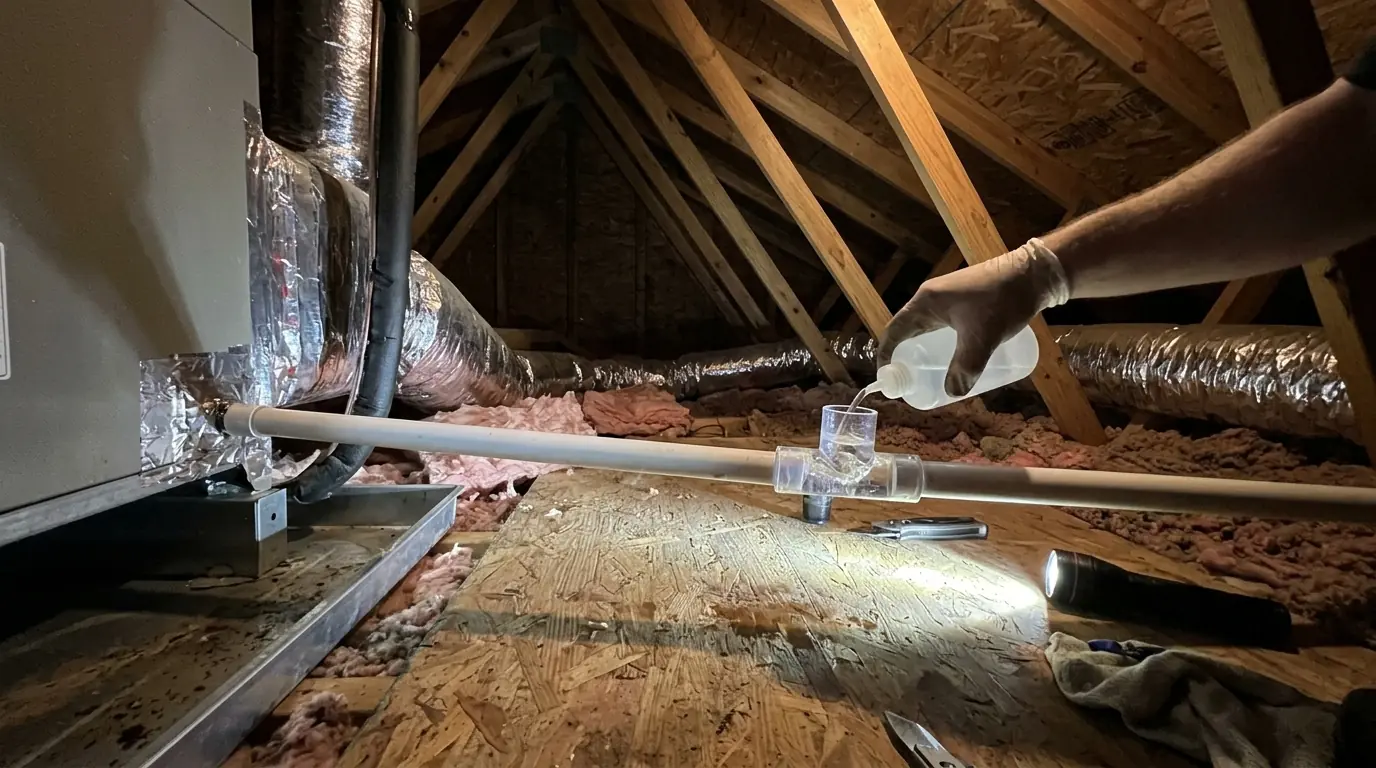
Your AC pulls gallons of water out of the air on humid days, and that water leaves through a narrow PVC line that grows algae and biofilm. We flush the primary line, clear the trap, confirm the float switch shuts the system off when lifted, and check the secondary pan under an attic unit for standing water or rust. Where the line drains to a condensate pump, we test the pump's float and check valve. A clear drain matters as much as a clean coil, since a clogged line can soak a ceiling. See drain line and condensate pump repair if yours already backs up.
What happens during an AC tune-up visit
Start at the thermostat
We confirm the thermostat calls for cooling correctly and note the starting supply and return temperatures.
Power down and inspect
With the disconnect pulled, we inspect the contactor, capacitor, wiring and the condition of the fan blade.
Wash the condenser coil
The coil is cleaned from the inside out, and bent fins are combed straight.
Measure under load
With the system running we read amp draw, superheat or subcooling, and the temperature drop across the indoor coil.
Flush, record and report
We clear the drain, test the float switch and give you the readings with anything that needs attention.
Tune-up tasks you can handle and the ones to leave to us
A few jobs are fine for homeowners between visits. Others involve live voltage or refrigerant.
| Task | What you can do | Where a technician comes in |
|---|---|---|
| Filter changes | Yes, every one to three months, more often in pollen season | We check fit and pressure drop at each visit |
| Clearing the outdoor unit | Yes, keep plants and debris two feet back | Interior coil washing needs the top removed |
| Drain line vinegar flush | Yes, if the access tee is easy to reach | Trap, pump and float switch testing |
| Capacitor or refrigerant work | No, capacitors hold a dangerous charge and refrigerant handling is federally regulated | Tested and handled with proper meters and recovery equipment |
The local side of AC Tune-Up & Maintenance
Atlanta now averages about 44 days a year at 90F or hotter, up from 37 under the older climate normals, and 2019 set the record with 91. More hot days means more run hours on the same capacitor, contactor and fan motor, and less margin when one of them starts to weaken. That is why we push tune-ups into early spring, before the first stretch of 90-degree afternoons, and why the electrical tests carry as much weight as the coil wash.
Published AC tune-up price range
This is a national planning range from a published cost guide, not our price. What drives it is how much the visit actually covers.
| Job | Published planning range | Source |
|---|---|---|
| AC tune-up visit | $70 to $200 | How Much Does AC Repair Cost? (2026) - HomeGuide |
What moves the number
- Whether the coil is washed or only rinsed
- Charge readings recorded or skipped
- Number of systems in the house
- Attic air handler access
- Parts found worn, such as a weak capacitor
These are ranges published by the sources linked above, shown for planning. They are not a quote and not our price; the real number depends on what we find at your home.
AC Tune-Up & Maintenance questions from Atlanta homeowners
March or April is ideal. Pollen has usually landed on the coil by then, and the first hot stretch has not arrived. A spring visit gives time to replace a weak capacitor or clear a drain before the system faces months of daily runtime.
Yes. A two-year-old system still collects pollen on its coil and algae in its drain, and early charge readings give a baseline for spotting leaks later. Newer A2L systems also have refrigerant sensors that should be checked. Skipping years on a new unit is how small problems become expensive ones.
It can, mainly through a clean outdoor coil and correct airflow. A matted coil raises head pressure, so the compressor draws more current for the same cooling. Correct charge and a clean blower wheel help too. The gain depends on how neglected the system was.
We show you the reading or the part and explain what it means before doing anything. A weak capacitor can usually be swapped during the visit. A suspected leak or a worn compressor needs a separate conversation, and you decide whether and when to proceed.
One-inch filters usually need changing every month or two in summer and during spring pollen, and every two to three months otherwise. Thicker media filters last longer. Our guide to Atlanta pollen and filters covers MERV ratings and timing in more detail.
If you have a heat pump, the same equipment does both jobs, and we can test the reversing valve and defrost controls on the same visit. For a gas furnace, a separate furnace tune-up in the fall makes more sense, since burners and safety controls need checking right before heating season.
Updated October 2026