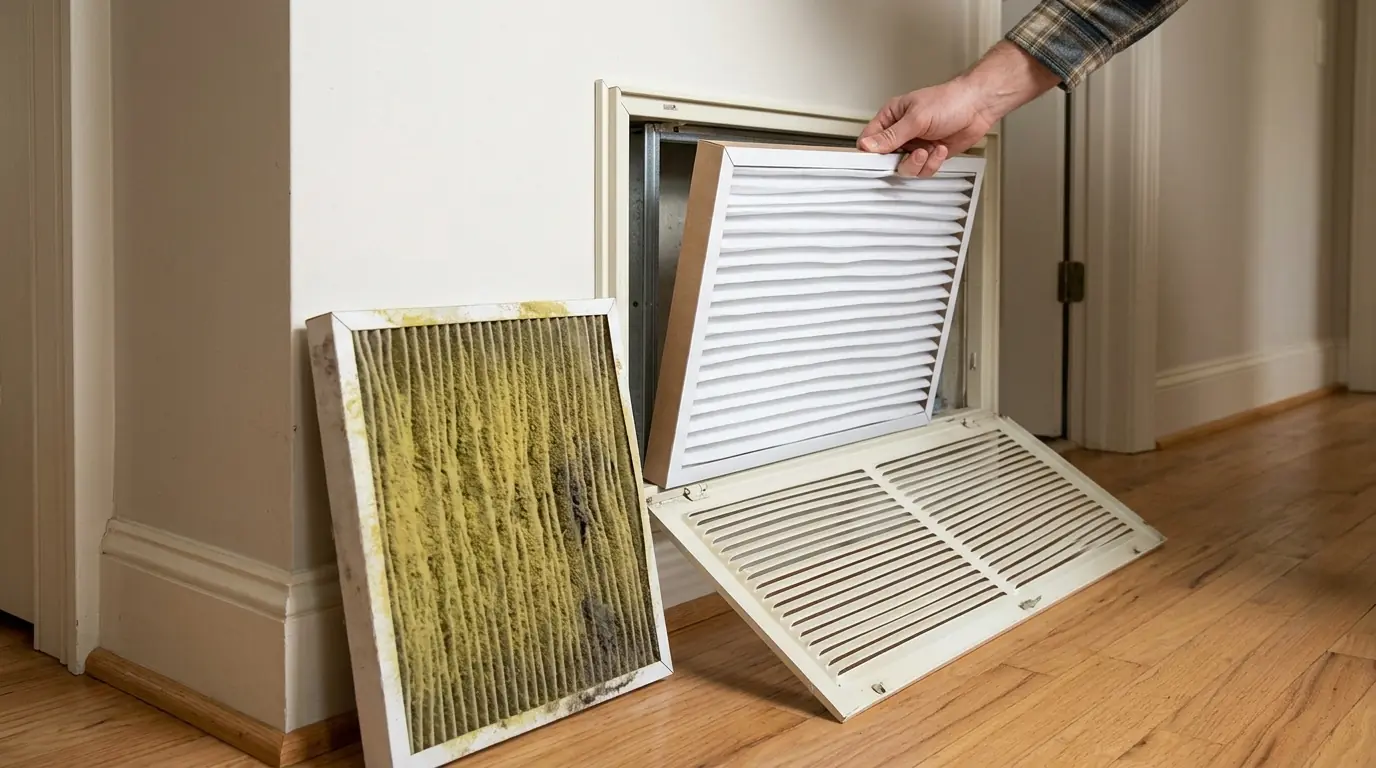
During Atlanta's spring pollen peak, check your HVAC filter every two to three weeks and replace it when it is visibly coated. A MERV 8 to 11 pleated filter catches most pollen without choking airflow on typical home systems. Going higher is fine only if your return and filter slot are large enough to keep static pressure in range.
How bad Atlanta pollen gets, by the numbers
Atlanta's spring pollen comes mostly from oak, pine, sweetgum and sycamore trees, and local counts have been tracked since 1991. A reading of 1,500 grains is treated as extreme. On March 29, 2025, Atlanta Allergy and Asthma counted 14,801, the highest on local record.
Pollen grains are large compared with fine dust or smoke, which makes them relatively easy for a decent filter to catch. The trouble is volume. A filter that would last two or three months in summer can load up in a fraction of that time during the peak weeks.
Choosing a MERV rating without starving the blower
MERV ratings describe how well a filter traps particles of different sizes. Higher numbers catch finer particles, but they also resist airflow more. Your blower can only push so much air against resistance, and every system has a limit.
For most homes, a pleated MERV 8 filter stops the bulk of pollen. MERV 11 adds better capture of smaller particles and suits allergy households if the system handles it. MERV 13 and up work well in a deep media cabinet with plenty of surface area, but in a thin one-inch slot they can cut airflow enough to freeze the coil in summer or overheat a furnace in winter.
If you want higher filtration, the fix is more filter area, not a denser thin filter. A media filter cabinet holds a four or five inch filter that captures more while resisting airflow less.
A pollen-season filter routine
Treat spring as its own season for filter care. This routine fits most Atlanta homes.
- Buy filters in bulk before the trees start shedding, so you are not caught short
- Write the size from the old filter frame on a strip of tape near the return
- Check the filter every two to three weeks from late February into May
- Replace it when the pleats look yellow-green or gray, not only on a calendar date
- Confirm the arrow on the frame points toward the blower, away from the return grille
- Close windows on high-count days and let the system recirculate filtered air
- Return to your normal change interval once counts fall in early summer
Signs a loaded filter is hurting the system
A clogged filter restricts air across the indoor coil. In cooling mode, the coil can drop below freezing and ice over, and you will notice weak airflow, ice on the refrigerant line, or water when it melts. In heating mode, a furnace can overheat and trip its high-limit switch, shutting off and restarting in short bursts.
Higher power bills and a blower that sounds strained are quieter signs. If the system already shows ice or keeps short cycling after you change the filter, the filter may not be the only issue. An AC repair visit for a frozen coil checks refrigerant charge and blower operation as well.
Beyond the filter: what else catches pollen indoors
Pollen gets in on clothes, pets and through gaps around doors and windows. Leaky return ducts in an attic or crawl space can also pull in unfiltered air that bypasses the filter entirely. Sealing return-side duct leaks closes that back door.
Duct cleaning is sometimes pitched after a heavy season. It makes sense when you can see buildup on the supply registers or inside the return, or after a renovation. It is not a substitute for a good filter, and a clean duct system will collect pollen again quickly if filtration is weak. For allergy-focused households, particle counts and humidity logging can show whether the problem is pollen, dust, or something else entirely.
When a better filter is not the answer
If someone in the house struggles every spring despite a fresh MERV 11 filter, look at what the system is actually doing. A blower that runs only when cooling is needed filters air less often. Running the fan in a low continuous mode during the worst weeks can help, though in humid months it can return moisture from the coil to the room. A professional measurement of static pressure tells you whether your system can safely handle a denser filter or needs more filter area first.
Questions readers ask about this
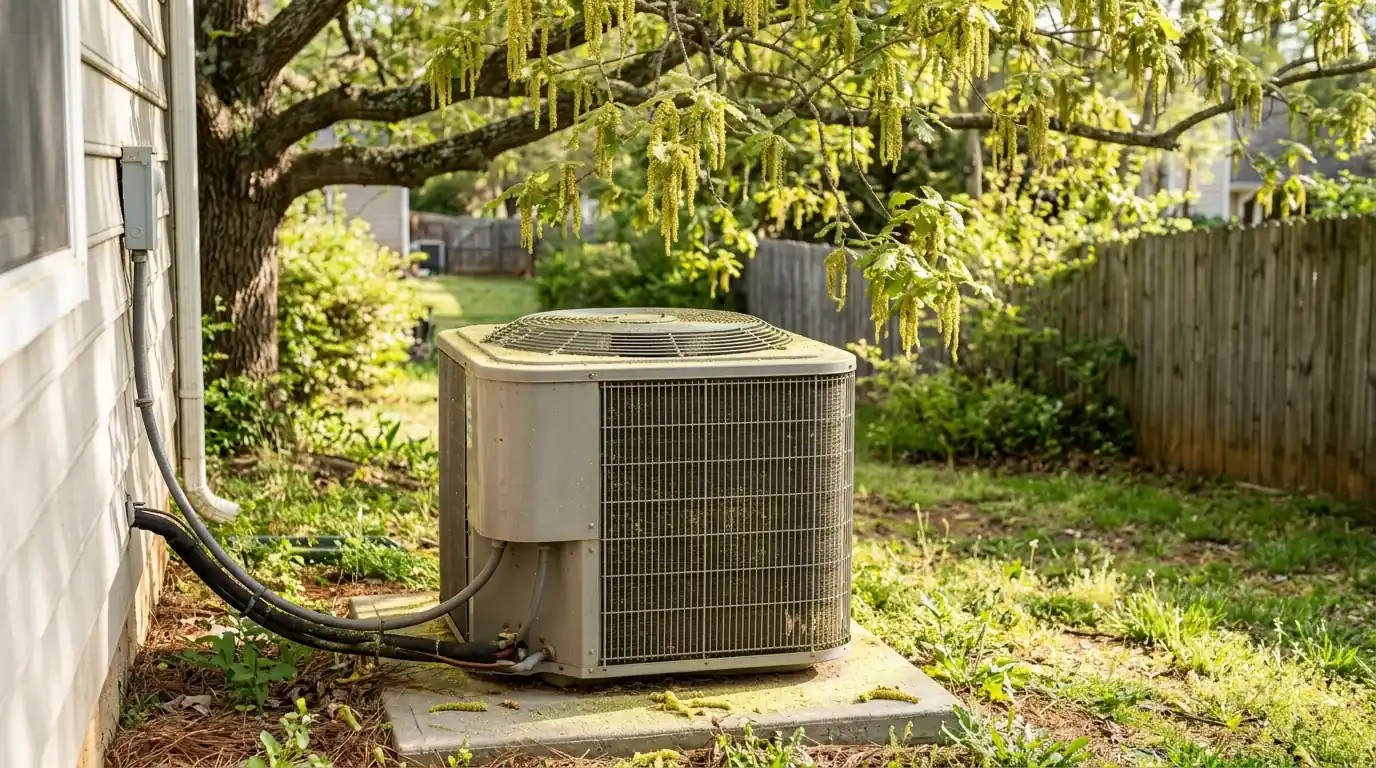
A light coat is harmless. Heavy pollen mixed with dust and leaf litter can mat the condenser fins and reduce airflow across the coil. Rinsing the fins gently with a garden hose from the inside out, with power off, clears most of it.
Most washable filters have low capture of fine particles, and they must dry completely before going back in, or they can grow mold in the return. A disposable pleated filter is usually more effective and simpler during peak weeks.
In many Atlanta homes, the filter sits behind a hinged ceiling or wall grille. In others, it slides into a slot at the air handler or furnace. Some homes have both, which doubles resistance. Use one filter location, not two stacked.
They can capture particles, but performance varies a lot by product, and some ionizing devices produce ozone. For pollen, which is relatively large, a properly sized pleated media filter gives predictable results without those questions.
A technician measures total external static pressure with the current filter, then compares it with the blower's rated limit. If there is room, a thicker MERV 13 in a media cabinet works. In a one-inch slot, it often pushes the system past its limit.
Yes. Pet hair and dander load a filter on their own, and pets carry pollen in from the yard. Homes with dogs or cats often need to check filters every two weeks in spring and change them as soon as the pleats look matted.
Services this article points to
Whole-Home Air Filtration
Whole-home air filtration in Atlanta usually means replacing a 1-inch filter slot with a 4- or 5-inch media cabinet at the air handler.
Duct Repair & Sealing
Duct repair and sealing in Atlanta mostly means finding air lost before it reaches the rooms: flex duct crushed or kinked in the attic, runs that have slipped off their collars, and joints leaking at every seam.
Indoor Air Quality Testing
Indoor air quality testing in an Atlanta home measures humidity over several days, airborne particle counts room by room, and carbon monoxide and VOC levels near combustion appliances and finishes.
Air Duct Cleaning
Air duct cleaning in Atlanta is worth doing after a renovation, a rodent problem, or years of heavy pet hair and pollen, not on a fixed yearly schedule.