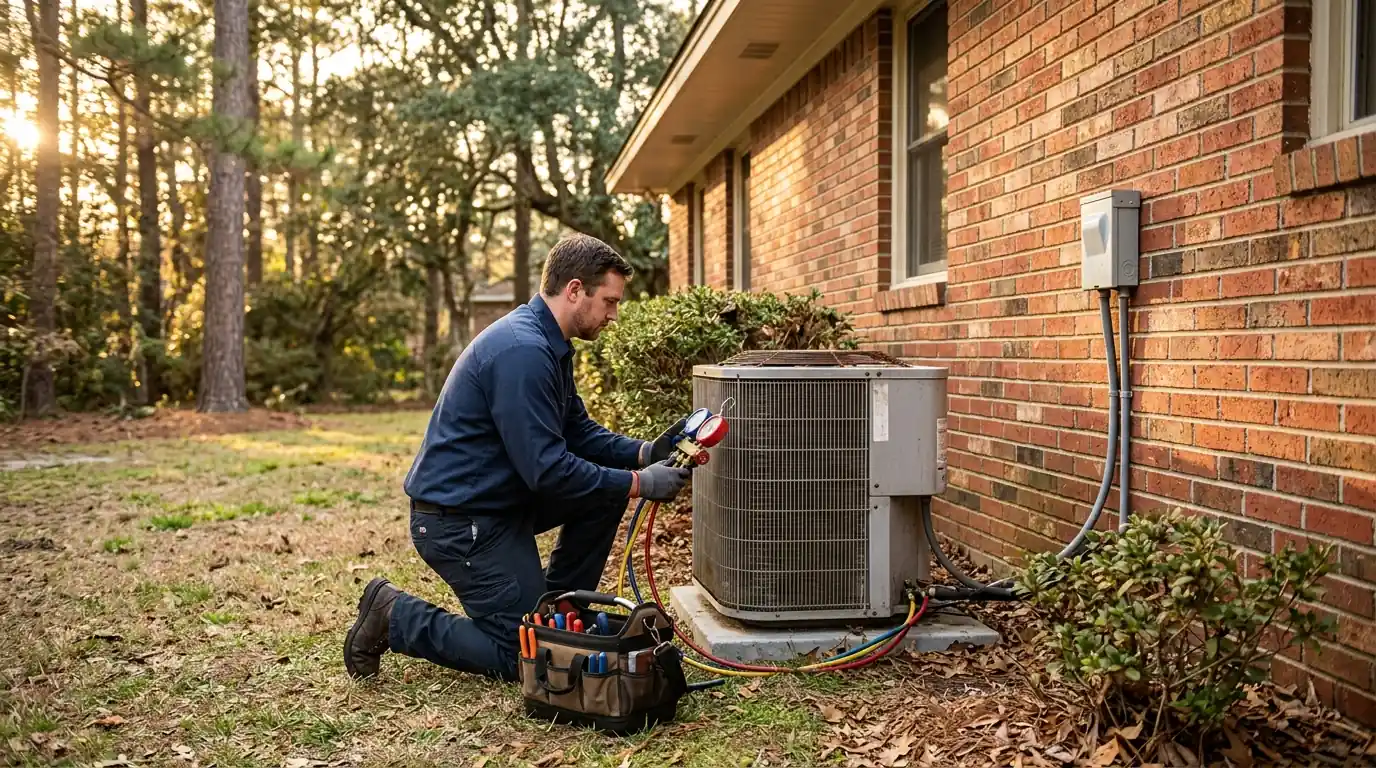
A furnace tune-up in Atlanta should clean the burners and flame sensor, inspect the flue and venting, test the limit, rollout and pressure switches, and measure gas pressure and temperature rise. Those checks catch the weak ignitors and blocked vents that cause most first-cold-night breakdowns and carbon monoxide risks.
How we handle furnace Tune-Up in Atlanta
A gas furnace in Atlanta might run only a few months a year, and much of the trouble comes from those idle months: dust on burners, spiders in burner tubes, a flame sensor oxidizing, a condensate trap drying out. A tune-up catches these before you need heat.
Safety is the bigger reason. A furnace burns gas inside your house, and its limit and rollout switches are what shut it down when something goes wrong. We test them every visit. For a deeper inspection of the heat exchanger, see our gas furnace safety check.
What a complete furnace tune-up should cover
Tune-ups vary between contractors. A thorough one includes these.
- Burners inspected and cleaned, with flame pattern checked
- Flame sensor cleaned and microamp signal measured
- Hot surface ignitor resistance tested
- High limit, rollout and pressure switches tested
- Flue and vent termination inspected for blockage and rust
- Gas pressure measured at the valve
- Temperature rise compared with the data plate
- Condensate trap and drain cleaned on condensing furnaces
Burner and flame sensor cleaning
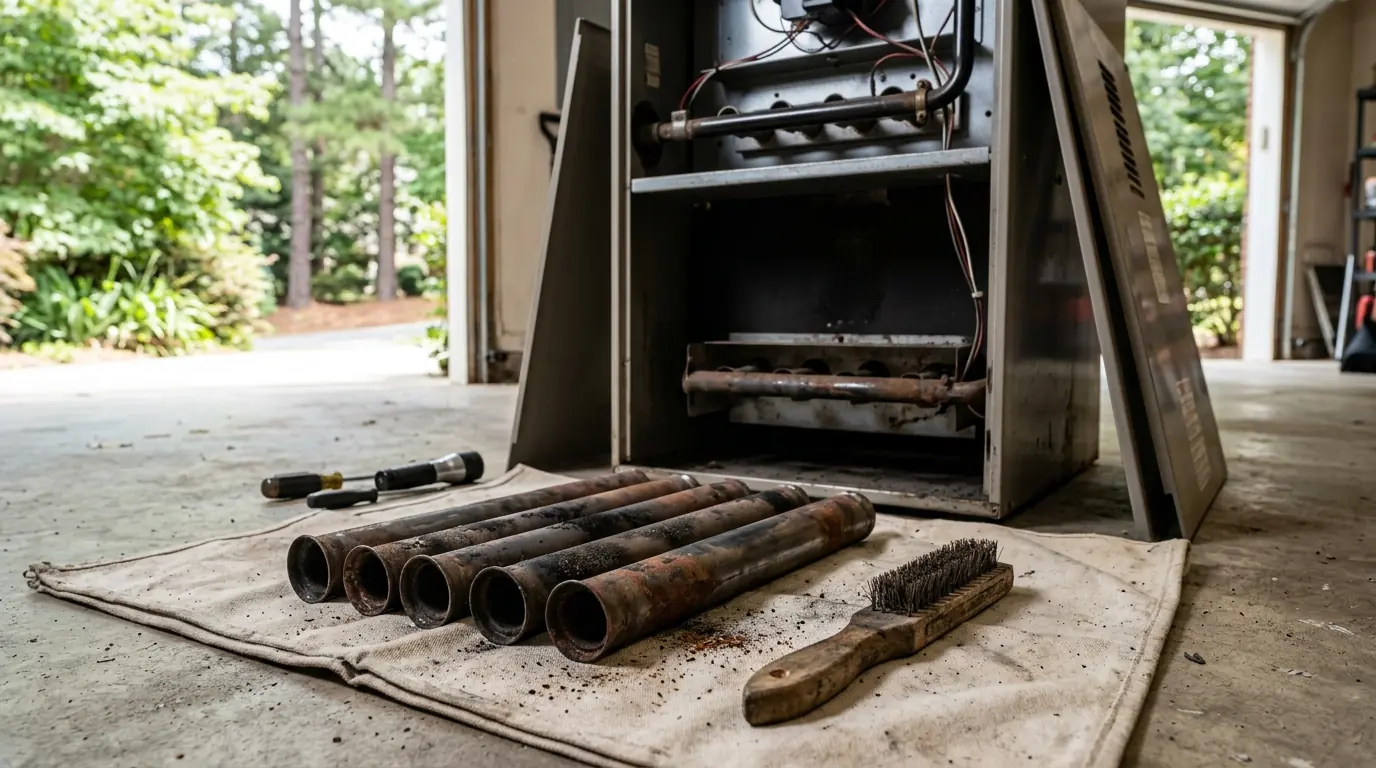
Burners collect dust and rust flakes over the off-season, which can cause uneven flame, delayed ignition and a small rollout of flame at startup. We remove and brush the burners when needed, clear the burner ports and inspect the crossover where the flame carries from one burner to the next. The flame sensor rod is cleaned and its microamp signal measured, since a weak signal is the most common reason a furnace lights and then shuts off. We also check the hot surface ignitor's resistance, because a weakening ignitor often fails on the first cold night.
Flue and venting check
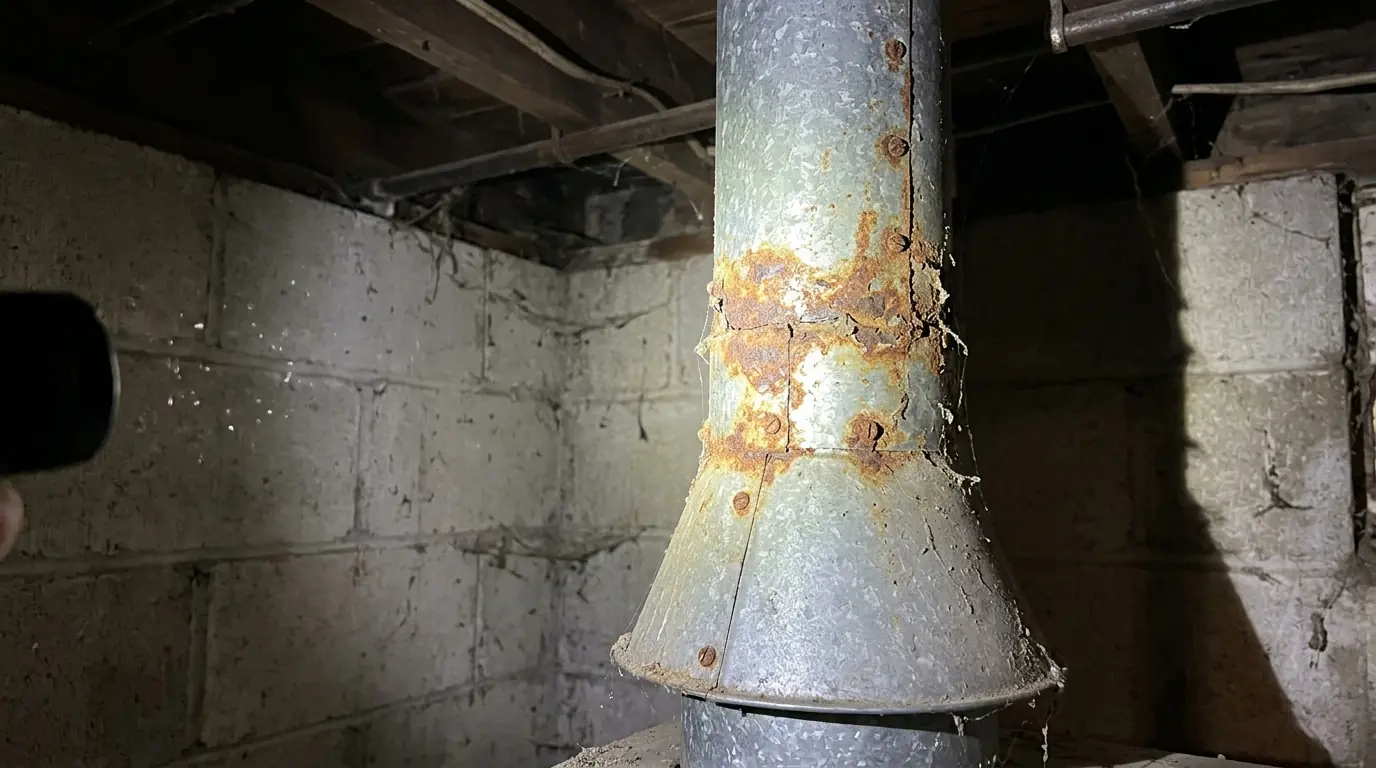
The flue carries combustion gases out of the house. We inspect metal flues for rust, separated joints, proper slope and the right clearance from combustibles, and PVC vents for sags, cracks and blocked terminations. Bird nests, leaves and wasp nests are common in outdoor vent caps after summer. On condensing furnaces, the condensate trap and drain are cleaned so water does not back into the pressure switch. A spillage test at the draft hood, where present, confirms gases are leaving instead of entering the room.
Safety control testing
Every gas furnace has controls that shut it down when something is wrong: the high limit switch for overheating, rollout switches for flame escaping the burner area, the pressure switch for draft, and the flame sensor for proof of flame. We test each one, check its wiring for heat damage, and confirm the board responds correctly. We also measure gas pressure at the valve and temperature rise across the heat exchanger. A tripped rollout switch found during a tune-up is not a nuisance; it signals a venting or heat exchanger problem.
What a fall furnace tune-up includes
Inspect before firing
We check the filter, wiring, gas line and flue before calling for heat.
Clean burners and sensor
Burners are cleared and the flame sensor polished and tested in microamps.
Test safety controls
Limit, rollout and pressure switches are verified and their wiring inspected.
Measure performance
Gas pressure, temperature rise and flue CO readings are taken under load.
Report findings
You get the readings and a plain list of anything worn or unsafe.
Furnace care between visits
Some upkeep is easy for homeowners. Anything involving gas is not.
| Task | What you can do | Where a technician comes in |
|---|---|---|
| Filter change | Yes, at the start of heating season and every one to three months | Checking blower and airflow |
| Clearing around the furnace | Yes, keep storage, paint and chemicals away from the cabinet | Combustion air and clearance checks |
| CO detector test | Yes, test monthly and replace batteries yearly | Flue CO and spillage testing |
| Burner or gas valve work | No, gas leaks and flame rollout are fire and CO hazards | Gas pressure and burner service |
The local side of furnace Tune-Up
January 2025 showed why a fall tune-up matters here. The month ran about 4F colder than normal in Atlanta, with winter storms on January 10 and 21 and a low of 14F on January 22. A furnace that idled through a long hot summer had to light and run nearly nonstop during those stretches. Weak ignitors, dirty flame sensors and blocked vents tend to fail under that load, and a tune-up in October or November catches them while the weather is still mild.
Published furnace tune-up range
A national planning range from a published cost guide, not our price. A safety inspection alone is a smaller visit.
| Job | Published planning range | Source |
|---|---|---|
| Furnace tune-up | $125 to $200 | How Much Does It Cost to Repair a Furnace? [2025 Data] - HomeAdvisor |
What moves the number
- Single furnace or several systems
- Attic or crawl space access
- Whether burners need removal and brushing
- Parts found worn, such as an ignitor or sensor
These are ranges published by the sources linked above, shown for planning. They are not a quote and not our price; the real number depends on what we find at your home.
Furnace Tune-Up questions from Atlanta homeowners
October or early November, before the first sustained cold snap. That gives time for any parts to arrive before you depend on heat. A spring tune-up of the AC and a fall tune-up of the furnace cover the year.
Yes. Most problems start during the idle months, such as a flame sensor oxidizing, a vent cap gaining a nest or a condensate trap drying out. A furnace that ran well last year can still fail on the first cold night.
It can catch many of the causes. We check flue draft, look for spillage, measure CO in the flue and test the rollout switches. A full heat exchanger inspection with a camera is a separate, deeper check if anything looks wrong.
Dust that settled on the heat exchanger burns off and smells for the first hour. That is normal and usually fades. A tune-up cleans much of it first. Persistent or electrical smells are not normal and should be checked.
They need less, but still benefit. We check the heat strip sequencers, relays and wiring for heat damage, and test the blower and limit switches. Our air handler and heat strip repair page covers those parts in more detail.
The furnace blower moves air for both systems. Cleaning the blower wheel and checking the filter and airflow helps the AC as well. If you have a heat pump instead, our seasonal heat pump visit covers both heating and cooling in one visit.
Updated October 2026