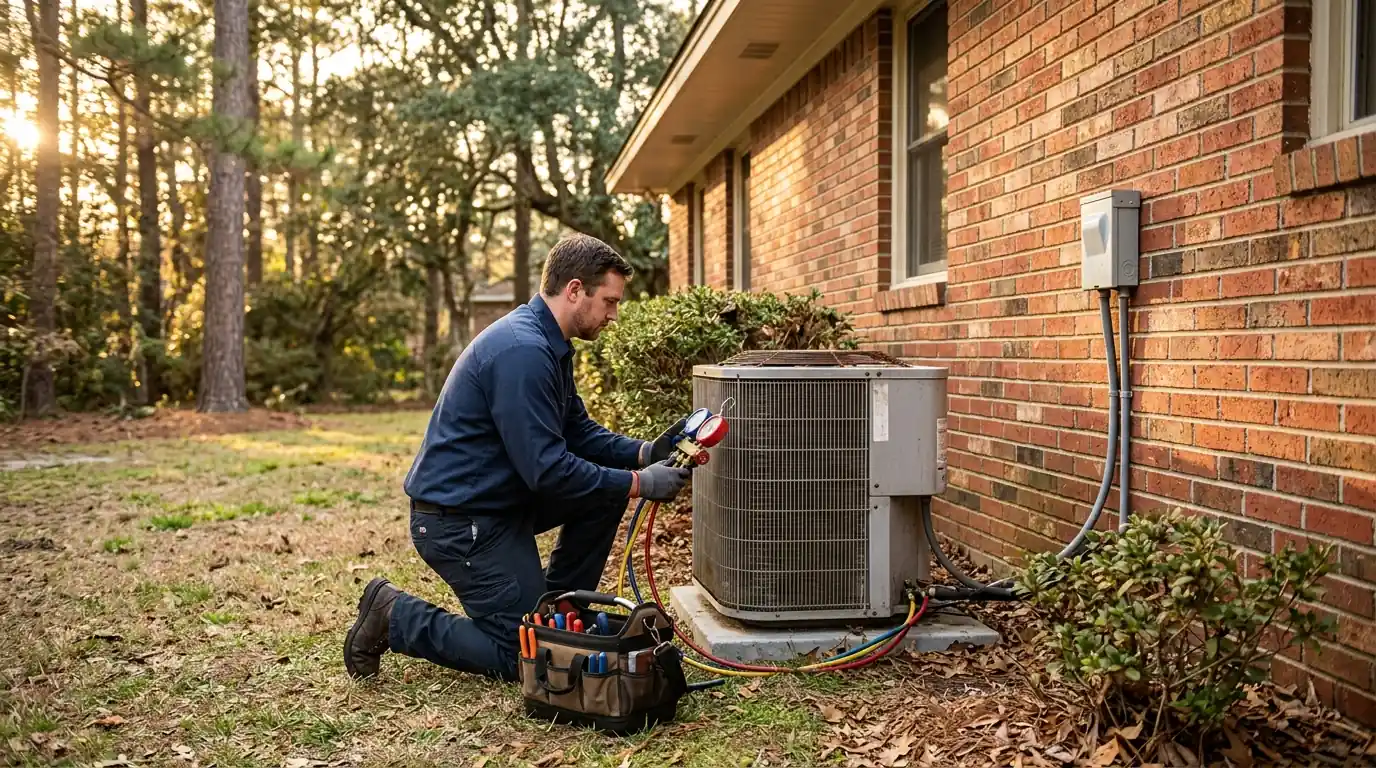
Attic insulation in Atlanta does most of its work in summer, when a sun-baked attic pushes heat down through the ceiling into rooms the AC is trying to cool. The order matters: we seal air leaks in the attic floor first, then blow in insulation to an even depth, keeping clearance around the HVAC equipment and ducts.
How we handle attic Insulation in Atlanta
Most Atlanta houses with attic air handlers and ducts have two heat problems at once: heat moving down through the ceiling, and ducts sitting in a hot attic. Adding insulation helps the first. Sealing and insulating around the equipment helps the second. Doing both together is where the gains are.
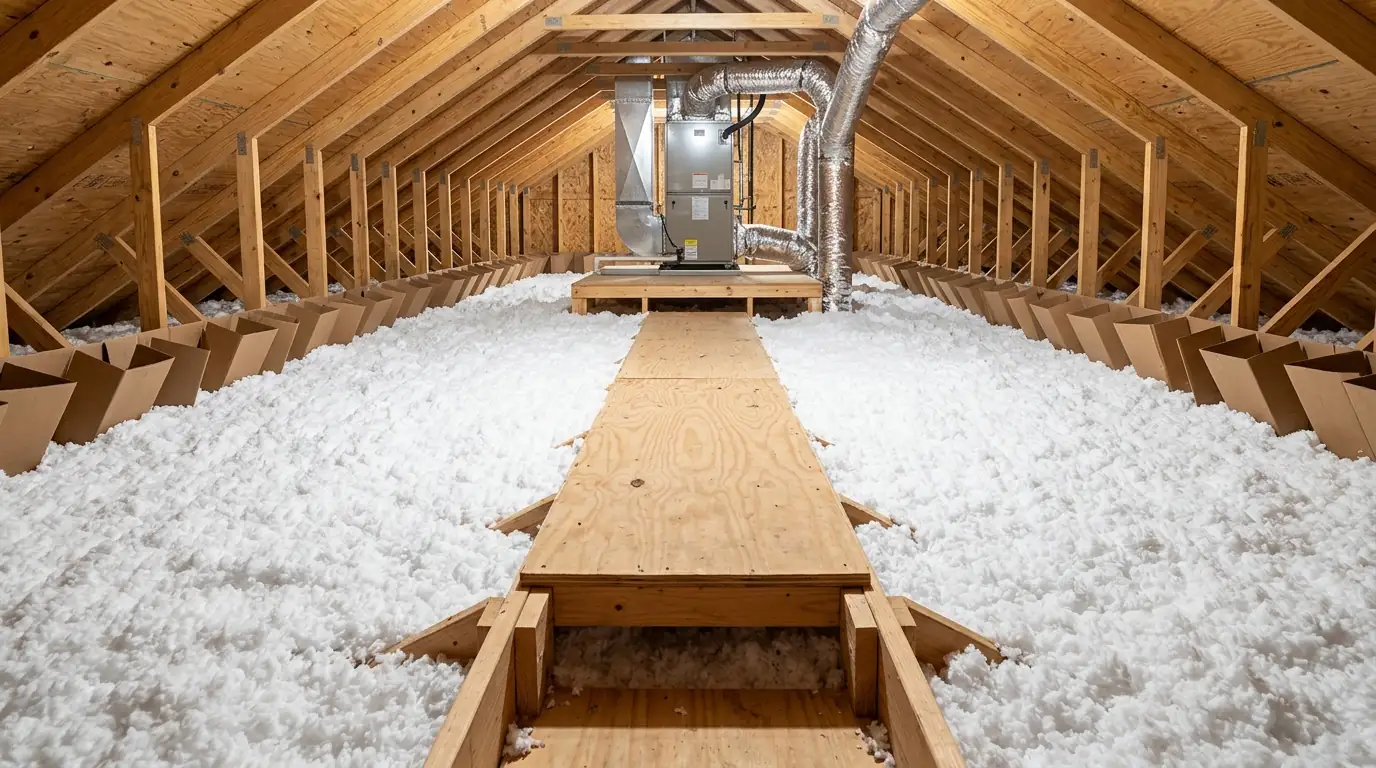
Insulation is not a substitute for working ducts. If supply runs are disconnected or crushed, burying them under insulation hides the problem. We look at the ducts first and fix them with duct sealing before anything is blown over them.
Blown fiberglass or blown cellulose
Both work well in an Atlanta attic. The differences are small but real.
| Blown fiberglass | Blown cellulose | |
|---|---|---|
| Material | Spun glass fibers | Recycled paper with fire retardant |
| Settling over time | Less | More, so we blow a little deeper |
| Air movement through it | More | Less, it packs denser |
| Fits well when | You want a lighter load on old ceilings | You want denser fill around obstacles |
Attic insulation costs to expect
The published range below is for typical attic insulation projects. Air sealing and equipment walkways change the scope, and we price them separately so you can see each part.
| Job | Published planning range | Source |
|---|---|---|
| Attic insulation | $1,000 to $2,700 | How Much Does Attic Insulation Cost? (2026) - HomeGuide |
What moves the number
- Attic square footage
- Existing insulation depth
- Air sealing scope
- Walkway to the HVAC equipment
- Removal of damaged insulation
These are ranges published by the sources linked above, shown for planning. They are not a quote and not our price; the real number depends on what we find at your home.
Blown-in attic insulation
Blown-in fiberglass or cellulose fills around joists, wires and pipes better than batts, which leave gaps at every obstacle. We install depth markers across the attic so the finished level is visible, keep baffles at the eaves so soffit vents stay open, and dam around attic hatches and recessed lights. Existing insulation can usually stay as long as it's dry and not contaminated. The new layer goes on top. Packed-down areas where people walked to reach the equipment get topped up to the same depth as the rest.
Air sealing the attic floor
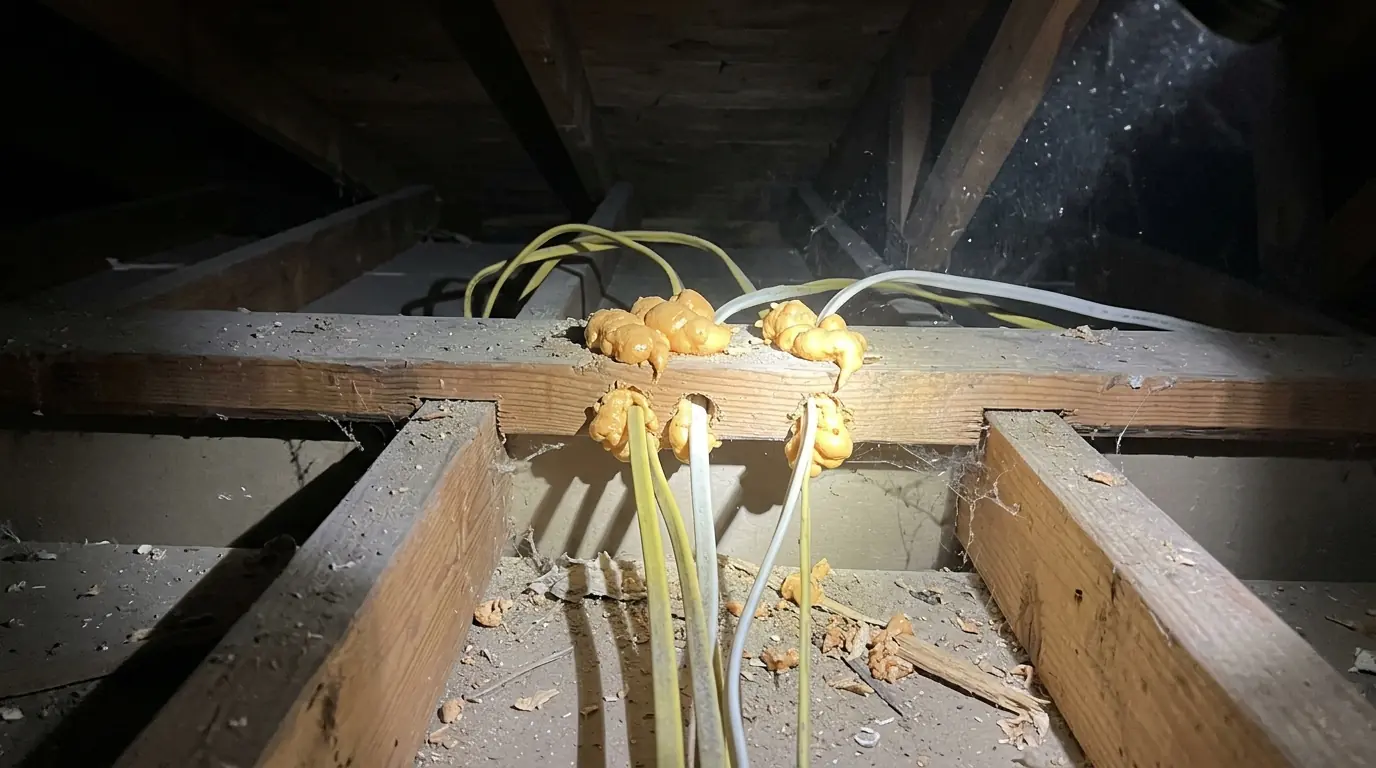
Insulation slows heat moving through it, but air moving around it carries heat too. Every hole in the attic floor, such as wiring holes, plumbing chases, the top of interior walls and gaps around the chimney, lets conditioned air rise into the attic in winter and pulls attic air down in summer. We seal those with foam, caulk and fire-rated sealant at flues before any insulation goes down. It's dirty, unglamorous work, and it often does as much as the insulation itself.
Insulating around attic HVAC equipment
Attic air handlers and furnaces need room to be serviced, and they need a clear path to reach them. We build a raised walkway from the hatch to the equipment so insulation doesn't get crushed on every service visit. Around the unit we leave the clearance the maker calls for, especially near gas furnace flues. Ducts get covered with blown insulation where they lie on the attic floor, which cuts their heat gain further. The service panel and filter stay easy to reach.
What an attic insulation job should cover
Some insulation jobs are just blowing material over whatever is there. These are the items we include.
- Pre-job duct inspection and repair
- Air sealing at wiring and plumbing penetrations
- Fire-rated sealant at flues and chimneys
- Eave baffles to keep soffit vents open
- Dam around the attic hatch
- Walkway to the air handler or furnace
- Clearance around the HVAC equipment
- Depth markers and an even final depth
How we insulate an attic properly
Attic survey
We measure existing depth, look for moisture and pests, and check the ducts and equipment.
Fix ducts first
We reconnect and seal any loose duct runs before they're covered.
Air seal the floor
We seal wiring, plumbing and wall-top gaps, with fire-rated sealant at flues.
Baffles and dams
We install eave baffles and build dams around the hatch, lights and equipment walkway.
Blow to depth
We blow insulation to an even depth across the attic and check it against depth markers.
Where this shows up around Atlanta
Hapeville sits right beside Hartsfield-Jackson, and attic work there has a side benefit. Air sealing the attic floor and adding a deeper layer of blown insulation mainly cuts summer heat gain through the ceiling, but closing gaps and adding mass overhead also takes some of the edge off noise coming through the roof. It won't replace window and door treatments, and it's a heat project first, but the extra layer overhead is worth knowing about this close to the runways. More about heating and cooling in Hapeville.
Attic Insulation questions from Atlanta homeowners
If you can see the tops of the ceiling joists, there isn't enough, and many older attics fall well short of what new homes get. We measure depth across the attic, mark the thin spots, and tell you how much needs to go on top.
Only if it's wet, moldy, contaminated by rodents or smoke-damaged. Clean, dry insulation stays, and the new layer goes on top. Removal adds a lot of cost and mess.
It helps, especially with air sealing. But a hot upstairs usually has several causes, including duct layout and a single thermostat. Our guide on two-story homes that run hot upstairs covers all of them.
No. We keep clearance around the unit and build a walkway to it. Burying equipment or blocking the service panel causes problems later. Ducts lying on the attic floor are a different story, and covering them helps.
In a hot climate it can cut some heat from the roof deck, especially over attic ducts. It works well alongside insulation, not instead of it. Air sealing and insulation depth usually come first.
Yes. The same layer slows heat escaping through the ceiling on cold nights, and the air sealing stops warm air rising into the attic. Heat pumps benefit most, since lower heat loss keeps backup strips off. See heat pump maintenance for the equipment side.
Updated October 2026