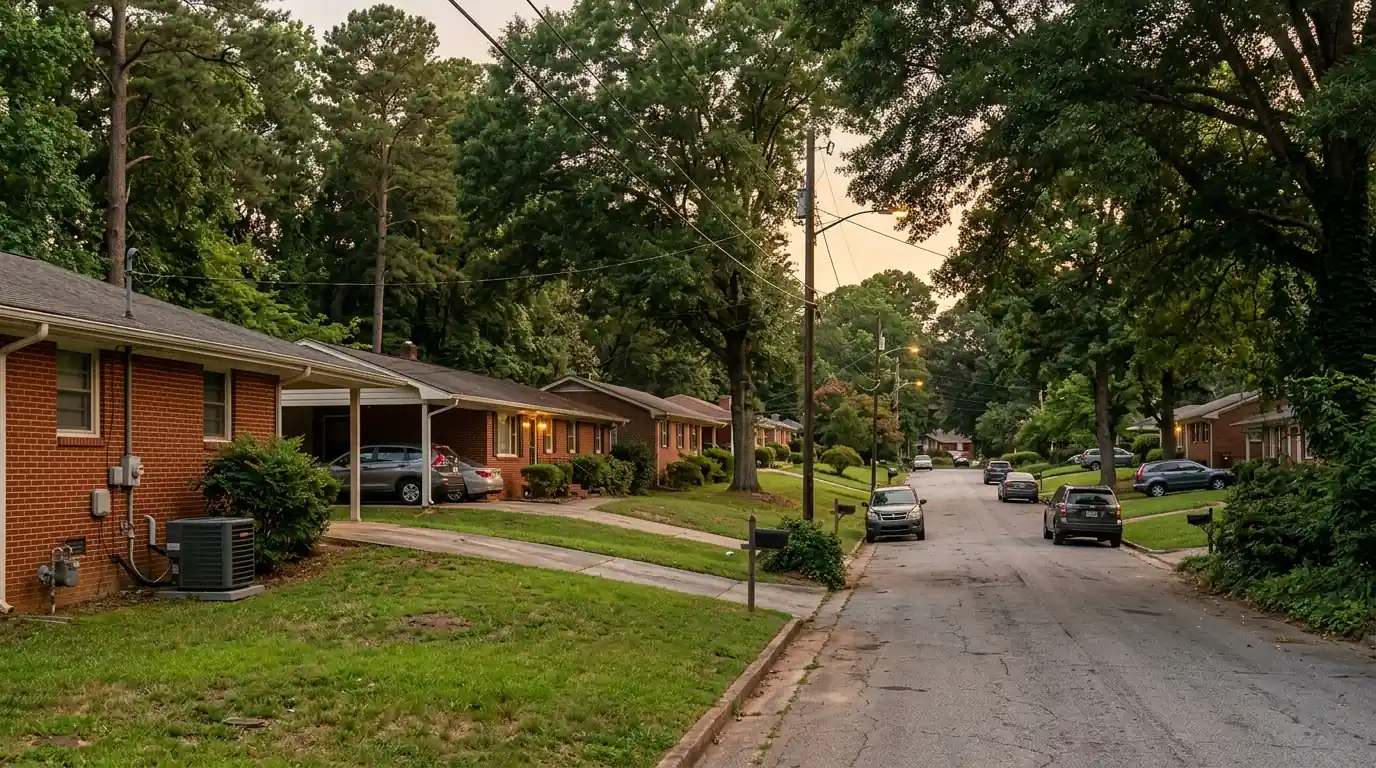
Sylvan Hills homes get furnace repair, heat pump service and duct repair from us. Platted in 1922, the neighborhood filled in from the 1920s through the 1950s, so one street can hold houses built thirty years apart. Heating and duct systems vary to match, and we start by working out what each house actually has before planning a repair.
Platted in 1922 and built out through the 1950s
Sylvan Hills was platted in 1922 on about 100 acres, and most of its houses went up between the 1920s and the 1950s. That span covers very different building habits. A 1920s house was built before forced-air heat was common in homes, while a 1950s house may have had a furnace and ducts from its first year.
The result is a neighborhood where two houses side by side can need opposite fixes. One has ducts that were added later and threaded through a crawl space. The next has original ducts that are simply old. We read the house before we read the thermostat.
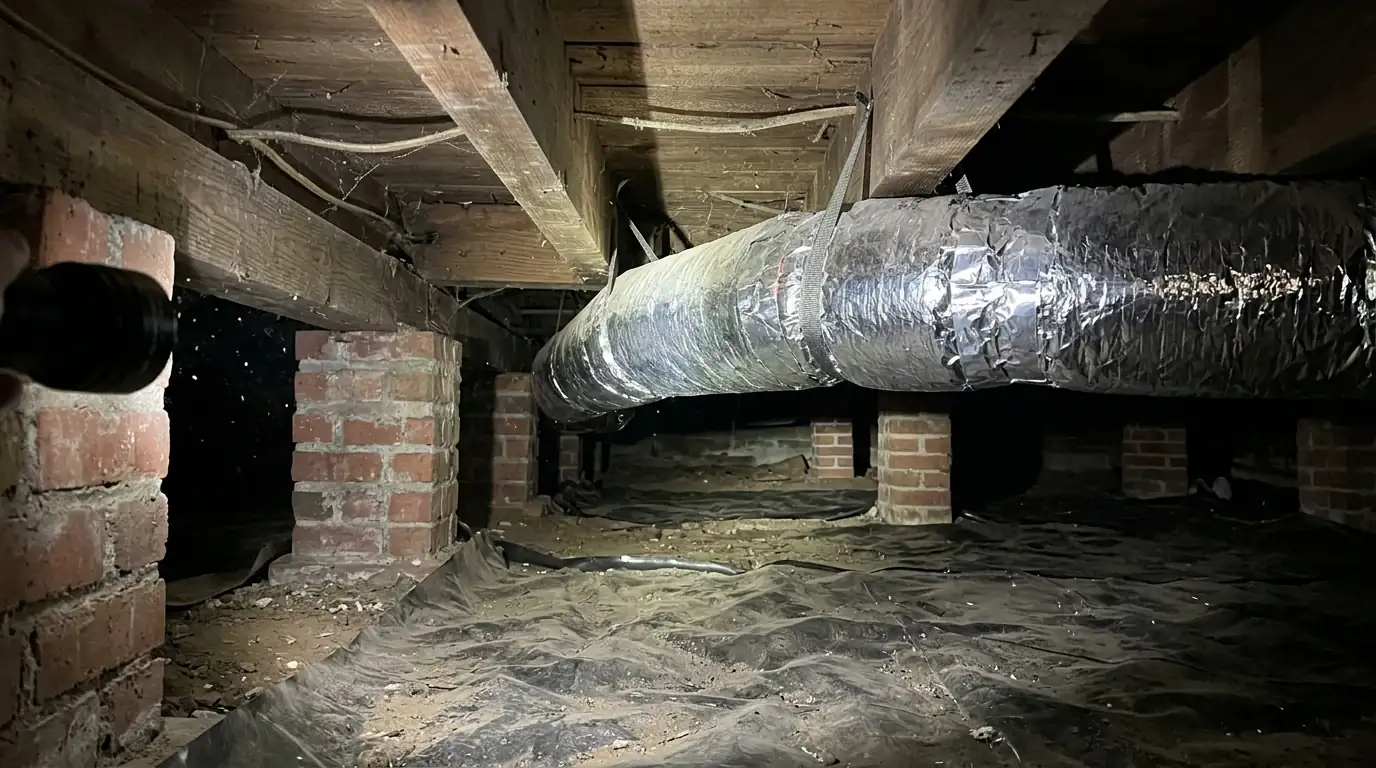
Crawl space ducts and the winter heat they lose
Many older Atlanta houses have ducts running through a vented crawl space, and that space gets cold. On a 34F January night, an uninsulated or leaking supply duct under the floor can shed much of its heat before the air reaches a register. The rooms over that run feel drafty even with the furnace running steadily.
We check joints and insulation along those runs and seal or rewrap them. Georgia's code for new work calls for duct insulation at R-8, a useful reference when we repair and seal crawl space ducts in an older house. Ducts that are crushed or rusted through are better replaced.
Freezing nights and the furnaces and heat pumps that face them
January in Atlanta averages a low near 34F, with overnight freezes on roughly 40 days a year. Gas furnaces see the most wear on the first cold weeks, when a flame sensor that has built up oxide over the summer or a cracking ignitor gives out. Heat pumps face long defrost cycles and lean on backup strips when charge or airflow is off.
We service both. A furnace repair visit runs through ignition, flame proving, pressure switch and limits in order. On heat pumps, we test defrost and backup staging. Either way, check the filter first: a clogged one causes more winter shutdowns than any failed part.
Neighbors with similar layouts
Sylvan Hills sits among other southwest Atlanta neighborhoods with early-1900s houses. Capitol View is led by Craftsman bungalows from about 1915 to 1925, and Oakland City has bungalows, Craftsman and Minimal Traditional houses. Both raise the same crawl space duct and heating questions, and the winter freezes behind them are shared across Fulton County.
Heating and cooling work that fits Sylvan Hills, Atlanta
Furnace Repair
The first cold weeks of winter expose dirty flame sensors and weak ignitors in older furnaces.
Duct Repair & Sealing
Crawl space ducts under 1920s to 1950s houses lose heat through open joints and missing insulation.
Heat Pump Repair
Freezing nights push heat pumps into long defrost cycles and expose backup strip faults.
Gas Furnace Safety & CO Testing
Older gas furnaces deserve a heat exchanger and flue draft check before heavy use.
Ductwork Replacement
Rusted or crushed runs are better replaced than patched, especially under the floor.
Whole-Home Humidifiers
Forced-air heat on cold days dries indoor air, which a bypass humidifier can offset.
Sylvan Hills heating and air questions
Often the ducts under the floor are losing heat in a cold crawl space, or the floor itself has no insulation. Leaking supply joints make it worse. We check the crawl space ducts for gaps and missing wrap, and point out where floor insulation would help.
That pattern usually means the furnace cannot prove flame, so it shuts the gas off for safety. A dirty flame sensor is the most common cause, followed by a weak ground or a failing gas valve. Cleaning the sensor is quick. We confirm the cause with a microamp reading.
Clues include duct material, the way runs enter rooms, and whether registers sit in floors or ceilings. Older sheet metal with cloth tape suggests earlier work, while flex duct points to a later retrofit. The data plates on the equipment also help date things. We note it all on the first visit.
On cold, dry weeks it can help with static, dry skin and gaps in wood floors. A bypass humidifier ties into the ductwork and runs when the furnace does. It does need yearly pad changes. Our whole-home humidifier page explains bypass and steam options.
Before, or at the same time. Sealing first lets us size the new furnace for a duct system that delivers what it should. If the ducts leak badly, a new furnace will run longer and heat unevenly regardless of its rating.
Updated October 2026