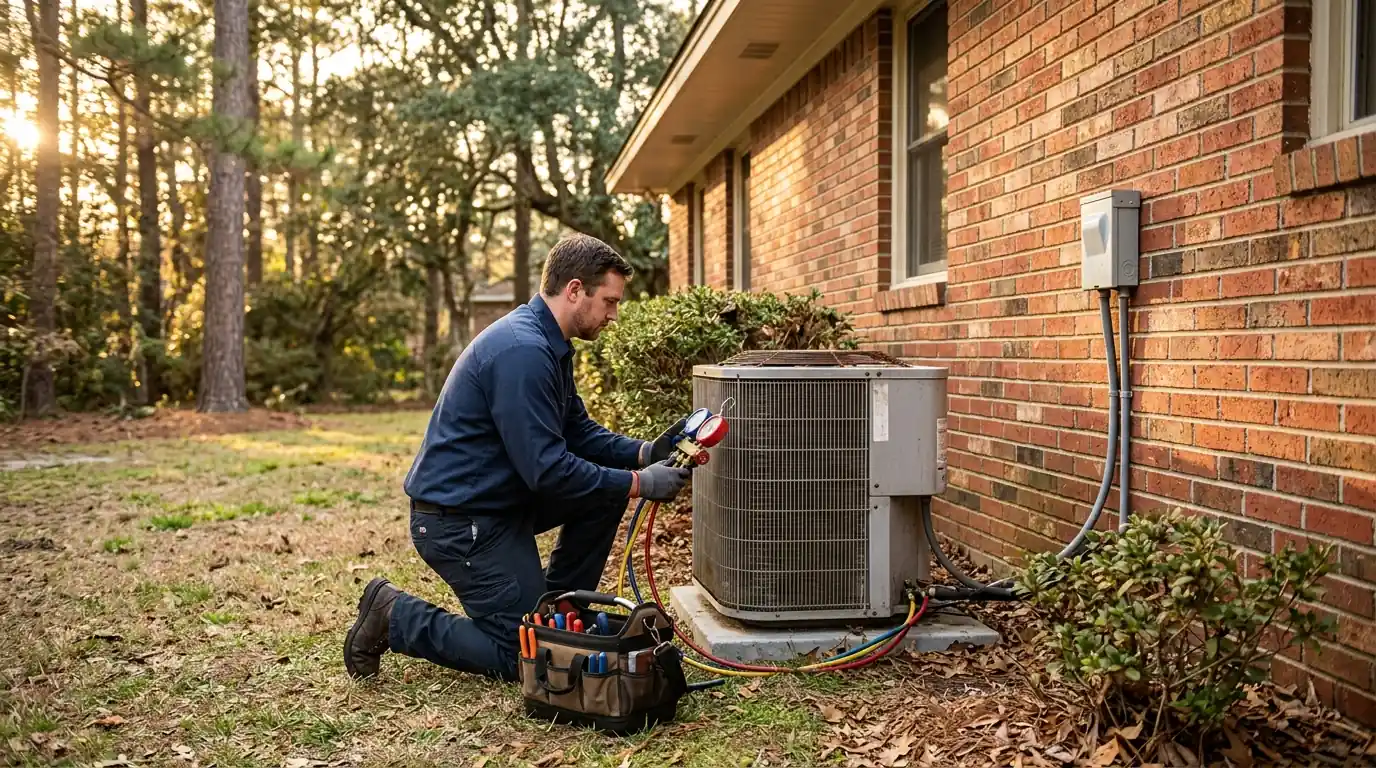
Dryer vent cleaning in Atlanta clears the lint that builds up inside the duct between the dryer and the outside hood, which the lint screen doesn't catch. When drying takes longer than one cycle, the vent is usually restricted. We clean the full run, check the hood damper, and fix crushed transition hoses.
How we handle dryer Vent Cleaning in Atlanta
A dryer pushes hot, wet, lint-laden air out through a duct. The lint screen catches most of the lint, but some passes through and sticks to the duct walls, especially at elbows and low spots where moisture condenses. As the duct narrows, airflow drops, drying slows, and the dryer runs hotter.
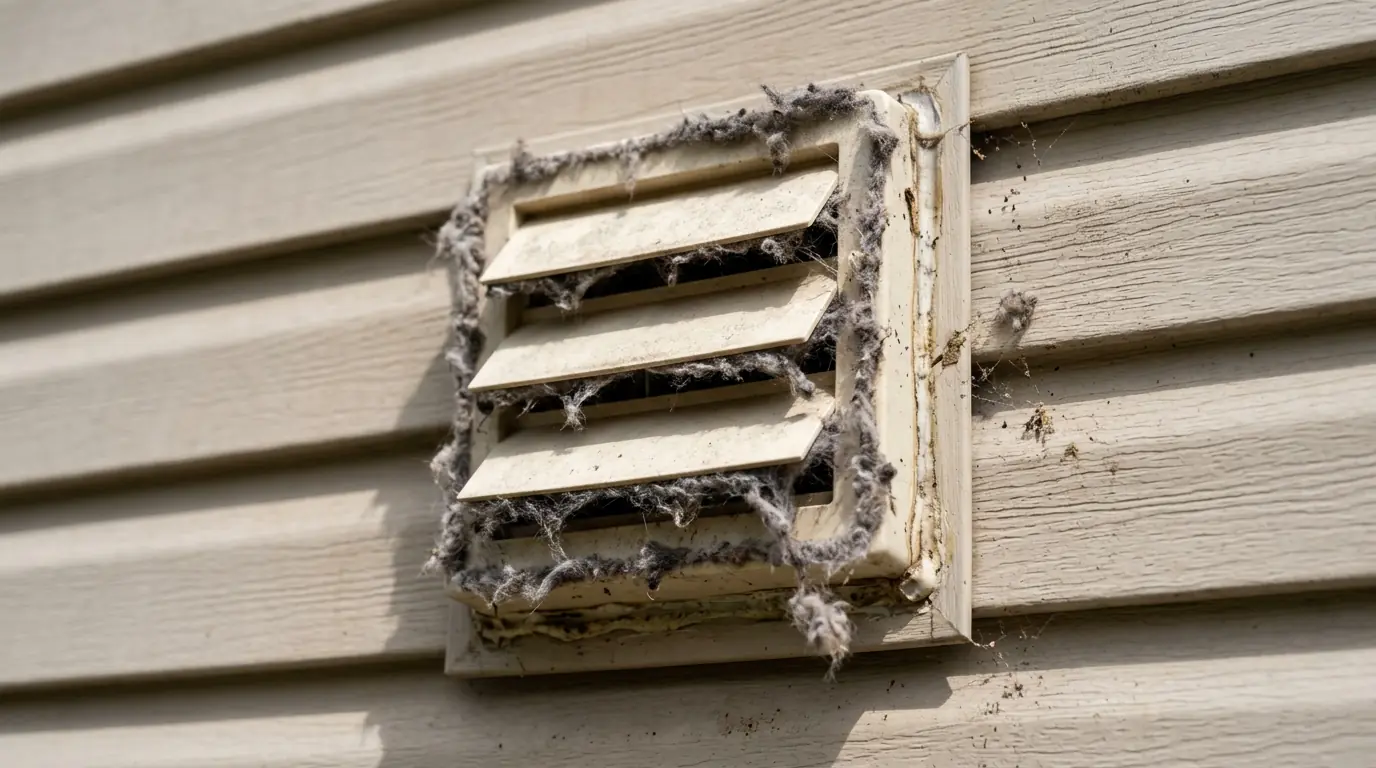
Dryer vents are ductwork, and the same rules apply: smooth rigid metal, sealed joints, as few turns as possible. Many problems we find were built in, such as long runs through an attic or a vinyl hose crushed behind the machine. We fix those along with the cleaning. Laundry rooms that stay hot can also point to leaky HVAC ducts nearby.
Long and roof-exit dryer vents
When the laundry room is in the middle of the house or upstairs, the vent may run twenty feet or more through an attic and exit on the roof. Long runs slow the air and let lint settle. Roof caps are worse: lint collects under the cap screen or damper, birds nest in them, and the vertical rise works against the dryer. We clean these with rotary brushes fed from both ends where possible, clear the roof cap, and replace cap screens with a proper dryer hood. Dryer makers publish a maximum vent length, and we check yours against it.
Lint buildup and fire risk
Lint is fine and burns easily. When it packs a vent, the dryer's high limit switch may cycle the heater on and off to keep from overheating, which is why drying takes longer. If the limit or thermal fuse fails, the dryer can keep heating with nowhere for that heat to go. Gas dryers add another risk: a blocked vent can push exhaust back into the house, so a CO check on your gas appliances is worth pairing with the cleaning. A clean vent, a metal transition and a working hood flap are the core protections. We check all three on every visit.
Rerouting crushed vent runs
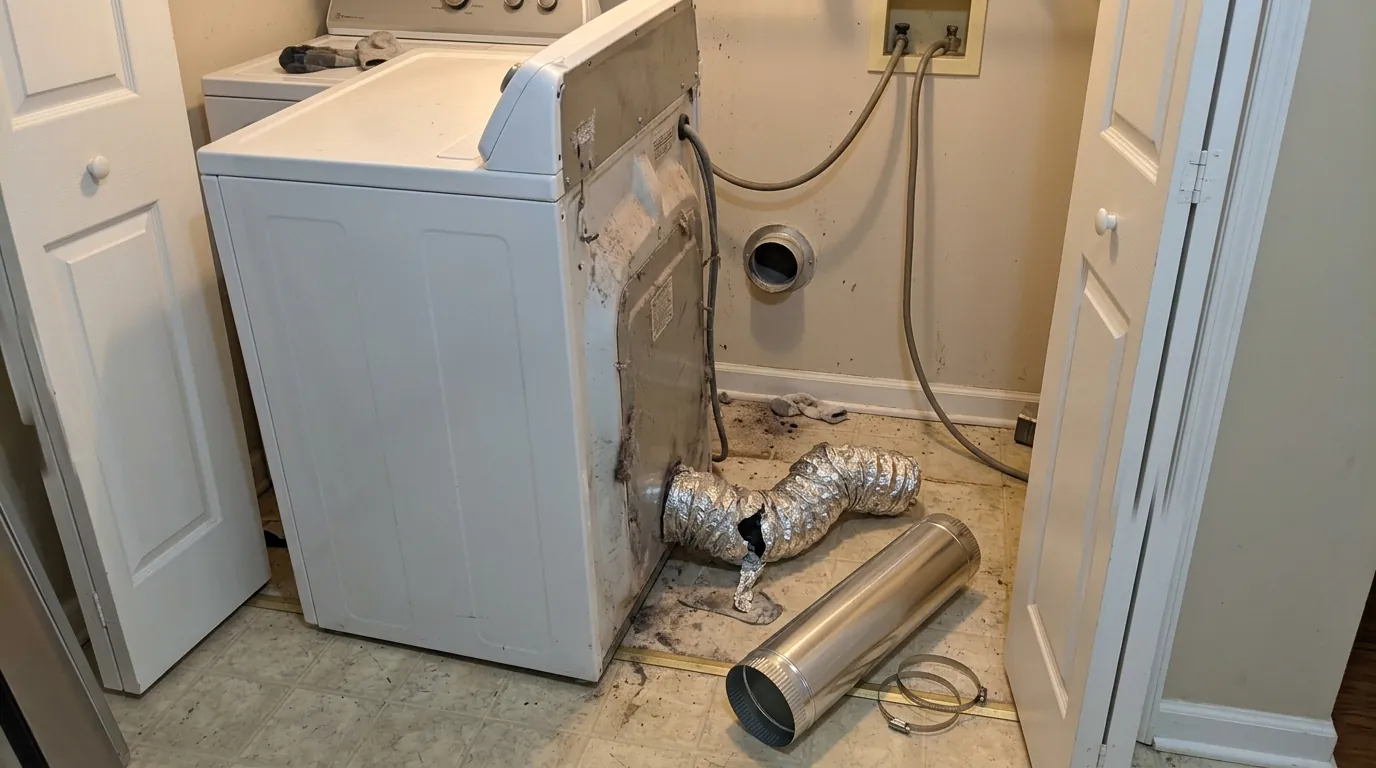
The most common problem we find is behind the dryer: a foil or vinyl transition hose squashed flat when the machine was pushed back. Others are vents run through a wall cavity with a sharp turn, or a run with screws through the duct that snag lint. We replace plastic and foil hoses with a semi-rigid metal transition, shorten runs where a straighter route exists, and join rigid sections with foil tape instead of screws. In tight laundry closets, a recessed dryer vent box lets the machine sit close without crushing the hose.
How we clean and check a dryer vent
Measure airflow
We check airflow at the outside hood with the dryer running, so there's a before number.
Pull the dryer
We move the machine, disconnect the transition and look at the wall connection.
Brush the run
We run a rotary brush the full length, from inside and from the hood where we can reach.
Hood and cap
We clear the exterior hood or roof cap and confirm the damper flap opens and closes.
Reconnect and test
We fit a metal transition, run the dryer and compare airflow at the hood.
Dryer vent upkeep you can handle
Some of this is routine homeowner care. The long, high and roof-exit parts are where help is worth it.
| Task | What you can do | Where a technician comes in |
|---|---|---|
| Lint screen | Clean every load, wash it if fabric softener film builds up | Not needed |
| Short wall-exit vent | A brush kit from the dryer end works | Needed if the brush won't pass an elbow |
| Transition hose | Replace foil or vinyl with semi-rigid metal | Recessed vent box in tight closets |
| Roof-exit vent | Don't climb the roof for it | Clean from the roof and clear the cap |
The local side of dryer Vent Cleaning
Dryers in newer, tightly built homes have a quieter problem. A dryer pushes a lot of air out of the house, and that air has to come back in somewhere. Southface reports that the 2020 Georgia energy code requires whole-house mechanical ventilation in new homes testing below 3 ACH50 on a blower door, because those houses leak so little. In a very tight house, a dryer running in a closed laundry room can struggle for makeup air, and long drying times are the result even with a clean vent. We check for that before blaming the duct.
Dryer vent cleaning cost ranges
The published range below covers standard wall-exit vents. Long attic runs, roof exits and rerouting work add to it.
| Job | Published planning range | Source |
|---|---|---|
| Dryer vent cleaning | $80 to $185 | 2026 Dryer Vent Cleaning Cost - HomeGuide |
What moves the number
- Vent length and number of elbows
- Roof or wall exit
- Bird nest or heavy blockage
- Transition hose replacement
- Rerouting through a new wall opening
These are ranges published by the sources linked above, shown for planning. They are not a quote and not our price; the real number depends on what we find at your home.
Signs the dryer vent is clogged
These show up at the dryer long before anything dangerous happens.
Two cycles for one load
Restricted airflow can't carry moisture out.
Dryer top hot to the touch
Heat is backing up instead of venting.
Burning smell during a cycle
Lint near the heater or in the drum housing.
Hood flap stays shut while running
Little or no air reaching the outside.
Lint around the outside hood
A clogged screen or cap forcing lint out of the seams.
Humid, hot laundry room
A disconnected or leaking vent dumping air indoors.
Dryer Vent Cleaning questions from Atlanta homeowners
Once a year is a reasonable baseline for a typical household. Large families, pets and long or roof-exit runs need it more often. If drying times creep up, don't wait for the schedule.
No. It dumps moisture that feeds mold and rot, spreads lint where it can burn, and with a gas dryer releases combustion gases indoors. A dryer vent must end outdoors at a hood with a damper.
Lint packed behind it, paint sealing the flap, or a nest. A flap that won't open restricts the whole vent. We clean or replace the hood and check it opens freely with the dryer running.
It can cook the high limit and thermal fuse, and it can back exhaust into the laundry room. A gas dryer should always vent freely. If anyone feels headaches near the laundry room, stop using it and have the vent checked.
Smooth rigid metal for the run inside walls and attics, joined with foil tape and no screws, and a short semi-rigid metal connector behind the machine. Plastic and thin foil hoses sag, crush and trap lint.
Yes, for individual units where the vent can be reached. Shared vertical vent chases in larger buildings need roof access and coordination with the property manager. See commercial maintenance for building-wide service.
Updated October 2026