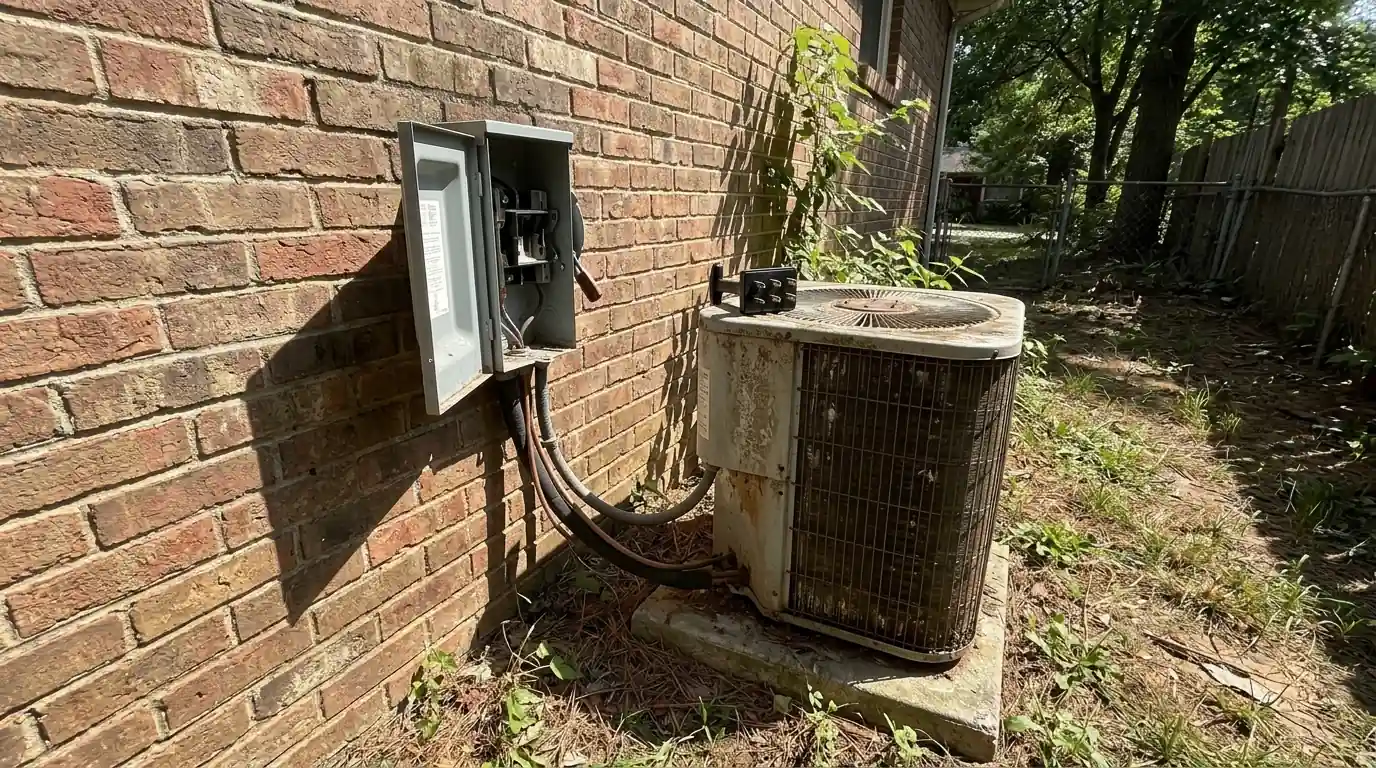
When the AC quits in Atlanta heat, check four things before anything else: the thermostat mode and batteries, both breakers, the filter, and whether the drain float switch tripped. If the outdoor fan is still and the unit hums, or you see ice on the copper line, turn the system off and call us. We answer 24/7.
Minute one: is the thermostat actually asking for cooling?
Start where the request begins. These checks take a minute and solve a surprising share of no-cool calls.
- Mode set to Cool, not Heat or Off, and fan set to Auto
- Setpoint at least a few degrees below the room temperature
- Display lit; if blank, replace the batteries or check that the system has power
- Smart thermostats: look for a schedule, eco mode or a utility event holding the temperature up
Minutes two to five: power at both ends
A split system has two power feeds. The indoor unit, either a furnace or air handler, has its own breaker and usually a service switch that looks like a light switch on or near the cabinet. The outdoor condenser has a separate breaker in the panel and a disconnect box mounted on the wall beside it.
- Look for a tripped breaker sitting in the middle position, then switch it fully off and back on once
- If it trips again right away, leave it off; a repeat trip means a short or a failing compressor
- Make sure the switch at the indoor unit is on and the furnace door panel is seated, since a safety switch cuts power when it is loose
- At the outdoor disconnect, confirm the pull-out block or lever is fully engaged
Minutes five to ten: airflow, ice and water
Pull the filter. A filter packed with dust after a long season can choke airflow enough to freeze the indoor coil. If you see frost on the larger copper line at the outdoor unit, or ice on the coil, switch the thermostat to Off and the fan to On. That melts the ice faster. Running the compressor against a frozen coil can damage it.
Next, check for water. Many attic and closet units have a float switch on the drain that shuts the system off when water backs up. If the secondary pan holds water or the switch is tripped, the drain is the problem. Our guide to drain line clogs explains what causes them.
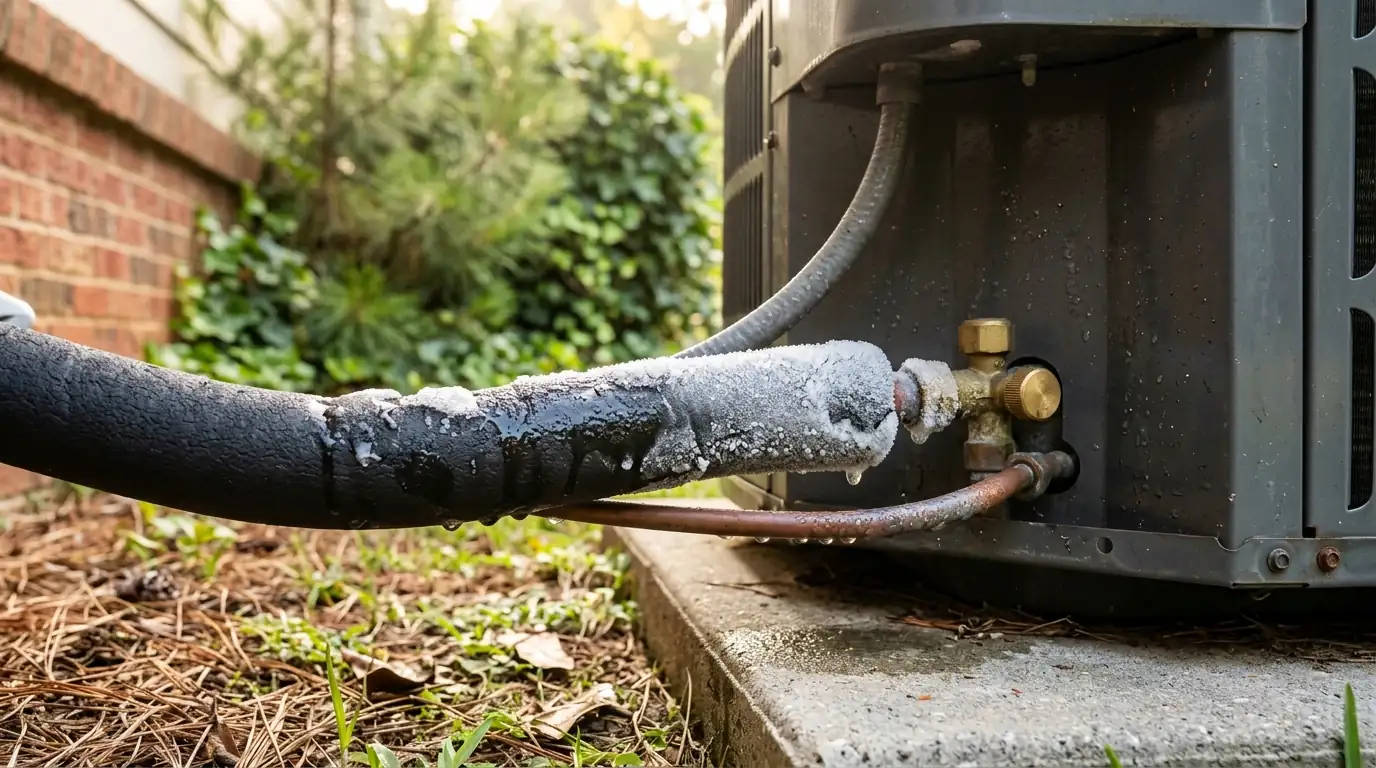
What the outdoor unit is telling you
Stand by the condenser with the thermostat calling for cooling. What you hear and see narrows the problem quickly.
If the fan spins and the unit hums, but the air inside stays warm, the compressor may not be running or the system may be low on refrigerant. If the unit hums loudly and the fan does not turn, a failed capacitor is a common cause, and the hum is the motors trying to start. Turn it off at the thermostat; repeated attempts to start can overheat the compressor. If nothing happens at all, power or a control problem is more likely.
Capacitors store a charge even with the breaker off, so opening the panel is not a homeowner task. A capacitor and contactor repair is one of the most common fixes on a hot afternoon.
Keeping the house bearable until help arrives
Atlanta summers do not wait. The city now averages about 44 days a year at 90F or hotter, and the all-time record of 106F was set on June 30, 2012. Overnight lows in July still average around 71F, so a house without cooling may not recover much at night.
Close blinds and curtains on sunny sides, especially west-facing windows in the afternoon. Shut doors to rooms you are not using. Run ceiling fans counterclockwise to move air across skin. Limit oven and dryer use. Move children, older relatives and pets to the lowest, shadiest room, and watch for signs of heat illness. If anyone at home is medically vulnerable, consider a cooled space elsewhere until the system is running.
What to tell us when you call
Details from the steps above save time. Tell us what the thermostat shows, whether a breaker tripped, whether the outdoor fan spins, whether there is ice or water, and the age of the system if you know it. That lets our technician arrive with the likely parts. If the outage is part of a bigger pattern, such as repeat failures every summer, it may be worth reading about what drives replacement cost in Atlanta before the next heat wave. For anything outside normal hours, emergency HVAC repair is the route; we answer around the clock.
Questions readers ask about this
Turn it off at the thermostat. A system blowing warm air may have a stalled compressor, a failed outdoor fan or low refrigerant, and running it can turn a small repair into a larger one. Set the fan to On if you suspect ice on the coil.
A healthy, properly sized system keeps running but may not hold the setpoint in extreme heat, especially in the late afternoon. Outright shutdowns in a heat wave usually point to a weak part, like a capacitor or contactor, that finally failed under heavy load.
The indoor unit is getting power and the thermostat is calling, but the condenser is not responding. Common causes are a tripped outdoor breaker, a pulled disconnect, a failed contactor or a tripped drain safety switch interrupting the control circuit.
Rinsing dirt and pollen from the fins with power off helps the coil shed heat. Spraying a running unit to cool it is not a reliable fix and can push debris deeper. A dirty coil should be cleaned properly once the immediate problem is solved.
It depends on insulation, shade and window exposure. Upper floors and rooms with west-facing glass heat fastest. Closing blinds and doors and limiting heat sources can slow the rise, but a well-insulated house still warms steadily through the afternoon.
A restart can clear a frozen display, but it rarely fixes a cooling failure. Check the mode, setpoint and any active schedule or eco setting first. If the thermostat is calling and nothing outside starts, the issue is downstream of it.
Services this article points to
AC Repair
AC repair in Atlanta usually traces back to one of four things: a failed capacitor, a stuck contactor, a dead condenser fan motor, or an evaporator coil frozen by poor airflow or low charge.
24/7 Emergency HVAC Repair
Emergency HVAC repair in Atlanta means a person answers your call 24/7 and walks you through making the house safe before a technician arrives.
AC Drain Line & Condensate Pump Repair
AC drain line repair in Atlanta usually means clearing a condensate line plugged with algae and biofilm, which builds up fast in humid summers.
AC Compressor Replacement
AC compressor replacement in Atlanta is warranted only after windings test open, grounded or locked, since weak capacitors and failed contactors mimic a dead compressor.