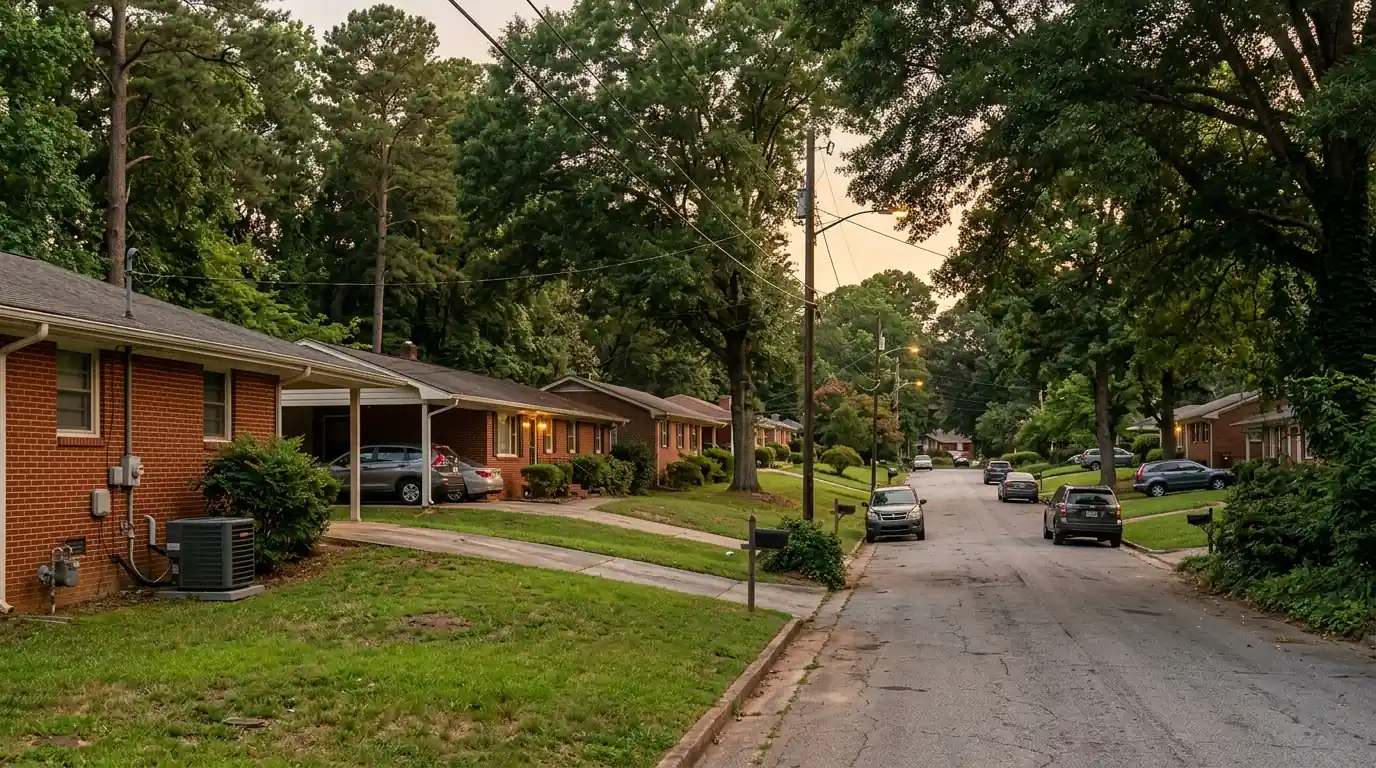
South Fulton homes get AC repair, new AC installation and heating service from us. The city's newest neighborhoods and its older streets share the same pressure: Atlanta-area summers that now start in April and run past September. That stretch wears out electrical parts, and when a system is due for replacement, it has to meet the 2023 SEER2 minimums.
A young city with a big housing base
South Fulton became a city on May 1, 2017, and counted 107,436 residents in 2020, making it Georgia's eighth-largest city. The city is new; most of its houses are not. That means a wide spread of system ages, from aging split systems on original ductwork to recent heat pumps.
It sits within Fulton County, the state's most populous, and we cover it the same way we cover the rest of the south county: one house at a time, starting with the data plate and the condition of the ducts.
Seventy-one hot days by mid-September
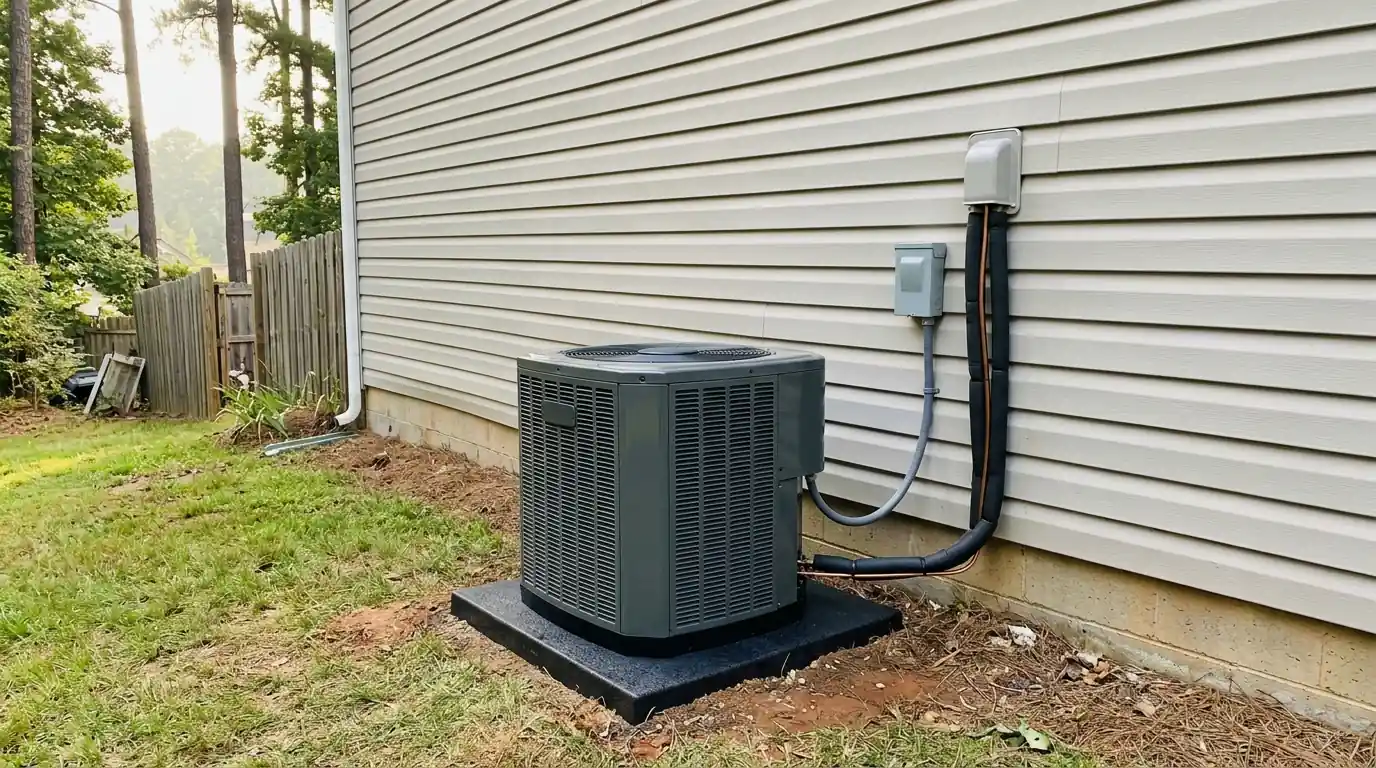
By mid-September 2026, Atlanta had already logged 71 days at 90F or above, nearly double the usual count of about 38. The first came in April, roughly six weeks early. Every extra week of full-load running heats up capacitors, pits contactor points and dries out fan motor bearings.
The calls that follow a season like that look familiar: an outdoor fan that will not spin, a compressor that hums and trips its breaker, or warm air from the vents with the condenser silent. Most of those are AC repairs measured in parts, not in new systems. We test the capacitor and contactor before condemning anything bigger.
When installation is the better spend
Sometimes repair stops making sense: a failed compressor on an older condenser, a coil with repeated leaks, or a system on R-22. Since January 1, 2023, a new split-system central AC installed in Georgia must meet 14.3 SEER2 below 45,000 Btu/h and 13.8 SEER2 at 45,000 Btu/h or above, judged by installation date.
Refrigerant is the other change. Newly made residential equipment from January 1, 2025 must use refrigerant with a GWP of 700 or less, which in practice means R-454B or R-32. Our AC replacement and installation work includes a load calculation and matching the indoor coil to the outdoor unit, and the SEER2 guide for Southeast homes explains the ratings in plain terms.
Heating and cooling work that fits South Fulton
AC Repair
A summer that started in April left many South Fulton capacitors, contactors and fan motors worn out by fall.
AC Replacement & Installation
Older South Fulton systems facing a compressor failure often make more sense to replace under the SEER2 rules.
AC Compressor Replacement
A hard-start kit can buy time on a weak compressor; a grounded one forces the repair or replace decision.
Evaporator Coil Replacement
Coils on aging systems develop pinhole leaks after many long, humid seasons.
AC Tune-Up & Maintenance
A spring check before the first April heat catches weak capacitors before they strand you.
South Fulton heating and air questions
Most often a failed run capacitor or a worn condenser fan motor. The compressor or fan tries to start and cannot. Shut the system off at the thermostat to protect the compressor, then call us. A capacitor is a quick, low-parts repair when caught early.
Equipment manufactured from January 1, 2025 has to use refrigerant with a GWP of 700 or less, so most new systems use R-454B or R-32. Some R-410A equipment built before 2025 can still be installed. We explain the difference in parts and service before you choose.
For split-system central AC installed since January 1, 2023, the Southeast minimum is 14.3 SEER2 below 45,000 Btu/h and 13.8 SEER2 at 45,000 Btu/h or above. Higher ratings cost more upfront and save more on power over long Georgia summers.
Wear builds with run hours. In 2026 the 90-degree days started in April and kept going, with 71 logged by mid-September. A capacitor or contactor that was marginal in June can make it through July and then give out after weeks more of full-load running.
Not necessarily. Even recent ducts can be crushed, disconnected or leaking at the boots. We look at the attic and measure static pressure during a replacement, because a new system on poor ducts loses capacity it was rated for.
Updated October 2026