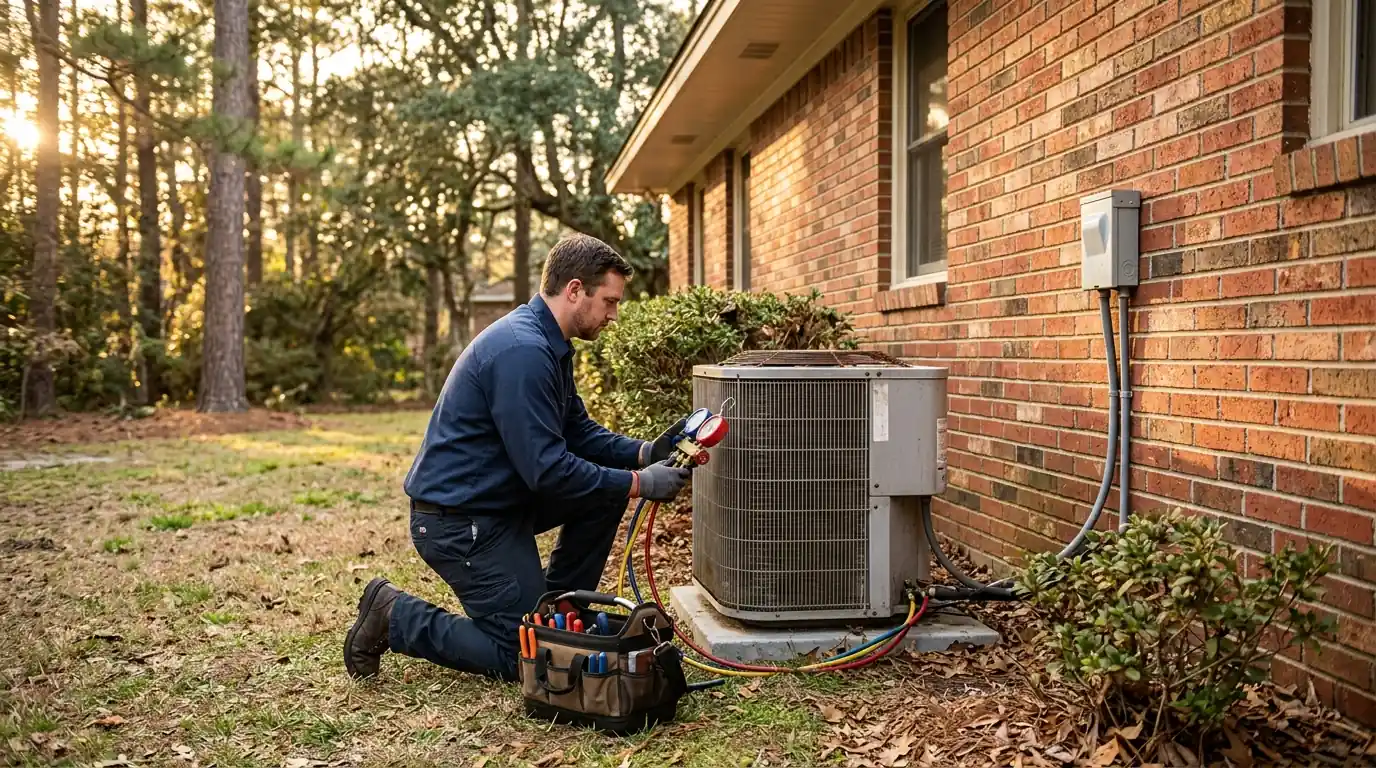
Heat pump repair in Atlanta usually involves one of three systems: the defrost controls that clear ice from the outdoor coil, the reversing valve that switches between heating and cooling, or the backup heat strips. A unit that frosts lightly and clears every hour or so is normal; one encased in ice is not.
Heat Pump Repair: what we check and why it matters
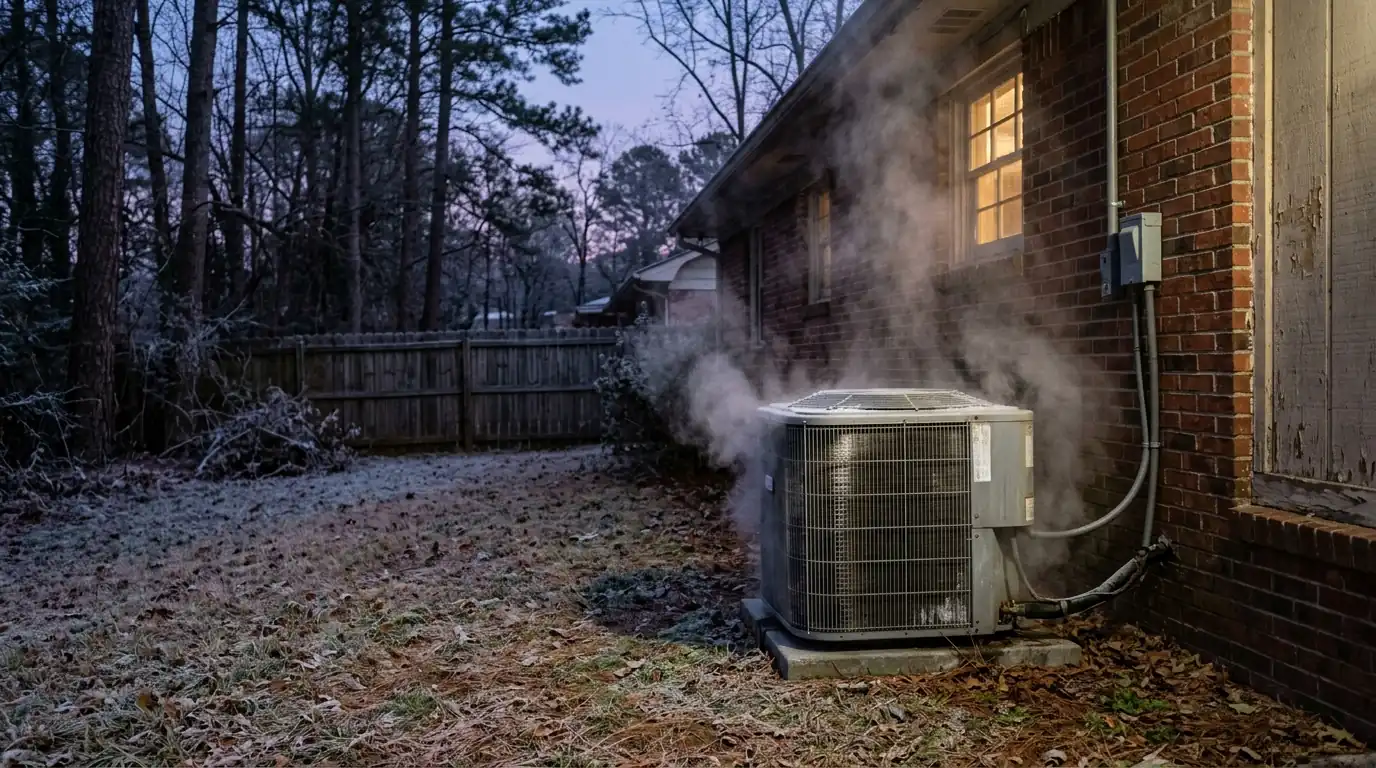
A heat pump moves heat instead of making it, and in winter it pulls heat from outdoor air across a coil that runs below freezing. Frost is expected. The defrost cycle reverses the system briefly to melt it, and that is when you may see steam rising from the outdoor unit. Problems start when that cycle fails, or when the system cannot keep up and leans on electric resistance heat.
Most heat pumps in the metro pair with an air handler holding heat strips, so diagnosis covers both units. If the strips themselves have failed, our air handler and heat strip repair page explains that side of the system.
Signs your heat pump needs attention
Some of these look alarming but are normal. Others are not.
Solid ice on the coil
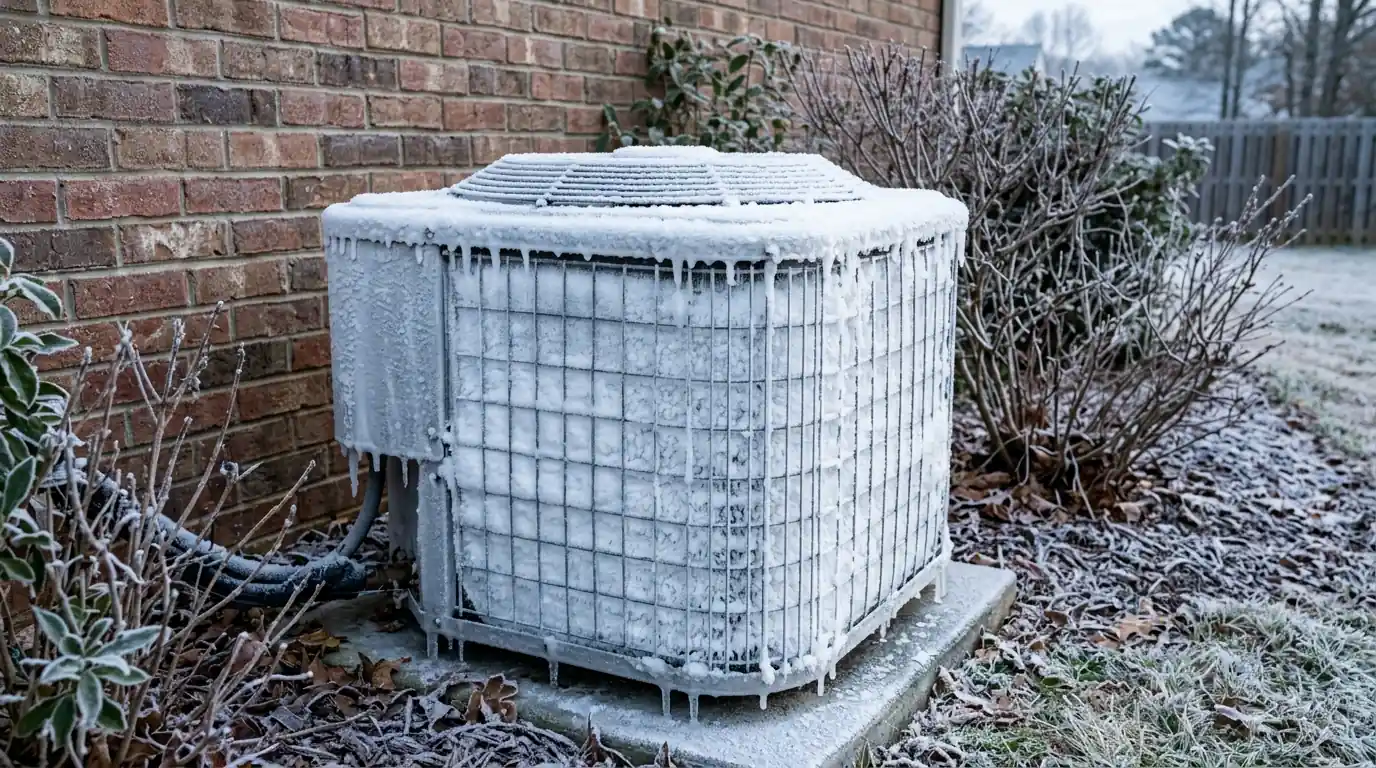
Light frost is normal. A thick block of ice that stays for hours is not.
Cool air in heat mode
A stuck reversing valve or low charge can leave air barely warm.
Aux heat always on
The thermostat shows auxiliary or emergency heat running on mild days.
Loud whoosh repeatedly
A brief whoosh at defrost is normal. Constant whooshing is not.
Fan stopped, no defrost
The outdoor fan stays off while the unit stays iced.
Sudden bill increase
A jump in winter power use often means the strips are doing the heating.
How long a heat pump repair usually takes
Sensor, defrost board, capacitor and sequencer repairs are often done in a single visit. A reversing valve replacement takes most of a day because the refrigerant must be recovered, the valve brazed in under nitrogen, and the system evacuated and recharged. While you wait, emergency heat keeps the house warm using the strips alone. It costs more to run, but it protects the outdoor unit until the repair is done.
Stuck in defrost or iced over
A heat pump that stays covered in ice for hours has a defrost problem. The defrost board decides when to defrost based on time and a coil sensor, and a failed sensor, a bad board, a stuck relay or low refrigerant charge can stop the cycle. Water from gutters dripping onto the unit, or a unit set too low to drain, can also freeze it solid. Turn the system to emergency heat to protect the compressor while you wait. We test the coil sensor, force a defrost to confirm the board and valve respond, and check the charge.
Reversing valve problems
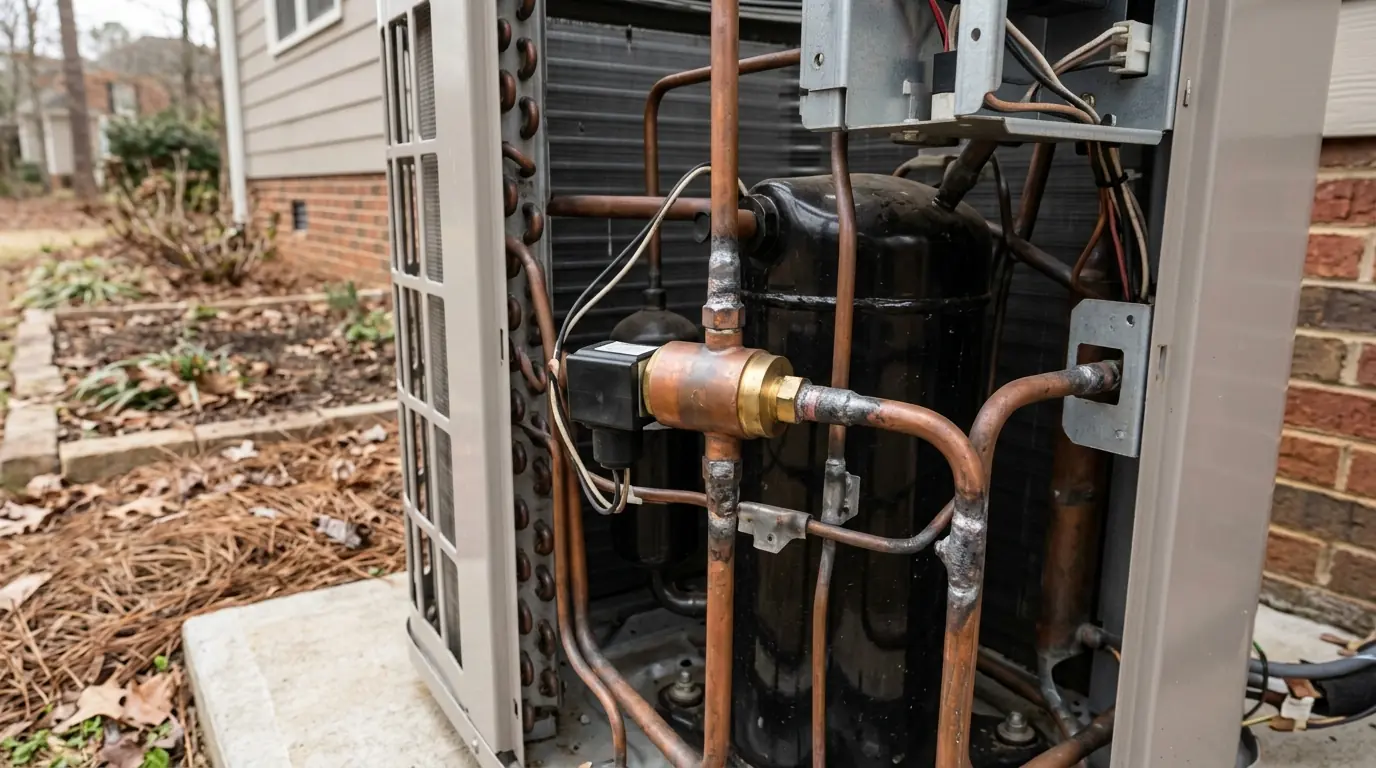
The reversing valve redirects refrigerant to switch between heating and cooling, driven by a solenoid coil. If the heat pump blows cool air in heat mode, or warm air in cooling, the valve may be stuck or the solenoid may have failed. A valve stuck halfway often makes a whooshing sound and leaves both lines lukewarm. We check for 24 volts at the solenoid, test the coil, and measure line temperatures to see whether the valve is shifting. A failed solenoid coil is a small part. A failed valve body means recovering refrigerant and brazing in a new valve.
Backup heat running constantly
Electric heat strips are expensive to run, and a heat pump that relies on them on mild days drives power bills up. Causes include a thermostat with aux heat set to trigger too early, a heat pump that is low on refrigerant or has a failing compressor, a defrost cycle that never ends, or a stuck sequencer keeping strips on. Many thermostats let you set an aux heat lockout temperature so the strips only run when it is truly cold. We check the heat pump's own output, review the thermostat setup and test the sequencers before replacing parts.
How we diagnose a heat pump in winter
Check thermostat and wiring
We confirm the O or B terminal for the reversing valve and the aux heat staging.
Force a defrost
Triggering defrost shows whether the board, valve and fan respond as designed.
Read pressures and line temps
Gauges and pipe clamps show charge and whether the reversing valve shifts fully.
Test backup heat
Amp draw at each heat strip confirms which stages work and whether sequencers release.
Repair and confirm output
After the repair we measure supply air temperature with heat strips off.
Equipment brands we service and install
Most homes around Atlanta run equipment from a handful of major manufacturers. We diagnose, repair and replace Carrier, Trane, Lennox, Goodman, Rheem and Daikin systems, along with the other names below.
Brand names are shown to describe the equipment we work on. We are not claiming a dealer or factory relationship with any manufacturer.
Where this shows up around Atlanta
Cold snaps show which heat pumps are healthy. On December 24, 2022, the National Weather Service recorded a low of 8F in Atlanta, and January 2025 brought a low of 14F on January 22 after a month running about 4F colder than normal. At those temperatures a heat pump defrosts often and its capacity drops, so backup heat has to carry part of the load. A failed defrost board or a strip that has burned open shows up quickly on nights like those.
What you can safely try and what needs us
A few checks help. Ice and electrical work need care.
| Task | What you can do | Where a technician comes in |
|---|---|---|
| Switch to emergency heat | Yes, if the unit is iced, to protect the compressor | Defrost board and sensor testing |
| Clear snow, leaves and drips | Yes, keep the unit clear and redirect gutter drips | Raising the unit on risers for drainage |
| Thermostat aux settings | Yes, check the mode and the aux lockout setting if your thermostat shows it | Staging and wiring corrections |
| Chipping ice off the coil | No, it bends fins and can puncture refrigerant tubes | Force a defrost and find the fault |
Published heat pump repair range
A national planning range from a published cost guide, not our price. Valve and compressor work sit at the higher end.
| Job | Published planning range | Source |
|---|---|---|
| Heat pump repair | $161 to $661 | How Much Does It Cost to Repair a Heat Pump? [2025 Data] - HomeAdvisor |
What moves the number
- Which part failed: sensor, board, valve or compressor
- Whether refrigerant must be recovered
- Backup heat strip and sequencer condition
- Thermostat setup and wiring corrections
- Outdoor unit access and footing
These are ranges published by the sources linked above, shown for planning. They are not a quote and not our price; the real number depends on what we find at your home.
Heat Pump Repair questions from Atlanta homeowners
That is usually the defrost cycle. The system reverses briefly to warm the outdoor coil and melt frost, and the moisture rises as steam. The outdoor fan stops during defrost, and the cycle typically lasts a few minutes. If it repeats constantly or the coil stays iced, call us.
No, but it is expensive to run because it uses electric resistance strips only. It is meant for when the heat pump is iced, broken or waiting for repair. Use it for short periods and switch back to normal heat once the problem is fixed.
Heat pump supply air is usually warmer than room air but cooler than furnace air, often around the low 90s instead of 120s. It feels mild but runs longer to keep the house steady. If the air feels cold, the reversing valve or charge may need checking.
Yes, with help. Most heat pumps lose capacity as it gets colder and rely on backup strips or a gas furnace on the coldest nights. Newer variable-speed models hold capacity better. Our heat pump or furnace guide compares the options.
If only the solenoid coil failed, it is a quick part swap. If the valve body is stuck or leaking internally, the refrigerant has to be recovered and a new valve brazed in, followed by evacuation and recharge. We confirm which it is before quoting the work.
It depends on age, refrigerant and the failure. A defrost board on a ten-year-old unit is worth fixing. A compressor or reversing valve on a fifteen-year-old R-22 heat pump usually is not. See our heat pump replacement page for what replacement involves.
Updated October 2026