
Whole-home air filtration in Atlanta usually means replacing a 1-inch filter slot with a 4- or 5-inch media cabinet at the air handler. The deeper pleats give far more surface area, so a MERV 11 to 13 filter can trap fine dust and pollen while keeping static pressure within the blower's rating.
How we handle whole-Home Air Filtration in Atlanta
A standard 1-inch filter has little surface area. Push it to a higher MERV and the blower has to pull harder, which raises static pressure, cuts airflow across the coil and can freeze it in summer or overheat a furnace in winter. Leave it at a low MERV and it mostly protects the equipment, not your lungs.
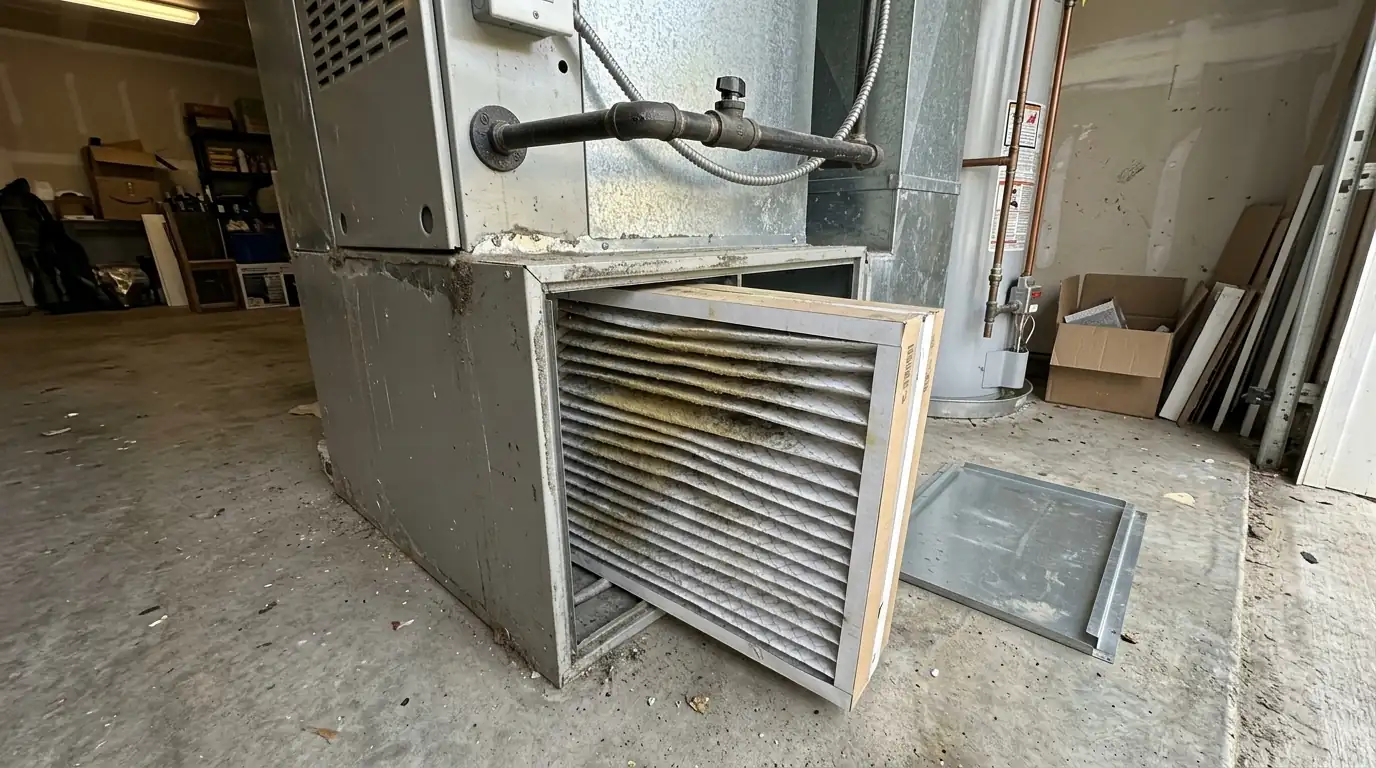
A media cabinet solves that with a much deeper filter, installed between the return duct and the air handler with a gasketed door so air cannot slip around the edges. We pair it with sealing the return side, since a leaky return in an attic or crawl pulls unfiltered air straight in. Our duct sealing work covers that part.
Thin filter slot or a deep media cabinet
The filter depth decides how fine a filter your system can run without losing airflow.
| 1-inch filter slot | 4- or 5-inch media cabinet | |
|---|---|---|
| Practical MERV ceiling | Often MERV 8 before airflow suffers | MERV 11 to 13 in most systems |
| Change interval | Every 1 to 3 months | Every 6 to 12 months |
| Air bypass | Common at loose grilles and slots | Gasketed door, little bypass |
| Upfront work | None | Plenum change at install |
What shapes the cost of a filtration upgrade
We do not have a published planning range we trust for media cabinet installs on their own, so here is what moves the price instead. We walk through the scope for your system when you call.
What moves the number
- Cabinet size and filter depth
- Return plenum changes
- Working room around the air handler
- Return duct sealing at the same visit
- Replacement filter cost over a year
Media filter cabinets
If your filter sits in a ceiling return grille or a loose slot cut into the air handler, air bypasses it on every cycle. A media cabinet is a sealed metal housing that holds a 4- or 5-inch pleated filter behind a gasketed door. Installing one usually means cutting into the return plenum, transitioning the duct, and sometimes shifting the air handler a few inches. It makes sense when you want MERV 11 or higher, when dust keeps returning after cleaning, or when someone in the house has allergies or asthma. In most homes, filter changes drop to once or twice a year.
Choosing a MERV rating
MERV runs from 1 to 16 for residential and light commercial filters. MERV 8 stops pollen and lint; MERV 11 adds pet dander and much of the fine dust; MERV 13 starts catching smoke and bacteria-sized particles. The catch is resistance. We measure total external static pressure with the system running and compare it to the blower's rating before recommending a number. Many systems with 1-inch racks can only handle MERV 8 without starving airflow, which is the main reason people move to a deeper cabinet instead of just buying a denser filter at the store.
Filter changes in pollen season
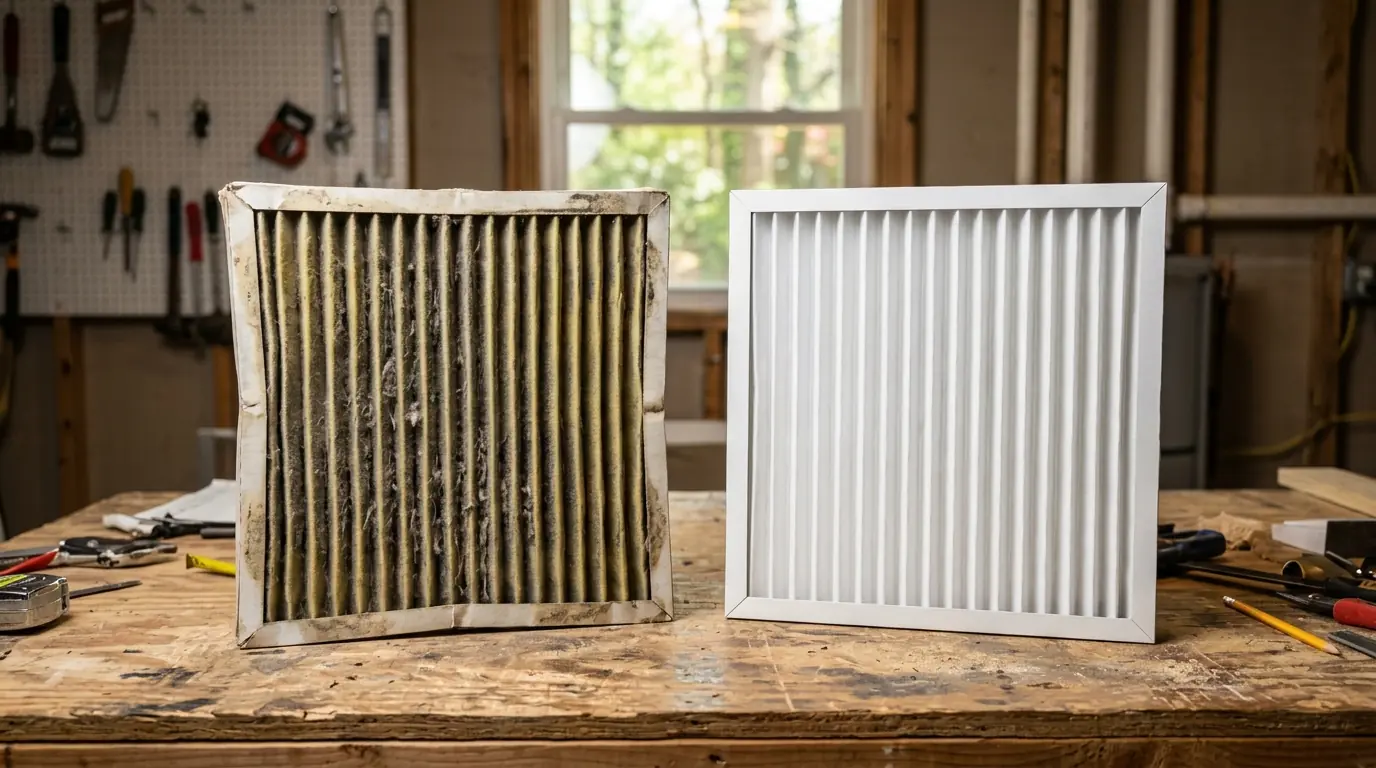
Spring loads filters fast. The yellow-green film on cars and porches is also being pulled into your return. A 1-inch filter can clog in two to three weeks during the peak, and a clogged filter starves the coil of air, which can ice it on the first warm days. A media cabinet holds far more before resistance climbs, but we still suggest checking it once the peak passes. If you run the fan continuously for filtration, change it sooner. Our pollen season guide lays out a simple schedule.
Filter jobs you can do and the ones to leave to us
Changing filters is the most common homeowner HVAC task. A few related jobs are not.
| Task | What you can do | Where a technician comes in |
|---|---|---|
| Swapping a filter | Yes, note the size and the airflow arrow | When the rack is on a cramped attic platform |
| Moving up a MERV rating | Check with us first on a 1-inch slot | Static pressure test before the change |
| Taping gaps around a grille | Temporary fix only | Mastic sealing and a proper filter frame |
| Adding a media cabinet | No, it means cutting the plenum | Sizing, install and airflow retest |
How we fit a media filter cabinet
Measure static pressure
We read total external static with the current filter in place to see how much headroom the blower has.
Trace the return path
We look for bypass at grilles and slots, open panels and return leaks that pull air around any filter.
Size the cabinet
We match cabinet size to the blower's airflow and the return duct so the filter face velocity stays low.
Cut in and seal
We set the cabinet, transition the plenum and seal every joint with mastic so all return air passes the filter.
Retest and label
We read static pressure again and write the filter size and MERV on the cabinet for future changes.
Atlanta homes, weather and this job
Few cities test a filter the way this one does in spring. Atlanta's pollen peak comes mainly from oak, pine, sweetgum and sycamore, with counts tracked locally since 1991, and on March 29, 2025 Atlanta Allergy & Asthma recorded 14,801 grains, the highest local reading on record and far above the 1,500 level treated as extreme. Whole grains are large enough for a MERV 8 to stop, but the fine fragments left after rain and wind need MERV 11 or better, and a deep cabinet lets you run that without starving the blower.
Whole-Home Air Filtration questions from Atlanta homeowners
In a 1-inch slot it often is. In a 4- or 5-inch cabinet sized to the blower, most residential systems run MERV 13 without trouble. We confirm with a static pressure reading rather than assuming.
A denser filter can cut airflow across the coil. Less air means the coil runs too cold, may frost, and cools the house more slowly. If that started after a filter change, go back to the old rating and have the static pressure checked.
Most washable filters test around MERV 1 to 4, so they mainly keep large debris off the coil. They also have to dry completely before going back in, or they can grow mold during a humid summer.
Yes, horizontal units take side-access cabinets. The work is more cramped, and the platform sometimes needs extending so the filter door can open, which we plan for before starting.
Continuous fan moves more air through the filter, but in summer it can blow moisture off a wet coil back into the house. Many people do better with a circulate setting, or with a ducted dehumidifier if they want the fan running constantly.
Electronic cleaners catch fine particles well while their cells are clean, but they need washing every month or two and some give off a little ozone. A deep media filter is simpler to live with. We compare both alongside UV and purifier options when you call.
Updated October 2026