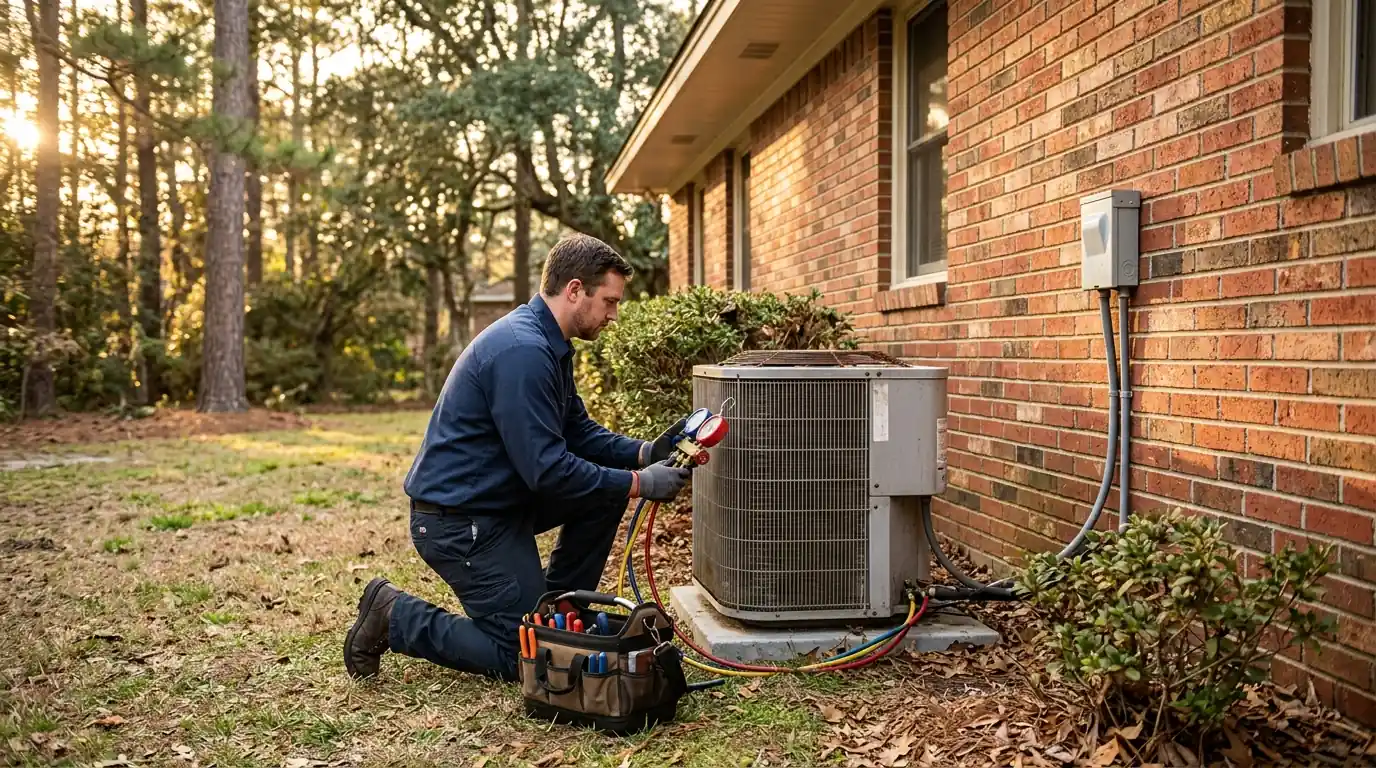
AC compressor replacement in Atlanta is warranted only after windings test open, grounded or locked, since weak capacitors and failed contactors mimic a dead compressor. When the compressor itself has failed, the choice is between replacing it alone on a younger system or replacing the condenser, which often costs less over time on older units.
What AC Compressor Replacement involves on a southwest Atlanta call
The compressor is the pump that moves refrigerant through the system, and it is the most expensive part of the outdoor unit. Most compressors fail from causes elsewhere: low charge that lets them overheat, a failed fan motor that drives head pressure up, liquid slugging from a bad metering device, or electrical stress from weak starting parts.
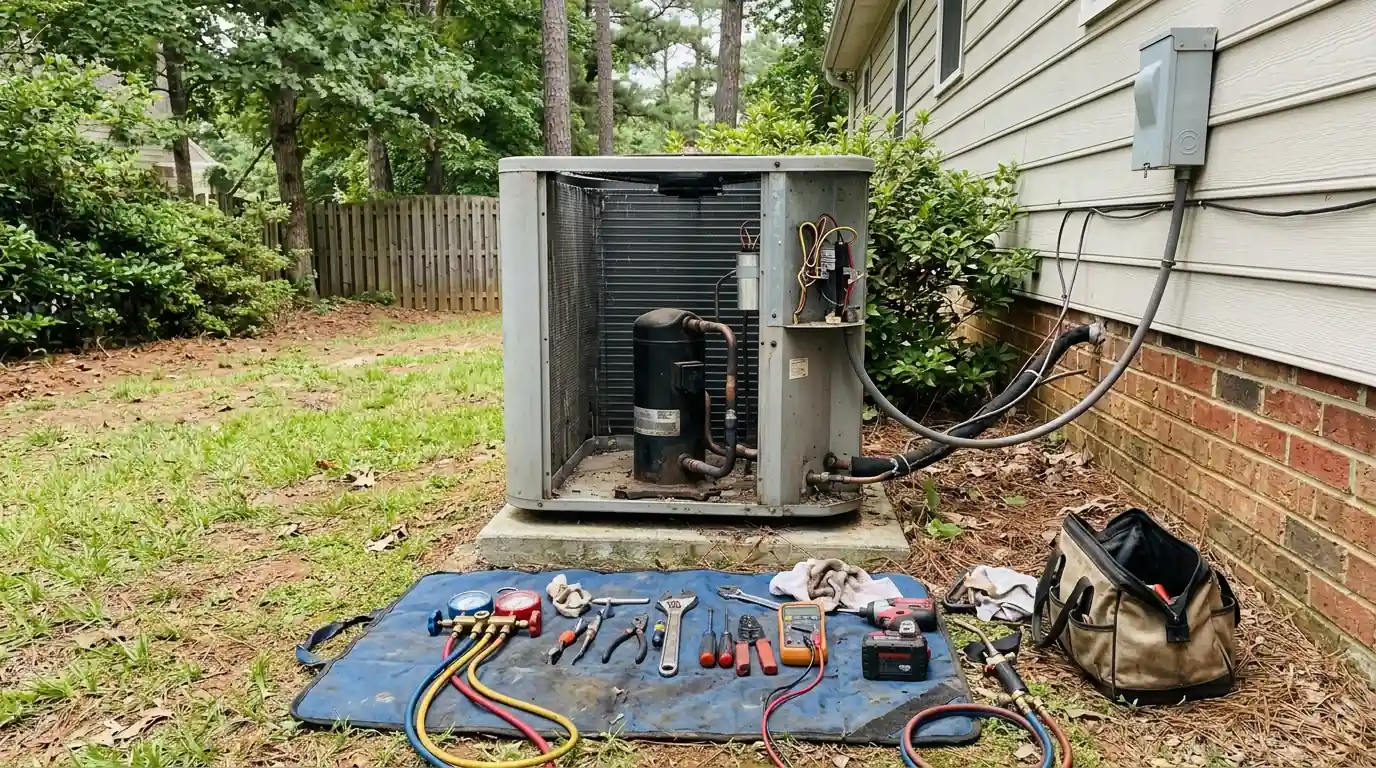
Replacing a compressor without correcting that cause usually leads to a second failure. We treat the job as a diagnosis first, then a repair, then a check of the conditions that killed the old compressor. Weak starts often begin as a small fix covered on our AC repair page.
Compressor only or a new condenser?
Both are real options depending on the unit.
| Compressor only | New condenser | |
|---|---|---|
| Usually suits | Units under about eight years | Older units and R-22 systems |
| Parts replaced | Compressor, driers, starting parts | Entire outdoor unit |
| Efficiency | Stays at the original rating | Meets current SEER2 minimums |
| Upfront cost | Lower | Higher |
Published compressor replacement range
A national planning range from a published cost guide, not our price. Refrigerant and cleanup after a burnout add to the job.
| Job | Published planning range | Source |
|---|---|---|
| AC compressor replacement | $600 to $2,500 | How Much Does AC Repair Cost? (2026) - HomeGuide |
What moves the number
- Compressor type and tonnage
- Refrigerant type and recharge amount
- Burnout cleanup with filter driers or flushing
- Whether a hard-start kit fixes the problem instead
- Condenser age and parts availability
These are ranges published by the sources linked above, shown for planning. They are not a quote and not our price; the real number depends on what we find at your home.
Hard-start kits and weak starts
A compressor that hums, trips its overload and tries again is often struggling against pressure that has not equalized, or a run capacitor that has drifted below its rating. A hard-start kit adds a start capacitor and a relay that give the motor a brief boost of torque at startup. It is a valid fix on an otherwise healthy compressor with a weak start, and it helps where voltage sags under load. It is not a cure for a compressor with damaged windings or mechanical wear. We measure locked-rotor and running amps before and after so you can see whether the kit actually changed anything.
Locked or grounded compressors
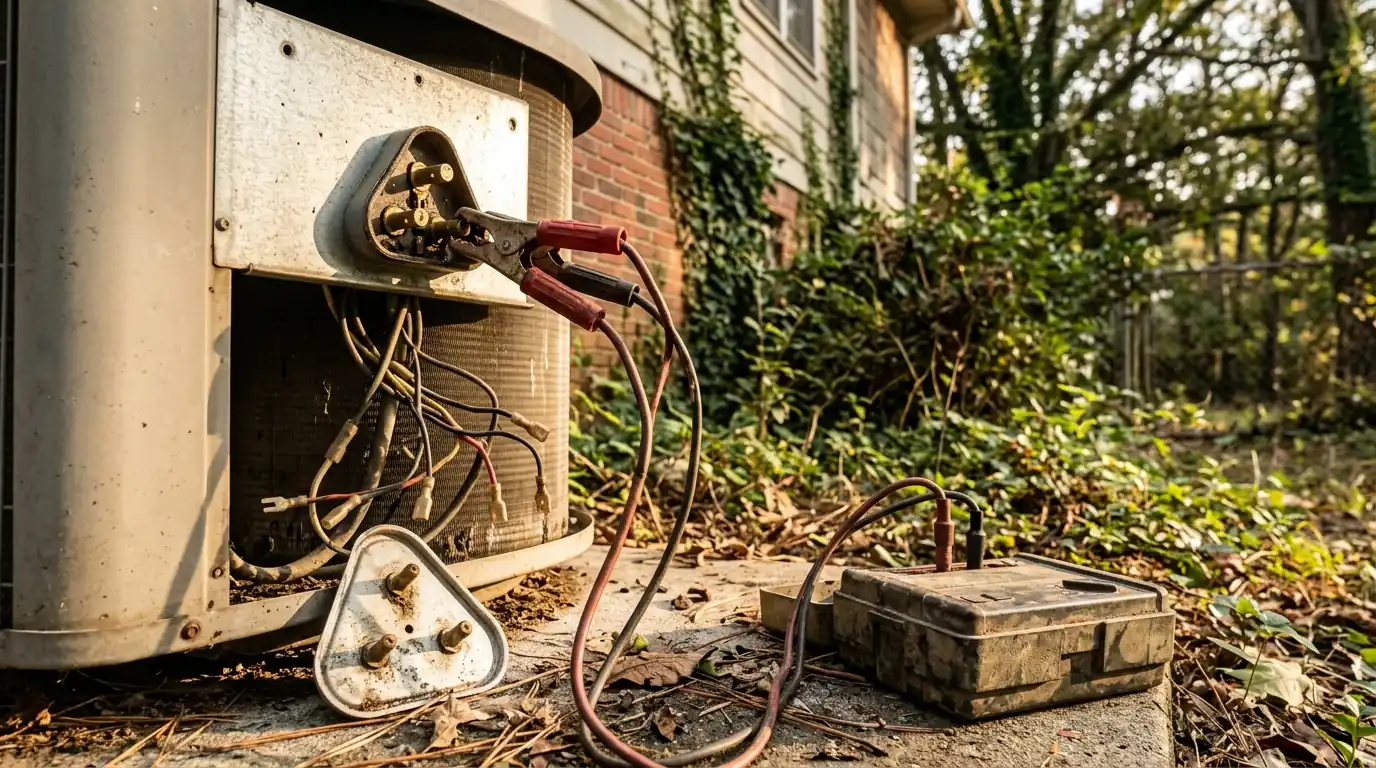
A locked compressor draws high current and never turns, usually from mechanical failure inside the shell. A grounded compressor has a winding shorted to the case, which trips breakers immediately and can burn the oil, leaving acid in the system. We test with a megohmmeter and ohmmeter at the terminals, comparing start, run and common windings. A grounded compressor that burned out needs an acid test of the oil, a suction line filter drier and sometimes a system flush before the new compressor goes in. Skipping that cleanup is how replacement compressors fail early.
Repair or replace the whole condenser
Replacing only the compressor keeps the existing coil, fan motor and cabinet, which works well on a system a few years old. On a ten-year-old or older unit, the labor for a compressor swap is close to the labor for a new condenser, and a new condenser brings a new coil, fan, controls and current efficiency. R-22 systems almost always point toward replacement, since the old refrigerant is scarce. We price both paths side by side. Our Atlanta AC replacement cost guide gives context for the larger option.
How we replace a failed compressor
Rule out starting parts
Capacitor, contactor and wiring are tested before the compressor is condemned.
Test the windings
Ohm readings between terminals and a megohm test to ground confirm a locked, open or grounded compressor.
Recover and test the oil
Refrigerant is recovered and the oil checked for acid after an electrical burnout.
Install with clean protection
The new compressor is brazed in under nitrogen with new driers and new starting components.
Charge and check the cause
We charge to spec, verify superheat, and confirm the fan, coil and charge will not repeat the failure.
Equipment brands we service and install
Most homes around Atlanta run equipment from a handful of major manufacturers. We diagnose, repair and replace Carrier, Trane, Lennox, Goodman, Rheem and Daikin systems, along with the other names below.
Brand names are shown to describe the equipment we work on. We are not claiming a dealer or factory relationship with any manufacturer.
The local side of AC Compressor Replacement
Atlanta reached its all-time record of 106F on June 30, 2012, and the city now averages about 44 days a year at 90F or hotter. Compressors feel that heat directly: condensing pressure rises with outdoor temperature, so the motor works hardest on the same afternoons the house needs it most. A compressor already weakened by a low charge or a dirty outdoor coil is most likely to fail during a heat wave, which is why we check those conditions before installing a new one.
How long a compressor job keeps you without AC
A compressor replacement usually takes most of a day once the part is in hand: recovery, removal, brazing, a pressure test, evacuation and charging. Ordering the compressor can add a day or more depending on the model. A full condenser swap is often quicker to schedule because condensers are stocked more widely. If the house is hot and someone is vulnerable, ask about running a portable unit or fans meanwhile.
Warning signs of a struggling compressor
These often appear before a complete failure.
Loud hum then silence
The compressor tries to start, overheats and shuts off on its overload.
Breaker trips at startup
High inrush current suggests a weak start or a winding fault.
Fan runs, no cooling
The condenser fan spins but the larger copper line stays warm.
Clanking or rattling
Mechanical noise inside the shell points to internal wear.
Lights dim when it starts
A heavy draw at startup that flickers lights can mean a hard-starting compressor.
Short run cycles
The unit starts, runs a few minutes and stops repeatedly.
AC Compressor Replacement questions from Atlanta homeowners
It can help a compressor that struggles to start but still has sound windings and no internal damage. It will not fix a grounded, locked or mechanically worn compressor. We test before installing one, so you do not pay for a kit that only delays a replacement by a few days.
Most failures start elsewhere: a slow refrigerant leak, a dead condenser fan, a dirty outdoor coil, a stuck metering device or weak starting parts. We look for the cause during replacement, because a new compressor in the same conditions often fails again.
Often not. At that age, the labor and refrigerant for a compressor swap approach the cost of a new condenser, and the rest of the outdoor unit is still ten years old. On a younger system, replacing just the compressor usually makes sense.
An electrical burnout can leave acid and carbon in the oil and refrigerant. That contamination attacks the new compressor unless it is removed with an acid test, new filter driers and sometimes a suction line drier that is changed after a few days of running.
Shut it off if it is humming without starting, clanking or tripping the breaker. Repeated failed starts overheat the windings and can turn a starting-part repair into a full compressor replacement. Call us and describe the sound so we can tell what to check first.
Yes. The system must be recovered to open it, so it is evacuated and recharged afterward. On R-410A that is routine. On R-22 the recharge uses reclaimed refrigerant and adds cost, which is one reason leak repair and refrigerant type weigh heavily in the decision.
Updated October 2026