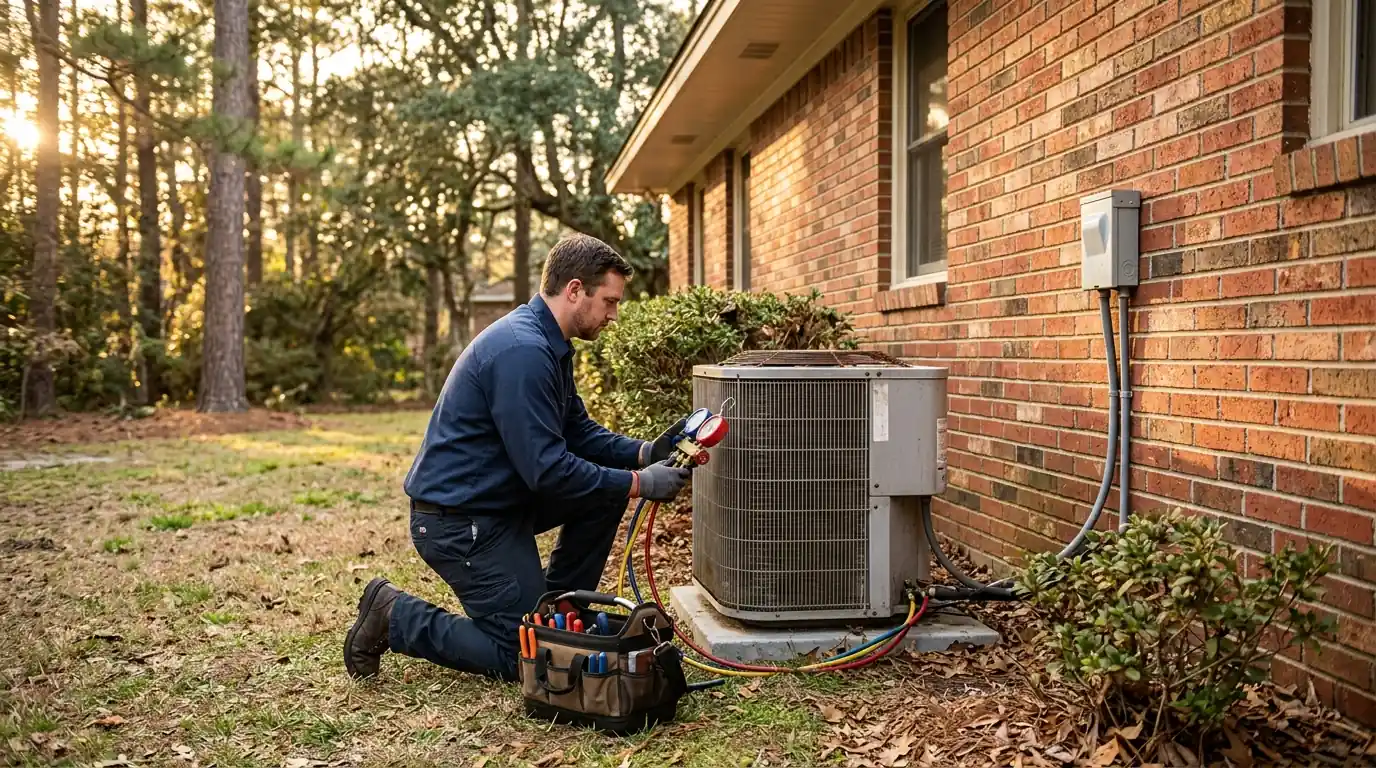
Rooftop unit replacement in Atlanta starts with the curb: a new RTU with a different footprint needs a curb adapter to meet the existing roof opening and ducts. Most jobs also involve a crane pick, an electrical check against the new unit's ratings, and setting the economizer for humid weather before the space goes back into use.
Commercial Rooftop Unit Replacement: what we check and why it matters
Rooftop units age hard. Sun, rain and pollen work on the cabinet and coils, and many units serving stores and offices run long hours most of the year. Once a compressor fails on an older unit, or the heat exchanger in a gas-electric unit cracks, putting money into the old cabinet rarely makes sense.
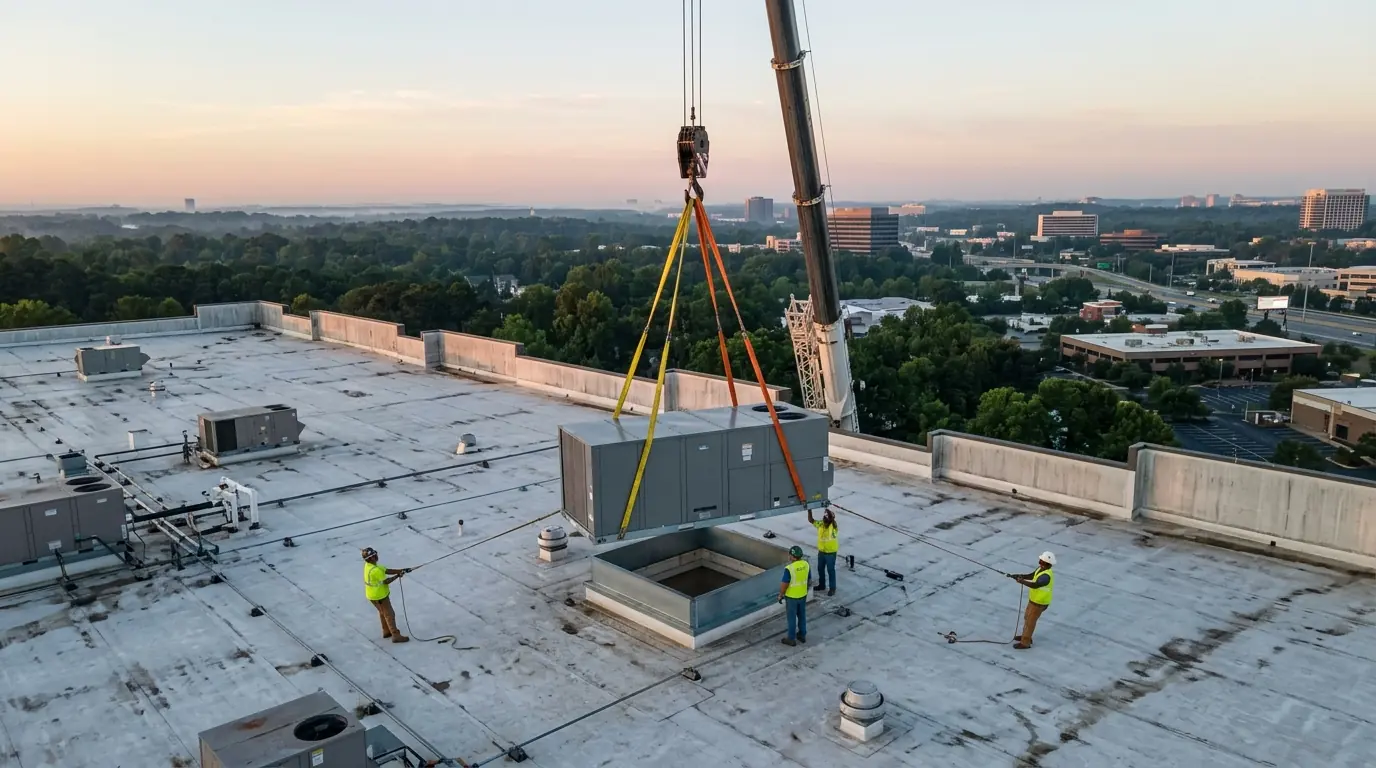
A good replacement starts with measurements, not a catalog. We verify the cooling load, the existing curb dimensions, the supply and return openings, the electrical and gas service, and whether the economizer is worth keeping. If the old unit was oversized or undersized for how the space is used now, this is the time to fix that. If the unit only needs a repair, our commercial repair page covers that side.
Curb adapter or new curb and roof opening
Most replacements use an adapter. A new curb makes sense in a few specific cases.
| Curb adapter | New curb and opening | |
|---|---|---|
| Roof work | Minimal, existing flashing stays | New opening and flashing |
| Added height | Several inches or more | Standard curb height |
| Fits when | Roof in good shape | Roof being replaced anyway |
| Ductwork | Transitions inside the adapter | New connections below the roof |
Planning range for a small rooftop unit
The published figure below covers a small 3 to 6 ton RTU replacement with a basic curb and little ductwork. It is a planning figure, not our pricing; larger units and harder sites run above it.
| Job | Published planning range | Source |
|---|---|---|
| Small RTU replacement, 3 to 6 tons | $9,000 low, $18,000 average, $35,000 high | Commercial HVAC Installation and Replacement Cost 2026 - PICKHVAC |
What moves the number
- Unit tonnage and heating type
- Crane size and setup location
- Curb adapter fabrication
- Economizer and controls
- Electrical or gas service changes
- Roof repairs around the curb
These are ranges published by the sources linked above, shown for planning. They are not a quote and not our price; the real number depends on what we find at your home.
Crane lifts and roof access
Most rooftop units are lifted by crane. Planning covers the unit's shipping weight, the crane's reach from the lot or street, where the crane can set up, and how the roof deck will carry the new unit. We pick a time when the parking area is quiet, often early morning or a weekend, so the lift does not block customers. Before the pick, we disconnect and cap the old unit's gas and electrical, and after it, we protect the roof membrane around the curb. On low buildings with good access, a smaller boom truck or lift may do the job instead.
Curb adapters
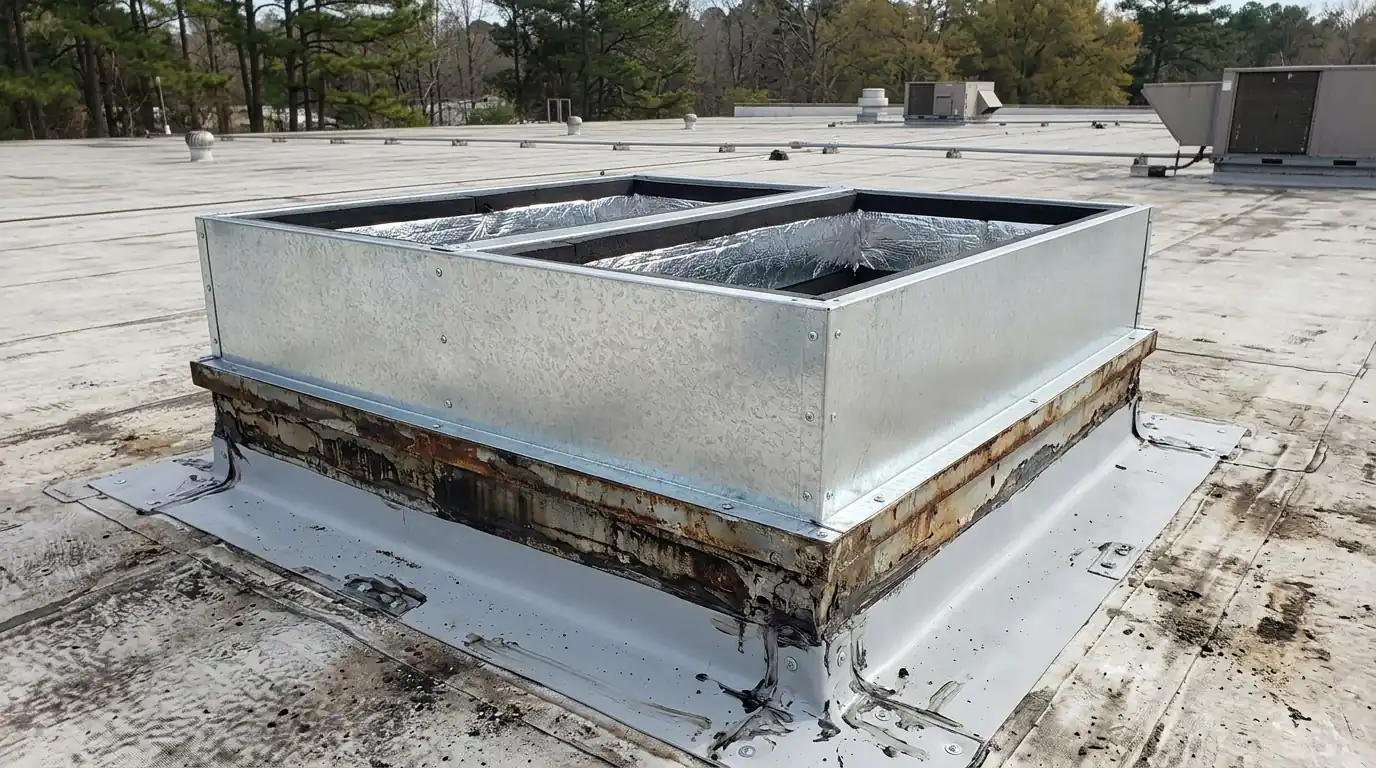
Unit footprints change between manufacturers and generations, so a new RTU rarely drops onto the old curb exactly. A curb adapter is a fabricated transition that sits on the existing curb and matches the new unit's base, with internal ducting that lines up the supply and return openings. It avoids cutting a new roof opening and redoing the roof flashing. Adapters need to be measured precisely, insulated and sealed, and they add height, which matters near parapets and for service clearances. It makes sense in most replacements unless the roof itself is being redone.
Economizers
An economizer brings in outdoor air for cooling when conditions allow, using dampers, an actuator and a controller. In a humid climate, the control strategy matters. A dry-bulb setting can let in cool but damp air that the unit then has to dry, while enthalpy or differential enthalpy control weighs moisture too. Many older economizers are stuck, disconnected or wired out entirely. On a new unit we set the changeover properly, check the minimum outdoor air position for occupancy, and test the fault detection. Energy code may require one depending on unit size, which we confirm before ordering. Afterward, scheduled maintenance keeps the dampers moving.
What a complete RTU replacement scope covers
Bids for rooftop replacements can leave out major pieces. Make sure yours addresses each of these.
- Load check, not a like-for-like tonnage guess
- Measured curb adapter or new curb with roof work
- Crane or lift plan and site timing
- Disconnect and removal of the old unit
- Gas, power and condensate connections to the new unit
- Economizer setup, or a stated reason to omit it
- Thermostat or building control integration
- Startup report with pressures, temperatures and amperage
From survey to startup on a rooftop replacement
Survey the roof
We measure the curb, openings, clearances and service runs, and note the old unit's data plate.
Check the load
We review the space use, occupancy and existing performance to confirm tonnage before ordering.
Plan the pick
We schedule the crane, set the lift plan and order the curb adapter built to the measured dimensions.
Swap and connect
We lift the old unit off, set the adapter and new unit, then connect gas, power, condensate and controls.
Start up and set controls
We test cooling, heating and economizer modes, set outdoor air and schedules, and record startup readings.
Equipment brands we service and install
Most homes around Atlanta run equipment from a handful of major manufacturers. We diagnose, repair and replace Carrier, Trane, Lennox, Goodman, Rheem and Daikin systems, along with the other names below.
Brand names are shown to describe the equipment we work on. We are not claiming a dealer or factory relationship with any manufacturer.
Atlanta homes, weather and this job
Around the world's busiest airport by passengers, rooftop equipment works on a lot of commercial roofs. Clayton, which contains most of Hartsfield-Jackson, had 297,595 residents in 2020, and the businesses that serve them and the airport often run on rooftop units over flat roofs. Replacement there usually means planning crane picks around parking lots and delivery lanes that stay busy most of the day, and checking curbs and roof decks that may have carried two or three generations of units already.
Questions we hear about this job
When the curb adapter and unit are on site, the swap itself is often one day: lift, set, connect and start up. Delays usually come from equipment lead times or weather, so we schedule the crane only once the parts are in hand.
Sometimes, but bigger is not automatically better. An oversized unit short cycles and leaves the space humid. We check the load, the duct size and the electrical service before changing tonnage.
Often. Newer units may have communicating controls or economizer modules that work properly with matching thermostats or a building control interface. We match controls to the unit so staging and outdoor air work as designed.
Newer light commercial units are moving to lower GWP refrigerants such as R-454B and R-32. Our refrigerant guide explains the change and what it means for service down the road.
Usually, if it is set up with enthalpy control so it uses outdoor air only when it is both cool and dry enough. A dry-bulb economizer in a humid climate can bring in damp air the unit then has to remove.
Note the data plate and serial number, look for rust through the base pan and heat exchanger area, and check for patched refrigerant lines. A unit with major rust and a compressor fault is usually near the end of its useful life.
Updated October 2026