
Douglas County homes get AC repair, duct sealing and airflow work from us, along with furnace service in winter. Many comfort complaints here, like one hot bedroom or a muggy upstairs, trace back to the ducts rather than the outdoor unit. Atlanta-area humidity and long summers make leaky attic ducts expensive, so we test before replacing anything.
When the AC runs but the back bedroom stays warm
Douglas County was formed in 1870 and had 144,237 residents in 2020, with about two-thirds of occupied homes owner-occupied. Plenty of those owners have one room that never matches the thermostat. Before a new condenser goes in, we check whether the cold air is actually reaching that room.
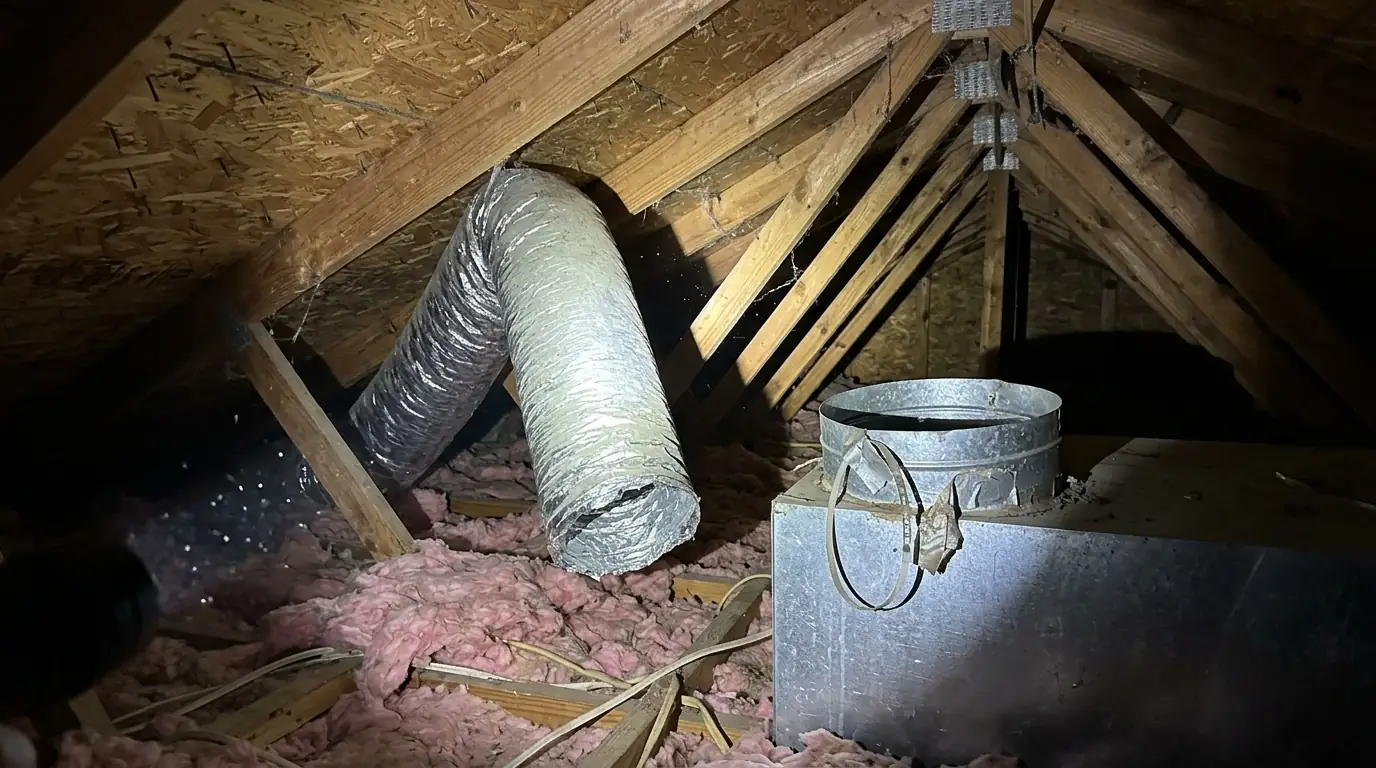
In attics, flex duct sags, kinks against framing or slips off its collar. A disconnected run can dump conditioned air into the hottest space in the house. Sealing and reconnecting attic ducts fixes that for far less disruption than new equipment. Where the trunk lines are undersized from the start, new ductwork is the honest answer.
The standard newer Georgia houses are held to
Georgia's residential energy code, the 2015 IECC with state amendments in effect since January 1, 2020, requires duct leakage testing at 6 CFM25 per 100 square feet at both rough-in and final, and ducts insulated to R-8. Southface reports the 2020 code also dropped the leakage-to-outside testing option.
Older Douglas houses were built before those numbers existed. We use the same idea on them: pressurize the duct system, find the leaks and seal joints with mastic rather than cloth tape that dries out in attic heat. If you are adding a room, our addition and remodel HVAC work follows the current testing rules.
Douglasville and a muggy July
The county seat, Douglasville, has held that role since 1874, and its downtown is a National Register district of Romanesque, Italianate and Queen Anne buildings. Commercial spaces in older buildings like those bring their own airflow problems, from long supply runs to returns that were never sized for a modern system.
Summer adds moisture to every one of these jobs. A July dew point close to 68F means attic ducts sweat when their insulation is torn or compressed, and that water drips onto ceilings. Average relative humidity around 74 percent in July and August also means a leaky return pulls damp attic air straight into the house.
Heating and cooling work that fits Douglas County
Duct Repair & Sealing
Disconnected and crushed attic flex duct is behind many single-room hot spots in Douglas County homes.
Ductwork Replacement
Undersized trunks and returns cannot be fixed with tape; some Douglas houses need a duct redesign.
AC Repair
When airflow checks out, the cause is usually electrical parts worn down by long humid summers.
Attic Insulation
Torn duct insulation and thin attic insulation let ducts sweat in a 68F July dew point.
New Construction HVAC
Additions in Douglas County should meet Georgia's 6 CFM25 duct leakage test, not just look tidy.
Commercial HVAC Repair
Douglasville's historic downtown buildings carry long runs and odd returns that strain commercial equipment.
Douglas County heating and air questions
Common signs are one or two rooms that stay warm, dust streaks around ceiling registers, a muggy house at normal temperature, and higher bills with no equipment fault. A duct pressure test measures the leakage directly, and a look in the attic usually finds the disconnected or crushed runs.
Usually the duct or register boot is colder than the dew point of the air around it. With a July dew point near 68F, a boot with torn or missing insulation sweats in a hot attic. Resealing and reinsulating the boot normally stops it; a clogged condensate line is the other suspect.
New construction and additions covered by the code must pass duct leakage testing at 6 CFM25 per 100 square feet, with ducts insulated to R-8. In practice that means sealed joints and a pressure test, so the new room gets the air it was designed for.
Test first. If the ducts leak badly or are undersized, a new AC on them will underperform and may short cycle. If the ducts are sound, the equipment is the place to spend. We measure static pressure and leakage so the order is based on numbers.
No. Cloth duct tape dries and lets go in attic heat within a few seasons. Joints should be sealed with mastic or a foil tape rated for ducts, and loose flex duct needs to be clamped back onto its collar.
Updated October 2026