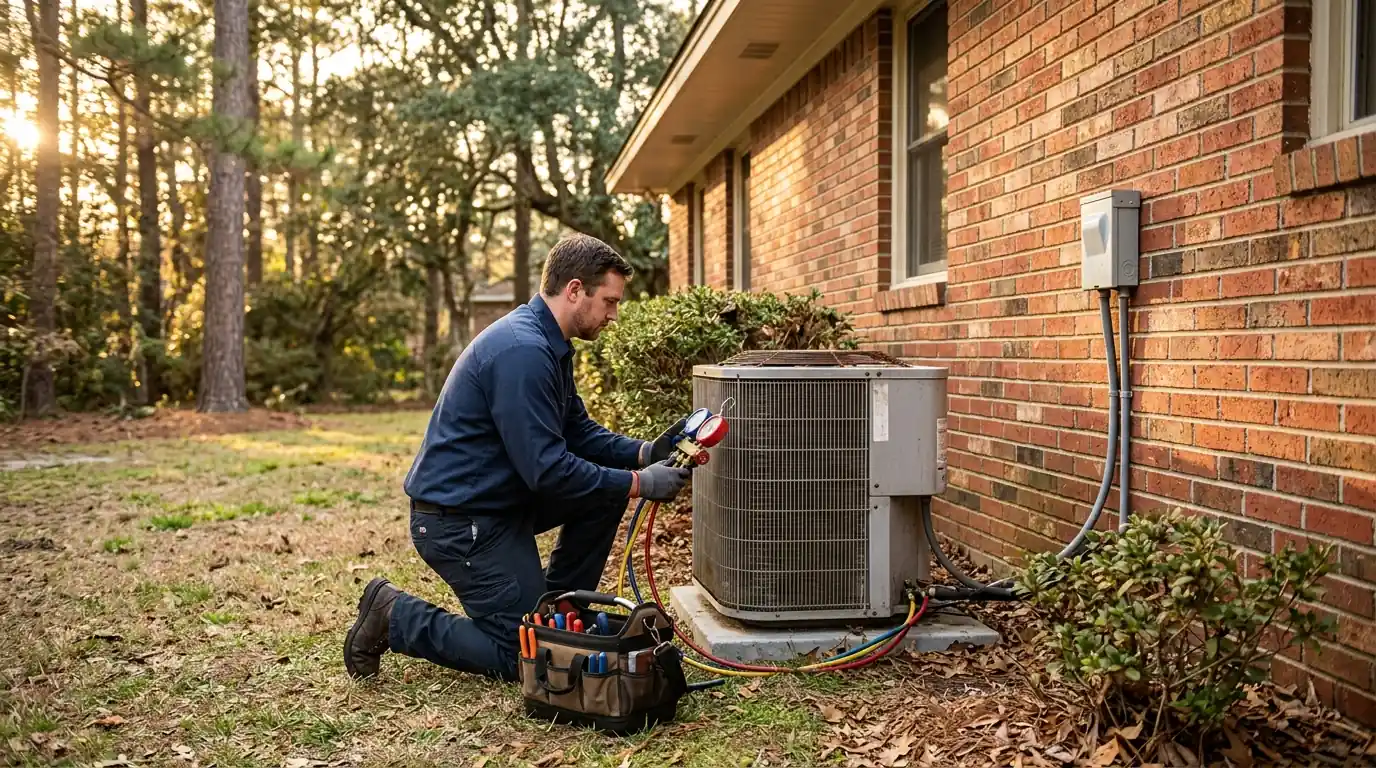
Furnace repair in Atlanta most often comes down to the ignition sequence: the inducer starts, the pressure switch closes, the hot surface ignitor glows, the gas valve opens and the flame sensor proves flame. When one step fails, the board locks out and flashes a code, which tells us where to start testing.
How we handle furnace Repair in Atlanta
A modern gas furnace runs a fixed sequence every time it lights, and the control board watches each step. That makes most no-heat calls traceable: the step that failed is usually the part that failed, or the condition around it, such as a blocked flue, a cracked ignitor or a sooty flame sensor.
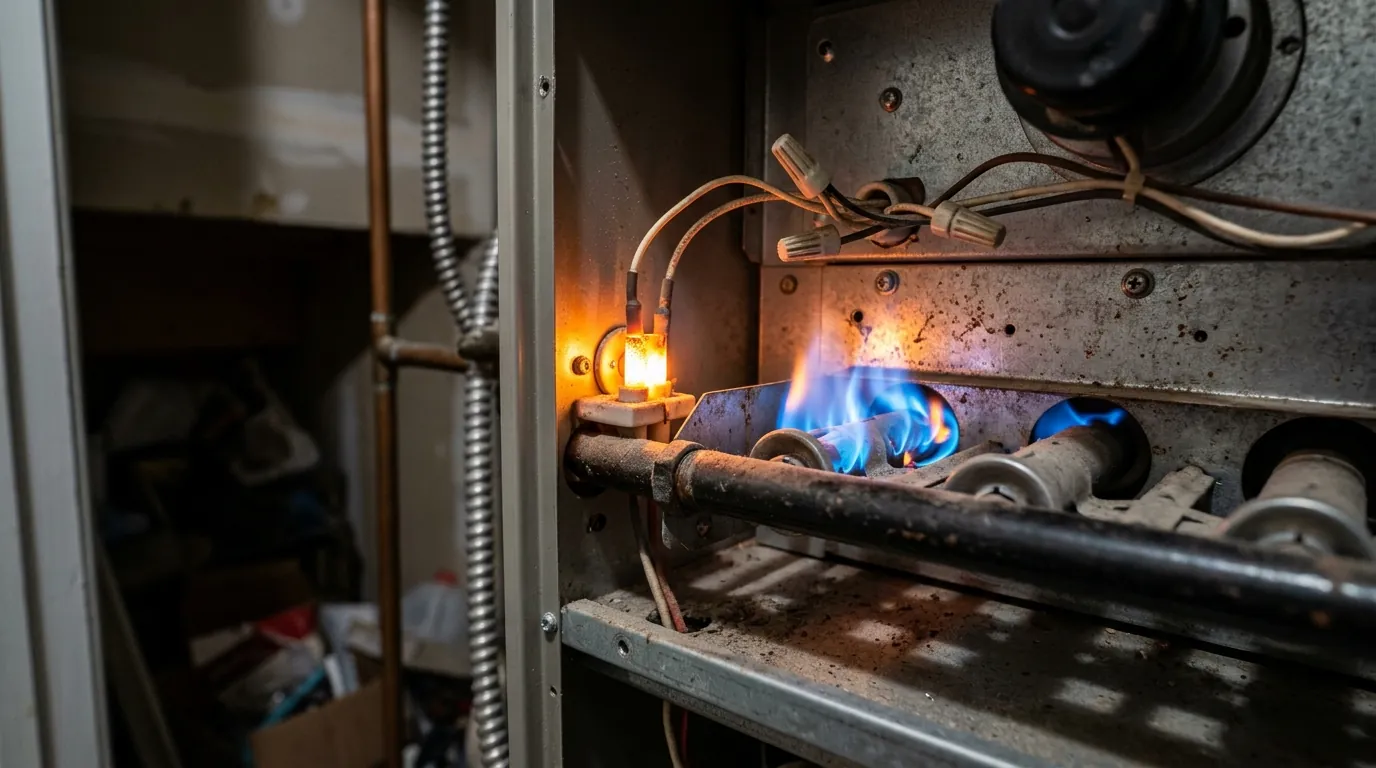
We also look past the immediate fix. A furnace that keeps tripping its rollout or limit switch is warning about airflow or venting, which is a safety issue. Our gas furnace safety and CO testing goes deeper on those checks.
Signs your furnace needs a repair visit
These usually appear before a full lockout.
Clicking with no flame
The ignitor or gas valve may not be completing the sequence.
Lights then shuts off
Burners fire for a few seconds and stop, often a flame sensor issue.
Cold air from vents
The blower runs but the burners never light or keep dropping out.
Whining from the furnace
A failing inducer motor bearing often whines or rattles first.
Blinking board light
A flash pattern on the board is the furnace reporting a fault.
Yellow or lifting flame
A healthy gas flame is mostly blue. Turn the furnace off and call.
No heat at all
When nothing happens at all, we start with what is easy to miss: thermostat batteries and mode, the furnace power switch that looks like a light switch, a tripped breaker, the blower door safety switch, and a blown 3-amp fuse on the control board. A clogged condensate trap on a high-efficiency furnace can also hold the pressure switch open. If the board shows a steady light and the furnace still sits idle, we check for 24 volts from the thermostat and work through the sequence.
Hot surface ignitor failure
The hot surface ignitor is a fragile silicon carbide or silicon nitride element that glows orange before the gas valve opens. When it cracks, you hear the inducer start and the furnace click, but no flame appears, and after a few tries the board locks out. We check its resistance and look for a hairline crack or burned white spot. Replacements must match the furnace's voltage and mounting, and we handle them only by the base, since skin oil creates hot spots.
Dirty flame sensor
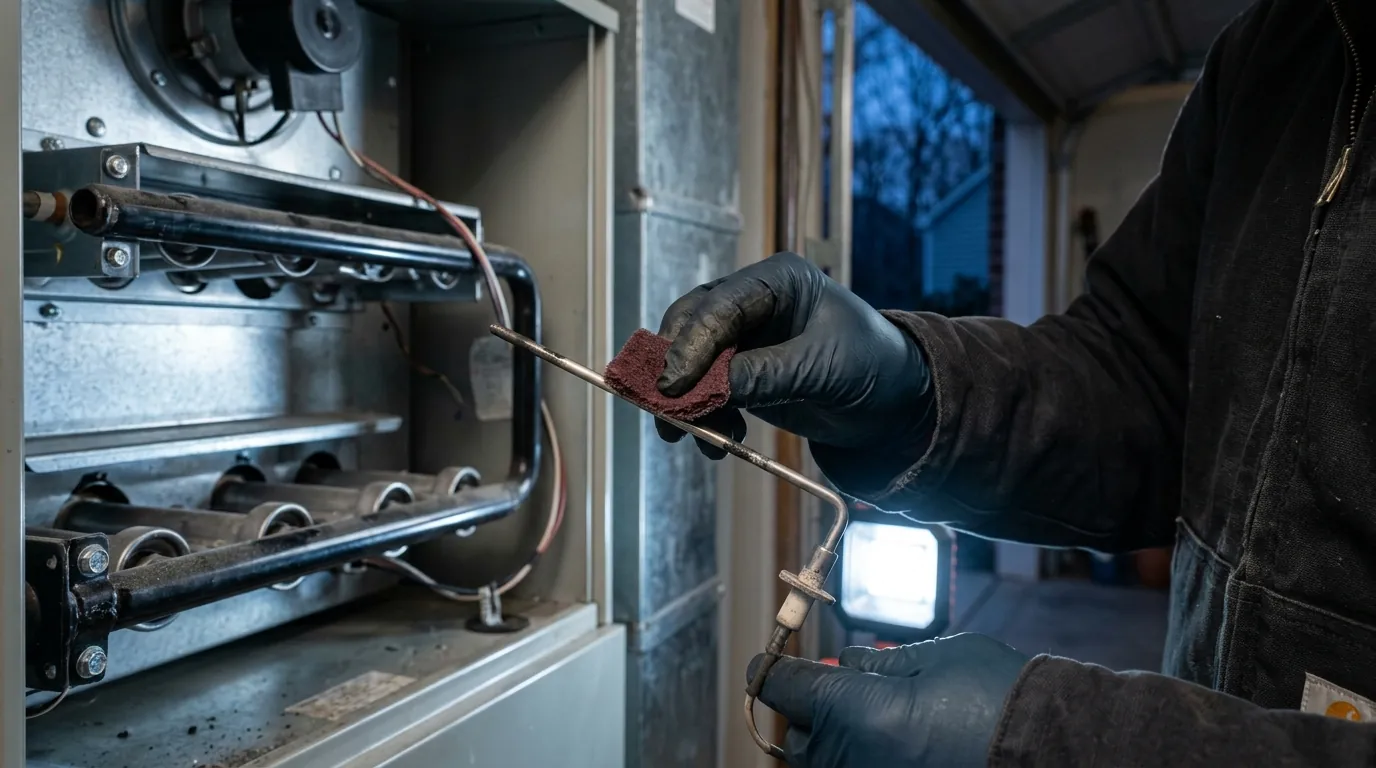
If the burners light and then shut off after a few seconds, the flame sensor is the usual suspect. It proves flame through flame rectification, a tiny DC microamp signal that passes through the flame to ground. Oxidation on the sensor rod weakens that signal until the board decides there is no flame and closes the gas valve. We remove the rod, clean it with fine abrasive, check the burner ground, and measure microamps after the repair. A sensor that fouls quickly can point to dirty combustion air or a poor ground connection.
Pressure switch and inducer motor
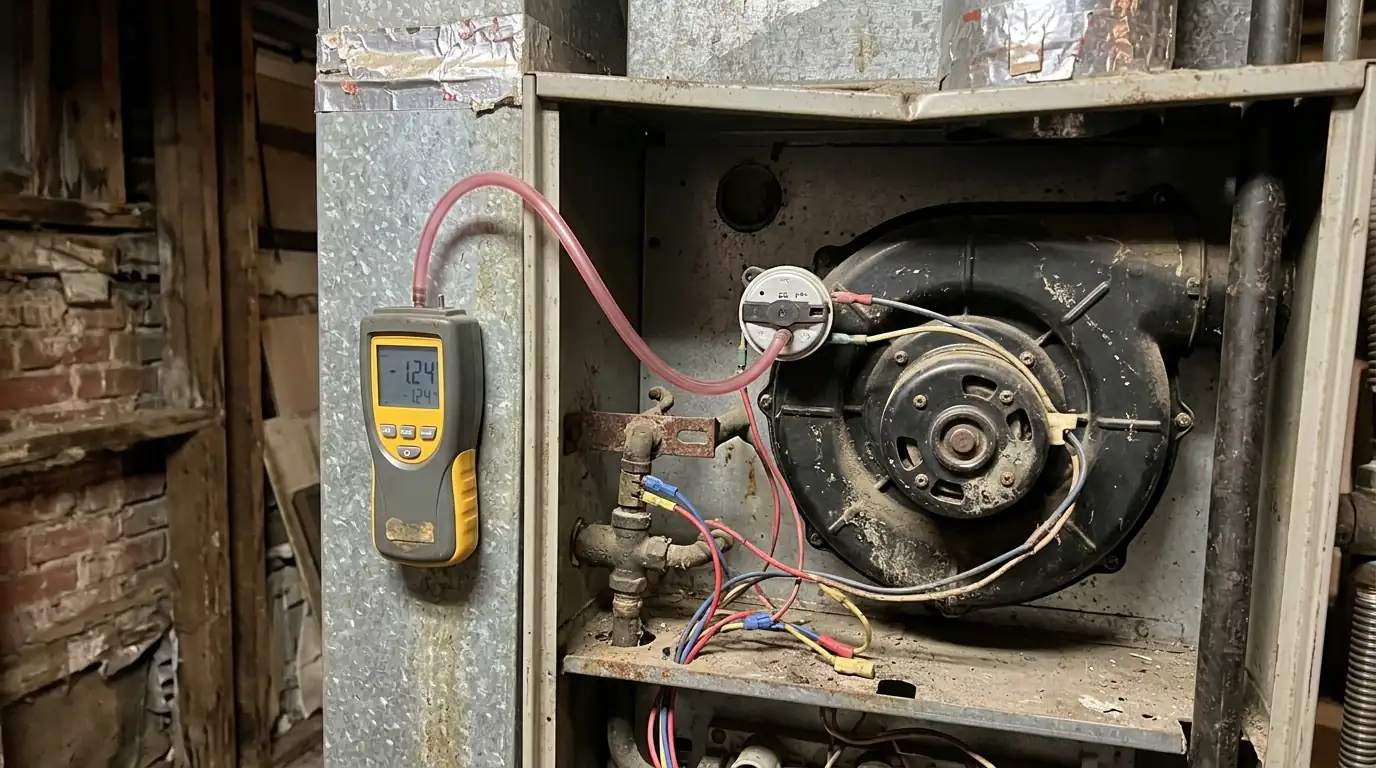
Before ignition, the inducer motor pulls combustion gases through the heat exchanger and out the flue, and the pressure switch confirms that draft exists. If the inducer is weak, or the flue, switch hose or condensate trap is blocked, the switch never closes and the furnace will not light. We measure draft with a manometer against the switch rating instead of replacing the switch on reflex. A worn inducer bearing usually whines or rattles for weeks before it finally fails.
Short cycling
A furnace that runs a couple of minutes, shuts off and restarts is often overheating. A clogged filter, closed registers or a dirty blower wheel slow airflow until the high limit switch trips. An oversized furnace can short cycle too, and so can a thermostat mounted near a supply register. We check temperature rise against the furnace data plate, which shows whether airflow is right. Short cycling wears ignitors and switches early, so it is worth fixing even when the house stays warm.
How we trace a furnace that will not heat
Read the fault code
The blinking LED on the control board points to the step in the sequence that failed.
Watch a full cycle
We call for heat and watch the inducer, ignitor, gas valve and flame in order.
Measure, do not guess
Manometer, microamp and resistance readings confirm the faulty part before replacement.
Repair and test safety
We fix the part and confirm the limit and rollout switches, flue and gas pressure are right.
Check temperature rise
A final reading across the furnace verifies airflow and correct firing rate.
Equipment brands we service and install
Most homes around Atlanta run equipment from a handful of major manufacturers. We diagnose, repair and replace Carrier, Trane, Lennox, Goodman, Rheem and Daikin systems, along with the other names below.
Brand names are shown to describe the equipment we work on. We are not claiming a dealer or factory relationship with any manufacturer.
The local side of furnace Repair
Some southwest Atlanta homes predate the postwar boom. Adams Park and neighboring Beecher Hills began developing between the two world wars, so furnaces there were often retrofitted into tight closets or crawl spaces where flue routing and return air are compromised, which makes pressure switch and limit trips more likely. Atlanta can get dangerously cold, too: the National Weather Service recorded 8F on December 24, 2022, the kind of night when a weak ignitor finally quits. More on that area is on our Adams Park page.
What to check before calling, and what to leave alone
A few checks are safe for anyone. Gas and electrical parts are not.
| Task | What you can do | Where a technician comes in |
|---|---|---|
| Thermostat and batteries | Yes, confirm heat mode and the setpoint above room temperature | Wiring and control faults |
| Filter | Yes, replace a clogged filter and wait a few minutes | Airflow and limit switch testing |
| Power switch and breaker | Yes, check both once, and leave them off if it trips again | Electrical diagnosis |
| Gas valve, ignitor or burners | No, gas and high-voltage parts carry fire and carbon monoxide risk | Tested with a manometer and meters |
Published furnace repair range
A national planning range from a published cost guide, not our price.
| Job | Published planning range | Source |
|---|---|---|
| Furnace repair | $133 to $505 | How Much Does It Cost to Repair a Furnace? [2025 Data] - HomeAdvisor |
What moves the number
- Which part failed: ignitor, sensor, switch, inducer or board
- Parts availability for the furnace brand
- Attic or crawl space access
- Night, weekend or holiday calls during a freeze
These are ranges published by the sources linked above, shown for planning. They are not a quote and not our price; the real number depends on what we find at your home.
Furnace Repair questions from Atlanta homeowners
Clicking means the control board is running the sequence and one step is not proving. A cracked ignitor, an open pressure switch or a gas valve that will not open are common causes, and the blinking code narrows it down. After several failed tries, most furnaces lock out for an hour.
Switching the power off for thirty seconds and back on is safe once. Repeated resets are not, especially after a rollout switch trip, which can mean flame escaping the burner area. If it fails again after one reset, leave it off and call us.
A dusty burning smell on the first cold day is normal and fades within an hour as dust burns off the heat exchanger. Electrical or plastic smells, or anything that lasts, are not. See our guide to furnace smells for what is normal and what needs a call.
Every gas furnace home needs working CO detectors near sleeping areas. A furnace that will not light is not producing CO, but a cracked heat exchanger or blocked flue can. If a detector sounds, leave the house and call 911 or the gas utility before calling us.
We service both. In a dual fuel setup, the heat pump handles mild weather and the furnace takes over below a set outdoor temperature, so a problem can sit in either or in the thermostat settings. Our page on heat pump faults covers the electric side.
Yes. A clogged filter starves the heat exchanger of air, the high limit switch trips, and the furnace shuts down or short cycles. A new filter fixes many of these calls, though repeated overheating should still be checked.
Updated October 2026