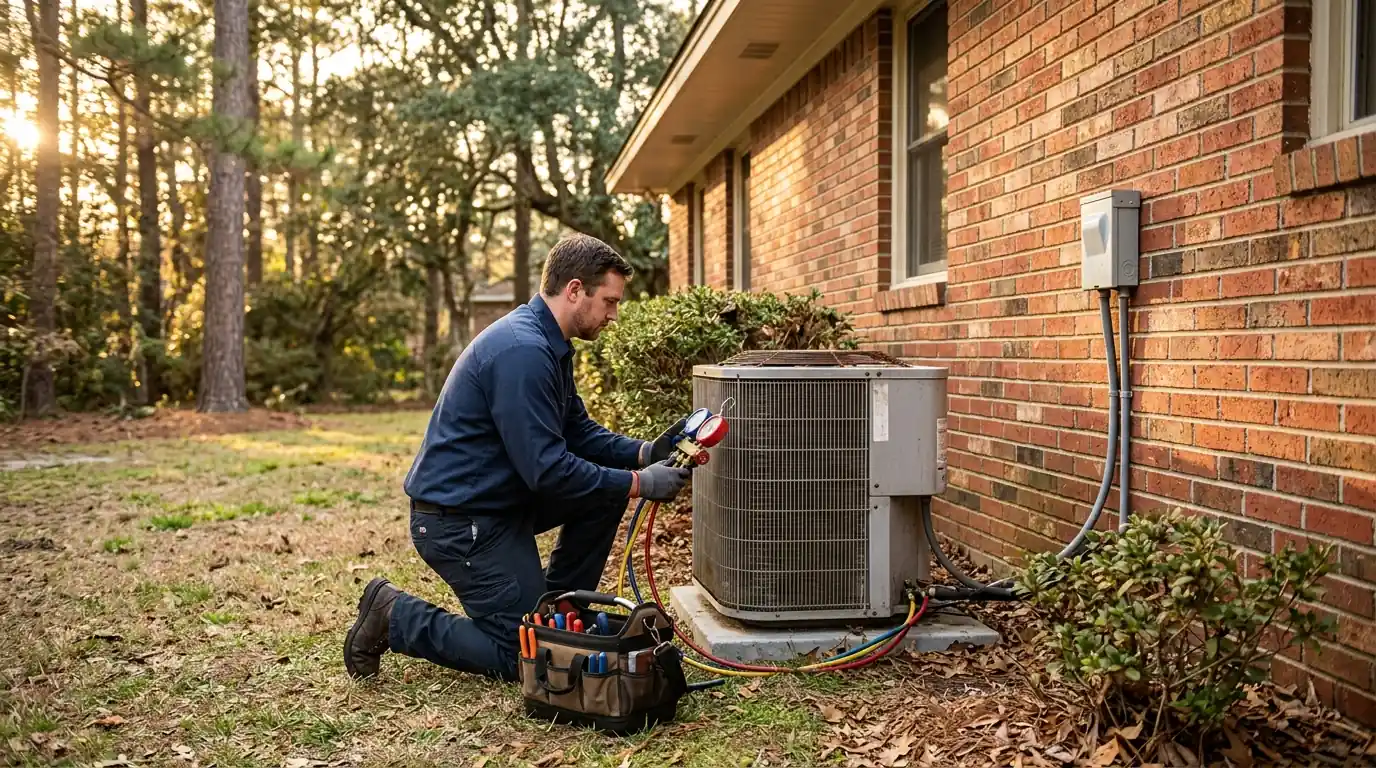
Commercial HVAC maintenance in Atlanta works most reliably on a fixed calendar: filters every one to three months depending on the space, belts checked each visit, condenser coils cleaned before cooling season, and heating sections tested in fall. Each visit gets a written log, which tenants, owners and landlords can use to settle who maintained what.
How we handle commercial HVAC Maintenance in Atlanta
Commercial units run longer hours and pull more outdoor air than house systems, so wear builds faster. A rooftop unit over a restaurant or busy store can load a filter in weeks and coat its coils with grease or pollen within a season. Skipped visits show up as high head pressure, frozen coils, belts that snap, and gas sections that will not light on the first cold morning.
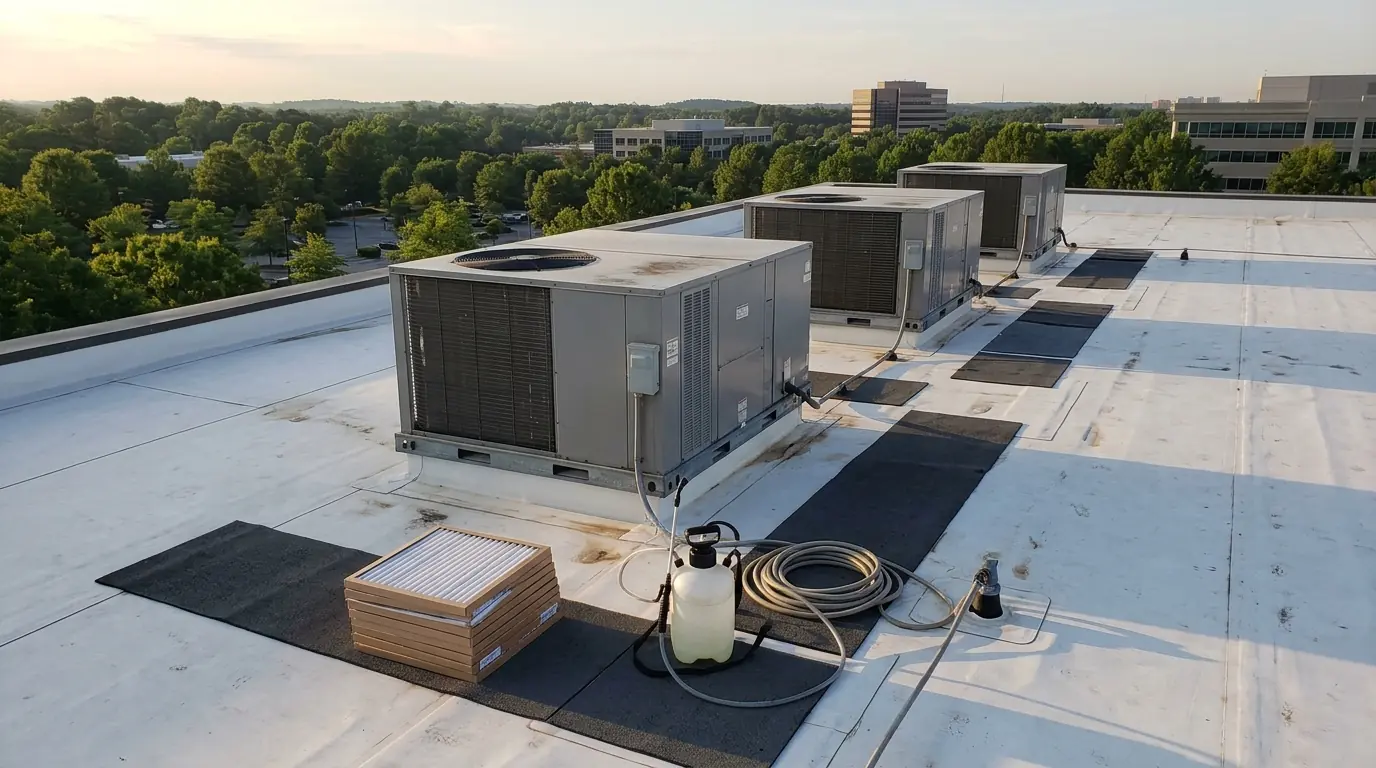
We set a schedule per unit based on the space it serves, then do the same checks each visit so readings can be compared over time. When something is wearing out, you see it in the log before it fails. Repairs that come up are quoted separately, and urgent breakdowns go through our commercial service line, answered 24/7.
What a commercial maintenance visit should include
Plans vary widely between contractors. Ask whether these are part of every visit.
- Filter replacement with the size and count recorded
- Belt tension, wear and pulley alignment
- Condenser coil cleaning on a set schedule
- Drain pan and condensate line cleaning
- Refrigerant pressure and temperature readings
- Electrical checks on contactors, capacitors and amperage
- Economizer damper and actuator test
- Gas heat section and flue check in fall
Filter and belt schedules
Filter intervals depend on what the space puts into the air. Offices often go two to three months; restaurants, salons and spaces near busy roads may need monthly changes, more during spring pollen. Belts get checked for tension, glazing, cracking and pulley alignment each visit and replaced on a schedule rather than waiting for a snap. A slipping belt cuts airflow, which can freeze the evaporator coil and make the unit look low on refrigerant when it is not. We label each unit with its filter size and count so the next change goes quickly.
Coil cleaning
Condenser coils on the roof collect pollen, leaves, cottonwood fluff and dust, and in kitchens they pick up grease. A dirty condenser raises head pressure and amperage, shortens compressor life and trips high-pressure switches on hot afternoons. We clean condenser coils before peak cooling with a coil-safe cleaner and low-pressure rinse, and check evaporator coils for buildup that filters let through. The drain pan and condensate line get cleaned at the same time, since slime there leads to overflows through the ceiling. Heavily loaded coils may need cleaning twice a year.
Service logs for landlords
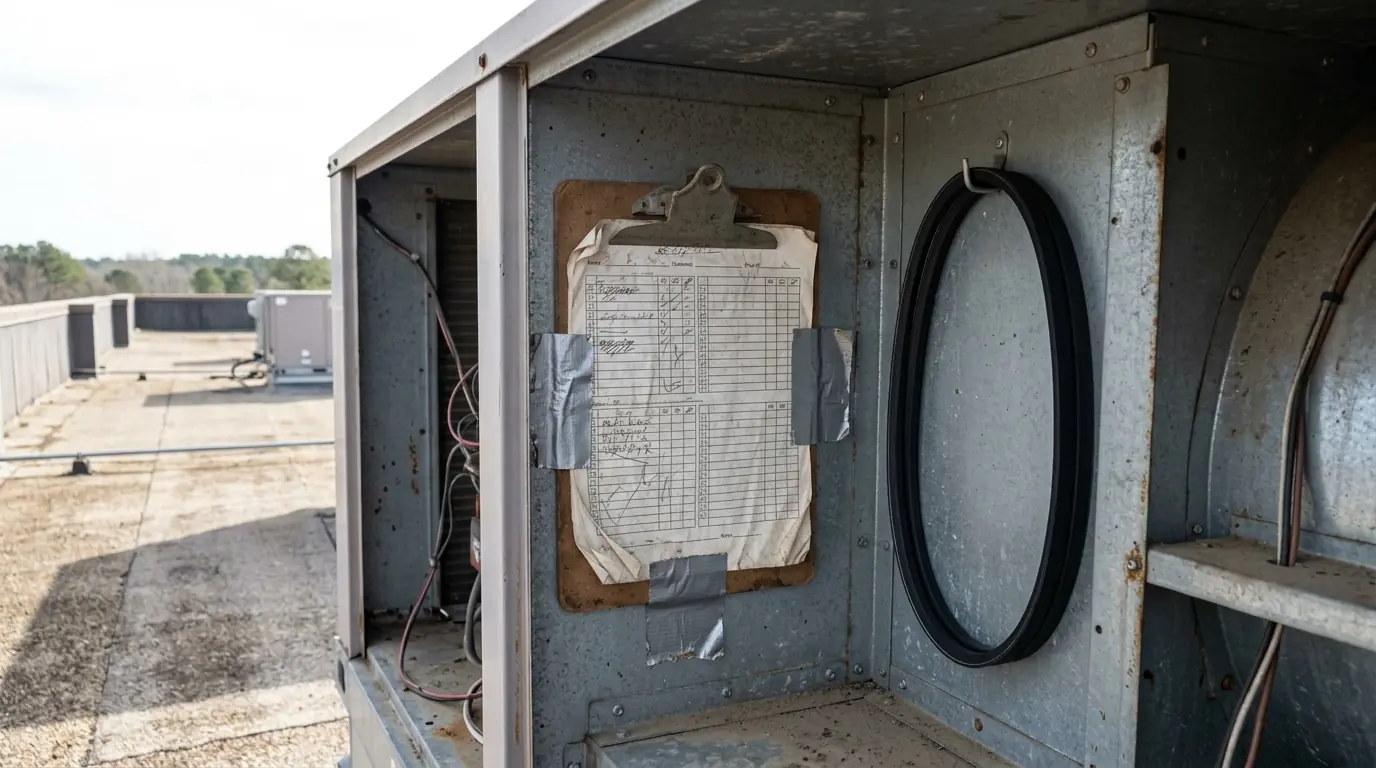
Many commercial leases put HVAC upkeep on the tenant and replacement on the landlord, or the reverse, and disputes come up when a unit fails. A dated service log settles a lot of that. Each visit we record the unit's model and serial, filter change, belt condition, refrigerant pressures and temperatures, amperage readings, gas section tests and any recommendations. Owners with several tenants get one log per unit, which helps when budgeting for rooftop unit replacement years ahead rather than all at once in August.
What happens on each maintenance visit
Inventory the units
On the first visit we record each unit's data plate, location, filter size and belt size.
Replace filters and inspect belts
We change filters, check belt tension and pulley alignment, and replace worn belts.
Clean coils and drains
We clean condenser coils as scheduled and clear drain pans and condensate lines.
Measure operation
We record pressures, temperatures, amperage and economizer action, and test gas heat in the fall visit.
Update the log
We add readings and recommendations to each unit's log and flag anything trending toward failure.
What building staff can handle between visits
Some tasks are reasonable for a facilities person. Roof electrical and gas work are not.
| Task | What you can do | Where a technician comes in |
|---|---|---|
| Indoor filter changes | Yes, at accessible returns and grilles | Rooftop filter racks and units on high roofs |
| Thermostat schedules | Yes, adjusting occupied hours | Control wiring or building controller faults |
| Clearing debris around units | Yes, from the ground or roof walkways | Coil cleaning and fin repair |
| Belt replacement | No, the blower must be locked out first | Belt and pulley work with lockout |
Atlanta homes, weather and this job
Rental share drives who keeps the maintenance records. Cobb had 766,149 residents in 2020, ranking third among Georgia counties, with about 64 percent of occupied homes owner-occupied, so roughly a third of households rent. Mableton, which became a city in 2023 and is now the county's most populous, keeps the 1843 Robert Mable House among its newer development. Where leased homes, apartments and storefronts are this common, owners and property managers usually need a maintenance log that clearly shows each unit was serviced, not just a receipt.
What sets the price of a maintenance plan
Published ranges for commercial maintenance agreements vary too much by building to plan around, so here are the factors. We price a plan per unit after walking the roof.
What moves the number
- Number and size of units
- Visits per year
- Filter count and type
- Belt-drive or direct-drive blowers
- Kitchen grease or heavy coil loading
- Roof access and ladder setup
Commercial HVAC Maintenance questions from Atlanta homeowners
Two is the usual minimum: one in spring before cooling season and one in fall before heating. Restaurants and high-traffic stores often add quarterly visits for filters and belts, since their units load faster.
It depends on the lease. Triple-net leases often put maintenance on the tenant, while gross leases may leave it with the landlord. Either way, a dated log protects the party responsible for upkeep when a failure comes up.
Clean coils and filters, correctly tensioned belts and a working economizer all cut run time and amperage. The savings depend on how neglected the unit was. The bigger benefit for most businesses is avoiding a failure during peak hours.
Yes. On the first visit we inventory the units, review any existing log and record baseline readings, so future visits have something to compare against.
Low airflow from a slipping belt, a dirty evaporator coil or a stuck damper can freeze a coil just as a clogged filter does. Low refrigerant charge is another cause. We check airflow before adding refrigerant.
Yes. Through-wall units need filter and coil cleaning on a schedule, and office splits need drain checks above the ceiling. See our PTAC repair page for through-wall units, and we fold the rest into the same log.
Updated October 2026