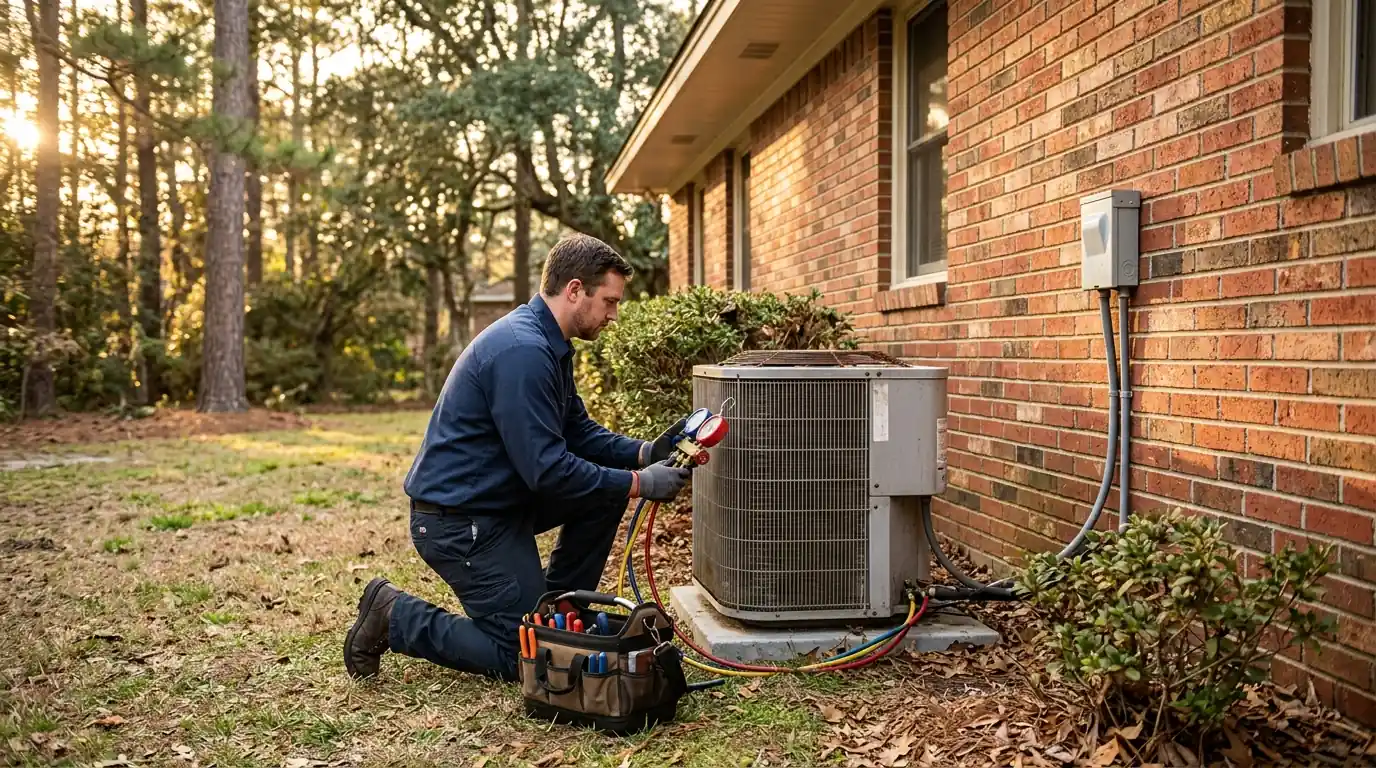
AC drain line repair in Atlanta usually means clearing a condensate line plugged with algae and biofilm, which builds up fast in humid summers. A float switch should shut the system off before the pan overflows, so an AC that stops cooling with water in the pan is often doing its job.
How we handle AC Drain Line & Condensate Pump Repair in Atlanta
Your air conditioner removes moisture from the air, and on a humid day that adds up to gallons of water. It drains through a narrow PVC line, often to the outdoors or a floor drain. That line grows a slimy biofilm, collects dust that passes the filter, and can sag or crack in an attic.
When the drain fails, two things can happen. A float switch shuts the AC off before water spills, or, without one, the pan overflows into the ceiling. Our guide to drain line clogs in Atlanta humidity explains why these lines clog so often here.
Signs your AC drain is backing up
Catch these early to avoid ceiling damage.
Water in the pan
Standing water under the air handler means the drain is slow or blocked.
AC off, fan on
A tripped float switch cuts cooling but often leaves the blower running.
Drip above a window
Water from a secondary drain outlet signals the primary line has failed.
Stain on the ceiling
A spot below the attic unit means an overflow has already happened.
Musty smell at vents
Standing water in the pan grows mold that the blower spreads.
Pump runs constantly
A condensate pump that never stops may have a stuck float or blocked tube.
Clogged condensate drain line
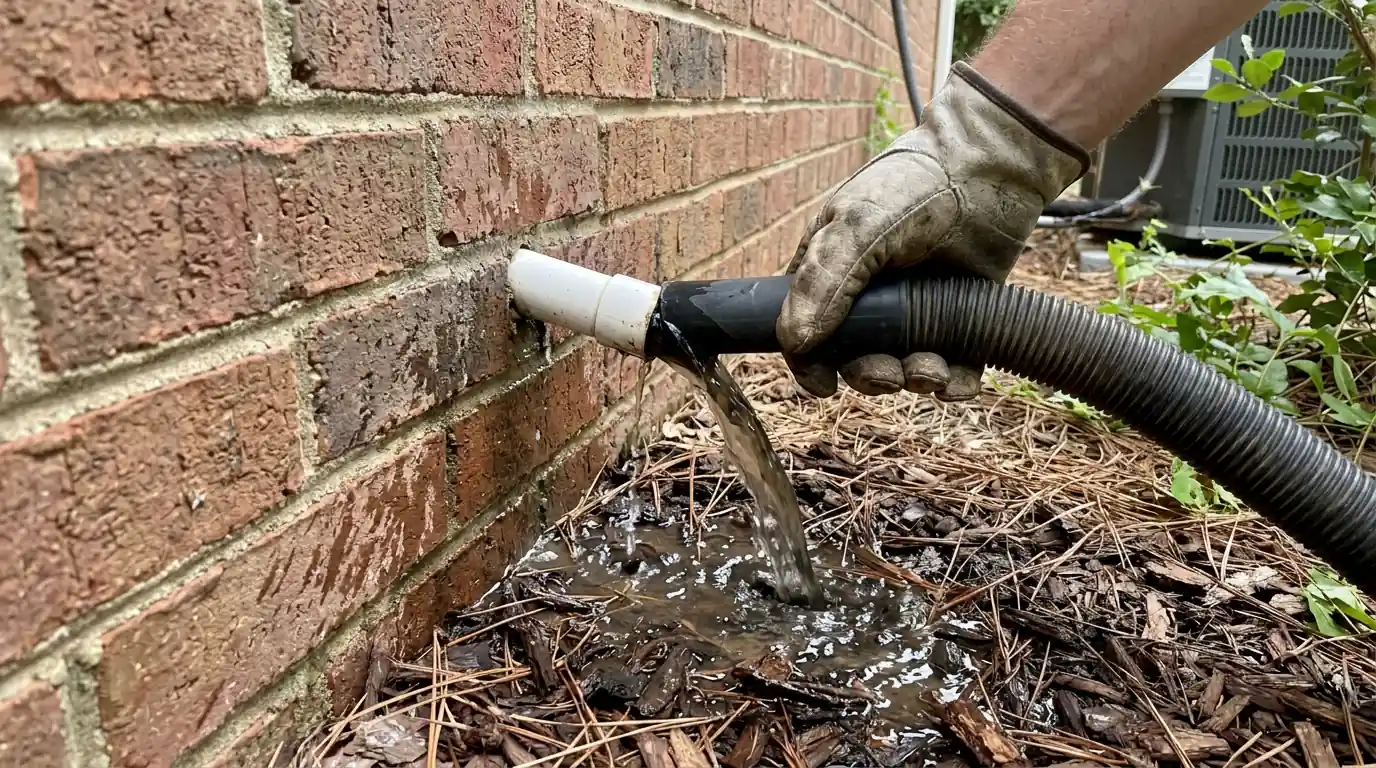
A clogged line backs water into the primary pan until it trips the float switch or overflows. We clear it with a wet vacuum from the outdoor end, flush it through the access tee, and check the trap that keeps the blower from pulling air through the line. If the line sags in the attic or runs uphill, it will clog again, so we look at slope and support. Recurring clogs can also point to a dirty evaporator coil shedding debris or a filter that lets too much dust through.
Float switch shutoffs
Float switches sit in the primary drain line, the secondary pan or the condensate pump, and cut power to the AC when water rises. If your system stopped cooling and the indoor fan still runs, check the pan near the air handler for water. The fix is clearing the drain, not bypassing the switch. We also test switches during service calls, since one that sticks can let a pan overflow. Where a system has none, we add one, because a float switch costs little compared with a ruined ceiling.
Condensate pump failure
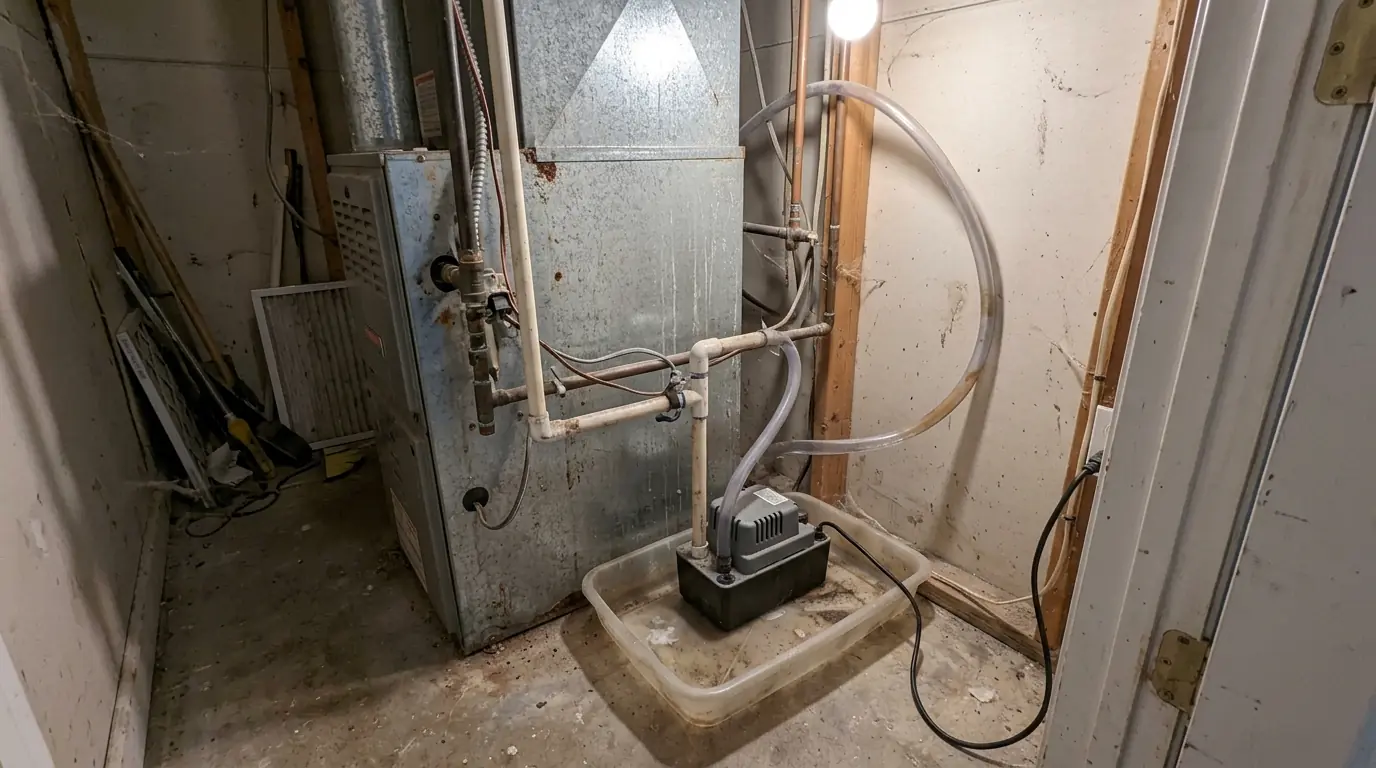
When the air handler sits below the drain point, a small pump lifts the water out. These pumps fail from stuck floats, worn motors, algae in the check valve or a cracked reservoir. Symptoms include a pump that hums but does not empty, water around its base or an AC that shuts off when the pump's safety switch trips. We clean or replace the pump, flush the discharge tube and make sure the safety switch is wired to shut down cooling. Pumps in attics should sit in a pan.
Overflowing secondary pan
The secondary pan under an attic air handler is a backup, not a drain. Water standing there means the primary drain is clogged or the coil pan has cracked. If the secondary pan has its own drain, it usually exits above a window or eave, where dripping water is your warning. Rusted pans eventually leak into the ceiling. We clear the cause, replace corroded pans and add a float switch to the pan if one is missing. Where the air handler itself is rusting, see our air handler repair page.
How we clear and protect your drain
Find where the water stops
We check the primary pan, the secondary pan, the pump and the outdoor end of the line.
Clear the line
A wet vacuum and a flush through the access tee remove the clog and biofilm.
Check slope and the trap
Sags, uphill runs and dry traps are corrected so the line drains freely.
Test the safety switch
We lift each float to confirm it stops the AC, and add one where missing.
Confirm drainage
With the AC running, we watch water leave the line and the pans stay dry.
Atlanta homes, weather and this job
This year Atlanta's air conditioners started producing water early. The first 90-degree day of 2026 arrived in April, roughly six weeks ahead of normal, and by mid-September the city had logged 71 such days. A longer cooling season means the condensate line stays wet for more months, giving algae and biofilm more time to build. Drain lines that only needed a flush once a summer may need attention twice, and a spring and a midsummer check are reasonable in a year like that.
Drain care you can do and when to call
Some drain maintenance is homeowner-friendly. Some is not.
| Task | What you can do | Where a technician comes in |
|---|---|---|
| Vinegar flush | Yes, a cup of white vinegar through the access tee every month or two in summer | Full flush and trap cleaning during maintenance |
| Wet vacuum at the outlet | Yes, if the outdoor end is easy to reach | Clearing deep clogs and inspecting slope |
| Emptying a full pan | Yes, turn the AC off first and soak up water | Finding why the pan filled |
| Bypassing a float switch | No, that removes the only overflow protection | Clear the cause and retest the switch |
Published drain line clearing range
A national planning range from a published cost guide, not our price. Pump and pan replacement add to it.
| Job | Published planning range | Source |
|---|---|---|
| Condensate drain line clearing | $75 to $250 | How Much Does AC Repair Cost? (2026) - HomeGuide |
What moves the number
- How far the clog sits from the access point
- Whether a pump or float switch needs replacing
- Attic access and pan condition
- Re-sloping or rerouting a sagging line
These are ranges published by the sources linked above, shown for planning. They are not a quote and not our price; the real number depends on what we find at your home.
Questions we hear about this job
That is usually the float switch doing its job. Water rose in the pan because the drain line is blocked, and the switch cut the AC to prevent an overflow. Turn the system off, soak up standing water and call us to clear the line properly.
At least once a year during a spring tune-up, and more often in long, humid summers. A monthly vinegar flush through the access tee helps slow biofilm growth. Lines that clog every season usually need a slope, trap or filter correction.
Yes, especially when the air handler sits in the attic. Without a working float switch, an overflowing pan sends water through the drywall below. Stains, sagging drywall and mold can follow. A float switch and a clear drain are inexpensive protection.
We suggest vinegar instead. Bleach can damage some pan materials and metal, and its fumes can be drawn into the system. A cup of white vinegar every month or two in summer is gentler and still slows algae growth.
It lifts water from the air handler or furnace to a drain point that is higher or farther away, such as from a basement or a closet with no floor drain. When the pump fails, water backs up into the pan and should trip a safety switch.
It can. Standing water in a pan or trap grows mold and bacteria, and the blower carries the smell into the house. Clearing the drain and cleaning the pan often fixes it. If the smell continues, the coil or blower may need cleaning as part of an AC tune-up.
Updated October 2026