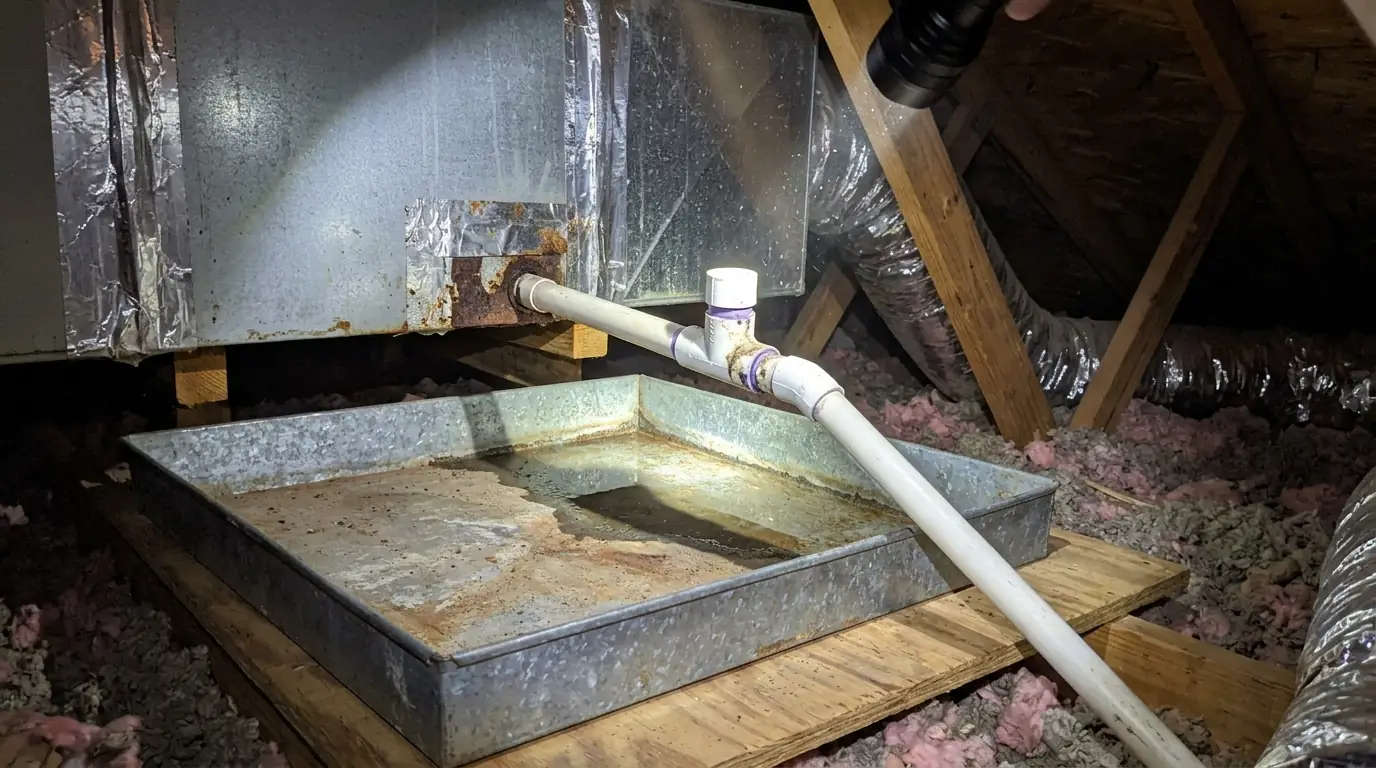
AC drain lines clog in Atlanta because the system pulls a lot of water out of humid summer air, and that warm, constantly wet line grows slime and algae. With July humidity averaging about 74 percent, the condensate never stops flowing for long. A clog backs water into the pan, trips the float switch, and on attic units can stain a ceiling below.
Your air conditioner is also a dehumidifier
As warm indoor air crosses the cold evaporator coil, moisture condenses on the fins just like water beads on a cold glass. That water drips into a pan under the coil and leaves through a PVC drain line, usually to the outside, a floor drain or a condensate pump.
In Atlanta the volume is serious. Average relative humidity sits around 74 percent in July and August, and the July dew point is close to 68F. On a muggy day a running system can pull a surprising amount of water out of a house. The longer and hotter the season, the more water runs down that small pipe, and the city now averages about 44 days a year at 90F or hotter.
What actually blocks the line
The drain is warm, dark and wet for months at a time. That is ideal for biological growth. A slimy film builds along the inside of the pipe and in the trap, then sloughs off and collects at the narrowest point. Dust that slipped past a loose filter adds to it, and in some homes insects or mud daubers find the outdoor end.
Installation details matter as much as the growth. A line without enough slope lets water sit. A missing or poorly built trap can let the blower pull air backward through the drain and stop it from emptying. Long horizontal runs across an attic, common on homes with the air handler upstairs, give sludge more places to settle.
Signs the drain is backing up
Most clogs announce themselves before they do damage, if you know where to look.
- The system shuts off on a warm day and will not restart, often because a float switch tripped
- Standing water in the secondary pan under an attic air handler
- Water dripping from a pipe over a window, which is the secondary drain doing its job
- A musty smell near the indoor unit or from the supply registers
- A brown ring or fresh stain on the ceiling below an attic unit
- A condensate pump that runs constantly or hums without moving water
The safety layers that stop a clog from becoming a ceiling repair
Attic and closet units should have more than one line of defense. The primary drain is the main path. Under the unit, a secondary pan catches overflow, and it should have its own drain or a float switch that shuts the system off when water rises. Many units also carry a float switch on the primary line itself.
A float switch is not a nuisance. If your system keeps shutting off and the switch is the cause, the switch is protecting the drywall below. The answer is clearing the line, not bypassing the switch. We see the worst water damage where a switch was removed or the secondary pan rusted through unnoticed. Clearing the drain and testing the float switch fixes the immediate problem, and it is worth asking about the pan's condition at the same time.
Maintenance that keeps condensate moving
Prevention is simple and inexpensive compared with a wet ceiling. Many homeowners can handle the first steps themselves.
Find the cleanout port on the primary drain, usually a capped tee near the indoor unit. A cup of plain water poured in during spring confirms the line flows. Some technicians recommend a small amount of distilled vinegar, but avoid bleach in lines with certain fittings and never mix cleaners. Keep filters fresh, since a dirty filter lets debris reach the coil and pan.
Once a year, an AC tune-up with a full drain flush covers the parts you cannot see: the trap, the pan and the float switch operation. If the line has no cleanout, or has a long flat run across the attic, ask about adding one or re-sloping it while the technician is there.
When a clog points to a bigger problem
Repeated clogs in the same season can mean something beyond slime. A frozen evaporator coil that thaws all at once can overwhelm the pan. A system that runs too long because it is low on refrigerant or starved of airflow produces more water than normal. Rust in the primary pan, or a cracked one, can leak even with a clear line.
If your home also has damp air downstairs or a musty crawl space, the drain may simply be handling more moisture than the system should. Our guide on crawl space humidity in Atlanta homes covers that side of the problem, and a whole-home dehumidifier can share the moisture load in the worst cases.
Questions readers ask about this
A float switch may be tripping as water rises, then resetting after the water slowly drains or evaporates. That pattern points to a partly blocked drain. It can also be a frozen coil thawing. Either way, the cycle will keep repeating until the cause is fixed.
Yes, for most homes. Seal the vacuum hose around the pipe end and run it for a minute to pull the clog out. It is a reasonable first step. If water still backs up afterward, the blockage may be in the trap or near the pan.
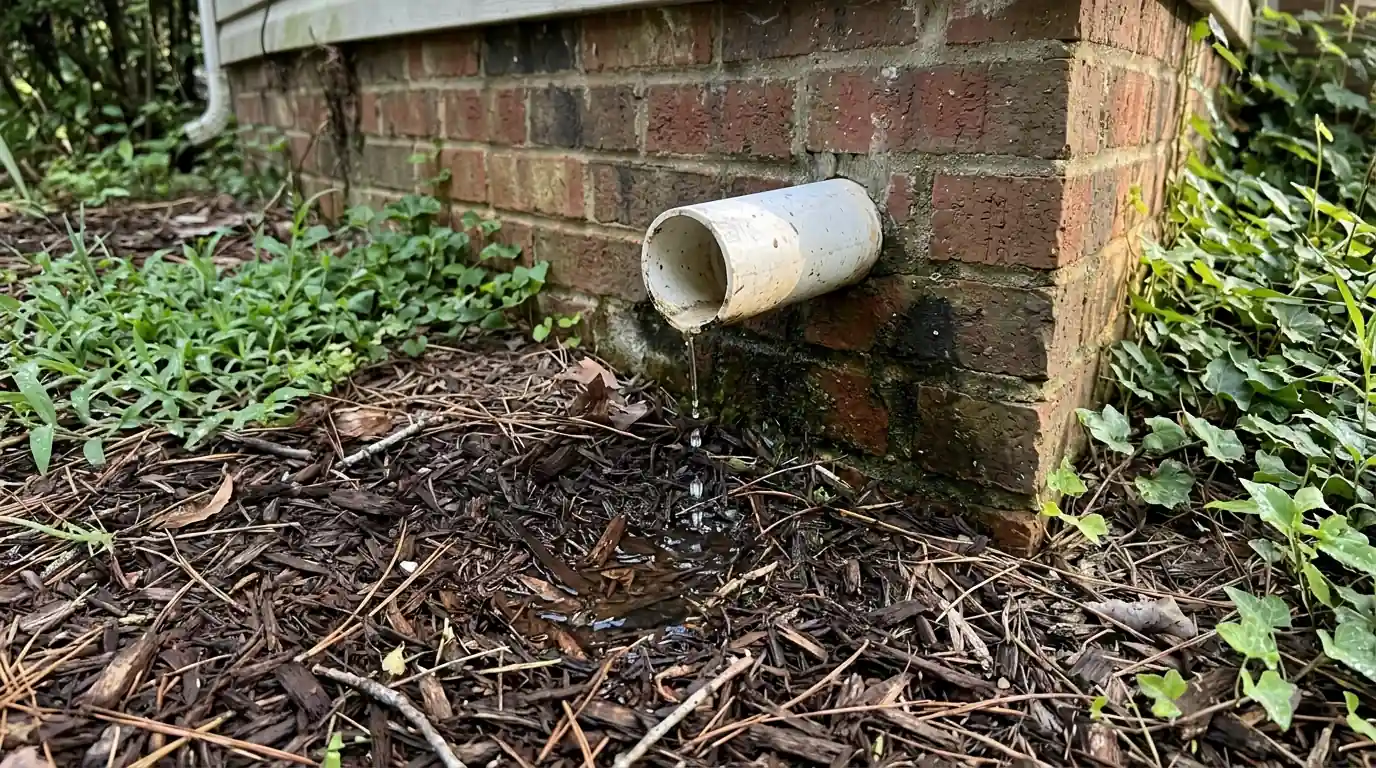
Often near the foundation by the outdoor unit, sometimes into a floor drain in a basement, and on attic systems sometimes into a plumbing stack or through the soffit. Following the white PVC from the indoor unit is the quickest way to find it.
On many attic installations, the secondary drain from the overflow pan exits over a window on purpose so you will notice it. Water there means the primary drain has backed up. Have the main line cleared soon, before the pan overflows too.
Tablets placed in the pan can slow biological growth for a season. They do not fix poor slope, a bad trap or debris from missing filters. Treat them as a helper alongside regular flushing, not a substitute for it.
The reservoir holds standing water that grows slime, especially in summer. A smell usually means the pump needs cleaning and its tubing and check valve may be partly clogged. A pump that hums without moving water is close to failing.
Services this article points to
AC Drain Line & Condensate Pump Repair
AC drain line repair in Atlanta usually means clearing a condensate line plugged with algae and biofilm, which builds up fast in humid summers.
AC Tune-Up & Maintenance
An AC tune-up in Atlanta should do four things: clean the outdoor coil, verify refrigerant charge with superheat or subcooling, test the capacitor and contactor under load, and flush the condensate drain.
Whole-Home Dehumidifiers
A whole-home dehumidifier in Atlanta pulls out the moisture your AC leaves behind, usually holding indoor humidity between 45 and 50 percent.
AC Repair
AC repair in Atlanta usually traces back to one of four things: a failed capacitor, a stuck contactor, a dead condenser fan motor, or an evaporator coil frozen by poor airflow or low charge.