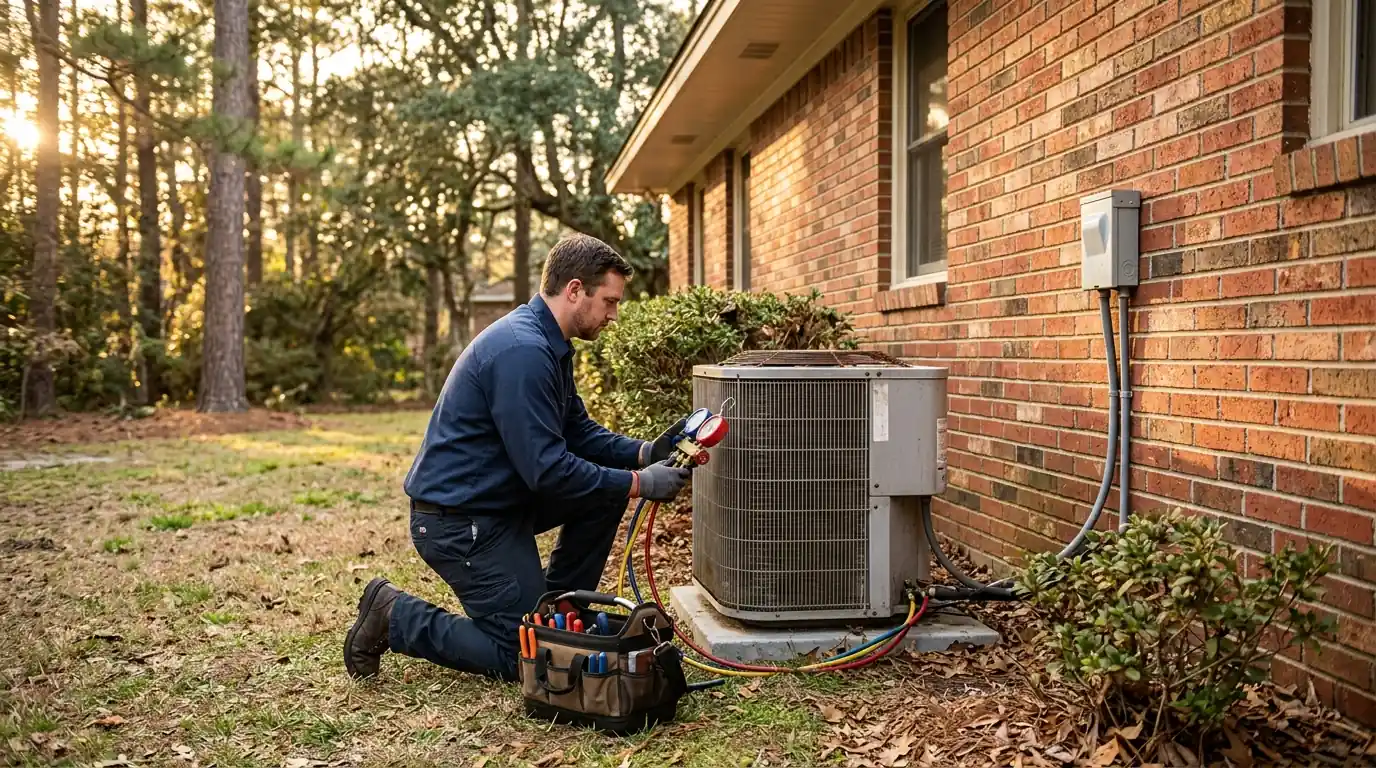
An HVAC inspection for Atlanta home buyers decodes each unit's data plate and serial number to find its real age, then tests cooling, heating, airflow and the gas furnace safety checks. That tells you whether the system has years left or is likely to need replacing soon, which can matter in your offer or repair requests.
HVAC Inspection for Home Buyers: what we check and why it matters
Most general home inspectors are generalists. They run the system, note the temperature at a register and move on. A dedicated HVAC inspection goes into the equipment: refrigerant pressures and temperature split, coil and blower condition, the condensate system, duct connections in the attic or crawl, and on gas furnaces, combustion and flue draft.
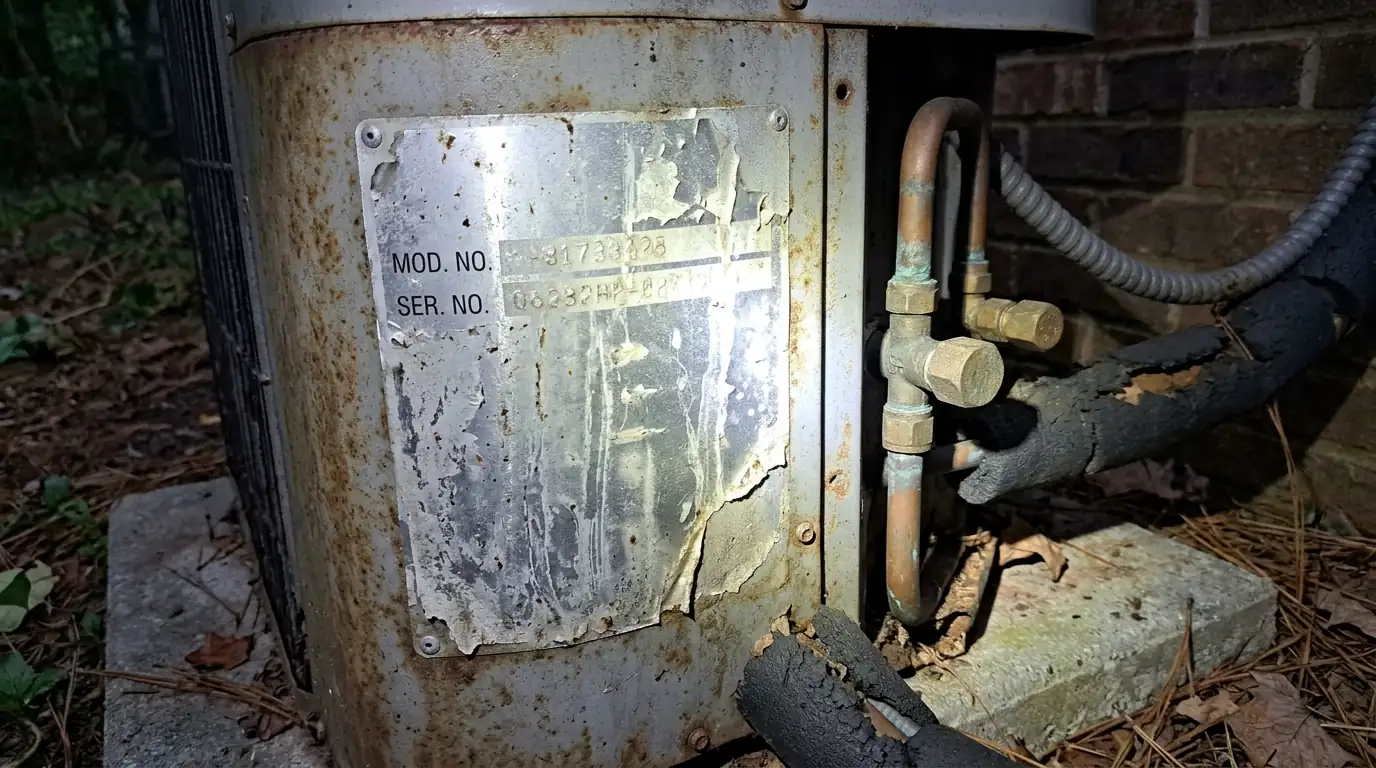
Age matters more than anything else in an inspection report. A system can run fine on inspection day and still be near the end of its life. We decode the manufacture date from the serial number, note the refrigerant type, and give you a straight read on what to expect. If something is unsafe, such as a cracked heat exchanger, we say so clearly and explain our CO and safety testing results.
What a buyer's HVAC inspection should cover
Ask whether these are part of the inspection you are paying for.
- Manufacture date decoded from each serial number
- Refrigerant type on the data plate
- Indoor and outdoor unit match
- Temperature split and refrigerant readings
- Heat exchanger visual check and CO readings on gas furnaces
- Drain pan, float switch and secondary pan condition
- Accessible ducts checked for disconnections
- A written report with photos
Pre-purchase inspection
Buyers usually call during the due diligence window. We check every system in the house: outdoor units, air handlers or furnaces, coils, ducts, thermostats and drains. Findings come back in plain terms: what works, what needs repair, what is near the end of its life and what may be unsafe. The report helps you decide whether to ask the seller for repairs, request a credit or move ahead as is. If the system uses R-22, we explain what that means for future repairs, since that refrigerant is no longer produced and service gets costly.
Pre-listing check
Sellers who check the HVAC before listing avoid surprises in the buyer's inspection. We test the system, clean what needs cleaning, clear the condensate line, replace the filter and point out anything a buyer's inspector is likely to flag, such as a rusted secondary pan, a missing float switch, disconnected attic ducts or a dirty coil. Fixing small items ahead of time is usually cheaper than negotiating over them later. If a system is near the end of its life, you can decide whether to replace it or price the home accordingly.
Reading the equipment data plate
Every condenser, furnace and air handler carries a data plate with the model number, serial number, refrigerant type and electrical ratings. The serial number usually encodes the manufacture year and week, but each brand uses its own pattern, so it takes some familiarity to decode. The model number often reveals tonnage and sometimes efficiency. We also check whether the outdoor and indoor units match, since a mismatched pair often points to a past repair. A listing that says the system is new may mean only one half was replaced.
What we check before closing day
Decode each data plate
We record model and serial numbers, decode manufacture dates and note the refrigerant type.
Run cooling and heating
We measure temperature split, refrigerant readings and heat output in each mode the system has.
Inspect the air handler and coil
We check the blower, coil, drain pan, float switch and secondary pan for rust or overflow signs.
Check ducts and venting
We look at accessible ducts for disconnections and crushing, and test gas furnace flue draft and CO.
Write it up
You get findings in plain language with photos and a clear note on any safety issues.
What buyers can check during a showing
A few quick looks help you decide whether to schedule a full HVAC inspection.
| Task | What you can do | Where a technician comes in |
|---|---|---|
| Finding equipment age | Photograph the data plates on each unit | Decoding the serial and checking the match |
| Checking for leaks | Look for rust or water stains near the air handler | Testing the drain, pan and float switch |
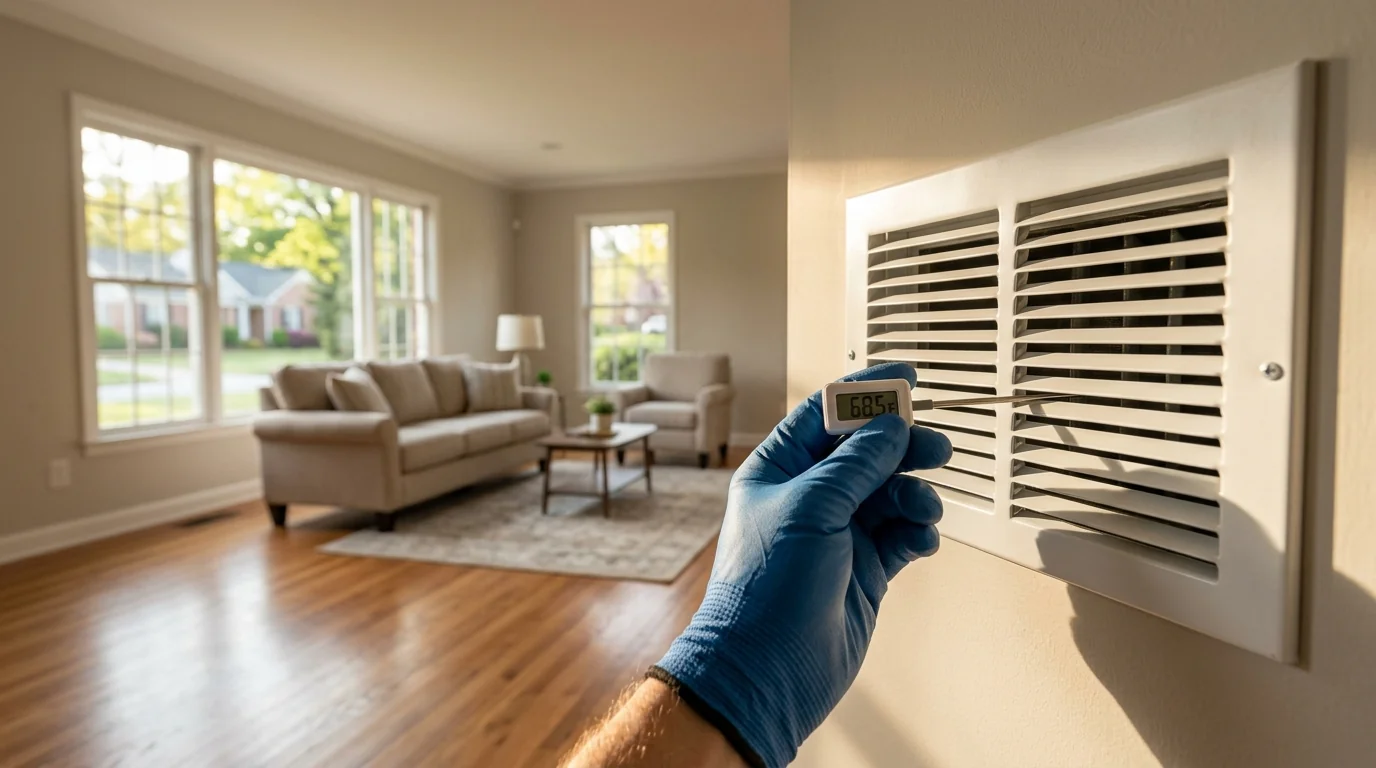
| Checking airflow | Feel registers in each room with the system on | Static pressure and duct inspection |
| Checking the furnace | Note any odors when the heat runs | Combustion, CO and heat exchanger checks |
The local side of HVAC Inspection for Home Buyers
Purchase decisions dominate in the counties west and south of the city. Douglas, the county formed in 1870, had 144,237 residents in 2020, with about two-thirds of occupied homes owner-occupied, and Fulton is Georgia's most populous county with 1,066,710 residents. With that many owner households, a lot of houses change hands, and many of them still carry the original condenser or a mismatched pair from a past repair. A buyer who knows the true equipment age before closing negotiates from facts instead of a seller's guess.
Planning range for an HVAC inspection
The published national range below covers a standalone HVAC inspection. It is a planning figure, not our pricing; the number of systems and fuel types move it most.
| Job | Published planning range | Source |
|---|---|---|
| HVAC inspection visit | $70 to $500 | How Much Does an HVAC Inspection Cost? [2026 Data] | Angi |
What moves the number
- Number of systems in the house
- Gas furnace combustion testing
- Attic and crawl space access
- Duct inspection depth
These are ranges published by the sources linked above, shown for planning. They are not a quote and not our price; the real number depends on what we find at your home.
HVAC Inspection for Home Buyers questions from Atlanta homeowners
Many systems in this climate last 12 to 15 years, sometimes longer with good care. A system past that range may still work, but budget for replacement soon. Age, refrigerant type and condition together tell the story.
It covers the basics, usually that the system turns on and heats or cools. A dedicated HVAC inspection adds age decoding, refrigerant readings, combustion testing and a closer look at coils, drains and ducts.
R-22 was phased out of production, so remaining supply is limited and repairs that need refrigerant cost more. A working R-22 system can still run, but plan on replacement rather than major repairs. Our refrigerant guide explains the change.
You can ask, and an inspection report with the decoded age and condition gives you something concrete. Often the result is a credit or a price adjustment rather than the seller installing a new system before closing.
Small items such as a clogged drain, a dirty filter or a rusted secondary pan are worth fixing first, since they show up on almost every buyer inspection. Larger items are a judgment call based on the price and the market.
Often one to two hours for a single system, longer for houses with two or three systems or hard attic access. Allow time within your due diligence window, and call us any hour to schedule.
Updated October 2026