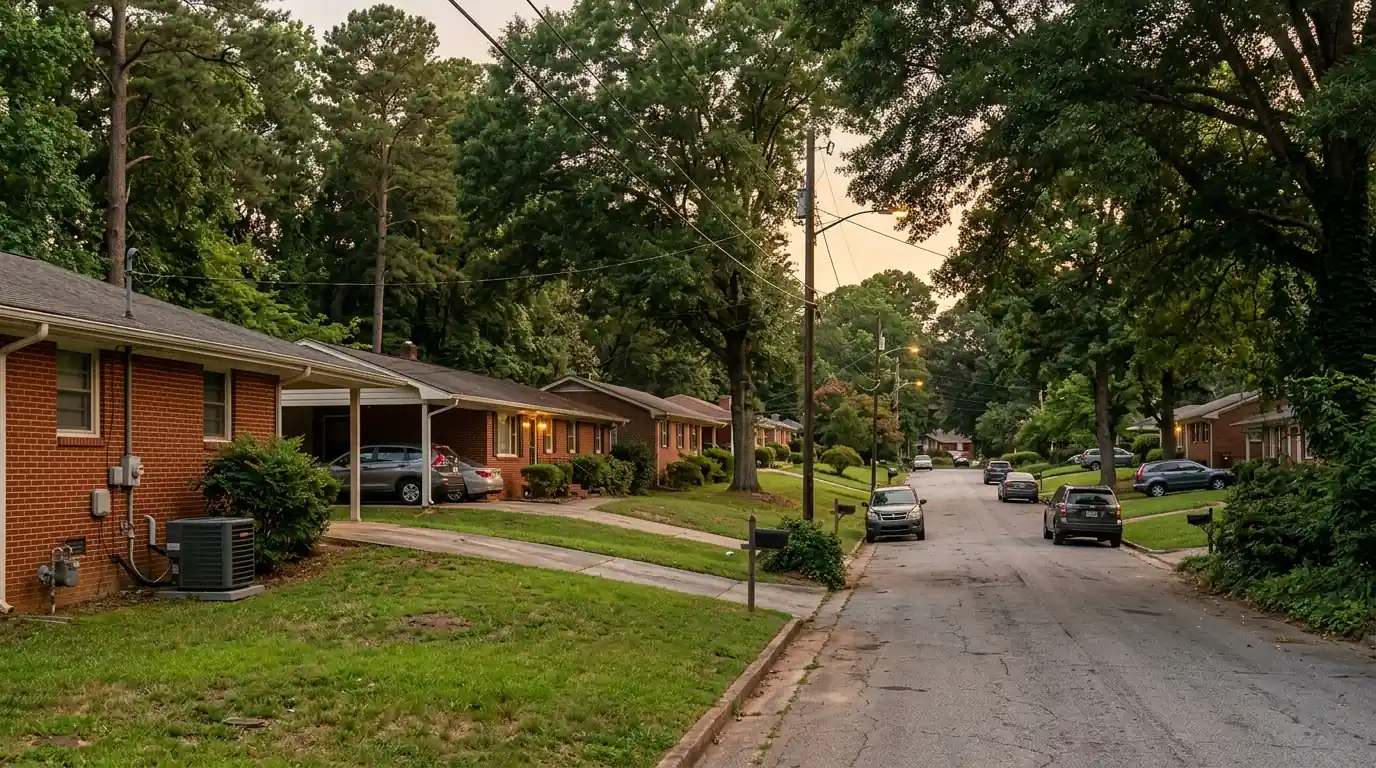
West End homes get heating repair, AC service, zoning and ductless installs from us. The neighborhood filled in with Queen Anne, Folk Victorian and Craftsman houses between 1894 and 1930, and those tall rooms and multi-level layouts were never planned around ducts. That means routing, room-by-room balance and protecting original finishes come first in any HVAC plan here.
Queen Anne, Folk Victorian and Craftsman houses from 1894 to 1930
West End was annexed into Atlanta in 1894 and filled in with Queen Anne, Folk Victorian and Craftsman houses between then and 1930. It joined the National Register in 1999. Many of those houses have tall ceilings, multiple stories, turrets or bays, and plaster walls that do not welcome new chases.
High ceilings hold warm air above head height in winter and add volume to cool in summer. A second floor under a hot roof runs warmer than the first. Neither problem is solved by turning the thermostat down. They are solved by where the air goes and how much reaches each floor.
Running ducts without damaging original finishes
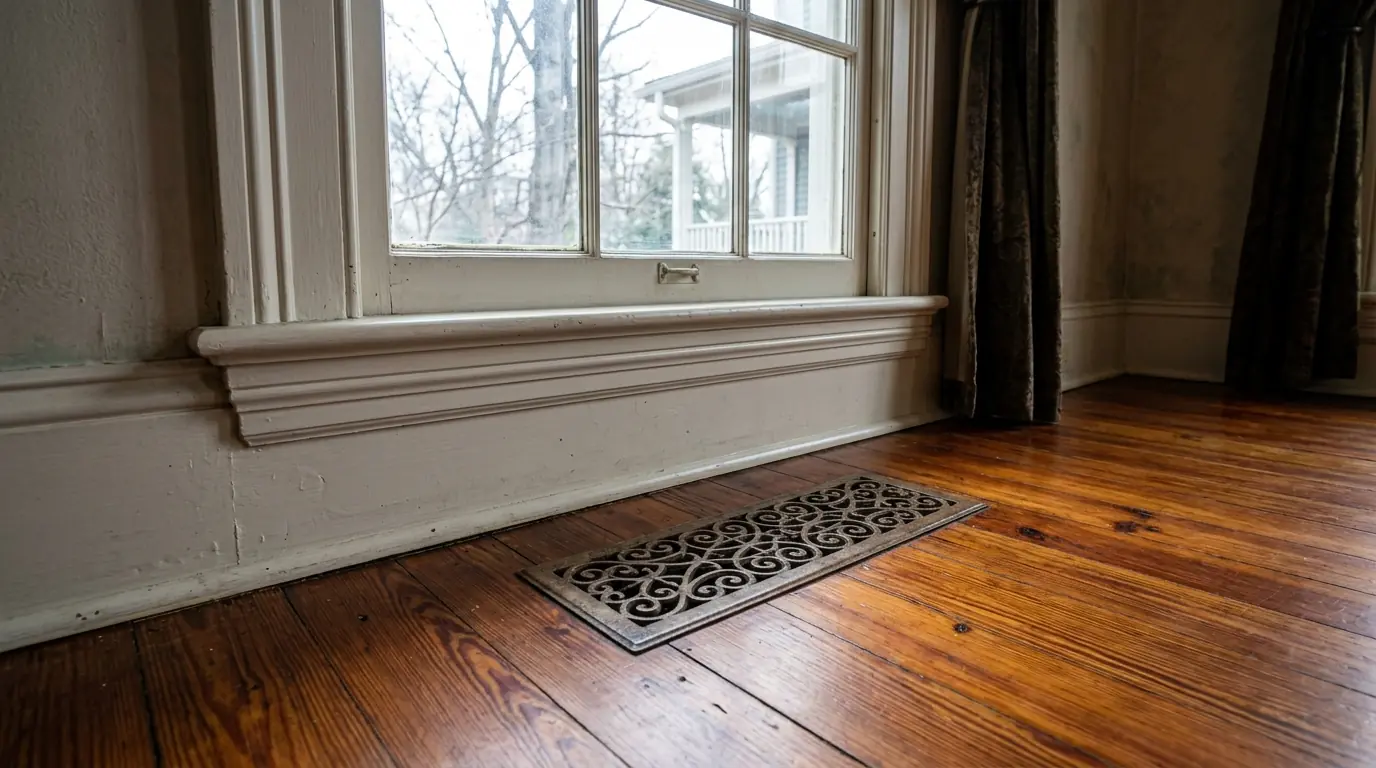
When we plan ducts in an older house, we look for the paths that already exist: closets stacked above each other, old chimney chases no longer in use, attic kneewalls and the crawl space or basement. Supply registers in the floor can serve the first story while an attic system handles the second.
Where no clean path exists, ductless heads or a small-duct high-velocity layout reduce the cutting. For two-story houses with a single system, zone dampers and a second thermostat let each floor call for what it needs. Our guide on why upstairs rooms run hot explains the physics.
Heating tall rooms through the coldest nights
The National Weather Service recorded a low of 8F in Atlanta on December 24, 2022, during the Christmas arctic outbreak, and burst pipes across the metro followed. In a tall, older house, that kind of night exposes weak heating fast: rooms at the end of long runs, drafty bays and upstairs floors that stay cool because heat stalls at the ceiling.
We check that the furnace or heat pump actually delivers its rated output, that the return pulls enough air from each floor, and that ceiling fans run in their winter direction. A fall furnace tune-up catches dirty flame sensors and weak ignitors before a cold snap does.
Same era, different streets
West End's Victorian-era stock sets it apart from the bungalow streets next door. Westview is mostly 1910s and 1920s bungalows, and Oakland City's district is largely bungalows, Craftsman and Minimal Traditional houses. The Craftsman overlap means some of our approaches carry across, but the multi-story Queen Anne houses here need their own planning.
Heating and cooling work that fits West End, Atlanta
HVAC Zoning Systems
Multi-story Victorian houses on a single system need zone dampers to keep each floor even.
Ductless Mini-Split Installation
Turrets, bays and rooms without a clean duct path can be served without cutting plaster.
Furnace Repair
Tall rooms expose a weak furnace quickly on nights like the 8F low of Christmas 2022.
Furnace Tune-Up
A fall cleaning of burners and the flame sensor heads off failures before the first deep freeze.
Ductwork Replacement
Old duct runs fitted into Victorian floor plans are often undersized for modern equipment.
Smart Thermostat Installation
Older thermostat wiring in these houses often lacks a C-wire, which we add or work around.
West End heating and air questions
We map existing paths first: stacked closets, unused chimney chases, kneewall spaces, attic and crawl space. Most supply runs can reach rooms through floors or ceilings from those spaces. Where they cannot, a ductless head or small-duct layout fills in. We show you the route before any cutting starts.
Heat rises, the roof heats the upper floor, and a single return downstairs cannot pull enough air from above. In tall Victorian houses the effect is stronger. Fixes range from balancing dampers and an upstairs return to a zoning system or a separate upstairs unit, depending on what the ducts allow.
Not automatically. Ceiling height adds volume, but heat loss depends more on insulation, windows and air leaks. We run a load calculation that accounts for the actual room heights. Often better air distribution and a ceiling fan reversed for winter do more than extra capacity.
The main choices are a ducted furnace or heat pump routed through attic and crawl space, a ductless system, or a dual fuel pairing. Each has tradeoffs in routing, comfort and operating cost. Our heat pump or gas furnace guide compares them for Georgia winters, and we walk the house with you before you choose.
The 8F night of December 2022 was followed by burst pipes across metro Atlanta. Keep heat running when you are away during a freeze, and make sure ducts and pipes in crawl spaces are insulated. We check that your heating can hold temperature on the coldest nights.
Updated October 2026