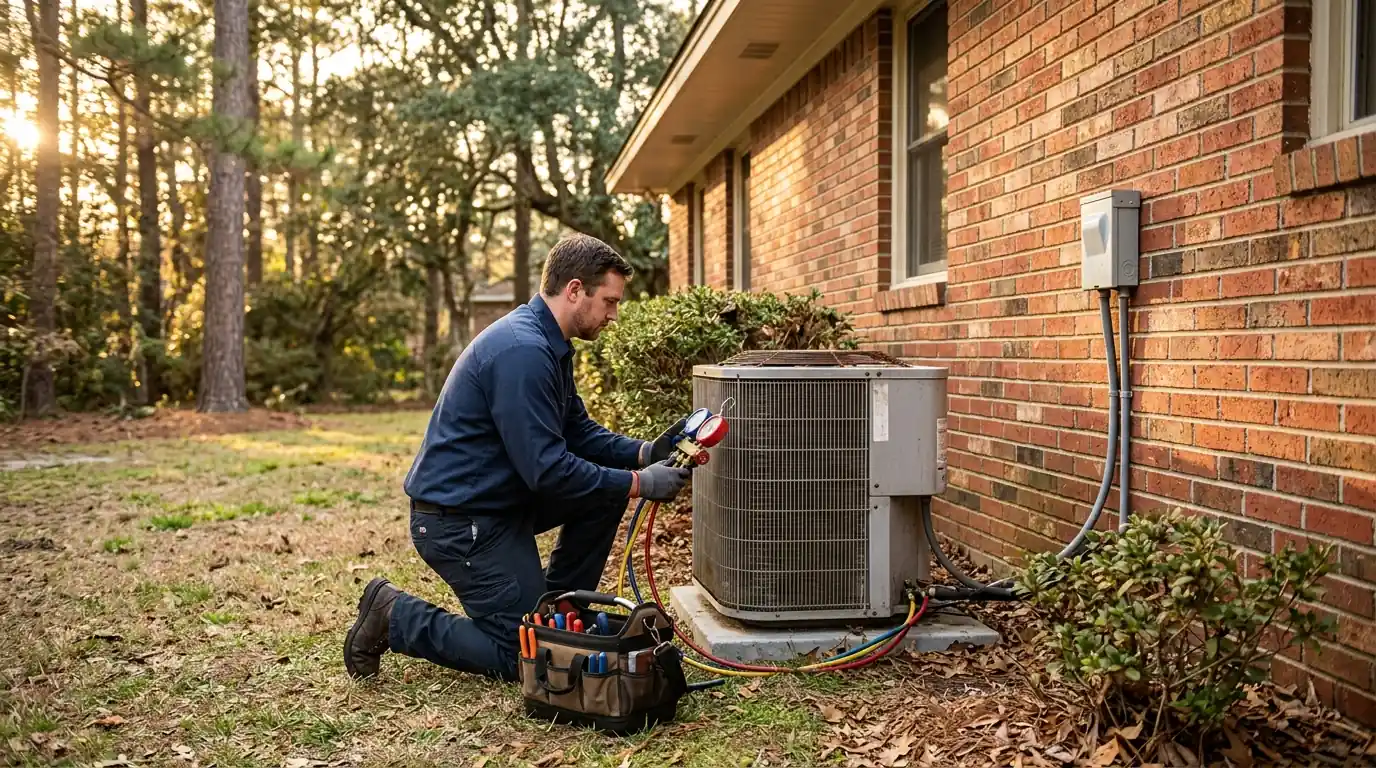
A whole-home dehumidifier in Atlanta pulls out the moisture your AC leaves behind, usually holding indoor humidity between 45 and 50 percent. It matters most in spring and fall, when the house needs little cooling, the compressor runs short cycles, and the evaporator coil never stays cold long enough to wring water out of the air.
Whole-Home Dehumidifiers: what we check and why it matters
Your air conditioner removes moisture only while the evaporator coil is cold and runs long enough for condensate to drip off. Oversized systems, mild weather and tight new windows all cut that run time short. The result is a house that reaches its setpoint yet sits at 60 percent humidity or higher, where dust mites, mildew on closet walls and cupped hardwood start to show up.
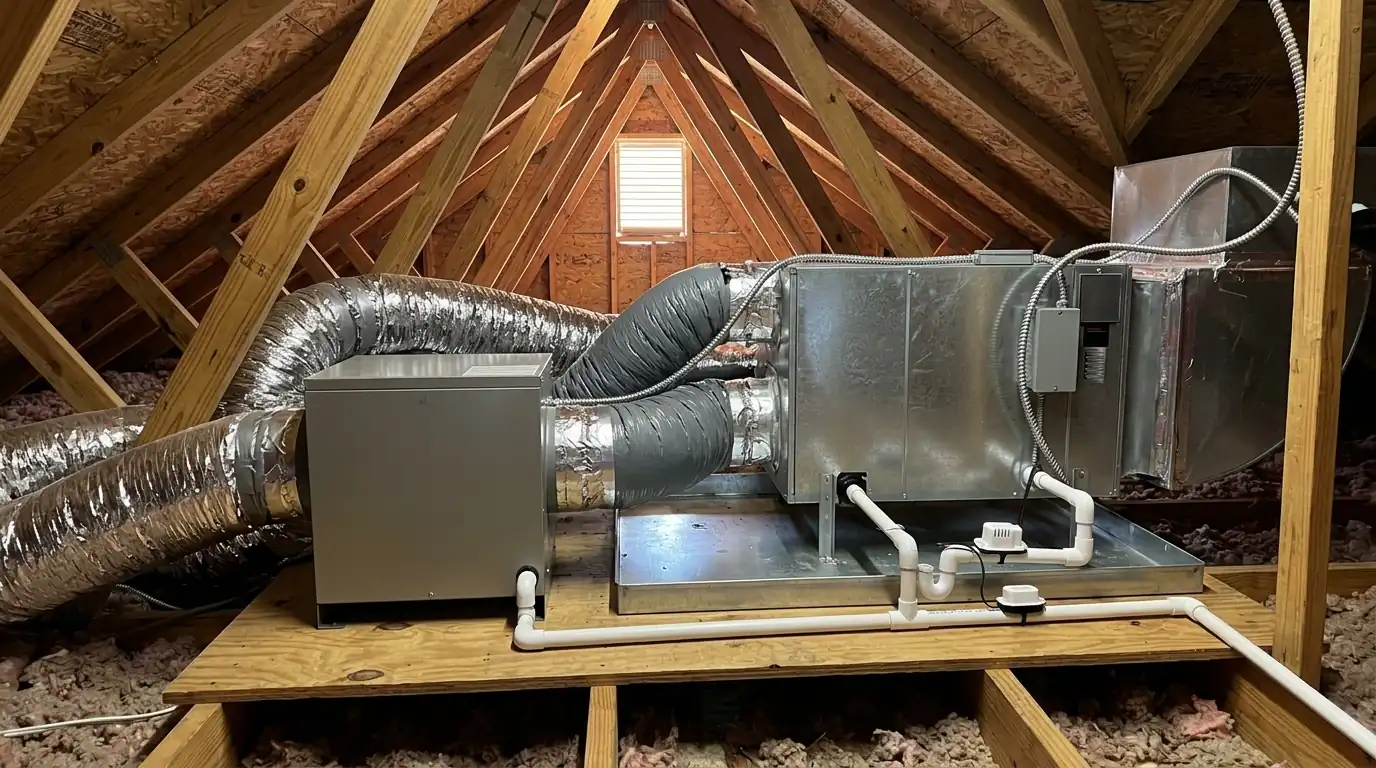
A whole-home dehumidifier handles that latent load on its own. It has its own refrigerant coil and humidistat and sends the water to a drain. We start by logging your humidity for a few days so the unit is sized to the real problem rather than a guess.
Standalone crawl space unit or ducted whole-home unit?
Both remove water from the air. The difference is how much of the house they reach and what they connect to.
| Standalone crawl or basement unit | Ducted whole-home unit | |
|---|---|---|
| Area it treats | One enclosed space | Every room the duct system serves |
| Ties into HVAC | No, runs on its own | Yes, at the return and supply |
| Typical drain | Gravity line or pump | Trapped drain near the air handler |
| Fits when | Moisture starts below the floor | Living areas feel damp on mild days |
What a whole-home dehumidifier install usually runs
The range below is a published national planning figure, not our pricing. Where the unit goes and how it drains move the final number most.
| Job | Published planning range | Source |
|---|---|---|
| Whole-home dehumidifier, unit and installation | $1,300 to $2,800 | How Much Does It Cost to Install a Whole-House Dehumidifier? [2025 Data] - HomeAdvisor |
What moves the number
- Capacity in pints per day
- Ducted tie-in or standalone placement
- Gravity drain or condensate pump
- Whether a dedicated circuit is needed
- Crawl space sealing done alongside
These are ranges published by the sources linked above, shown for planning. They are not a quote and not our price; the real number depends on what we find at your home.
Crawl space dehumidifiers
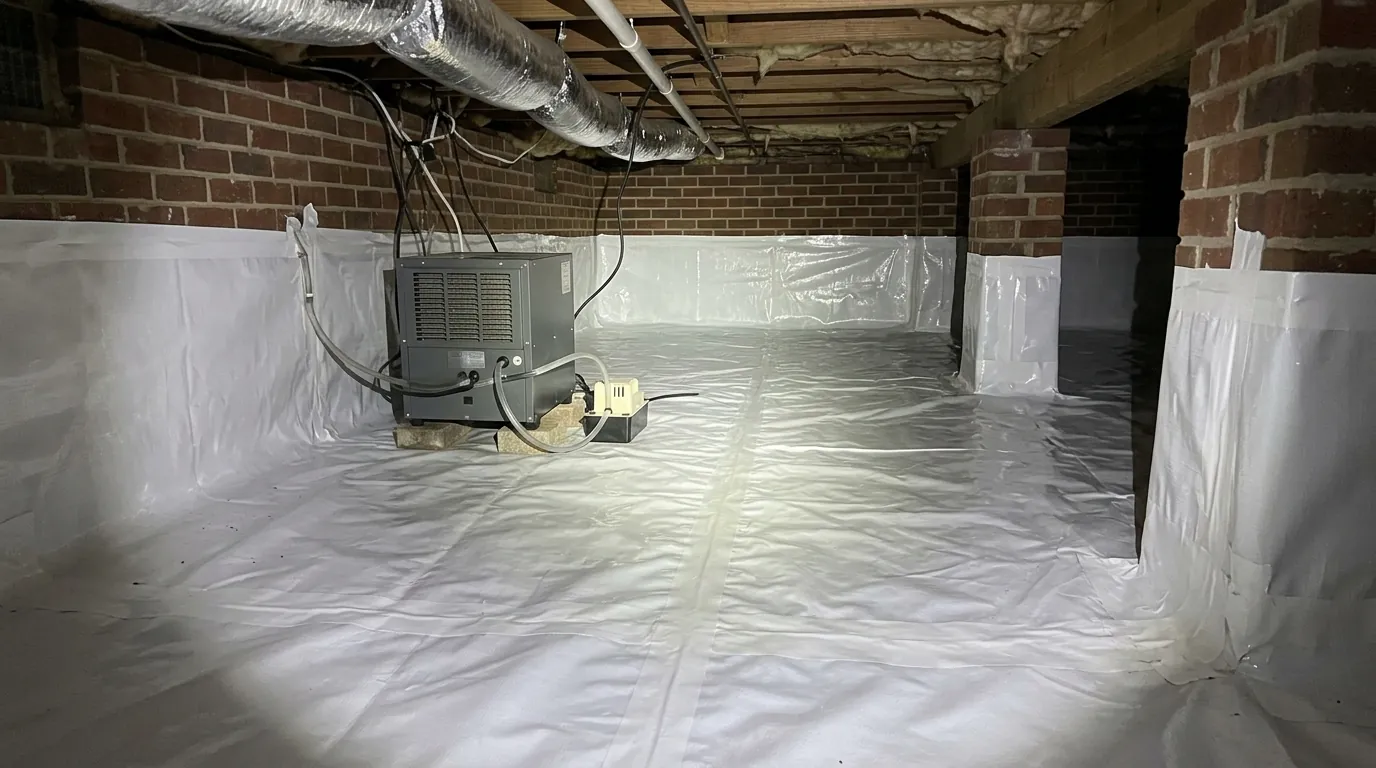
A vented crawl space under a ranch or split-level breathes outdoor air that is often wetter than the soil-cooled surfaces it touches, so joists and duct jackets sweat. You notice a musty smell upstairs, insulation sagging between joists, or rust on supply boots and hangers. The fix pairs a ground vapor barrier and closed vents with a dedicated dehumidifier rated for cool temperatures, drained by gravity or a condensate pump. It makes sense when a moisture meter reads high on the framing, not just when the space smells. Our crawl space humidity guide covers the vapor barrier side in more depth.
Basement dehumidifiers
Below-grade walls stay near ground temperature all summer, so warm air touching them drops below its dew point and leaves moisture on block, carpet and stored boxes. Portable units help, but small buckets and small coils lose ground in a full basement. We install a larger standalone unit with a hard drain, set freestanding or ducted so it pulls from the far end of the space and discharges near the stairwell. It makes sense when a portable unit runs nonstop and the basement still reads above 55 percent, or when finished rooms show mildew along the baseboards and behind furniture.
Ducted whole-home units
When the whole house feels damp, not just one level, a ducted dehumidifier ties into the HVAC system. It draws house air from the return, dries it, and sends it into the supply plenum or a dedicated supply, controlled by its own humidistat. Installation needs a return tap, a supply connection with a backdraft damper, a trapped condensate drain and usually a dedicated circuit. It makes sense in homes with a correctly sized AC that still cannot hold humidity in shoulder seasons, and in tight houses where filtration upgrades alone have not cleared the musty smell.
What a complete dehumidifier install should include
Scope varies a lot between installers. Ask whether each of these is part of the job.
- A humidity log before sizing, not a square-footage guess
- A unit rated for the temperature where it will run
- A dedicated electrical circuit when the unit calls for one
- A trapped condensate drain or a pump with a safety switch
- A backdraft damper on ducted supply connections
- A separate humidistat, not control through the thermostat alone
- An accessible filter on the dehumidifier intake
- Follow-up readings after a few days of operation
How we size and install a dehumidifier
Log the humidity
We record temperature and relative humidity in living areas and the problem space for several days to see when moisture peaks.
Find the source
We check crawl space vents, bath fans, dryer venting and return duct leaks so the unit is not fighting water that should be stopped at the source.
Size on latent load
We pick capacity from the moisture load and the space volume, and confirm the unit is rated for the temperatures where it will sit.
Install, duct and drain
We mount the unit, connect return and supply ducting with a backdraft damper where needed, and run a trapped drain or pump.
Set and verify
We set the humidistat, then take readings again after the unit has run so you can see the drop for yourself.
Equipment brands we service and install
Most homes around Atlanta run equipment from a handful of major manufacturers. We diagnose, repair and replace Carrier, Trane, Lennox, Goodman, Rheem and Daikin systems, along with the other names below.
Brand names are shown to describe the equipment we work on. We are not claiming a dealer or factory relationship with any manufacturer.
The local side of whole-Home Dehumidifiers
Summer air here carries a heavy water load. Average relative humidity in Atlanta runs about 74 percent in July and August, and the average July dew point sits close to 68F. Any surface cooler than that, whether a crawl space joist, a basement wall or a supply duct in a vented crawl, collects condensation. That is why we size dehumidifiers here on latent load and dew point rather than square footage, and why a correctly sized AC can still leave a house damp on a 78F June evening.
Whole-Home Dehumidifiers questions from Atlanta homeowners
Often, yes. When the dehumidifier carries the moisture load, many people feel comfortable a degree or two warmer. The dehumidifier adds its own electrical draw and a little heat, so the net gain depends on how damp the house was and how your AC is sized.
Colder setpoints pull more water only while the compressor runs. On mild days the house reaches a low setpoint quickly, the coil shuts off before it removes much moisture, and you end up cold and still clammy. A dehumidifier works independently of the cooling call.
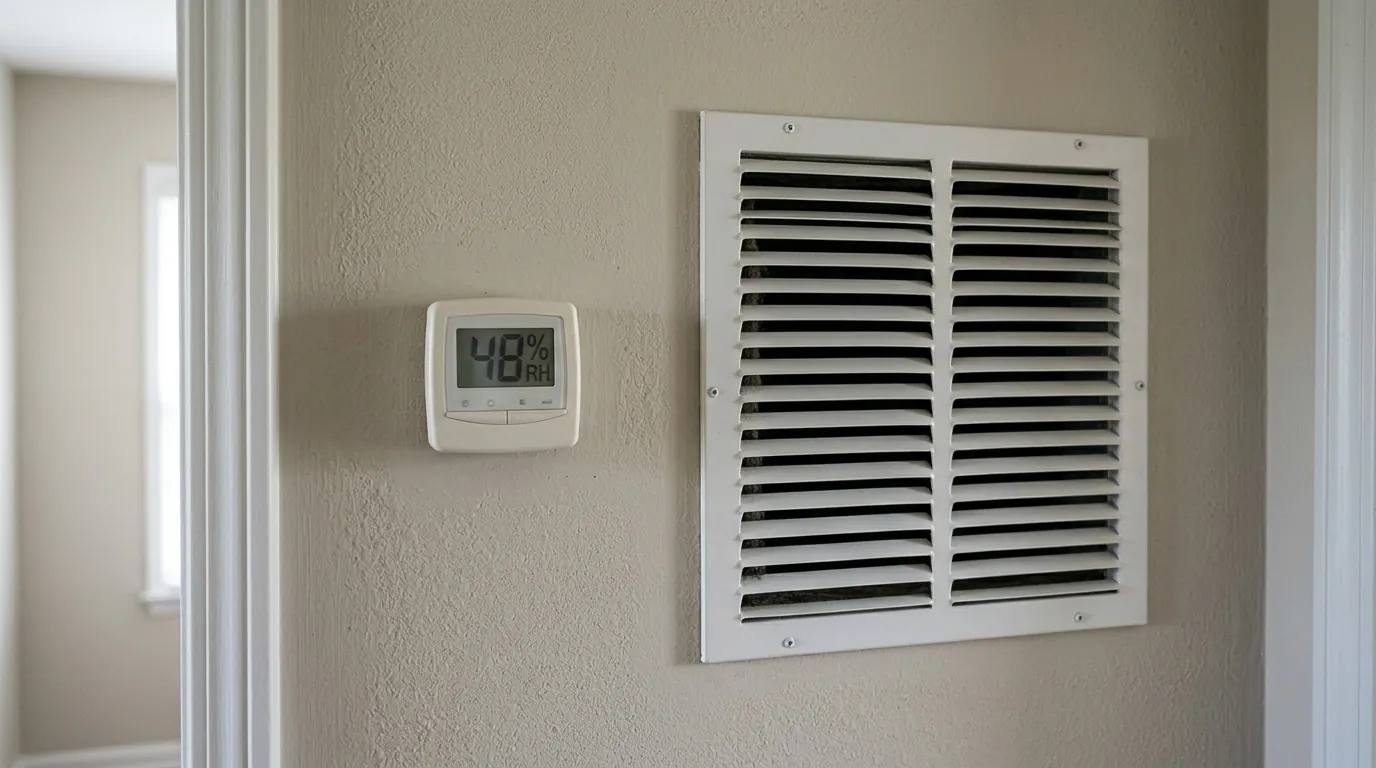
Most homes stay comfortable and resist mildew between 40 and 50 percent relative humidity. Above 60 percent for long stretches, dust mites and mold get going. We set the humidistat in the lower band and adjust it if you see condensation on cool surfaces.
Into a drain, never a bucket. We run a trapped line to a floor drain, the existing condensate line or outdoors by gravity, and fit a condensate pump with a high-water safety switch where gravity is not possible.
Usually not. An open vented crawl keeps drawing in humid outdoor air, so a dehumidifier there runs constantly and still loses ground. We recommend closing the vents and laying a sealed vapor barrier first, then sizing the unit for the enclosed space.
Often it makes it worse. An oversized system drops the temperature fast and shuts off before the coil wrings out moisture. If you are planning a new system, a load calculation and right-sizing during AC replacement matters as much as adding a dehumidifier.
Updated October 2026