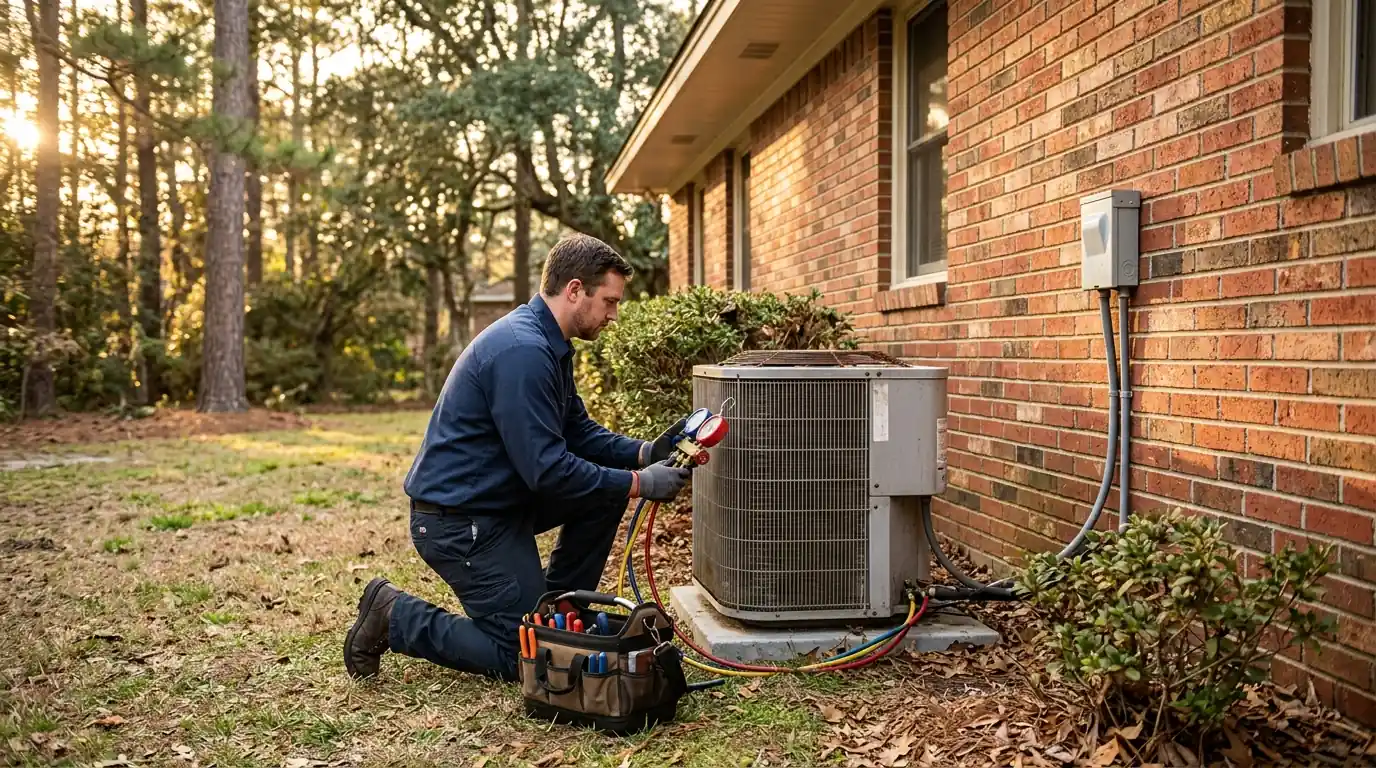
Heat pump maintenance in Atlanta works well on a twice-a-year schedule, because the same equipment heats in winter and cools in summer. Each visit should test the defrost cycle, measure backup heat strips, check refrigerant readings in the current mode, and clean the coil and blower. Those checks prevent most iced-over units and runaway electric bills.
Heat Pump Maintenance: what we check and why it matters
A heat pump has parts a standard AC does not: a reversing valve, a defrost board and coil sensor, and electric heat strips with sequencers in the air handler. Those parts fail quietly. A defrost board that stops working, or a strip that has burned open, may go unnoticed until a cold night or a high bill.
Fall visits focus on winter readiness, and spring visits on cooling. If something fails between visits, our page on fixing a heat pump covers the common faults.
What each heat pump maintenance visit should include
Maintenance plans vary. These items cover the parts unique to heat pumps.
- Forced defrost test with board and sensor check
- Reversing valve operation in both modes
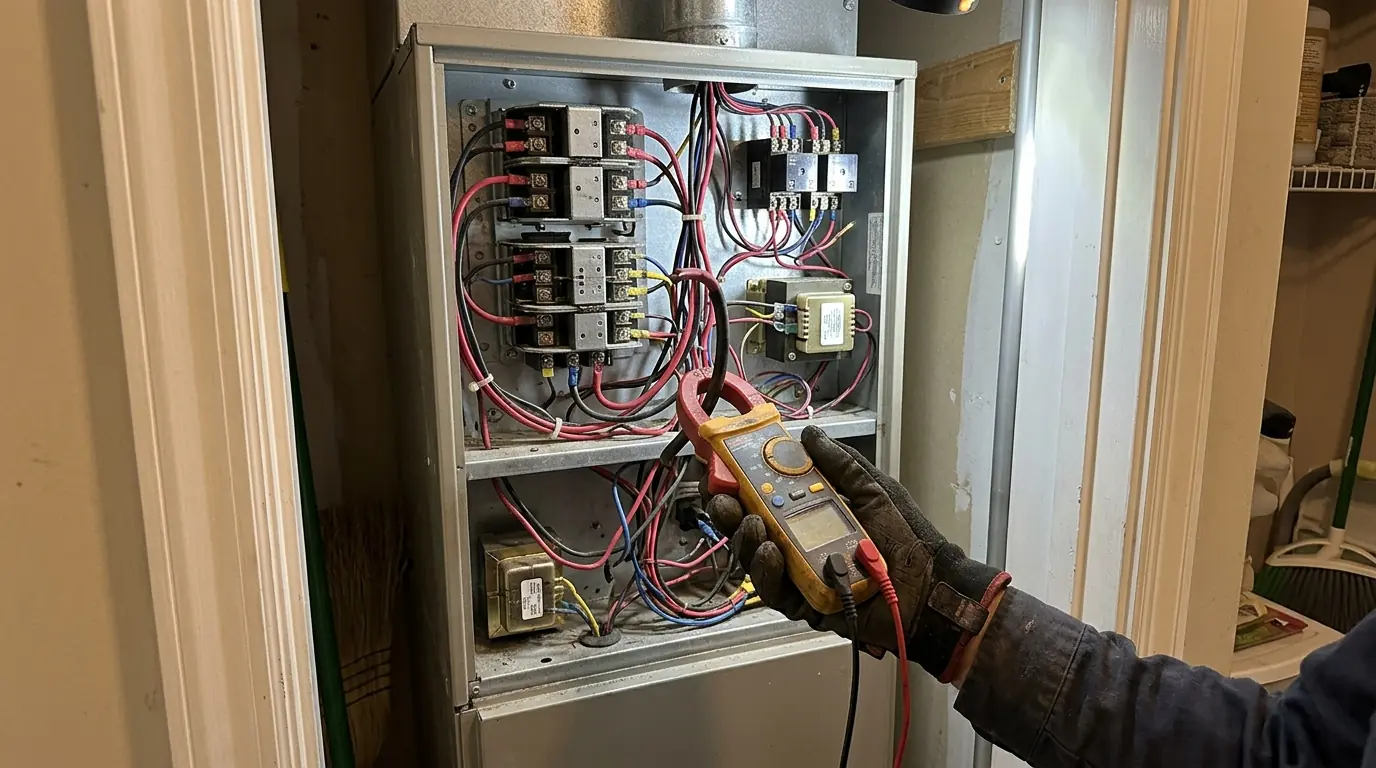
- Amp draw on each backup heat strip
- Sequencer and relay inspection
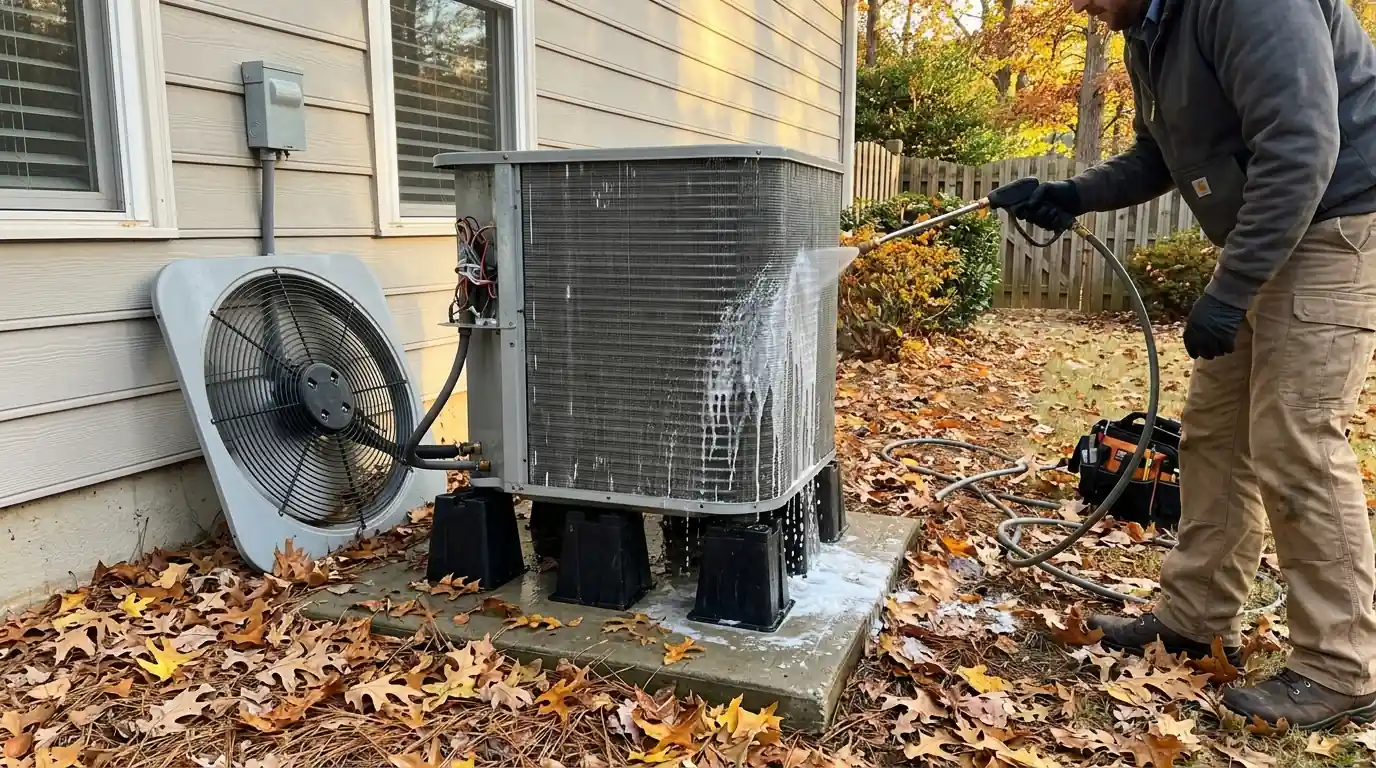
- Outdoor coil cleaning
- Indoor coil and blower inspection
- Static pressure and filter fit
- Refrigerant readings in the current mode
Defrost cycle test
The defrost cycle keeps the outdoor coil clear of ice in winter. We force a defrost and confirm the reversing valve shifts, the outdoor fan stops, the backup heat stages on to temper the air, and the cycle ends when the coil sensor reaches temperature. We also inspect the coil sensor's mounting, since a loose sensor can make the board misjudge coil temperature. A defrost system that works in October rarely surprises you in January. One that does not shows up as a block of ice on the coil.
Backup heat check
Backup heat strips keep the house warm when the heat pump cannot keep up, and during defrost. We measure amp draw at each strip to confirm every stage heats, test the sequencers and relays that bring strips on in steps, and look for heat damage on wiring and connectors. We also review the thermostat's aux heat settings, because strips that come on too early waste power. A burned-open strip often goes unnoticed until the coldest night, which is why we test them before winter.
Coil and airflow check
A heat pump depends on airflow in both modes. A dirty outdoor coil reduces heat transfer in summer and makes ice form faster in winter. A dirty indoor coil or blower wheel cuts airflow and raises bills. We clean the outdoor coil, inspect the indoor coil and blower, check the filter fit and measure static pressure across the system. Readings above the blower's rating point to restricted ducts or filters. Better airflow helps both heating and cooling, and lets the compressor run at lower pressures.
What happens during a heat pump maintenance visit
Review the thermostat
We confirm mode settings, aux heat staging and the reversing valve wiring.
Clean and inspect coils
The outdoor coil is washed and the indoor coil and blower inspected.
Test the defrost cycle
A forced defrost shows whether the board, sensor, valve and fan respond.
Measure backup heat
Amp readings at each strip confirm every stage works.
Record readings
Charge, airflow and electrical readings are logged for comparison next season.
Heat pump care between visits
Simple upkeep helps. Electrical and refrigerant work does not belong to homeowners.
| Task | What you can do | Where a technician comes in |
|---|---|---|
| Filter changes | Yes, every one to three months year-round | Airflow and static pressure checks |
| Keeping the unit clear | Yes, two feet of space and no gutter drips onto the top | Raising the unit for better defrost drainage |
| Watching aux heat use | Yes, note when the thermostat shows aux heat on mild days | Staging and lockout adjustments |
| Electrical or refrigerant work | No, capacitors and strips carry high voltage and refrigerant handling is regulated | Tested with meters and gauges |
Where this shows up around Atlanta
Atlanta's winters ask a lot of a heat pump without being harsh. January averages a high near 52F and a low near 34F, and the city sees overnight freezes on roughly 40 days a year. Those freezing nights are when the defrost cycle runs most often and backup heat steps in. A fall visit that tests both before December catches the faults those nights would expose, while the weather is still mild enough to make repairs without the house going cold.
What drives heat pump maintenance pricing
Published guides do not list heat pump maintenance on its own, so we do not show a range here. These are the factors that move the cost of a visit.
What moves the number
- One visit a year or spring and fall visits
- Number of systems in the house
- Air handler location and access
- Coil cleaning depth
- Parts found worn during the visit
Heat Pump Maintenance questions from Atlanta homeowners
Twice a year is ideal because it heats and cools. A spring visit prepares it for cooling, and a fall visit checks defrost and backup heat for winter. Once a year can work for newer systems, but you lose the seasonal checks.
Yes. Both include coil cleaning, charge checks and electrical tests, but a heat pump also needs its reversing valve, defrost controls and backup heat tested. An AC tune-up alone skips the parts that matter for winter.
Backup strips only run on cold nights and during defrost, so a failed strip can hide for months. When the coldest night arrives, the house falls behind. Measuring each strip before winter catches that early.
It can. A clean coil, correct charge and good airflow let the heat pump carry more of the load, and correct aux heat settings keep strips off on mild days. The biggest savings usually come from fixing strips that run too often.
In most cases, yes. Defrost melts ice into water that needs somewhere to drain. A unit sitting low can refreeze into a block of ice. Risers or a raised pad give that water a place to go and keep the coil clear.
We record refrigerant pressures, superheat or subcooling, strip amperage, static pressure and supply air temperatures. Comparing them season to season shows a slow leak or a weakening part before it fails, which is how we decide when a leak search is needed.
Updated October 2026