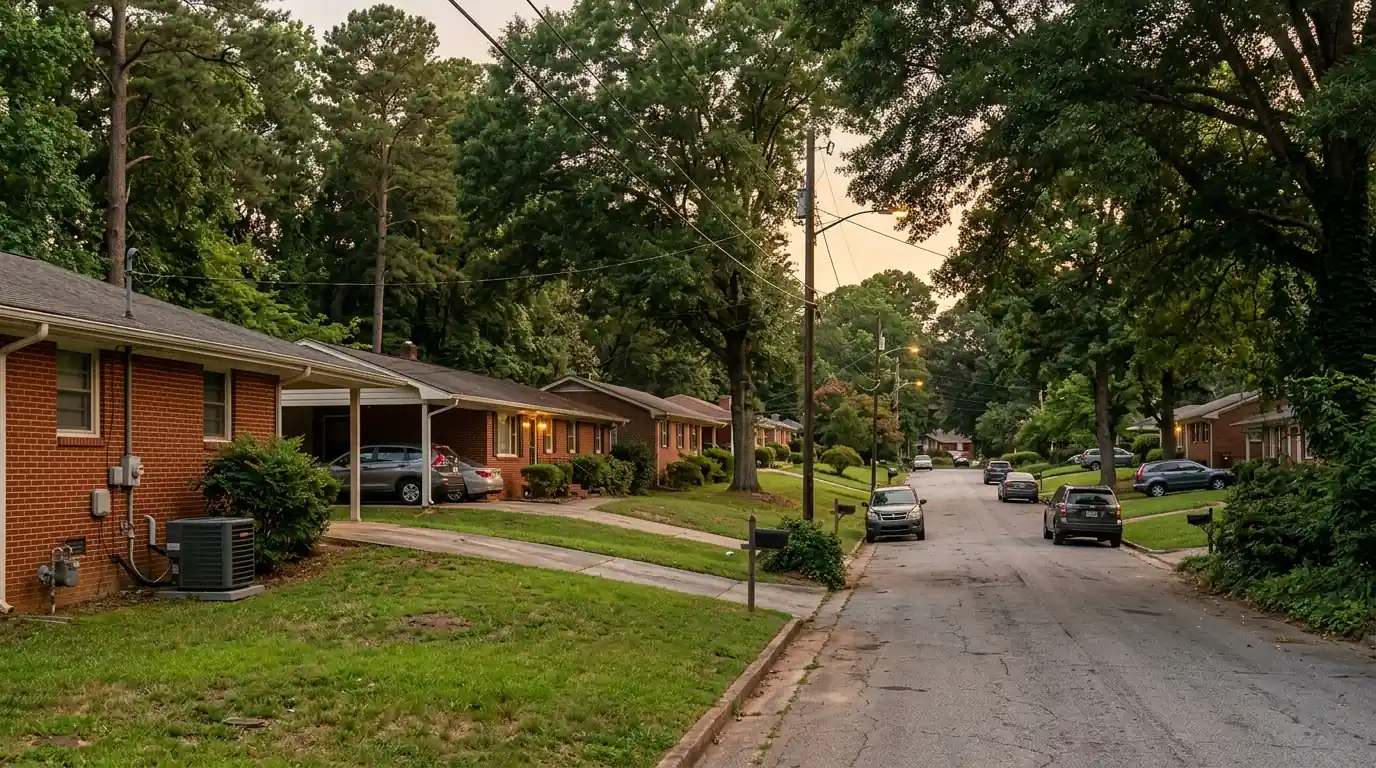
Westview homes get AC repair, ductless mini-split installs and duct work from us, and the neighborhood's 1910s and 1920s bungalows usually need a cooling plan that respects how they were built. Central air came to these houses later, so ducts tend to squeeze through low attics or crawl spaces, and ductless heads often solve the rooms those ducts never reached.
Bungalows first, then Foursquares, Tudors and ranches
Bungalows from the 1910s and 1920s are the most common house type in Westview, mixed with Foursquares, Tudors, Minimal Traditional houses and later ranches. That mix matters. A two-story Foursquare has a stairwell pulling heat upward, while a ranch spreads everything on one floor, and the bungalow sits somewhere in between with its low attic and rooms under the roof slope.
None of the early houses were built with ducts for central air. Whatever system a Westview house has today was added later, routed through whatever space the builder left. We start every first visit by finding out how.
Where retrofitted ducts in a bungalow tend to fail
Bungalow attics are often shallow, so flex duct gets pinched between rafters or stepped on during other work. In crawl spaces, ducts can sag, collect condensation on their outer jacket or come apart at connections. A supply run that has dropped off its boot can push cooled air under the floor while the room above stays hot.
We inspect each run we can reach and measure airflow at the registers, then repair crushed or disconnected runs before suggesting new equipment. A crawl space that holds moisture can also feed humidity into the house, which our crawl space humidity guide covers in more depth.
When a mini-split makes more sense than another duct run
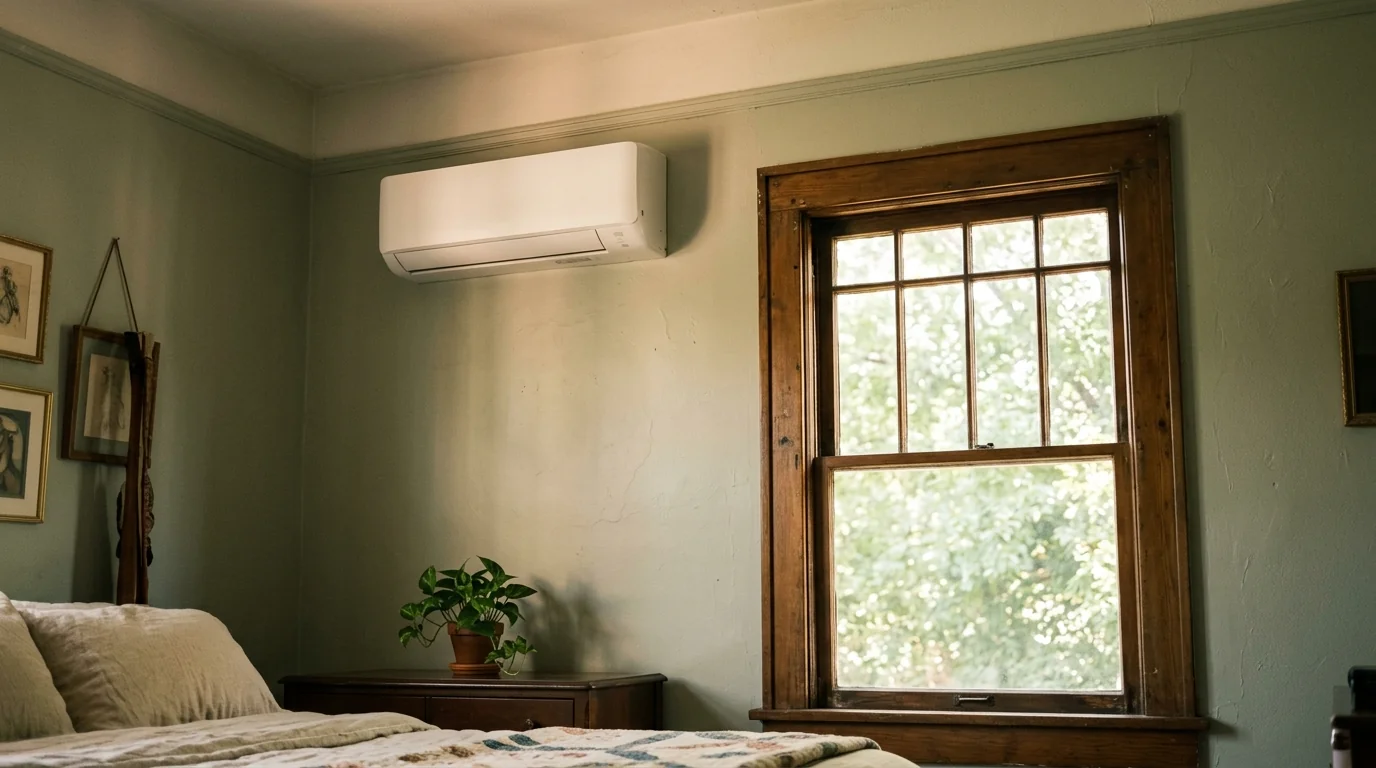
Finished attic rooms, sunrooms and rear additions are the usual problem spots. Running a new duct to them can mean opening plaster or losing closet space. A ductless head needs only a small hole for the line set and drain, and it cools and heats that room on its own schedule.
Ductless systems also suit houses with no ducts at all. A multi-zone setup can serve several rooms from one outdoor unit. The tradeoff is a wall-mounted head in each room, and filters that you rinse every month or two. We walk through both options on our mini-split installation page.
Atlanta heat that keeps older systems running
Atlanta's average count of 90F days has climbed to about 44 a year, from 37 under the older normals, and 2019 set the record with 91. Small, older systems in bungalows often run nonstop on those afternoons and still lose ground by evening.
Before replacing anything, we check charge, coil cleanliness and airflow, since a starved coil can cost as much capacity as an undersized unit. Older houses in nearby West End and the bungalow streets of Oakland City face the same summer math.
Heating and cooling work that fits Westview, Atlanta
Ductless Mini-Split Installation
Attic rooms and rear additions in Westview bungalows are often easier to condition with a ductless head than a new duct.
Duct Repair & Sealing
Retrofitted ducts in shallow attics and crawl spaces get crushed, sag and pull loose over time.
AC Repair
Older systems running nonstop on 90F afternoons wear out capacitors, contactors and fan motors.
Whole-Home Dehumidifiers
A damp crawl space under a bungalow can push moisture up into the living space.
Mini-Split Repair & Cleaning
Ductless heads that have run for years need their blower wheels cleaned and drains cleared.
Attic Insulation
Shallow bungalow attics heat up fast, so insulation around ducts and equipment protects cooling capacity.
Westview heating and air questions
Yes, two ways. A ducted system can go in if the attic or crawl space gives room for runs, or a multi-zone ductless system can put a head in each main room from one outdoor unit. We look at the framing, the electrical panel and where an outdoor unit can sit before suggesting either.
Additions are often tacked onto the end of the duct system with a long, small run, or skipped entirely. They may also have less insulation than the original house. We measure the airflow reaching the room, and if a duct fix is not practical, a single-zone mini-split is a common answer.
Signs include one room getting little or no air, a musty smell when the system starts, and higher bills without a clear cause. You may also feel cool air leaking from vents in the foundation. We inspect the crawl space with a light and measure airflow at the registers to confirm.
Yes. A mini-split is a heat pump, so it heats as well as cools, and current models keep producing useful heat through typical Atlanta winter nights. On the rare deep cold night, a backup source helps. We size the heads to each room's load, not just floor area.
It depends on how much ductwork is usable. If most runs are intact and only a few need sealing, repair usually wins. If the system is crushed, undersized or missing rooms, ductless heads can come out ahead. We give you both options with the work each involves so you can compare.
Updated October 2026