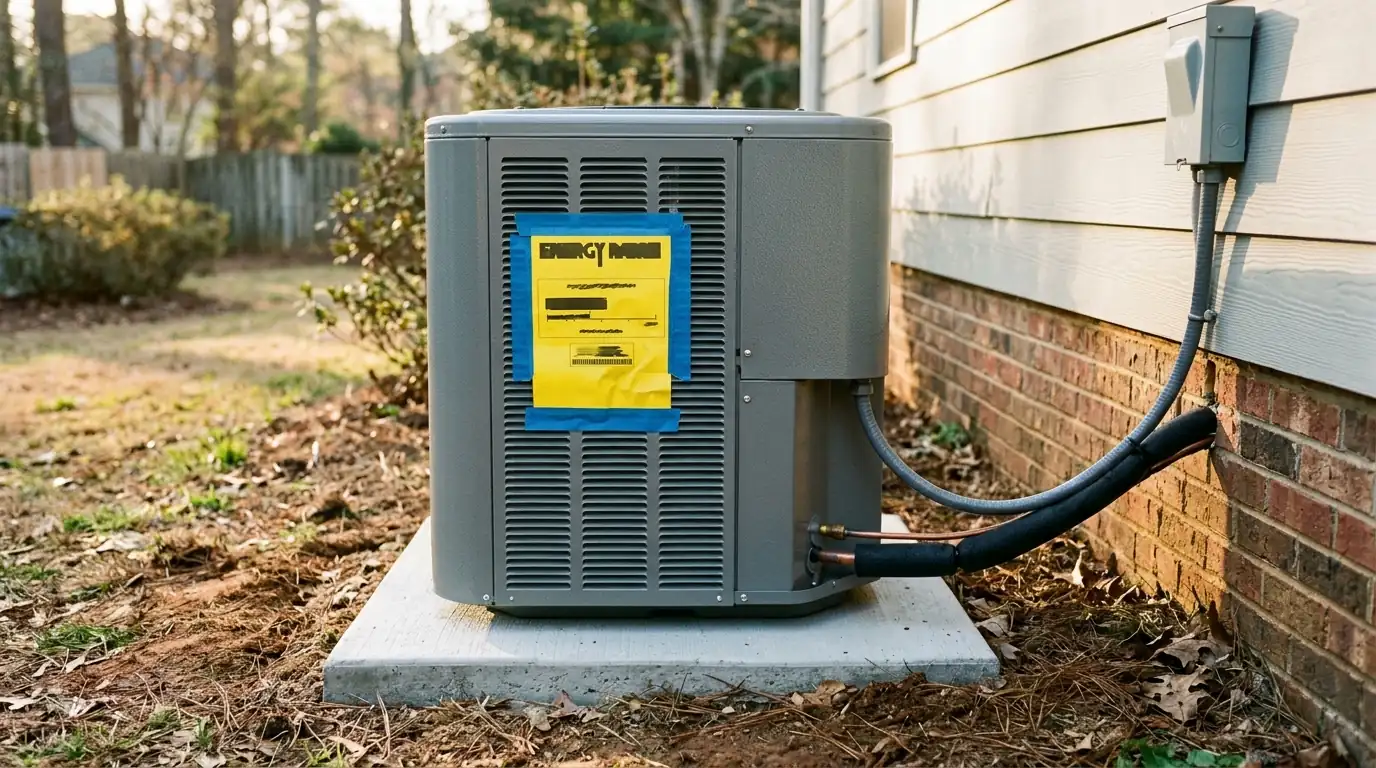
Georgia falls in the DOE Southeast region, so since January 1, 2023 a new split-system central AC installed here must meet 14.3 SEER2 below 45,000 Btu/h and 13.8 SEER2 at larger sizes. Heat pumps must meet 14.3 SEER2 and 7.5 HSPF2. Compliance depends on the install date, not when the unit was built.
SEER versus SEER2: same idea, tougher test
SEER measures how much cooling a system delivers for each unit of electricity across a season. SEER2 is the updated version that took effect in 2023. The new test uses higher external static pressure, closer to what real ductwork imposes, so the same equipment earns a lower number under SEER2 than it did under the old SEER test.
That means you cannot compare an old SEER sticker with a new SEER2 rating directly. A system labeled 14.3 SEER2 is not less efficient than an older unit labeled 15 SEER; it was simply measured under harder conditions. When comparing proposals, make sure every number on the table is SEER2.
The Southeast minimums, and the install-date catch
The Department of Energy splits the country into regions. Georgia is in the Southeast region, which has higher minimums for central air conditioners than the North. Since January 1, 2023, split-system central ACs installed in Georgia must reach 14.3 SEER2 if their capacity is under 45,000 Btu/h, roughly the smaller residential sizes, and 13.8 SEER2 at 45,000 Btu/h and up.
The key detail is that compliance is judged by installation date. An air conditioner made before 2023 that meets only the older northern standard cannot legally be installed here now, even if it is sitting new in a warehouse. Heat pumps follow a national standard instead: 14.3 SEER2 for cooling and 7.5 HSPF2 for heating, also from January 1, 2023.
Why the minimum is only a floor in Atlanta
Efficiency pays back in proportion to how much the system runs. Atlanta now averages about 44 days a year at 90F or hotter, and in 2026 the city had logged 71 such days by mid-September, with the first arriving in April. Long seasons mean more hours for every point of efficiency to earn its keep.
Humidity tilts the choice too. With July humidity around 74 percent and a dew point near 68F, a system that runs longer at lower speed pulls more moisture than one that blasts and stops. Two-stage and variable-speed equipment usually carry higher SEER2 ratings and dry the house better, which is often the bigger comfort gain.
Matching the rating to the house you actually have
A high SEER2 label assumes the system is installed correctly and matched as tested. The rating applies to a specific outdoor unit paired with a specific indoor coil or air handler. Mix in an unmatched coil and the real efficiency can fall well short of the sticker.
Ductwork matters as much. Leaky attic ducts lose cooled air before it reaches a room. Georgia's residential energy code, in effect since January 1, 2020, holds new construction to duct leakage of 6 CFM25 per 100 square feet and ducts at R-8. Many existing homes were built before that standard. Sealing the ducts can recover efficiency no equipment upgrade will deliver on its own.
Sizing is the third leg. An oversized high-efficiency unit short cycles, which wastes the efficiency you paid for and leaves moisture behind. We size from a room-by-room load calculation and check static pressure on the existing ducts, then choose the efficiency tier.
How to decide your efficiency level
Weigh these questions together rather than chasing the highest number on the brochure.
- How long will you stay in the house? Longer stays favor higher efficiency tiers
- Does the house have humidity problems, such as clammy rooms or musty smells? Variable-speed helps most there
- Are the ducts sealed and properly sized? If not, fix them first or budget for both
- Is the system a heat pump? Then compare HSPF2 alongside SEER2, since it heats too
- Is the outdoor unit and indoor coil listed as a matched pair at the rating you are paying for?
Where SEER2 meets the refrigerant change
Efficiency rules and refrigerant rules arrived at nearly the same time. Most newly built residential systems now use R-454B or R-32 because of the federal GWP limit that took effect for manufacturing on January 1, 2025. Our refrigerant guide explains how that affects partial replacements. When you are pricing a new system, the AC replacement cost guide covers how efficiency tier interacts with tonnage and installation scope, and our page on installing a heat pump explains the load calculation that should come first.
Questions readers ask about this
Not if it falls below the Southeast minimum. Compliance is based on installation date, so equipment that does not meet 14.3 SEER2 below 45,000 Btu/h, or 13.8 SEER2 above it, cannot go into a Georgia home now regardless of when it was manufactured.
The rating applies to the system as tested with a matched indoor coil. Replacing only the outdoor unit means confirming the new condenser and existing coil form a rated combination at or above the minimum, which is harder now that refrigerants have changed.
DOE set a single national standard for split-system heat pumps: 14.3 SEER2 and 7.5 HSPF2 since January 1, 2023. Central air conditioners carry regional standards because the cooling load varies so much between northern and southern states.
In humid climates it can be. Variable-speed equipment runs longer at low output, which removes more moisture and evens out temperatures between rooms. The comfort gain often shows up before the energy savings do.
HSPF2 measures heat pump heating efficiency across a winter. Atlanta winters are mild most of the time, so a heat pump handles most heating hours. A higher HSPF2 lowers winter bills and reduces how often backup heat strips are needed.
Usually not. Rooms that stay warm typically have duct, return or insulation problems. A more efficient system pushes air through the same restricted path. Diagnose the delivery problem first, then pick the efficiency level.
Services this article points to
AC Replacement & Installation
AC replacement in Atlanta must meet the Southeast SEER2 minimum, which for most homes means 14.3 SEER2 on a split system under 45,000 Btu/h.
Heat Pump Installation
Heat pump installation in Atlanta must meet federal minimums of 14.3 SEER2 and 7.5 HSPF2 for split systems, and new equipment uses lower-GWP refrigerants such as R-454B.
Duct Repair & Sealing
Duct repair and sealing in Atlanta mostly means finding air lost before it reaches the rooms: flex duct crushed or kinked in the attic, runs that have slipped off their collars, and joints leaking at every seam.
New Construction HVAC
New construction HVAC in Atlanta starts with a Manual J load calculation, then Manual S equipment selection and Manual D duct design.